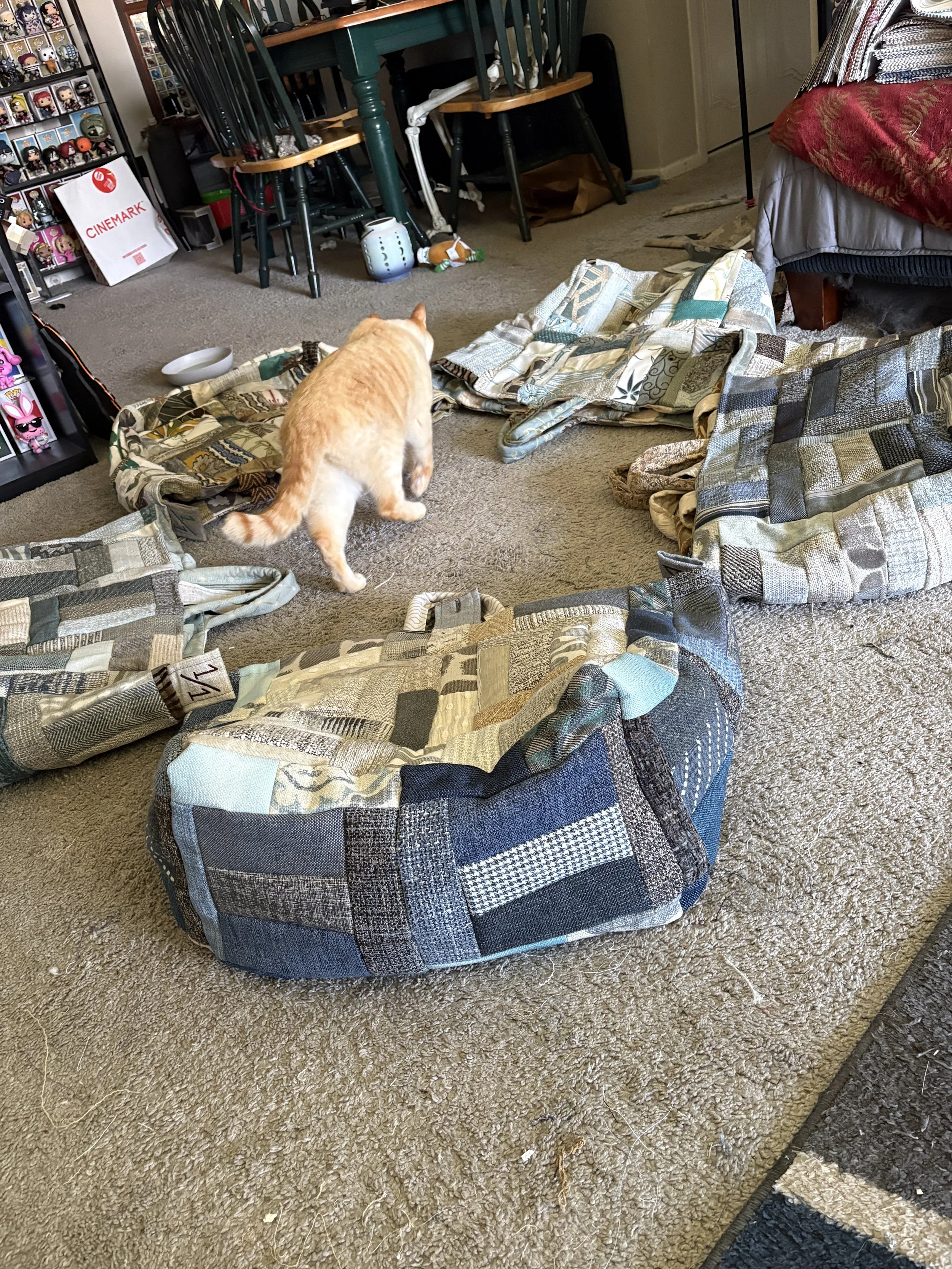
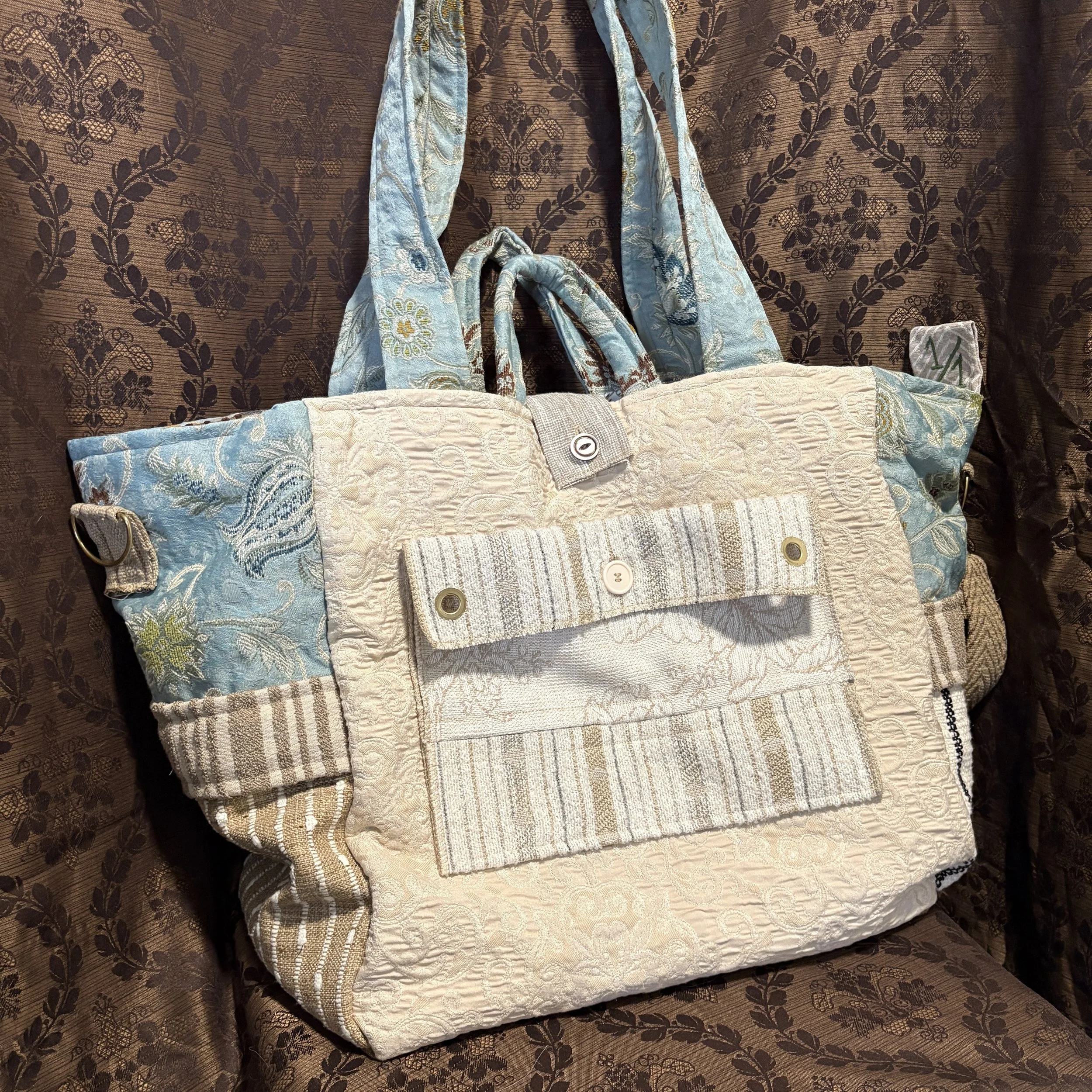
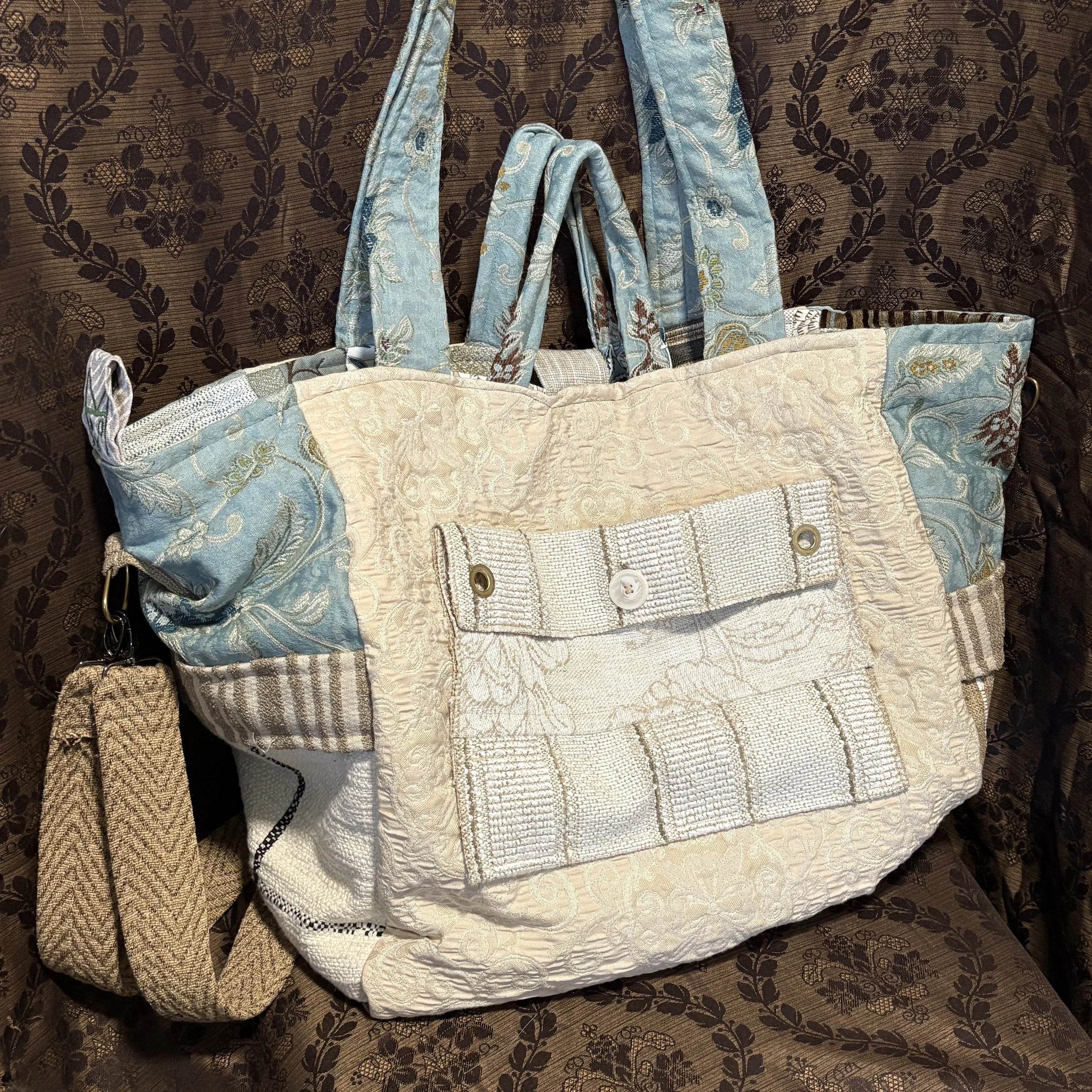
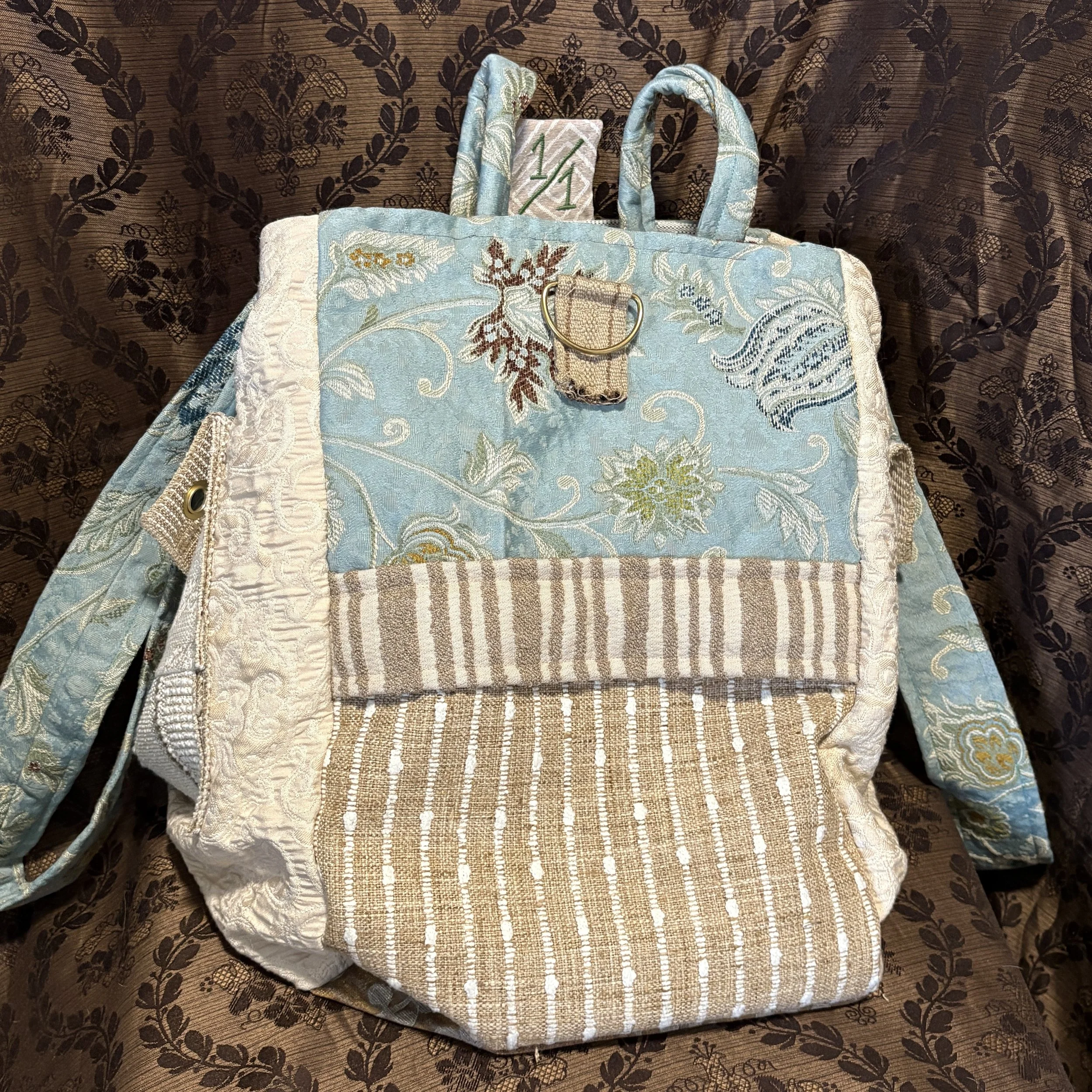
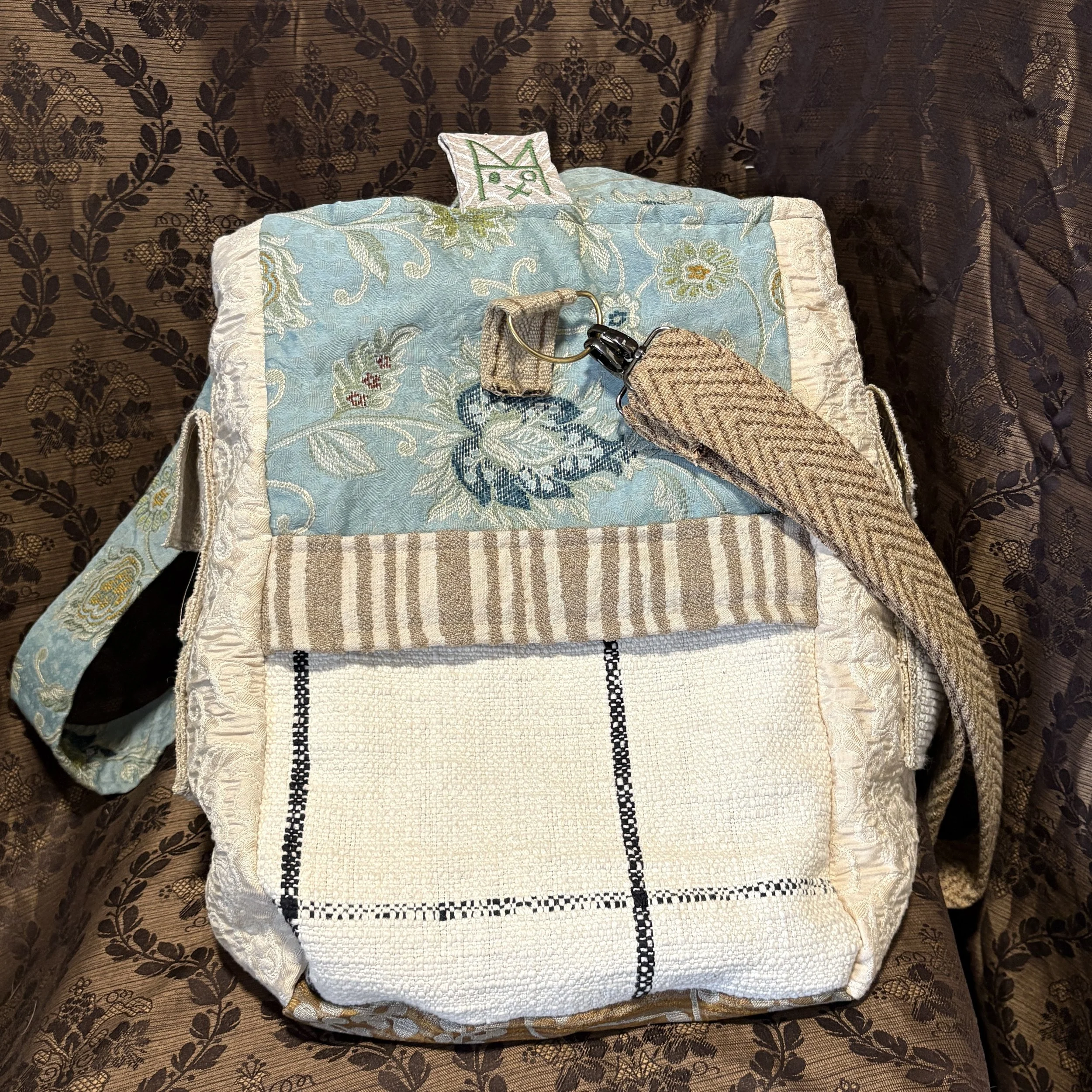
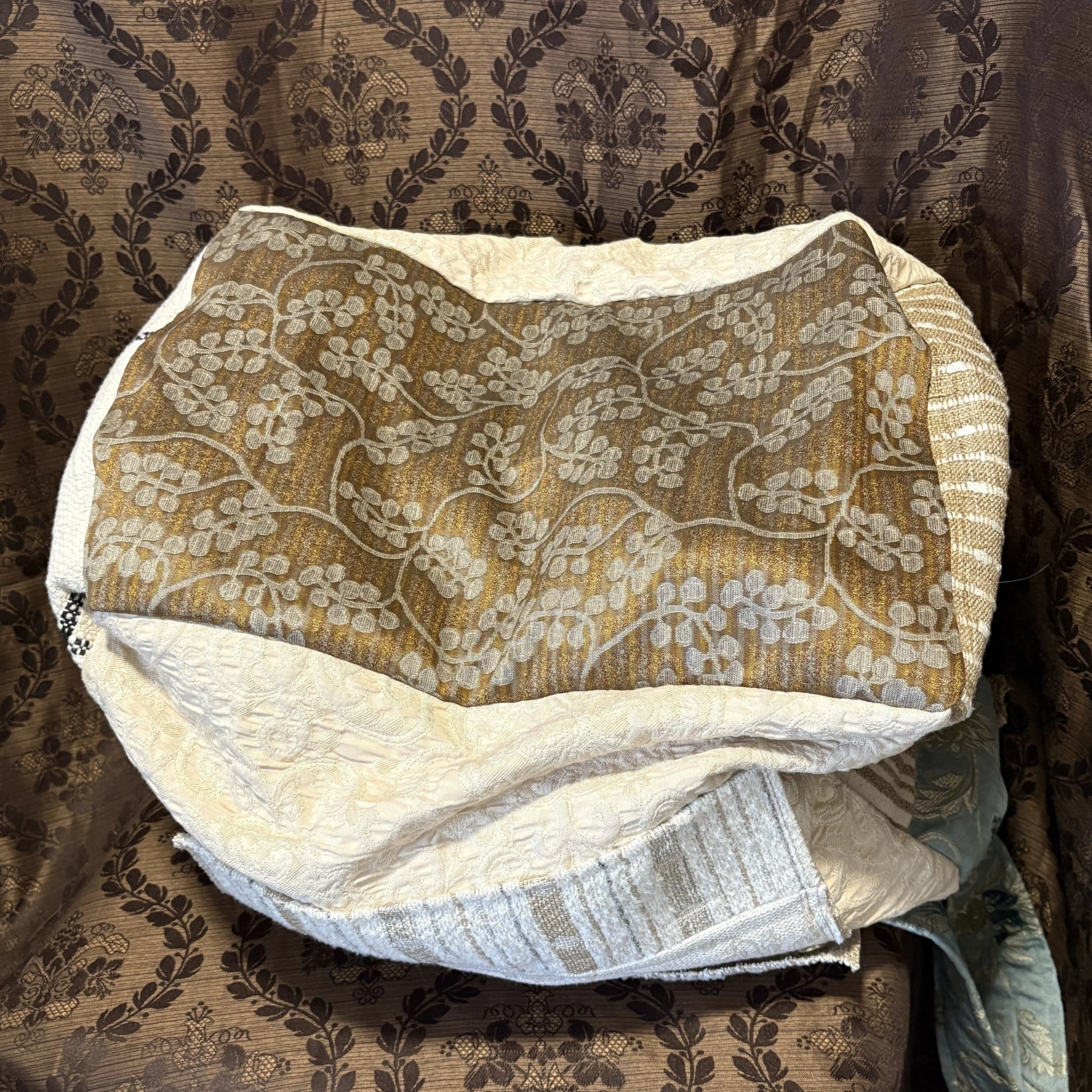
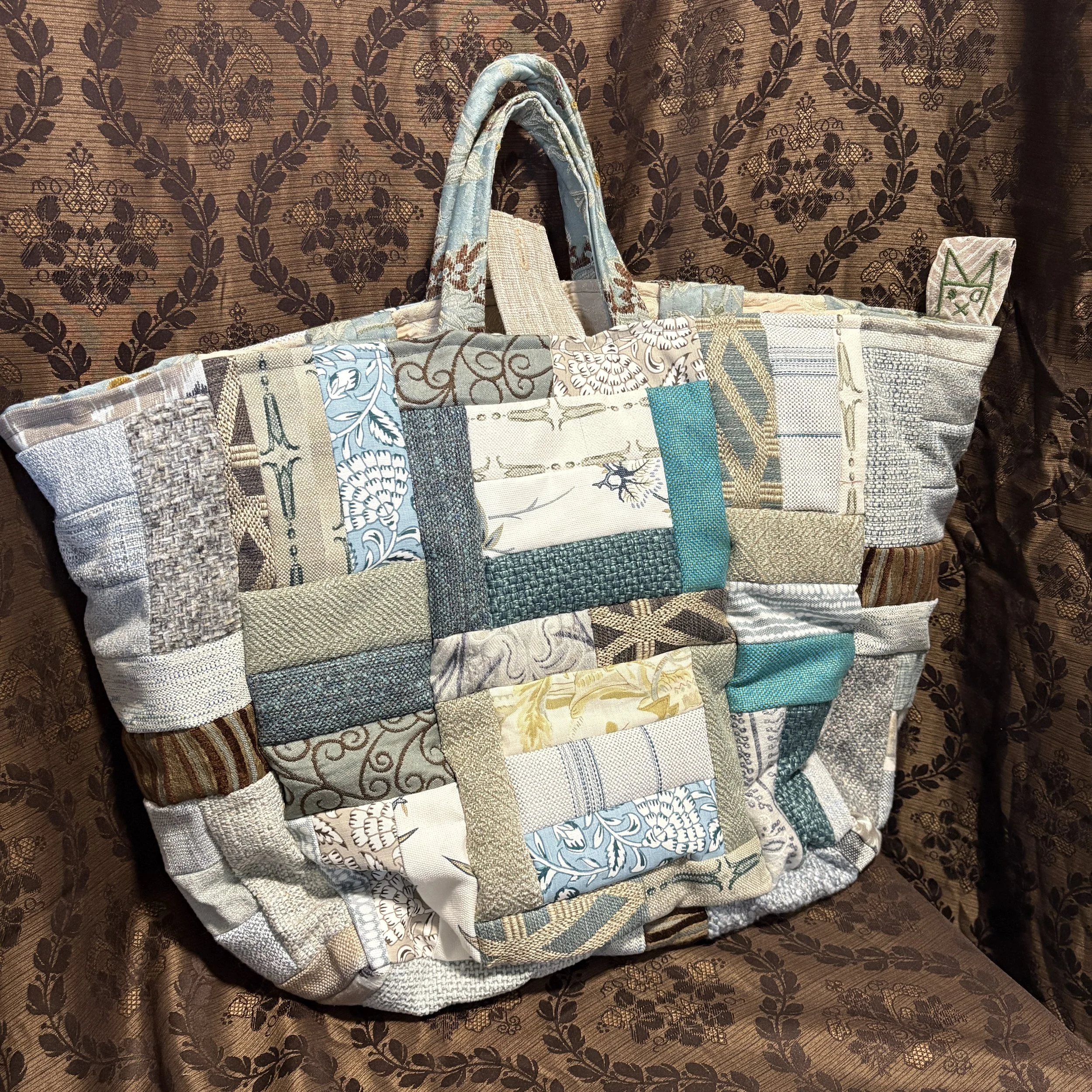
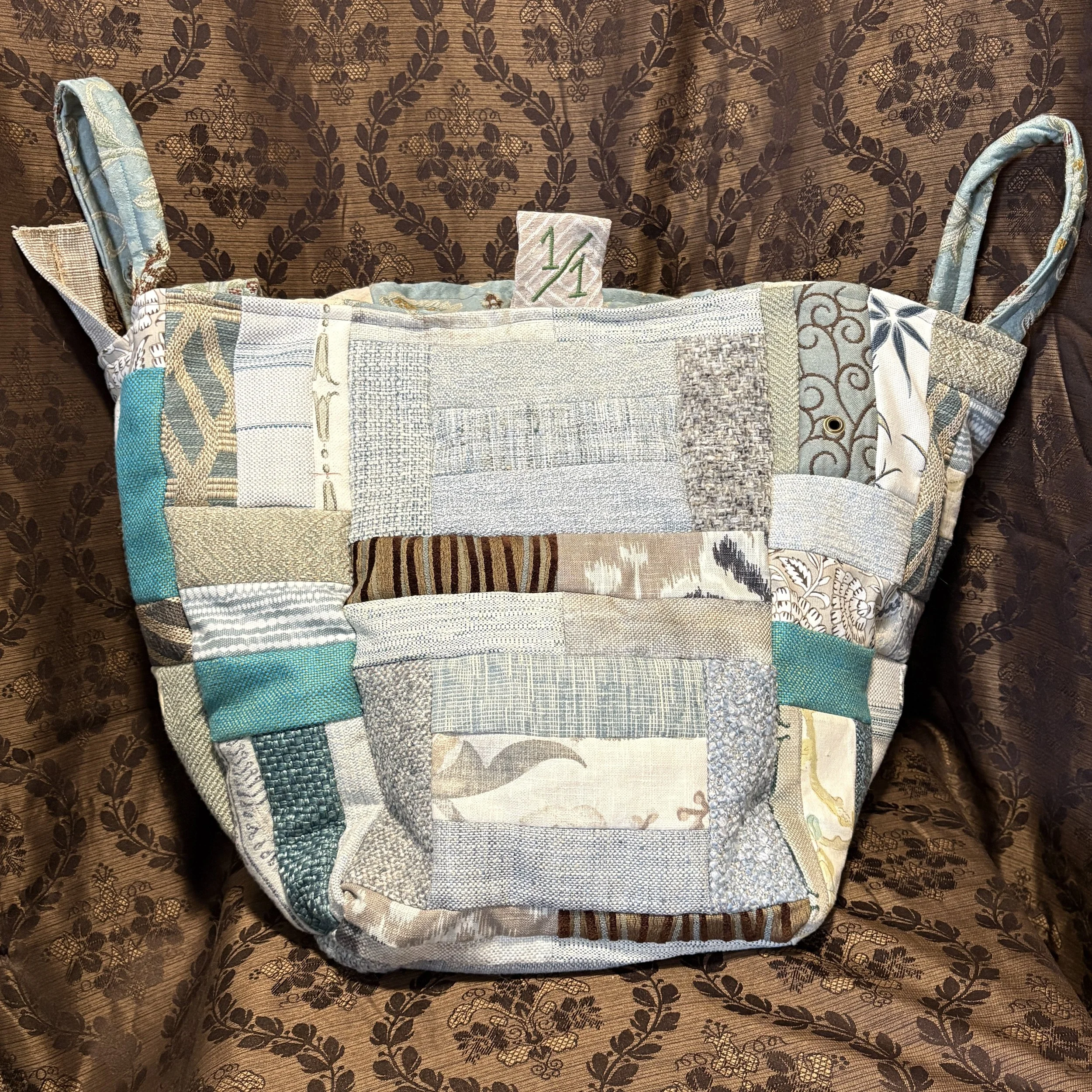
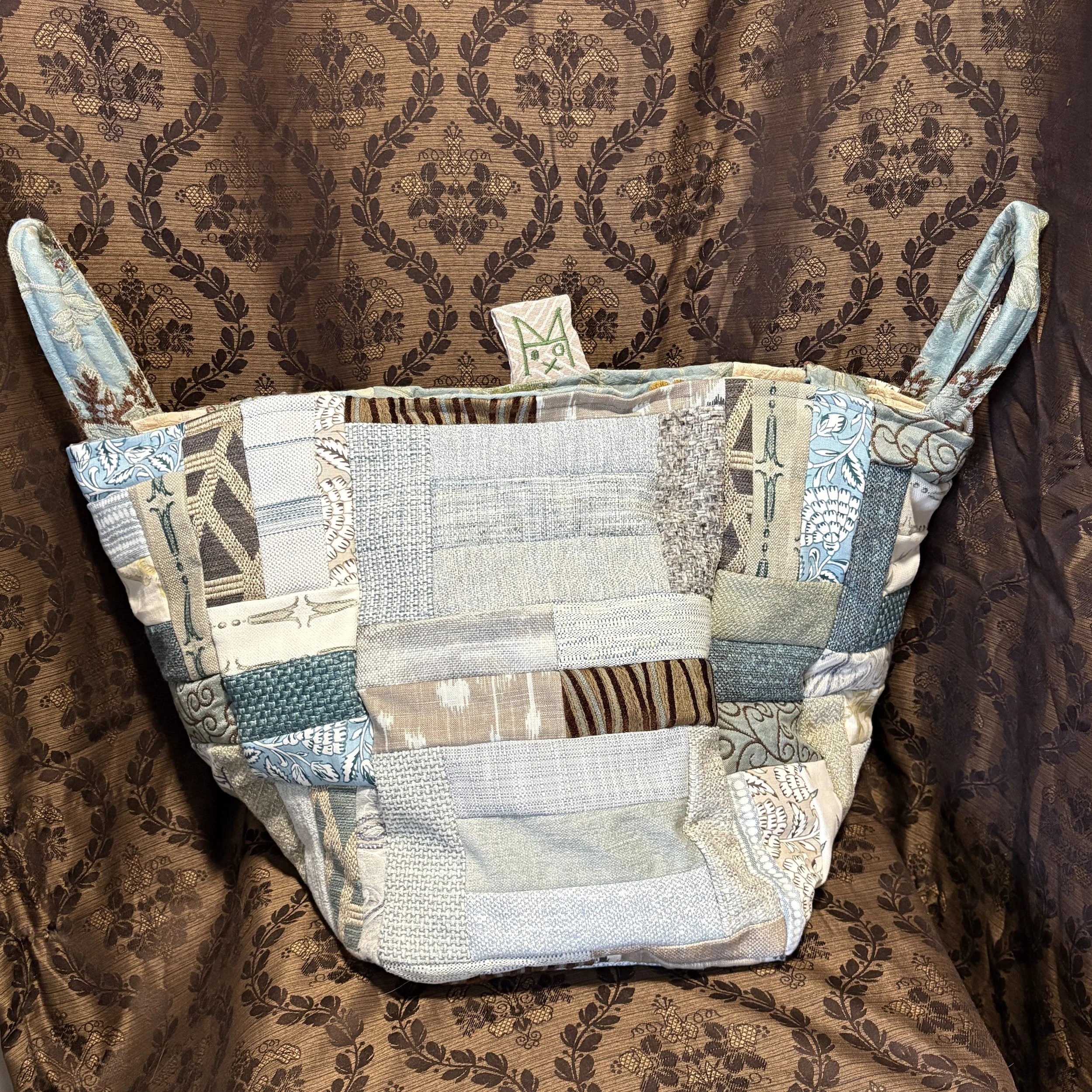
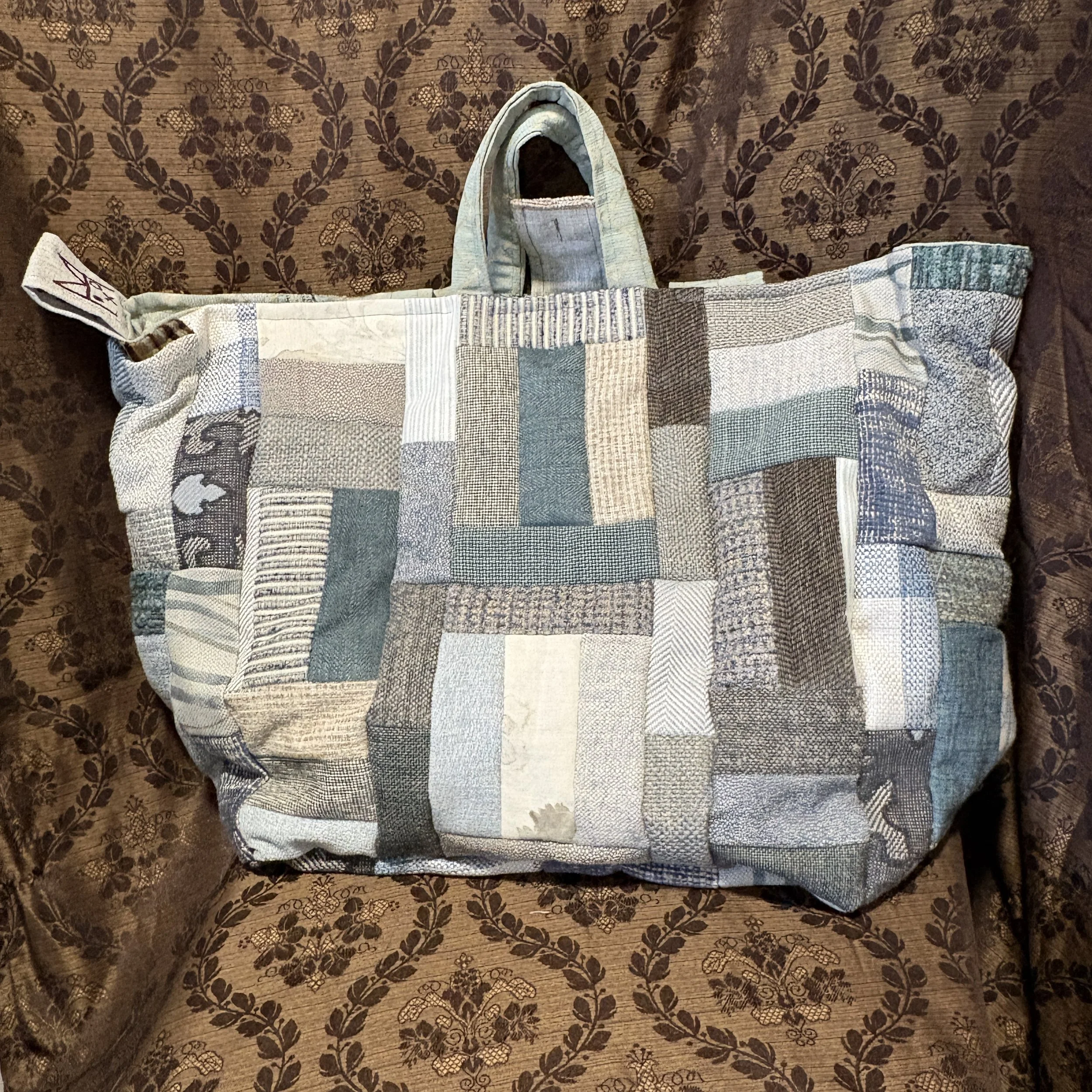
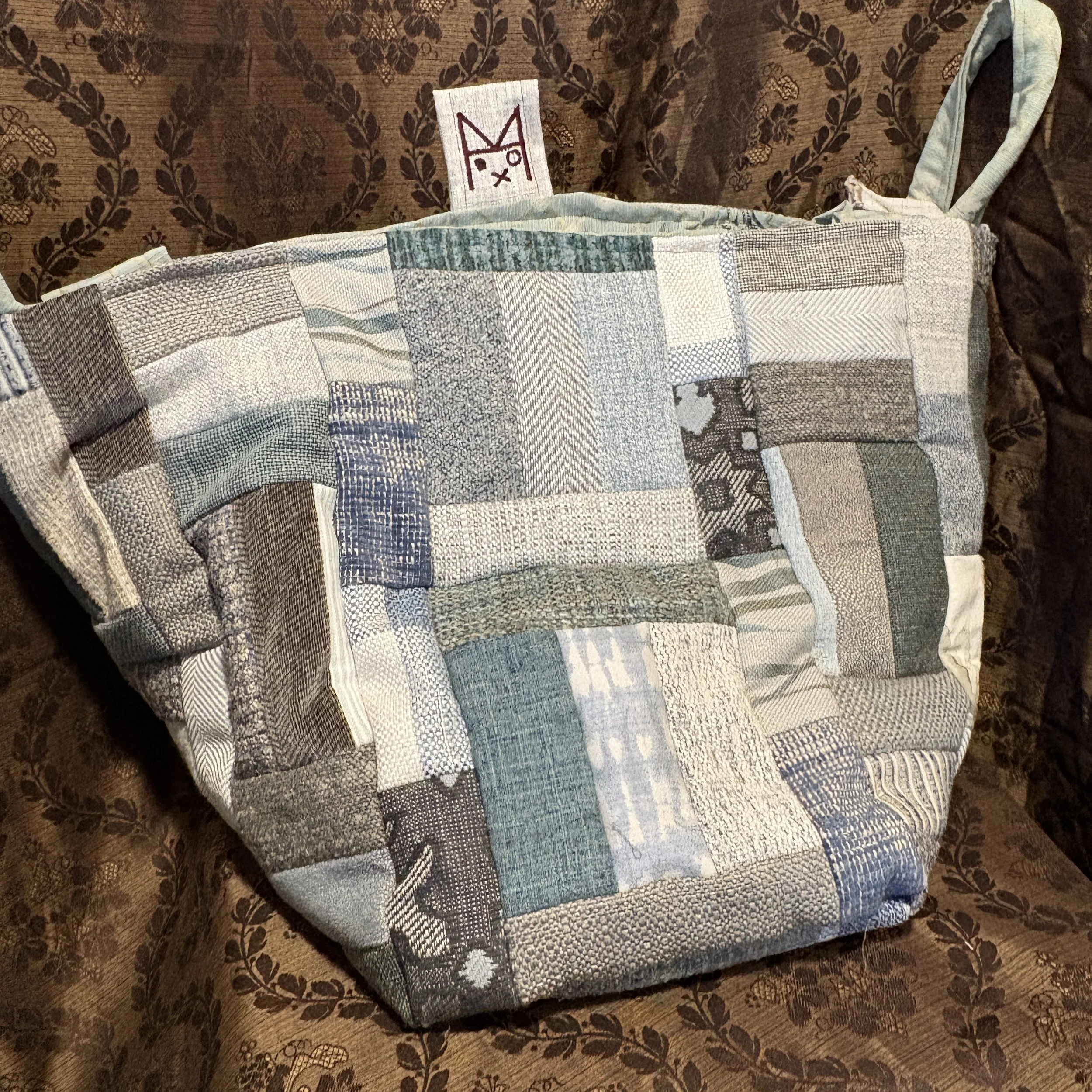
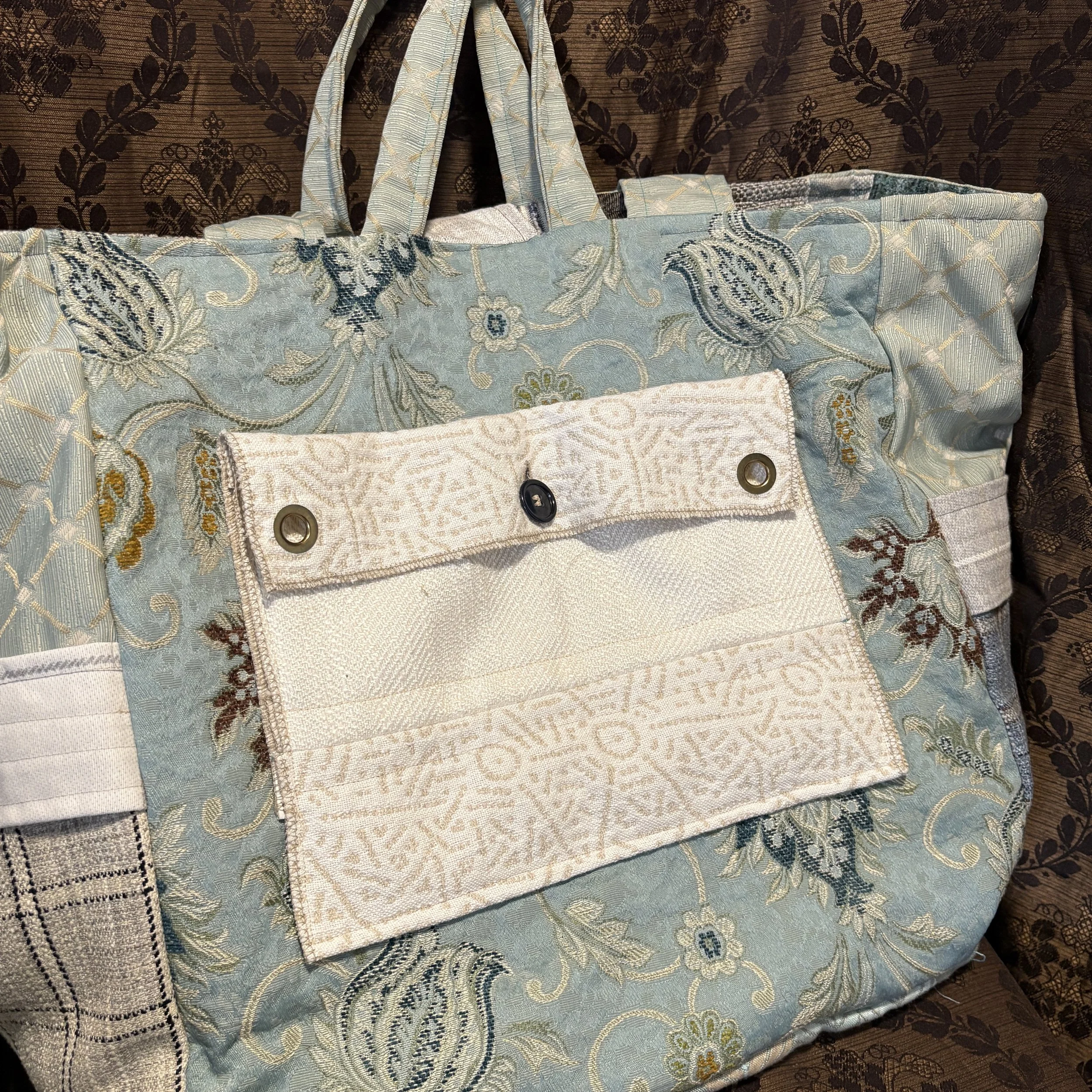
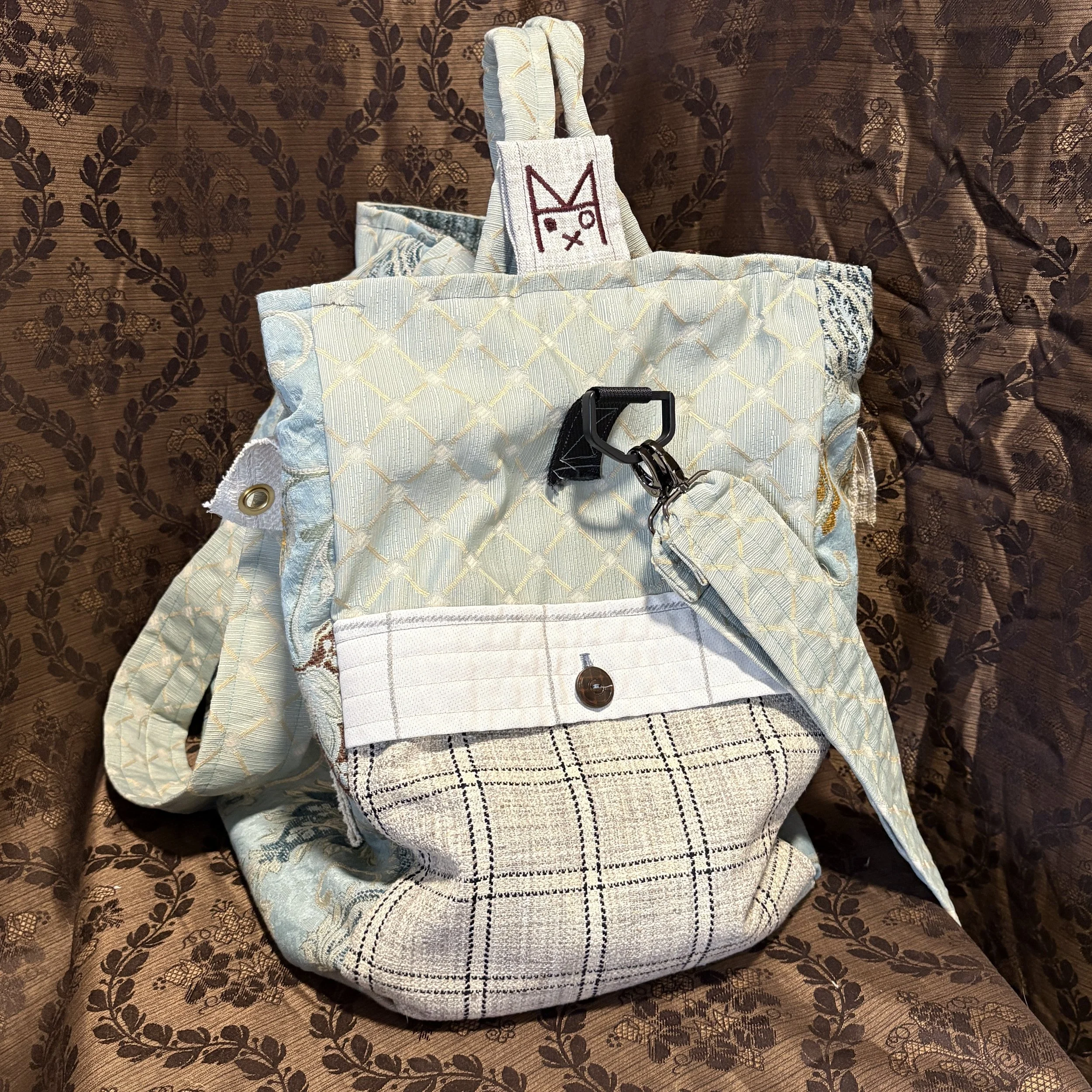
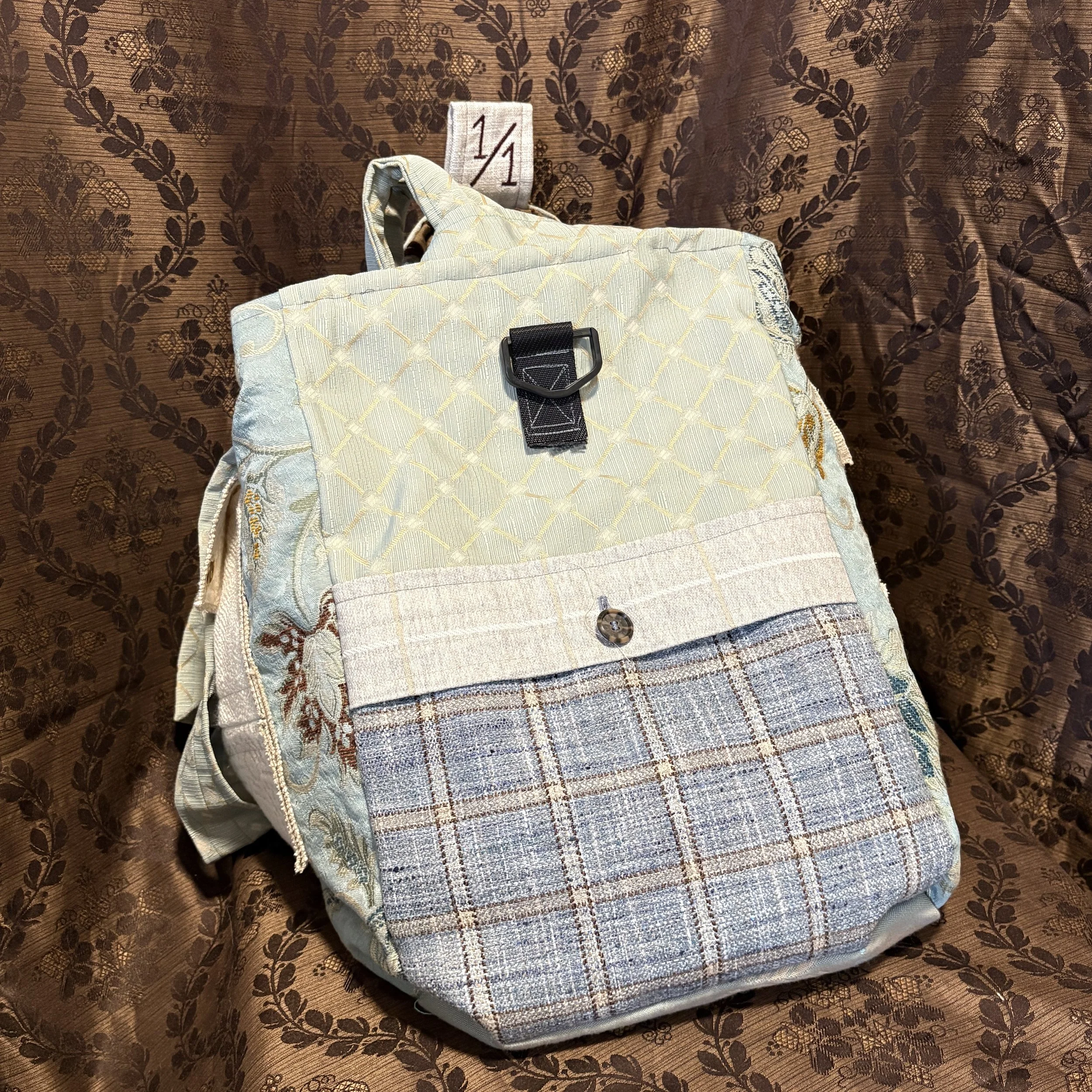
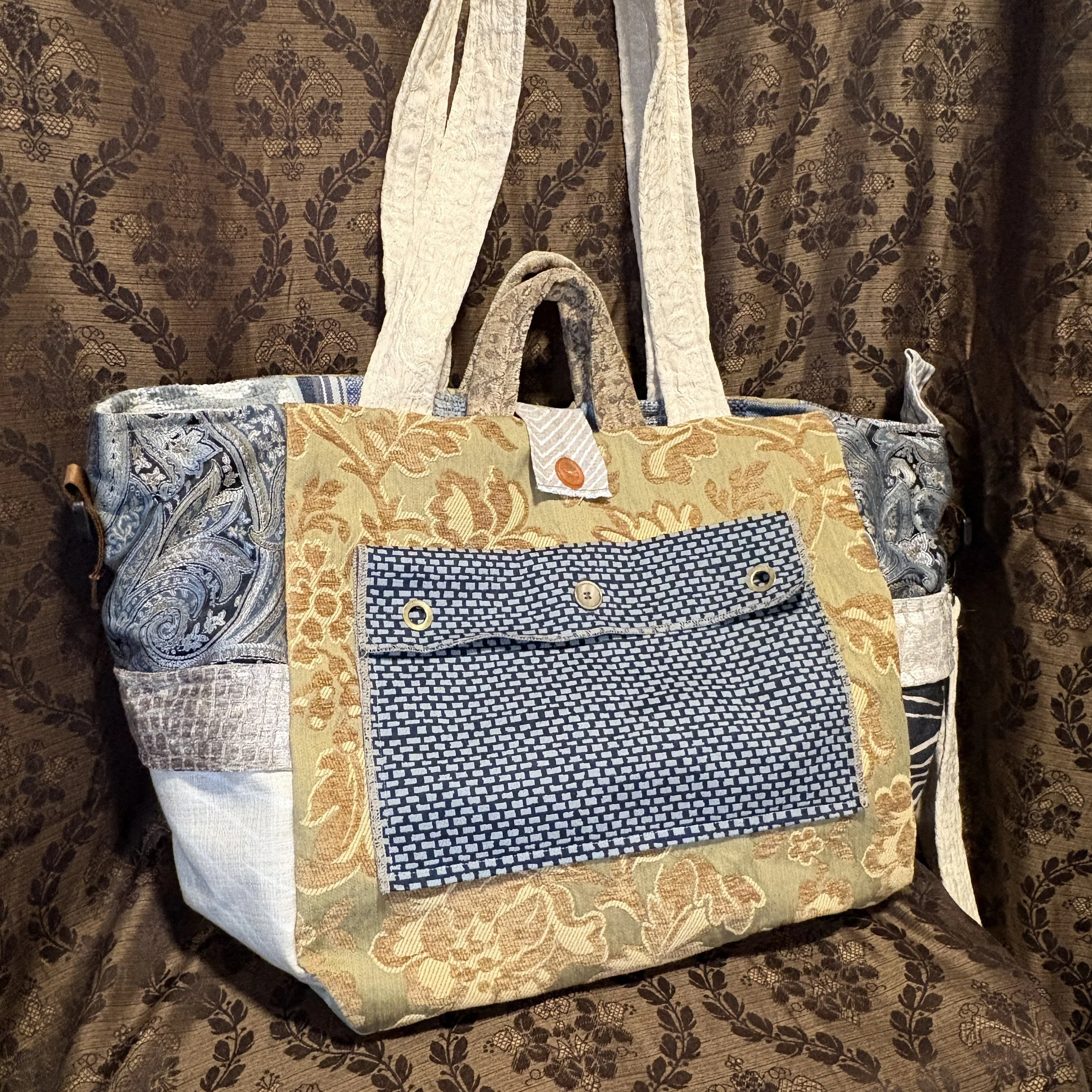
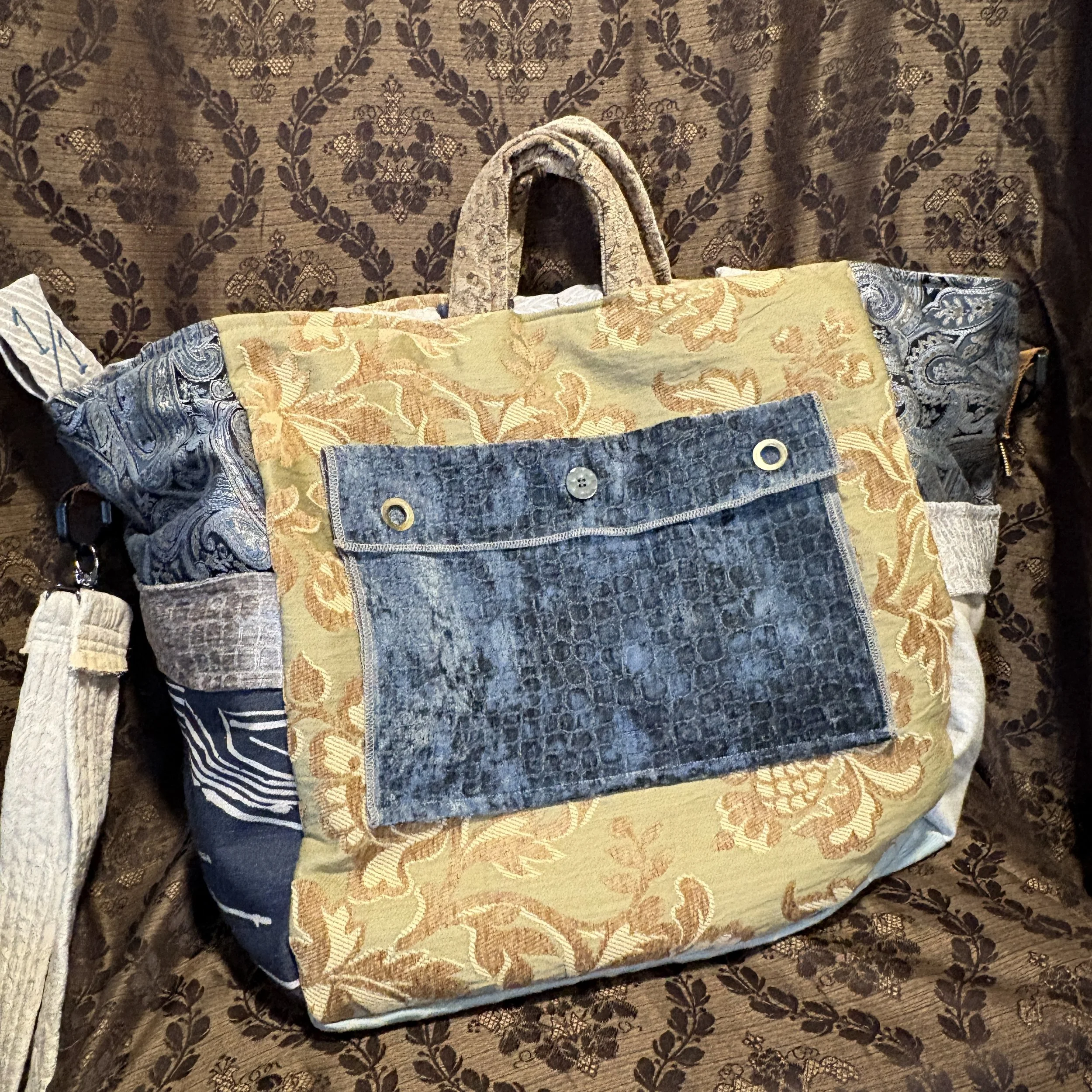
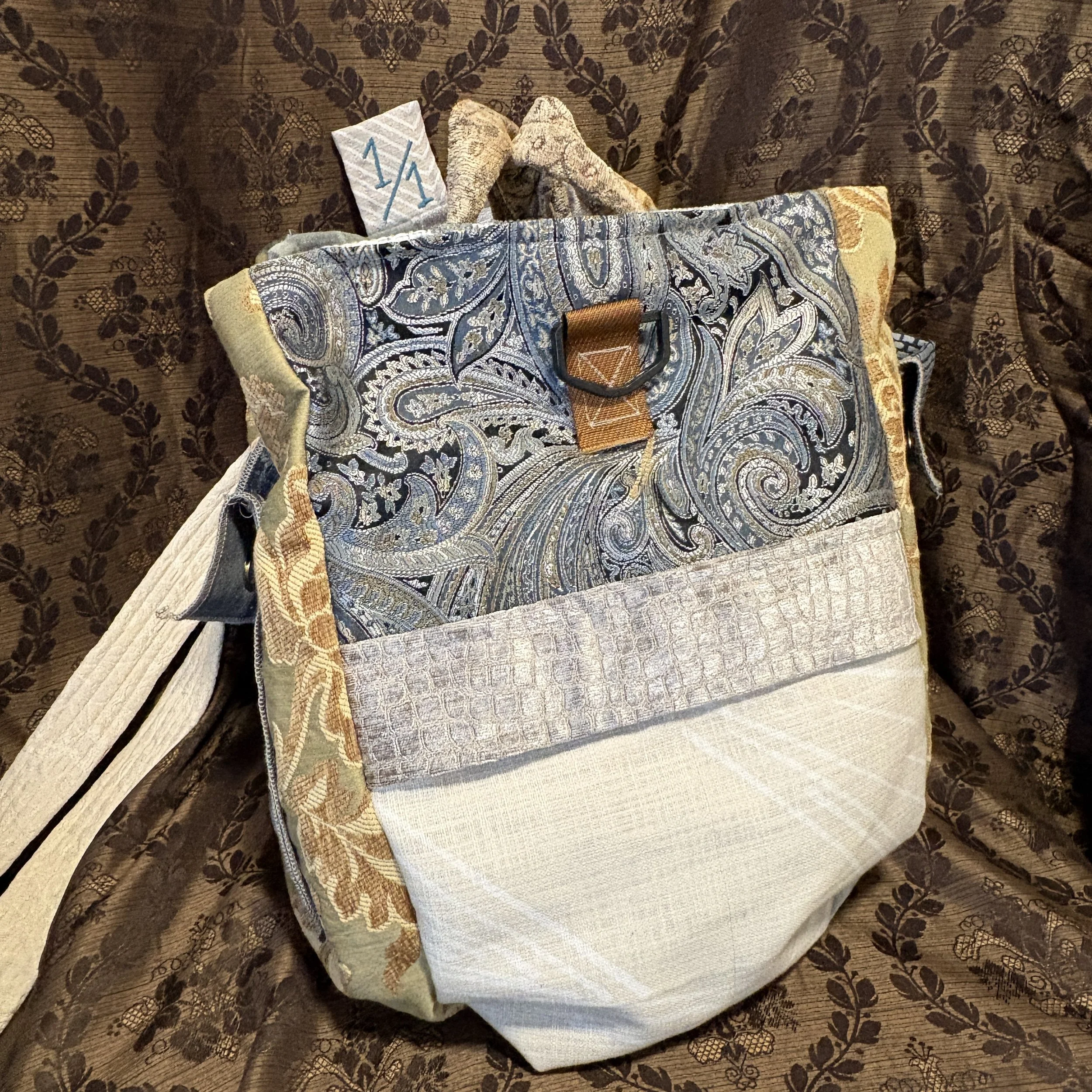
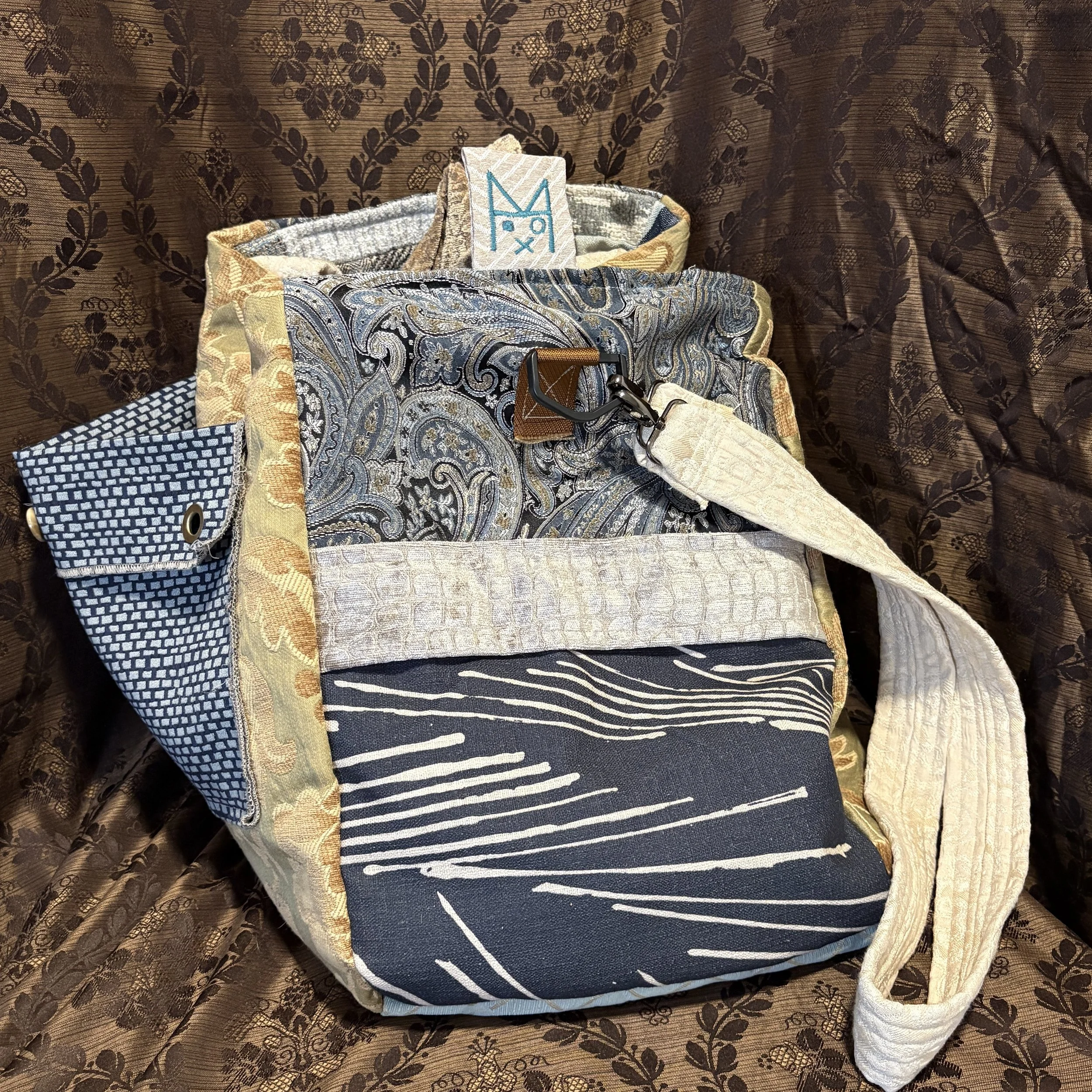
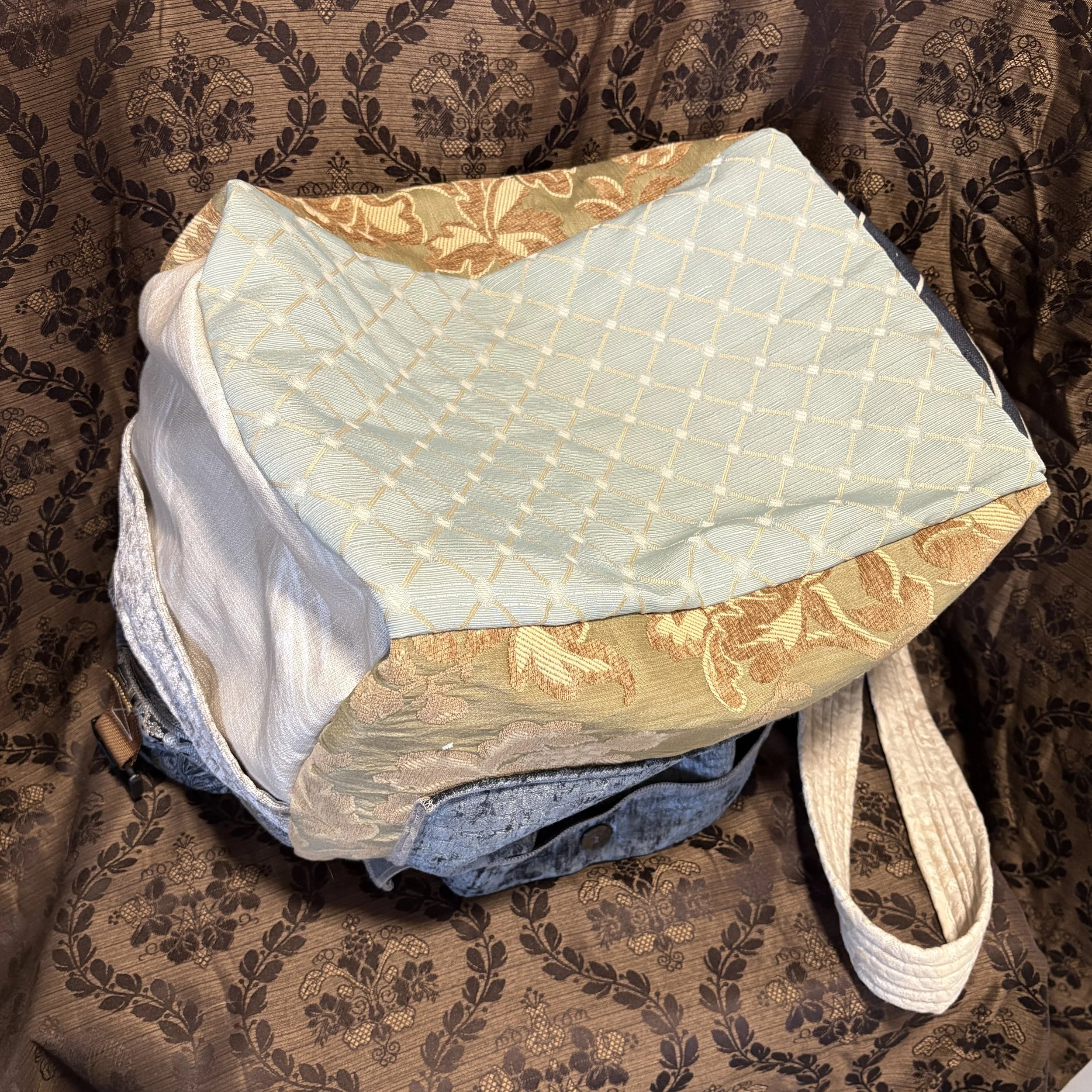
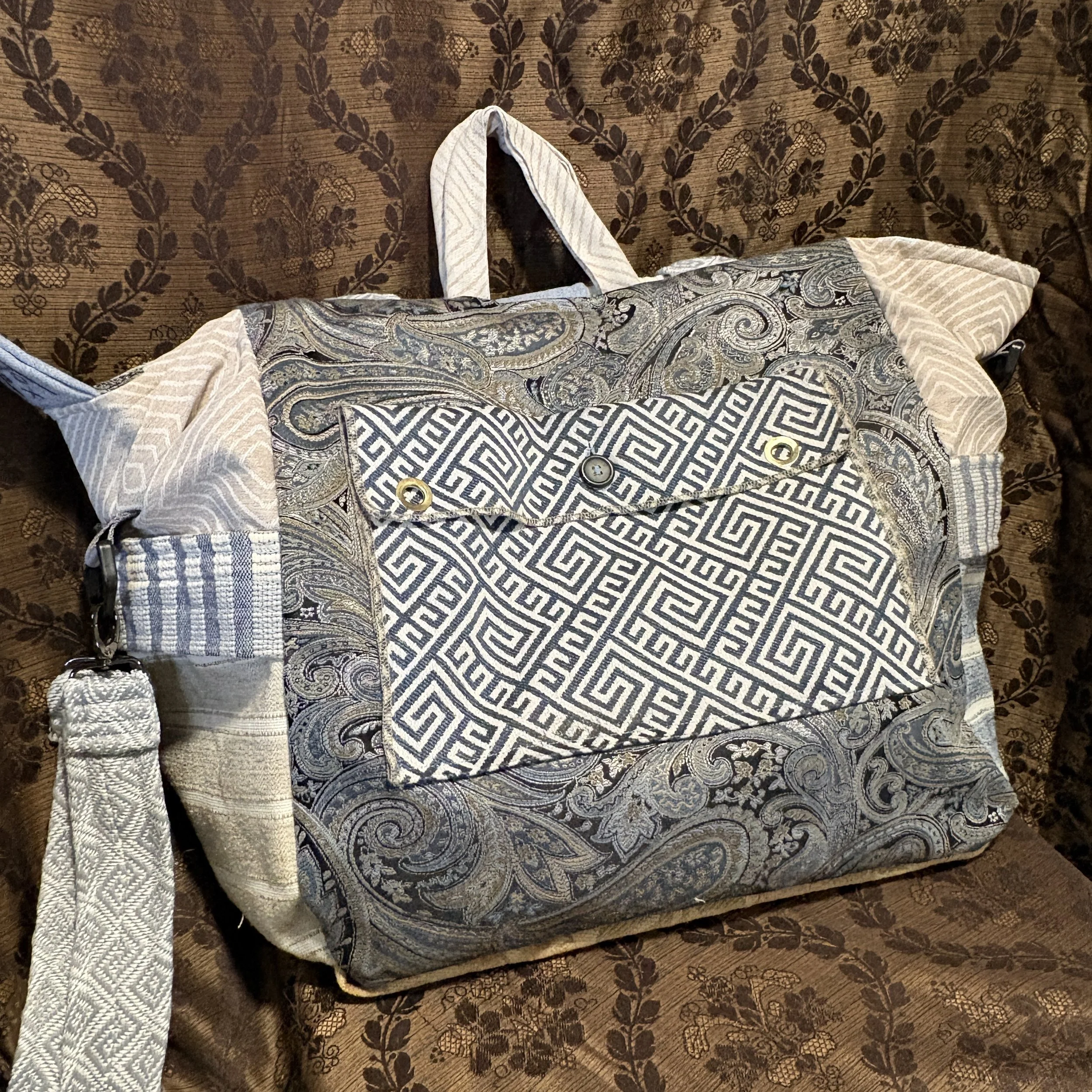
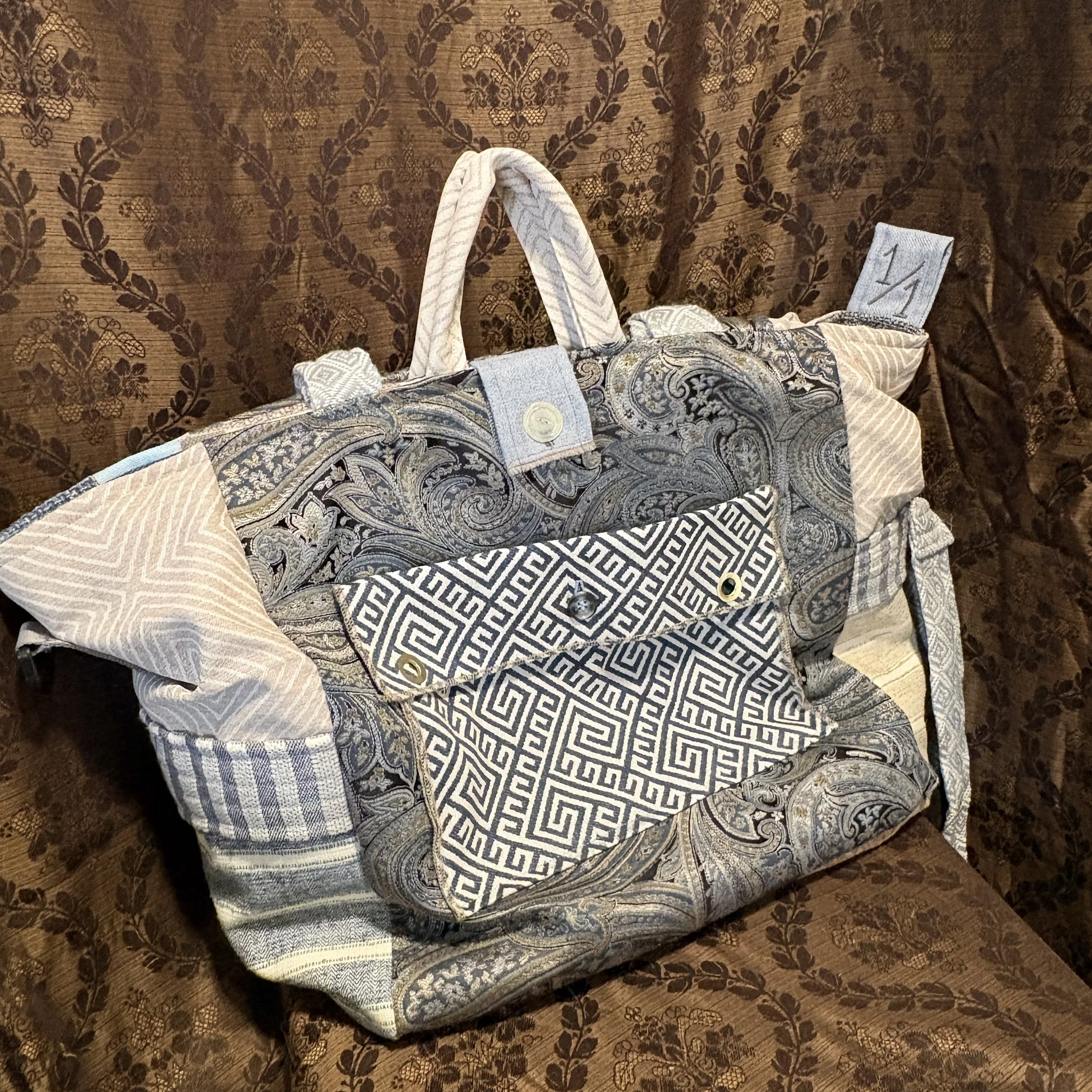
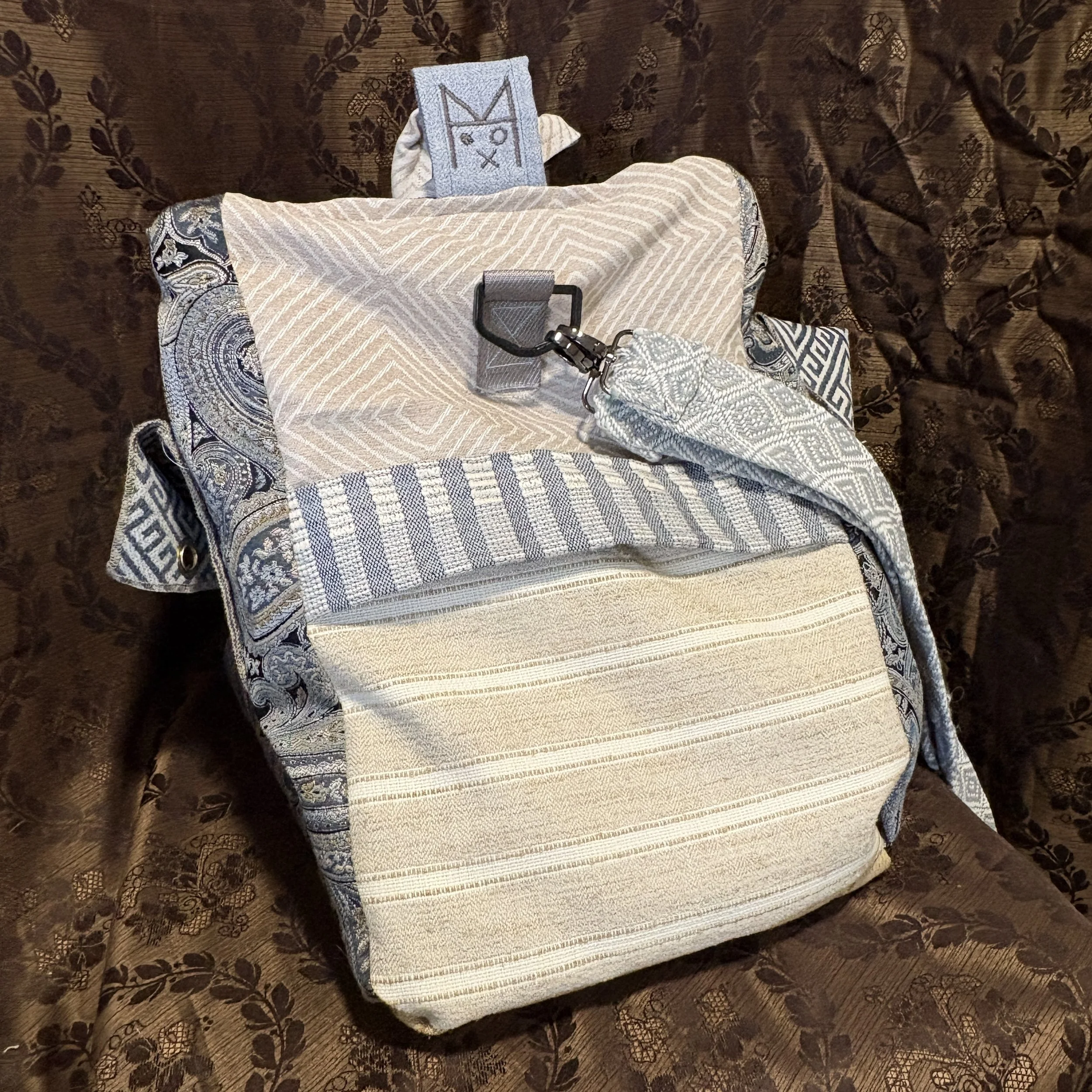
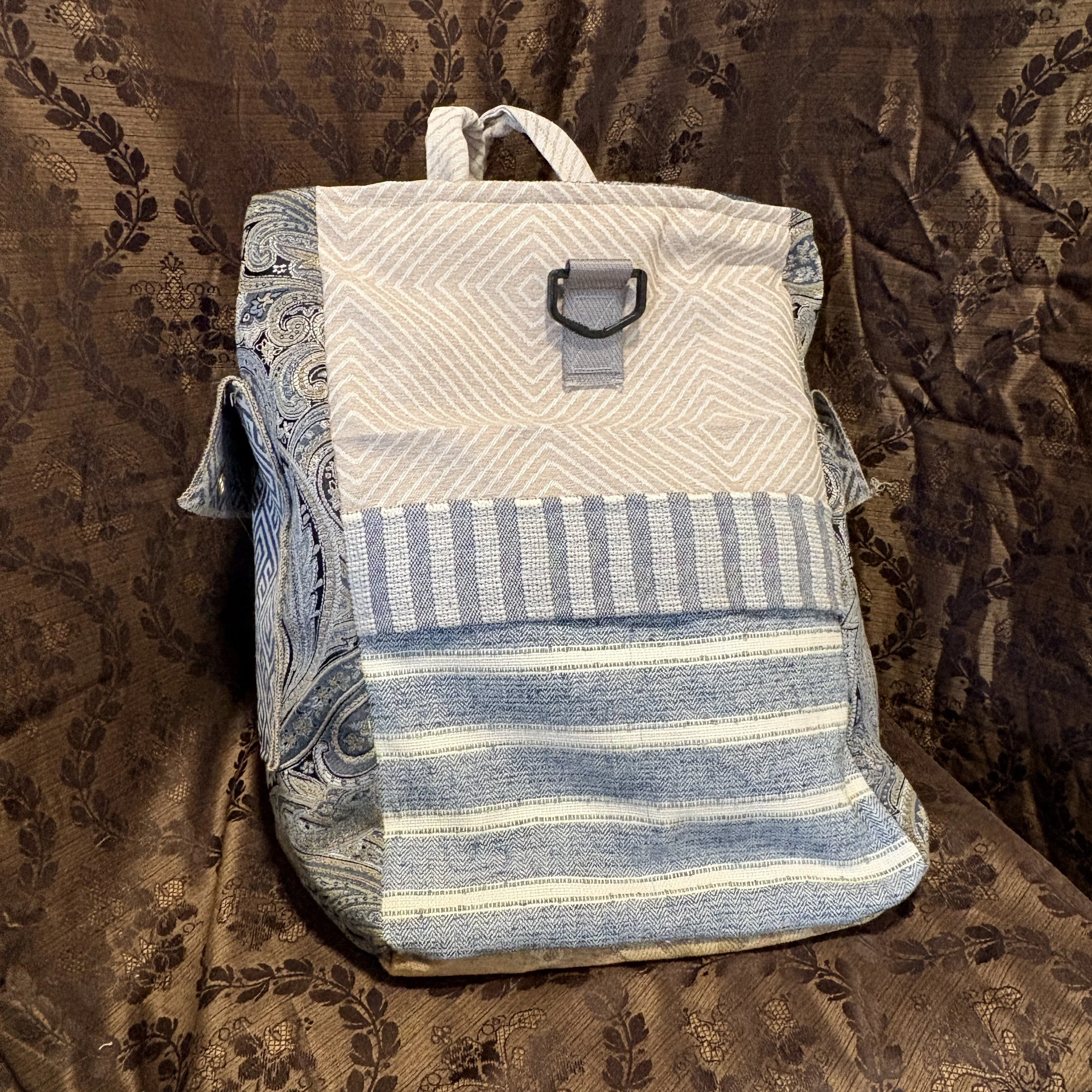
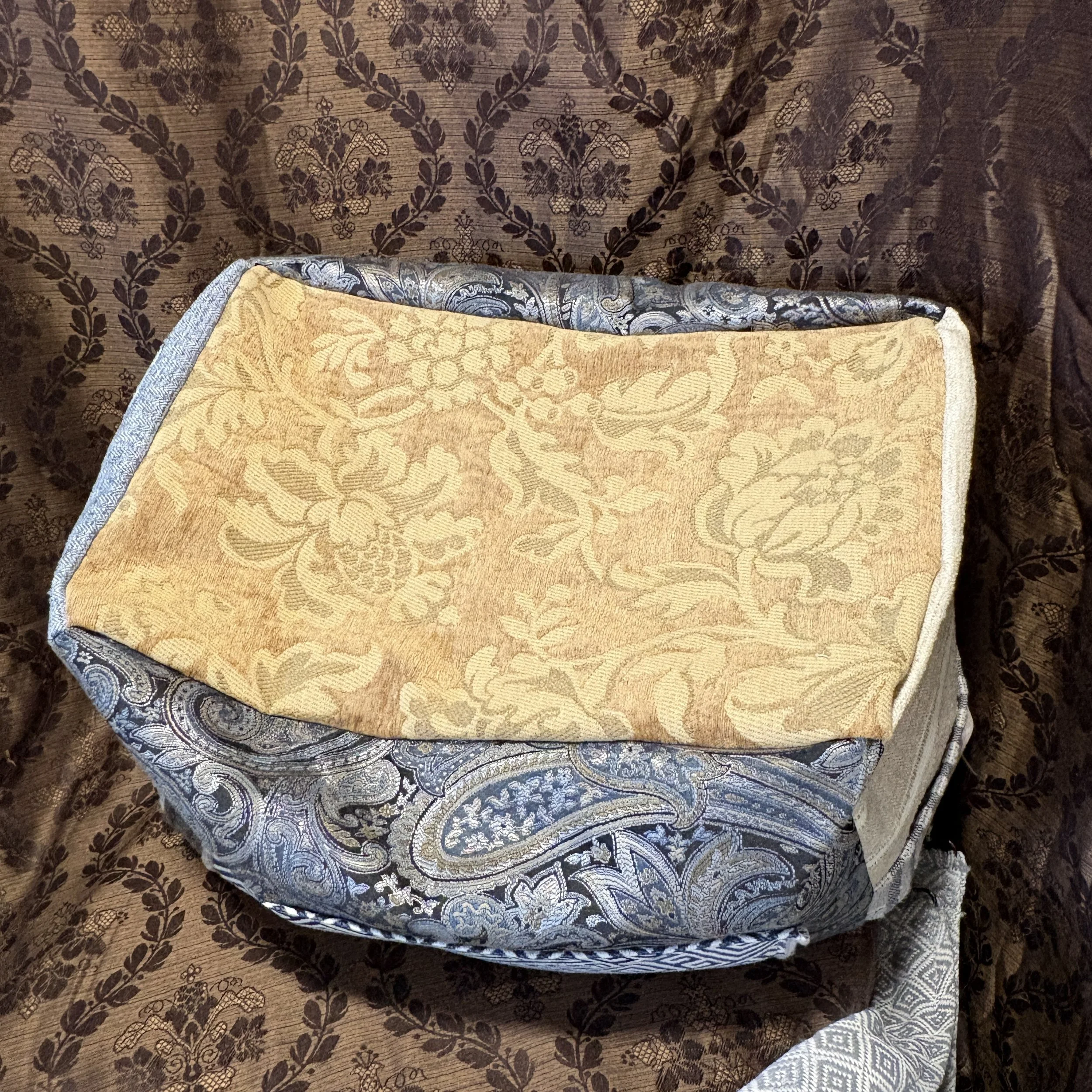
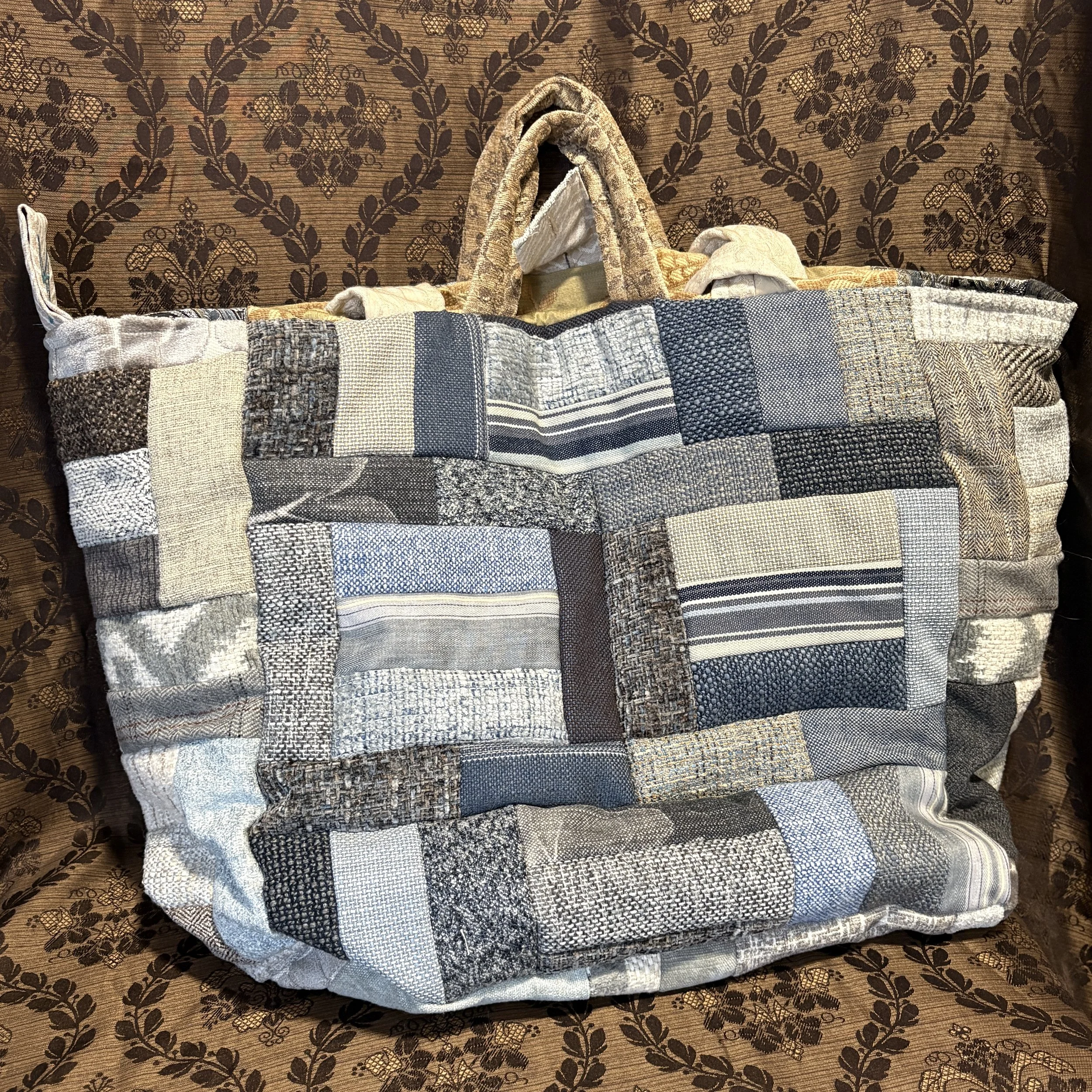
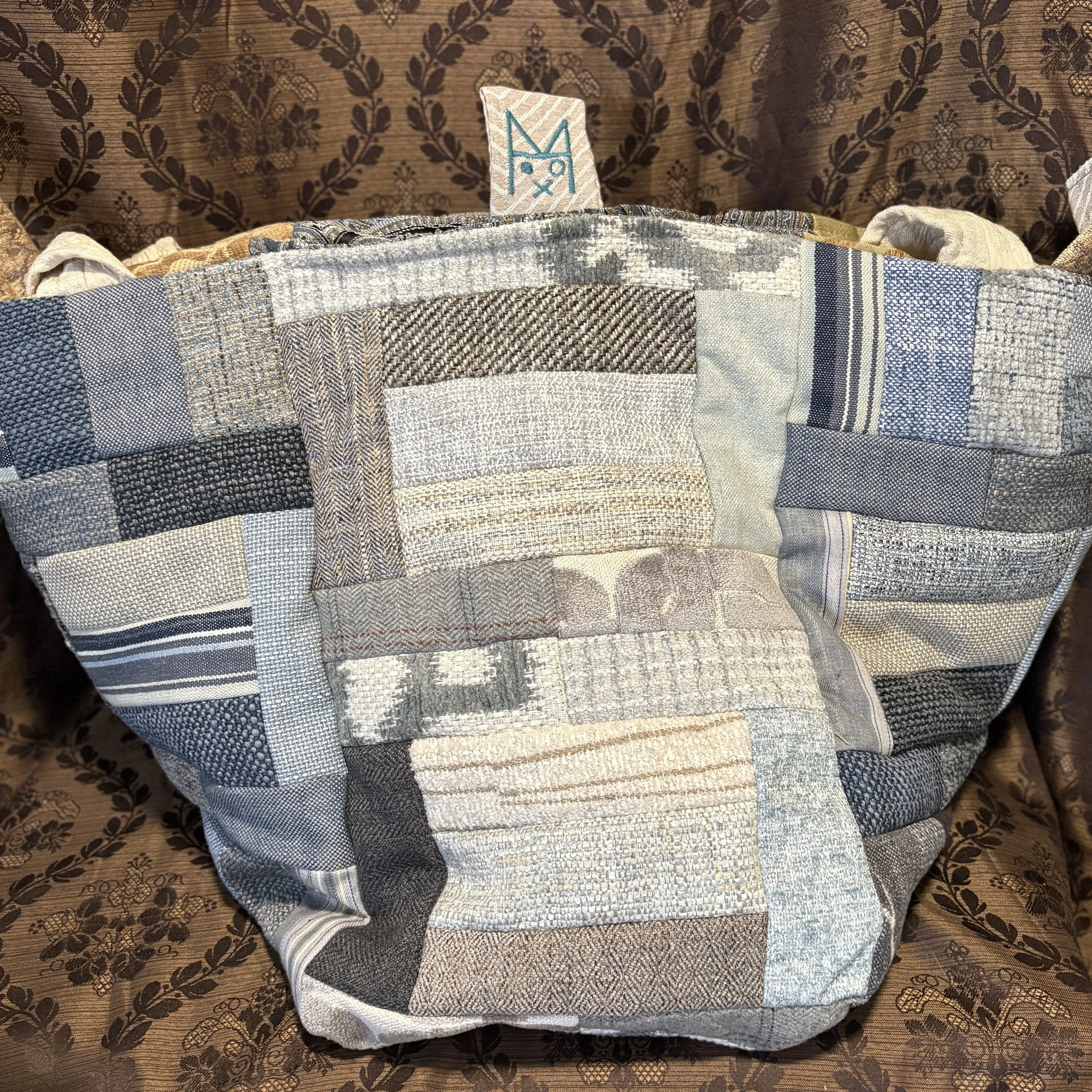
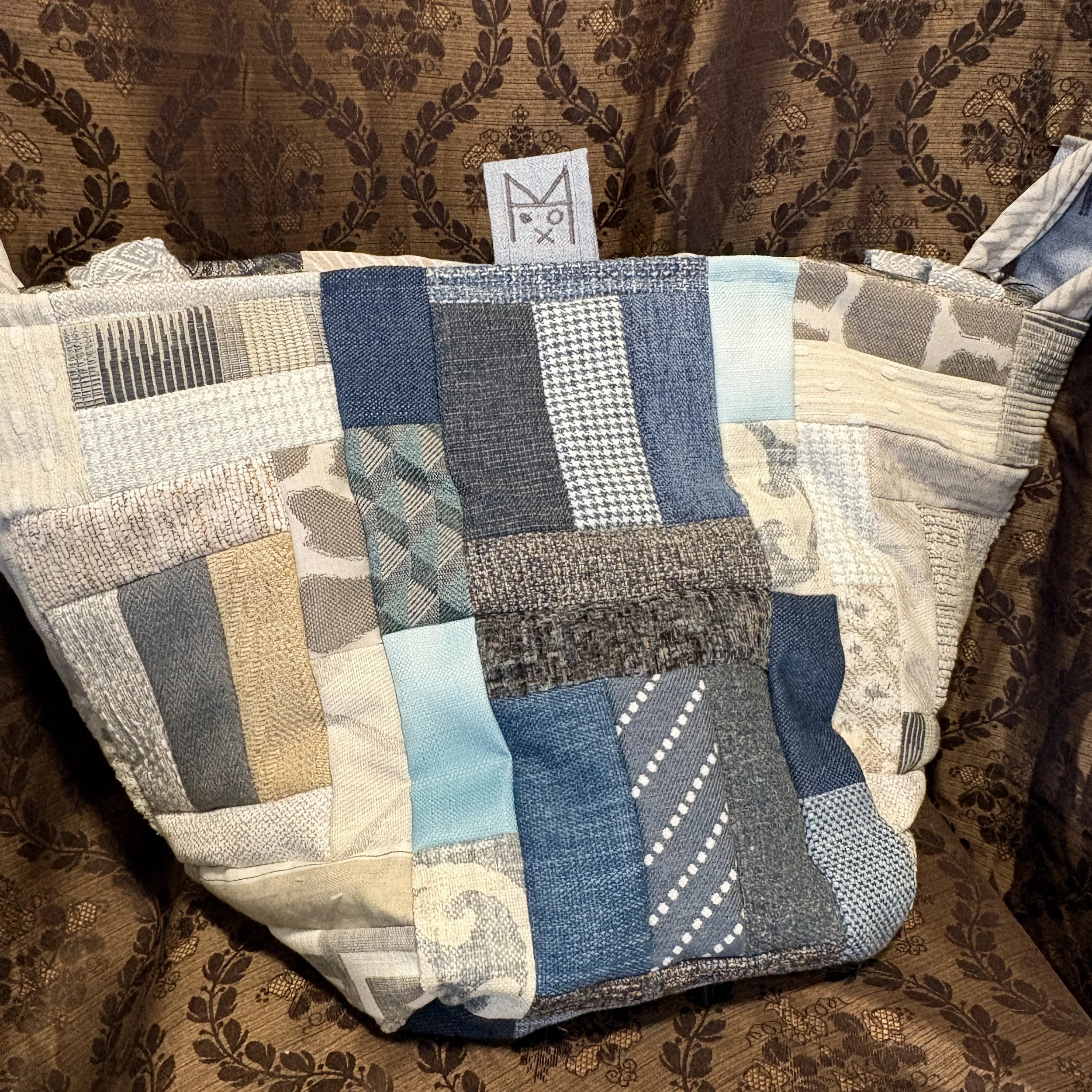
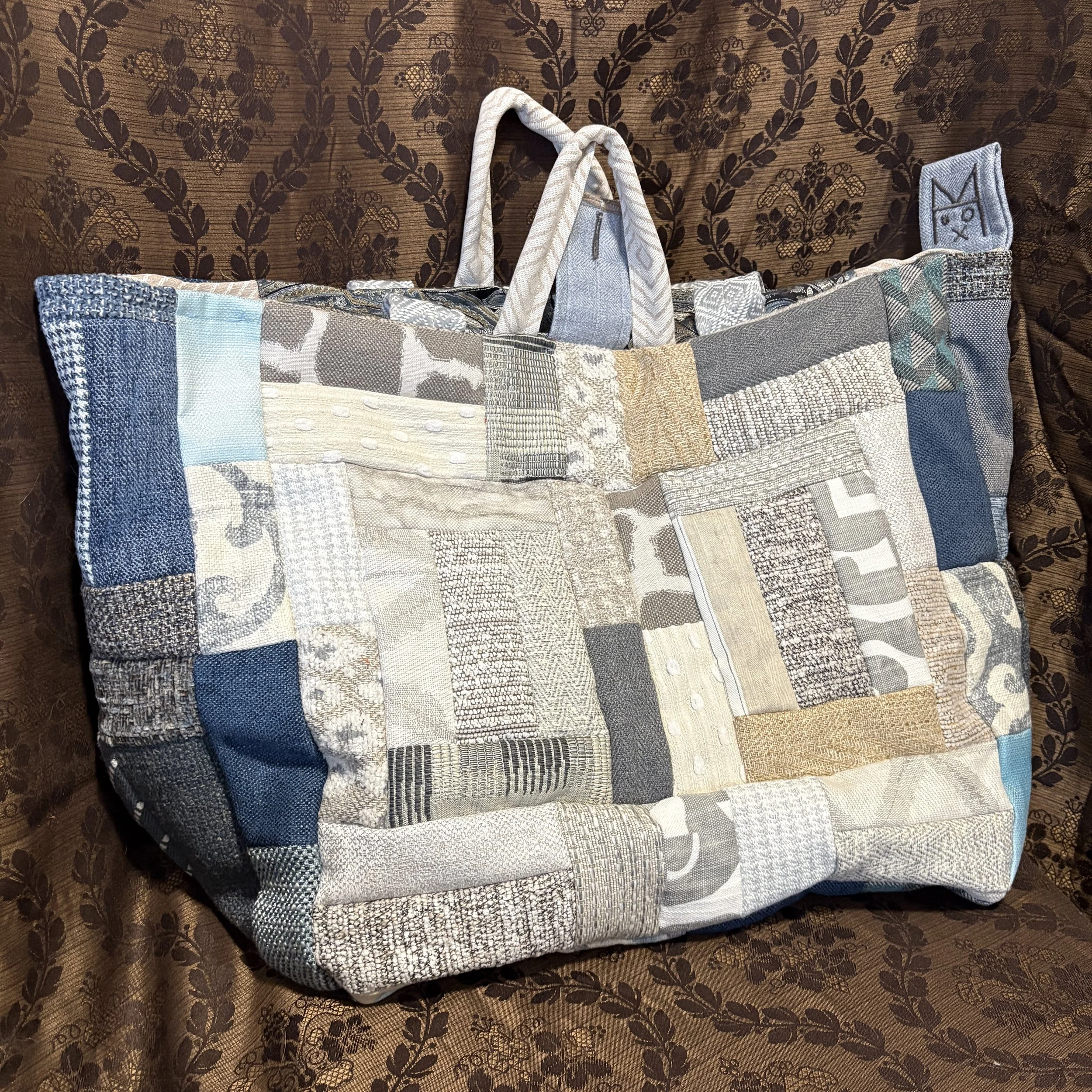
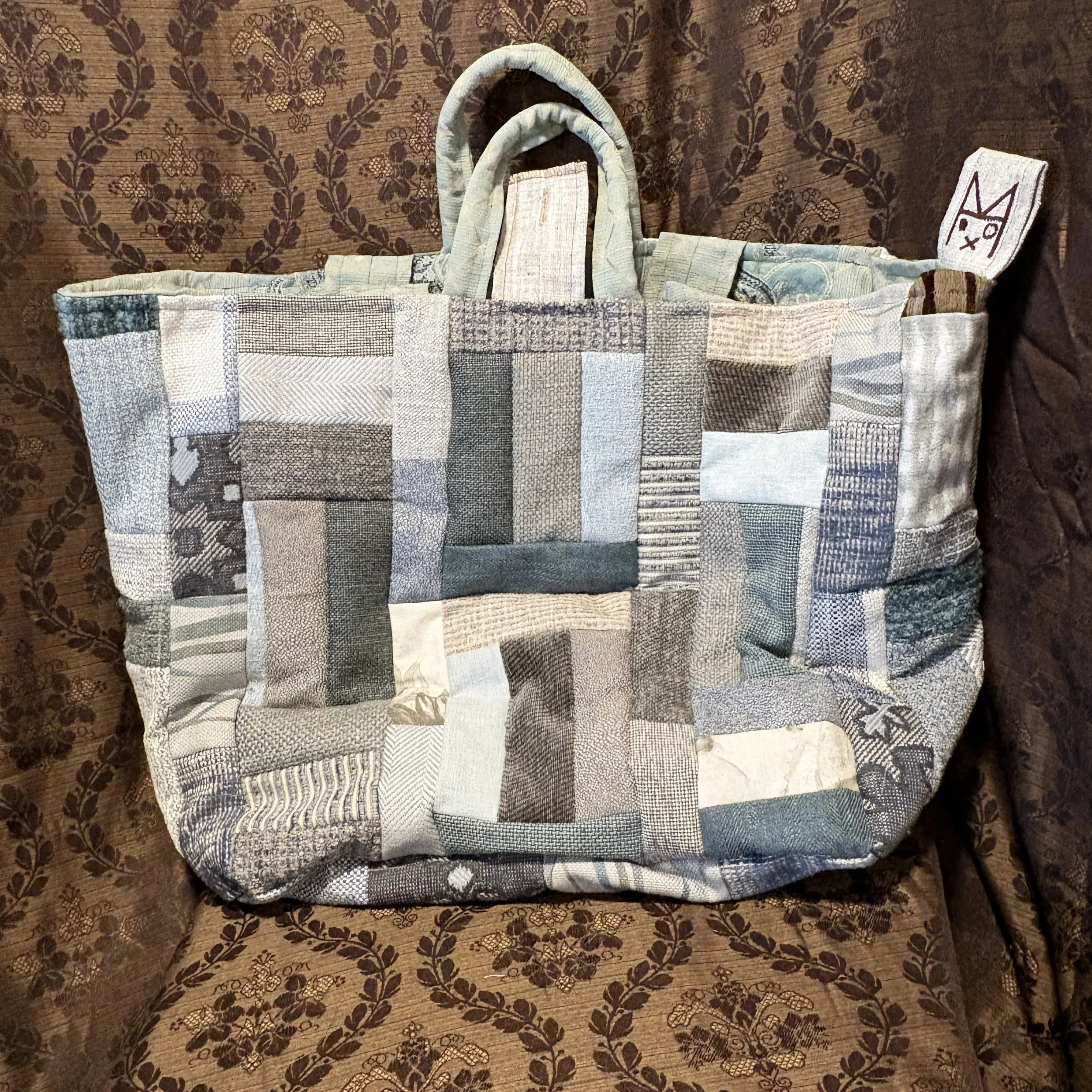
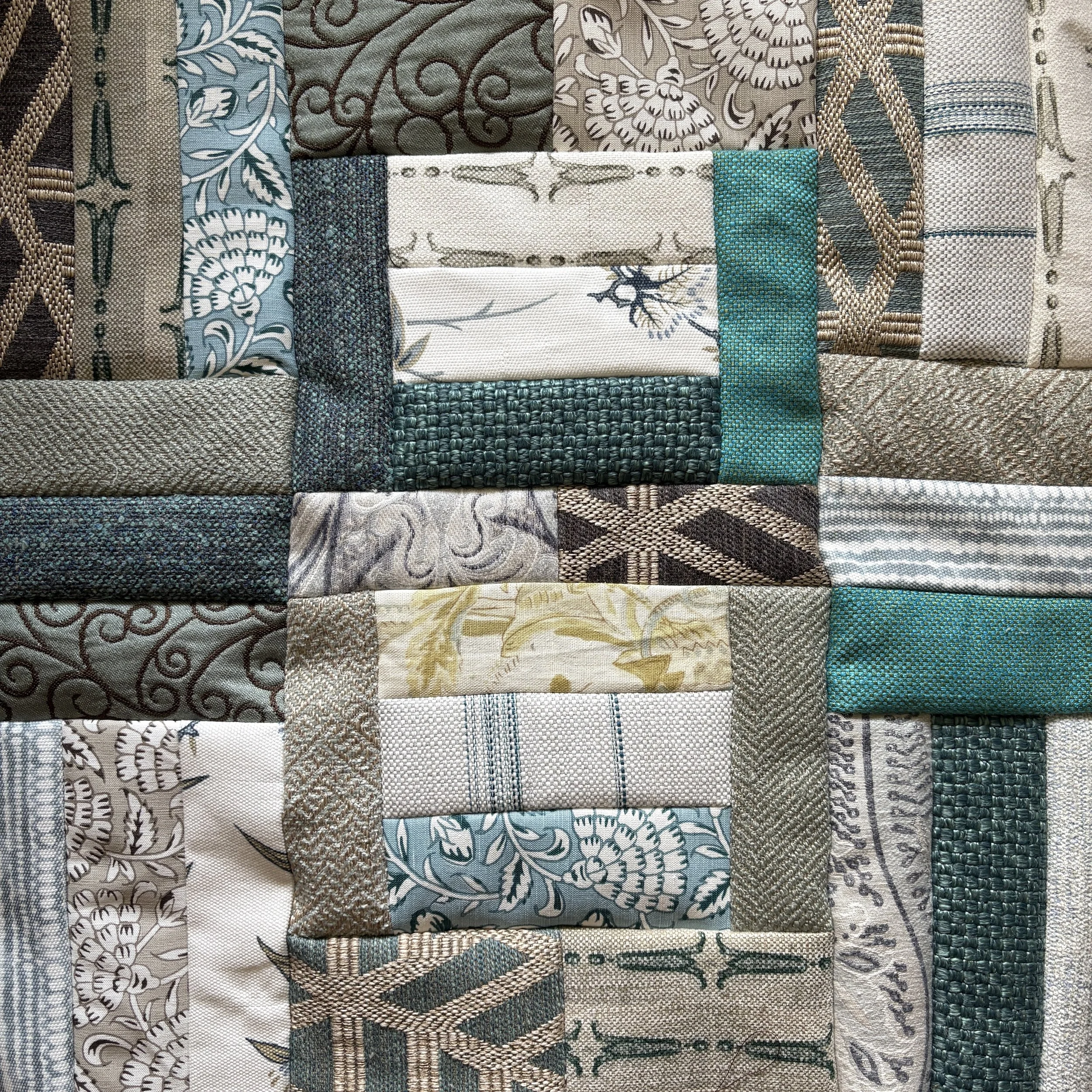
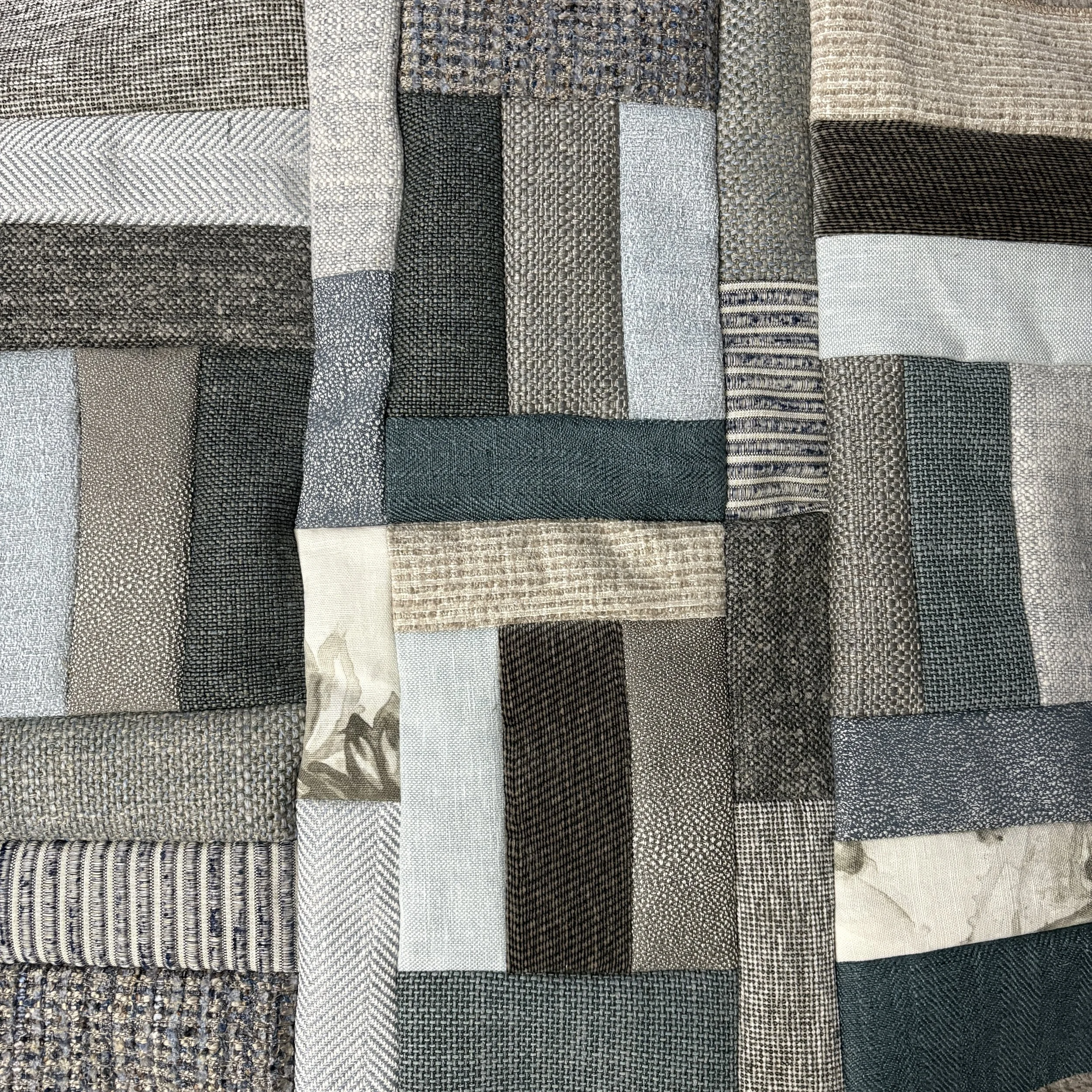
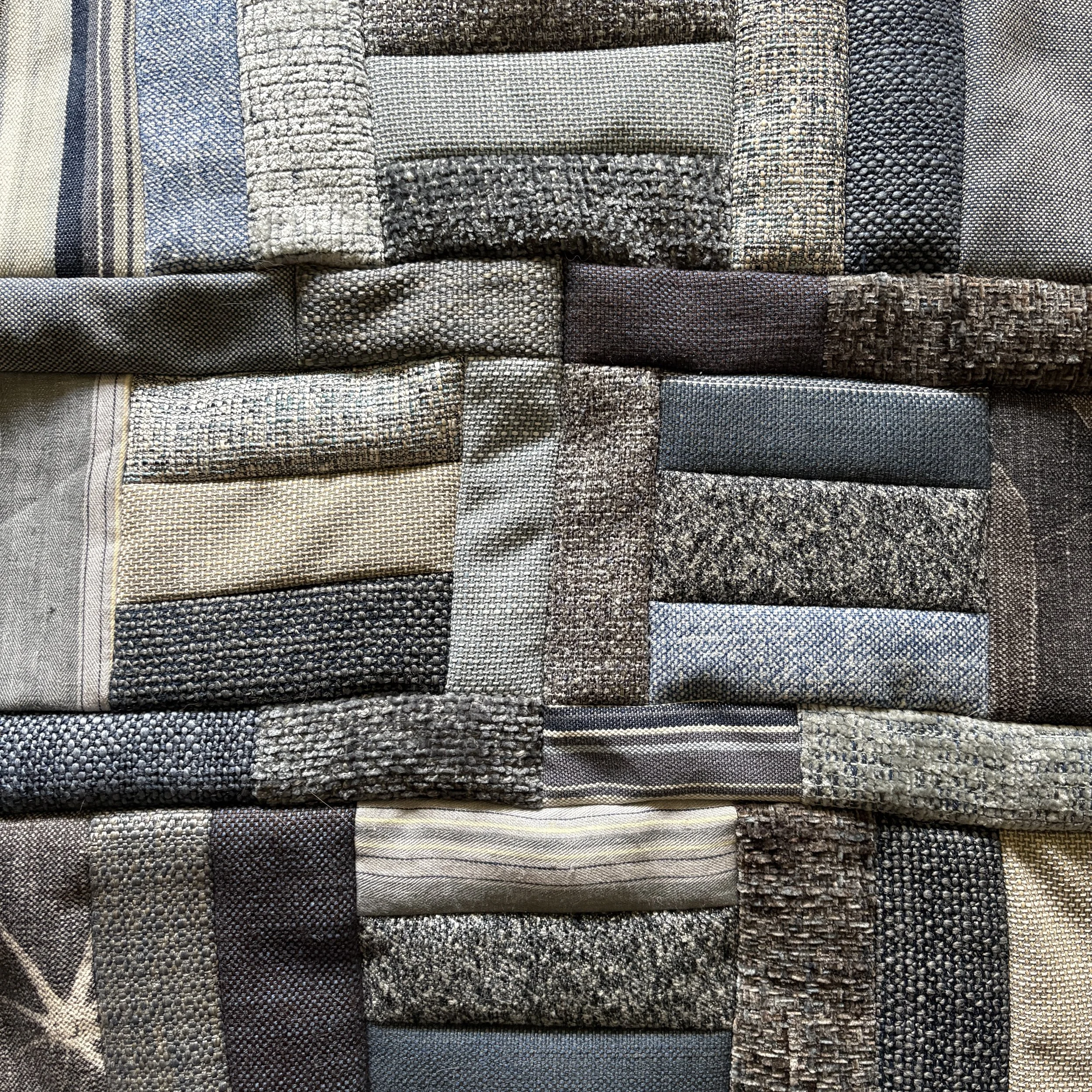
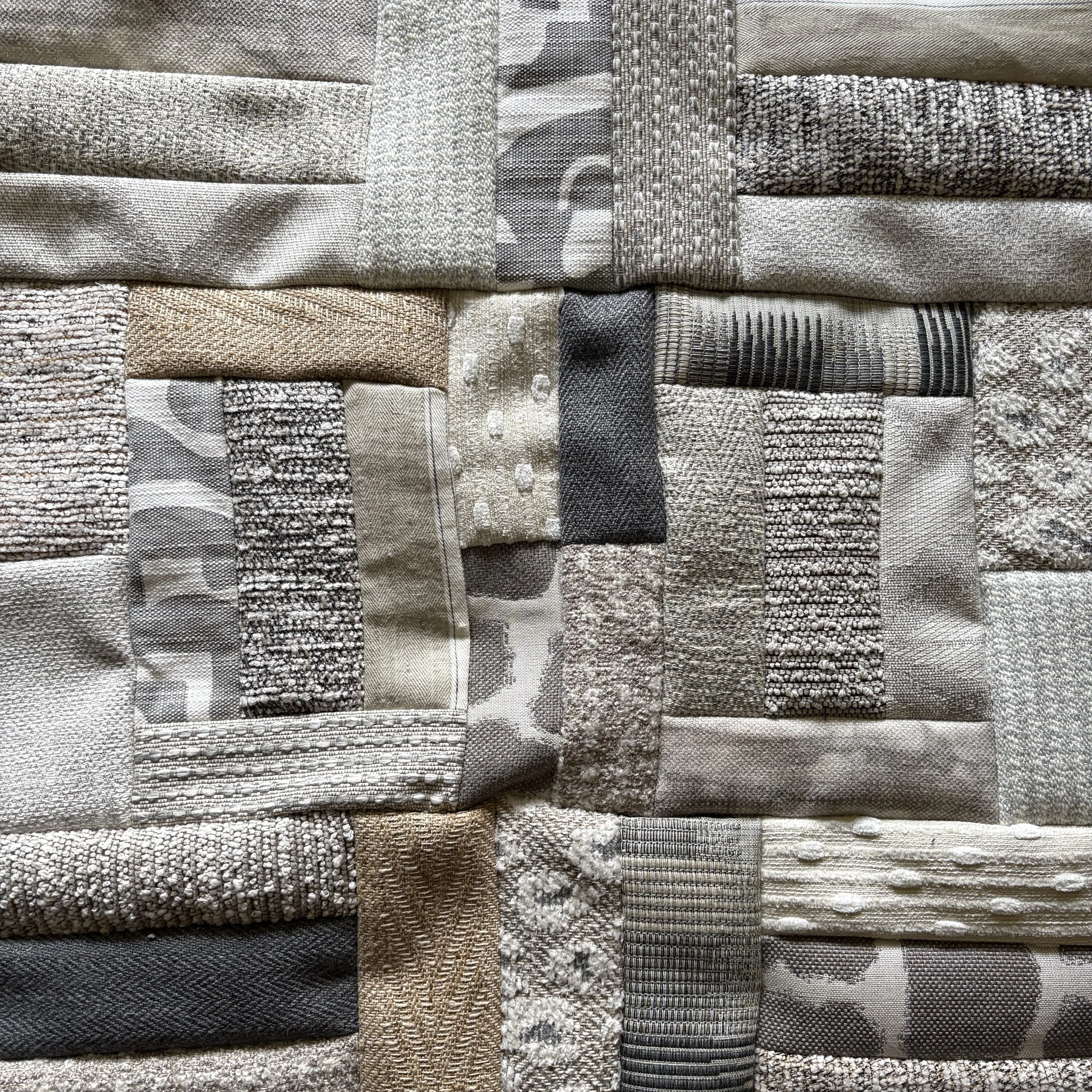
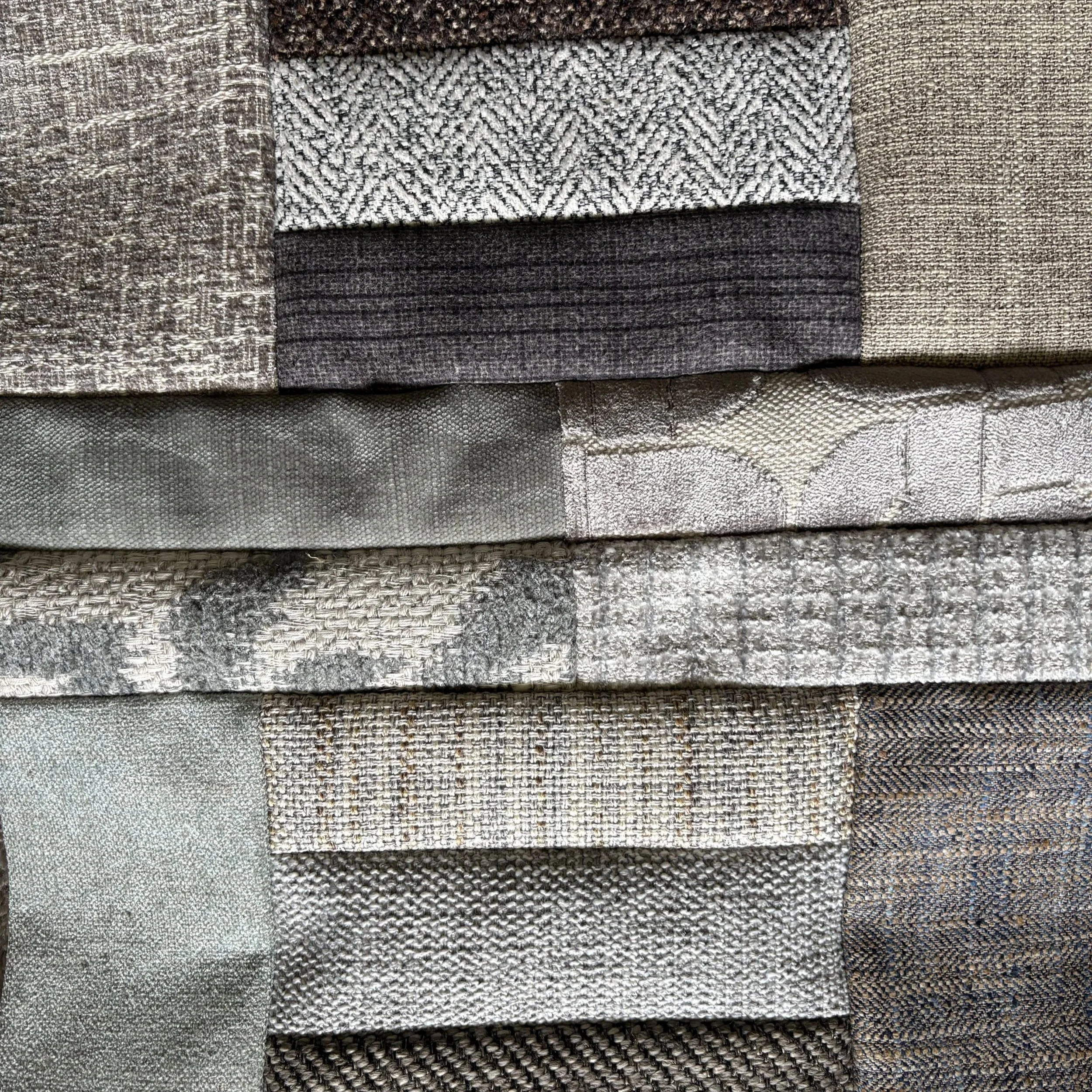
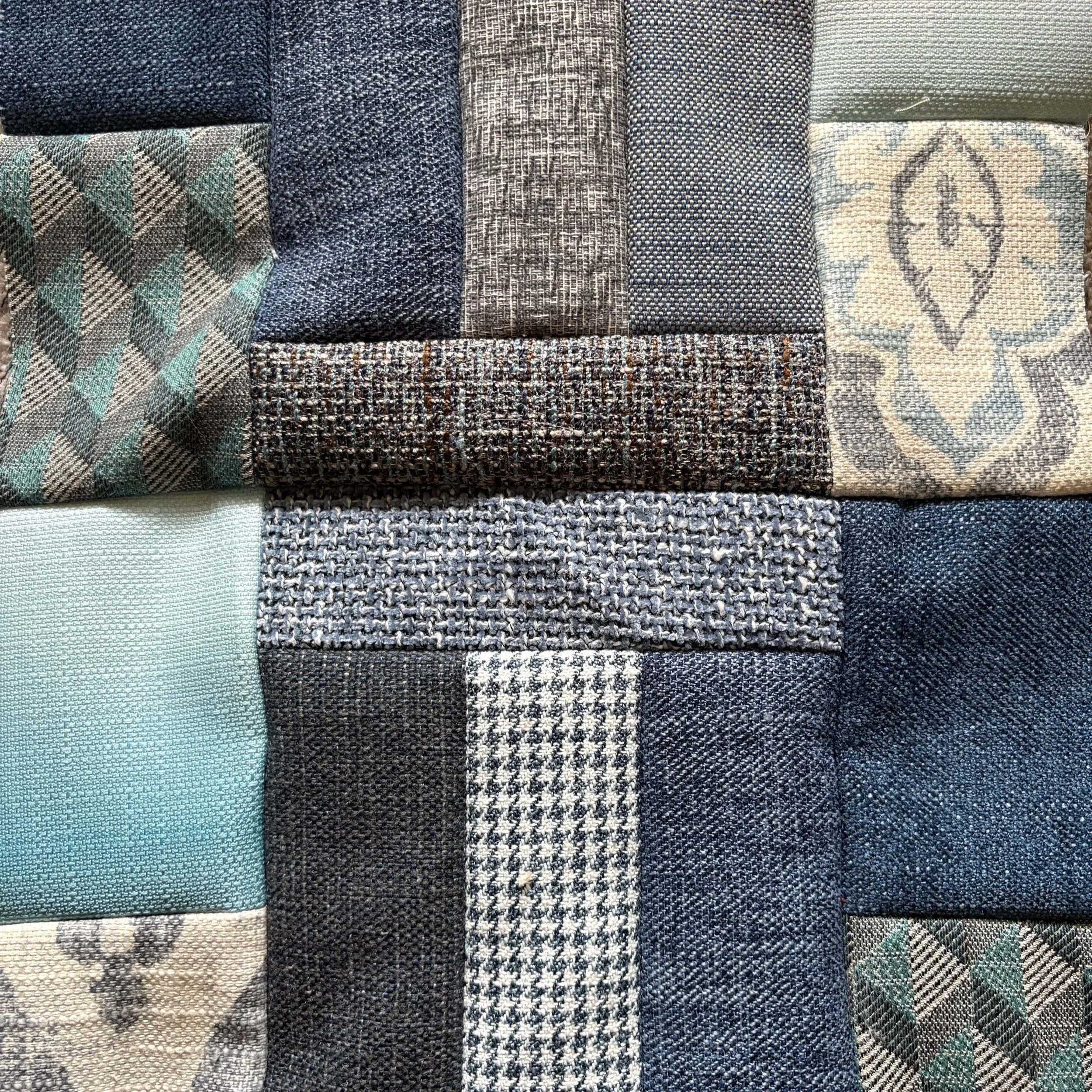
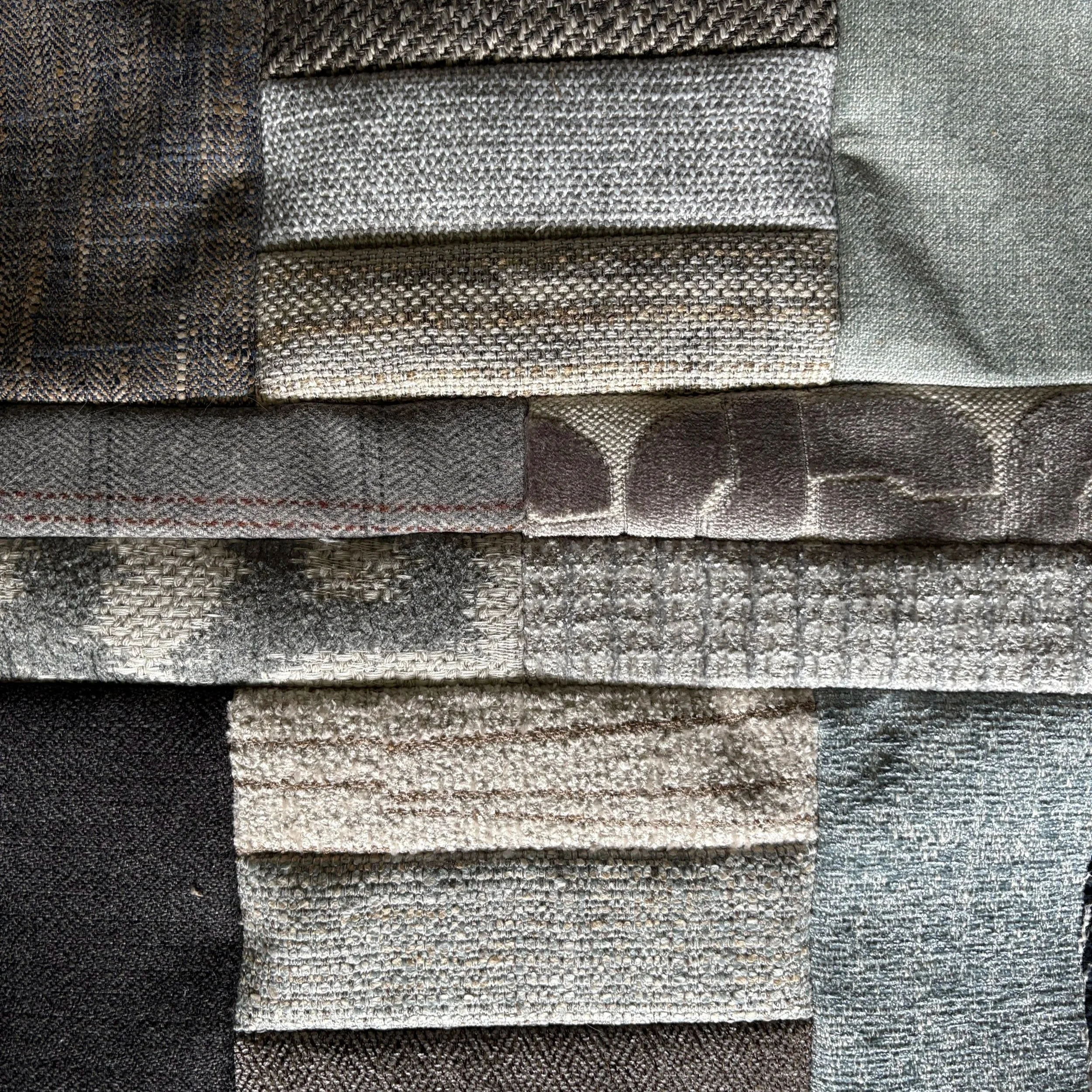
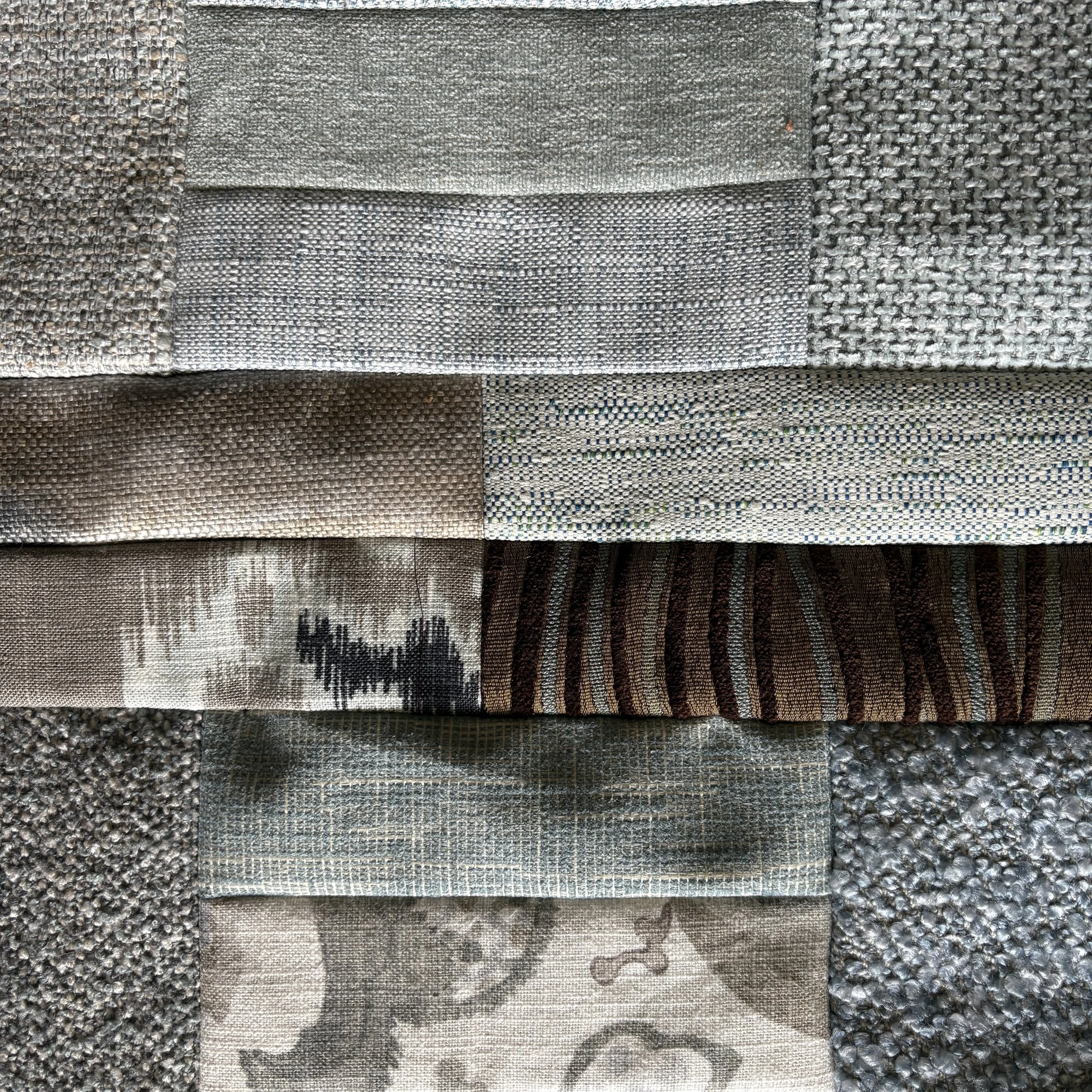
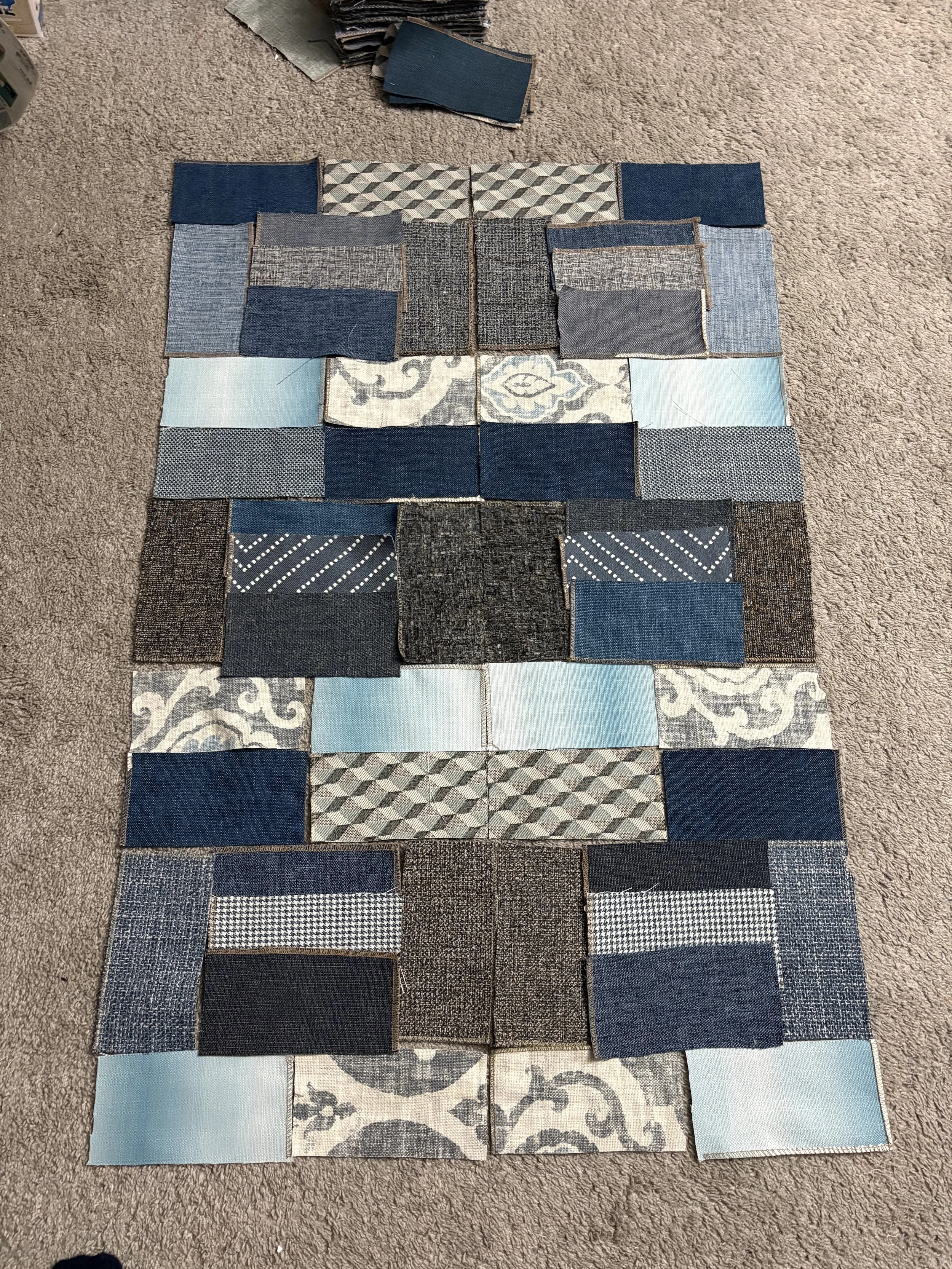
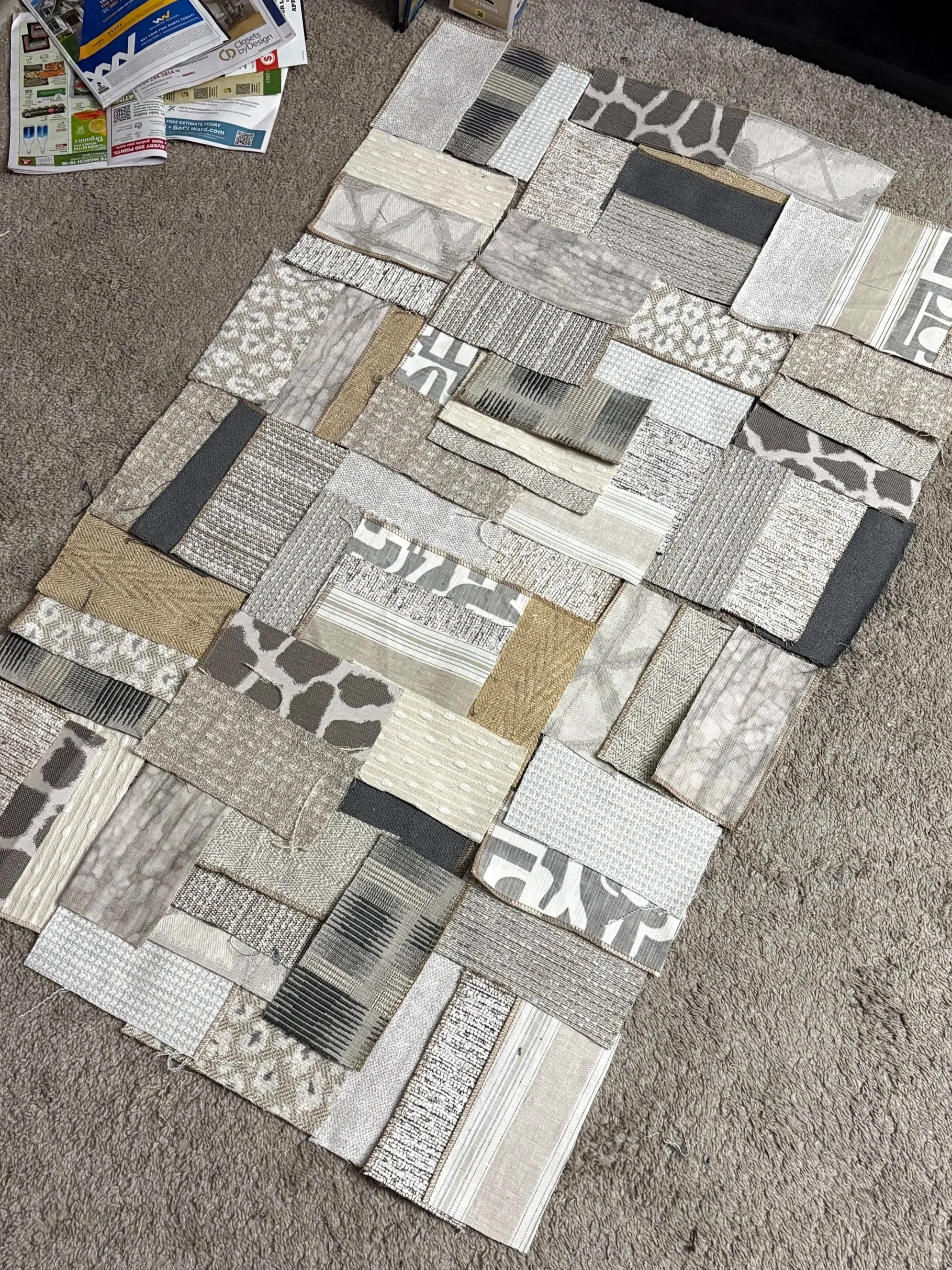
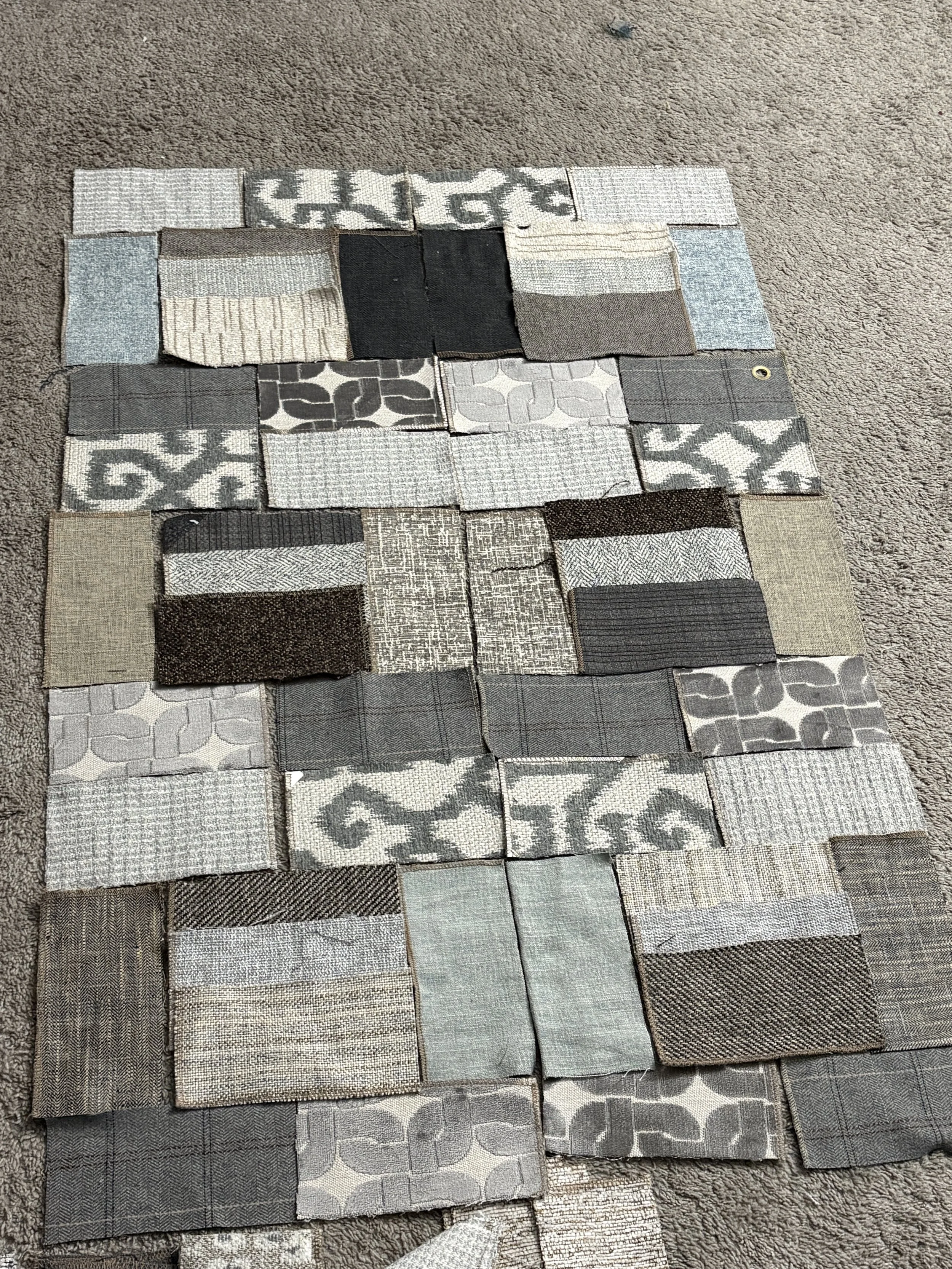
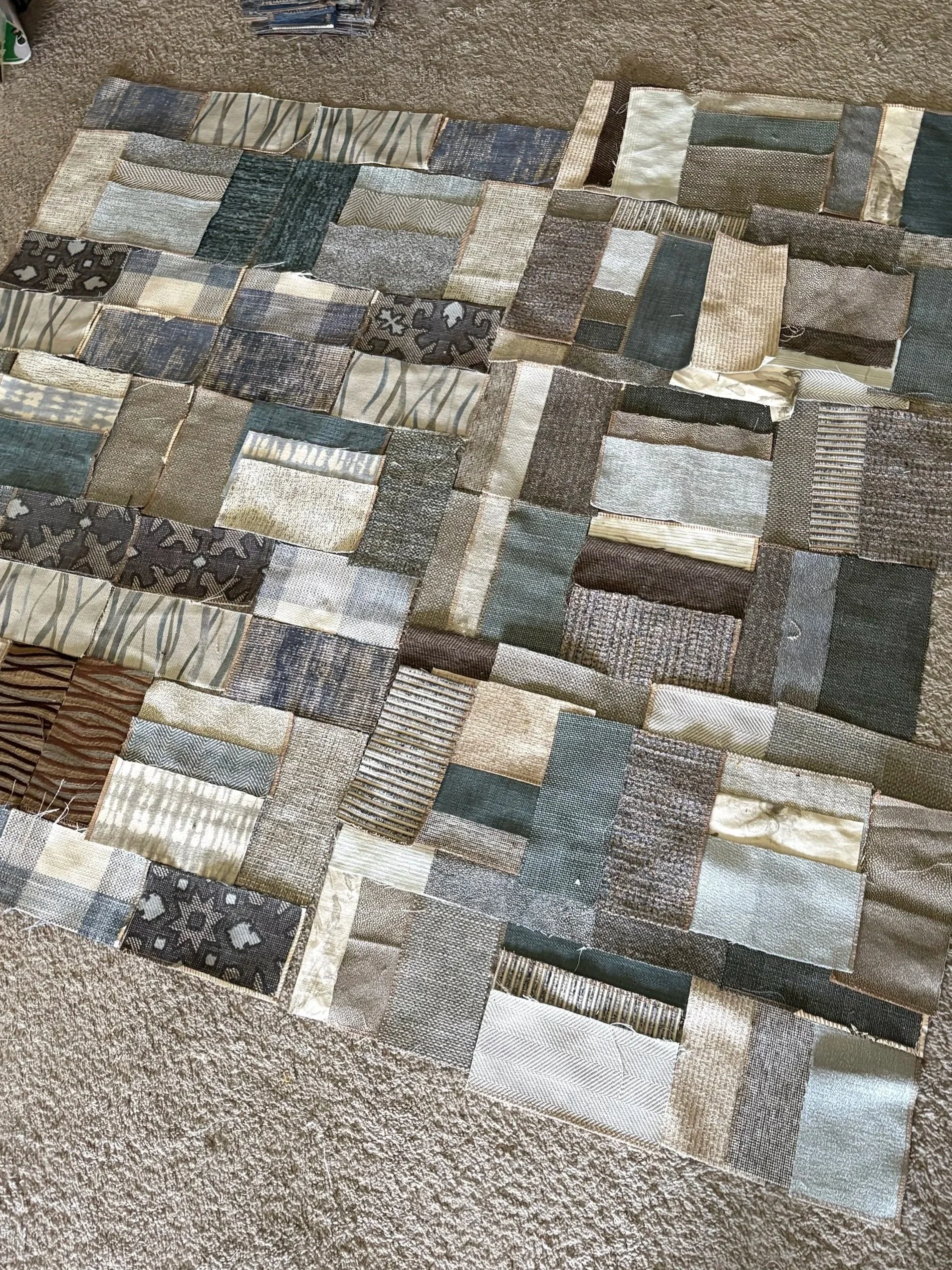
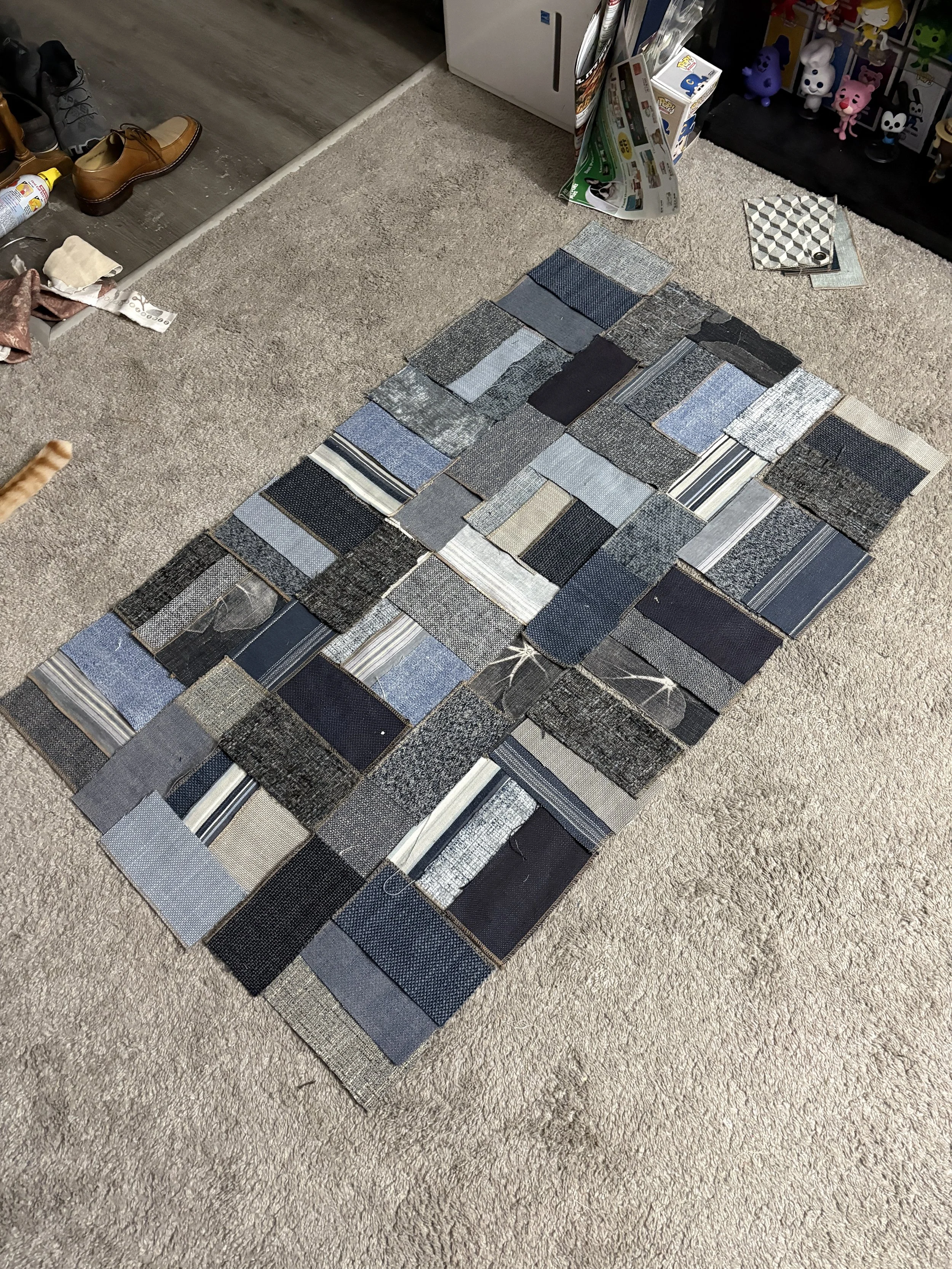
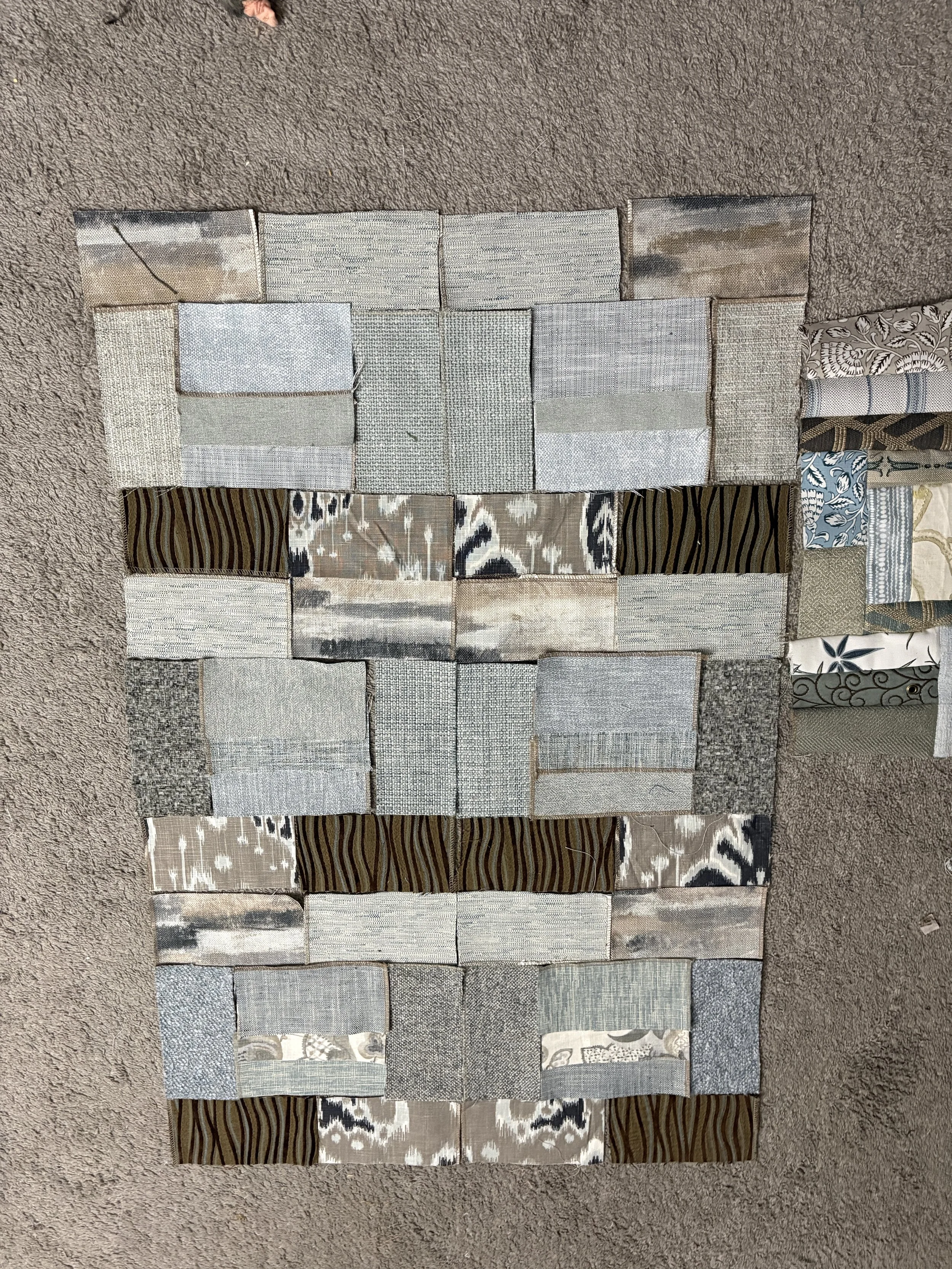
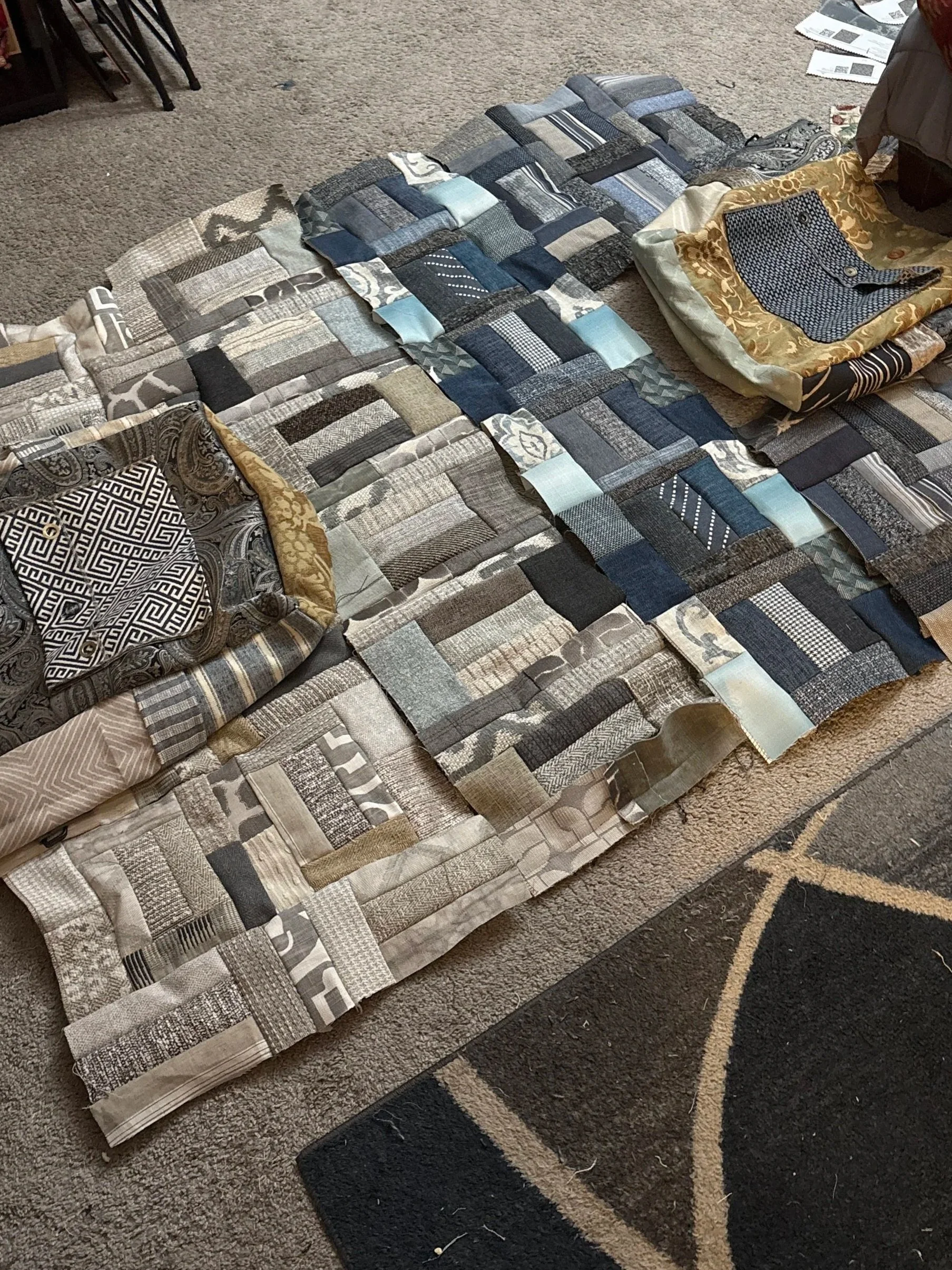
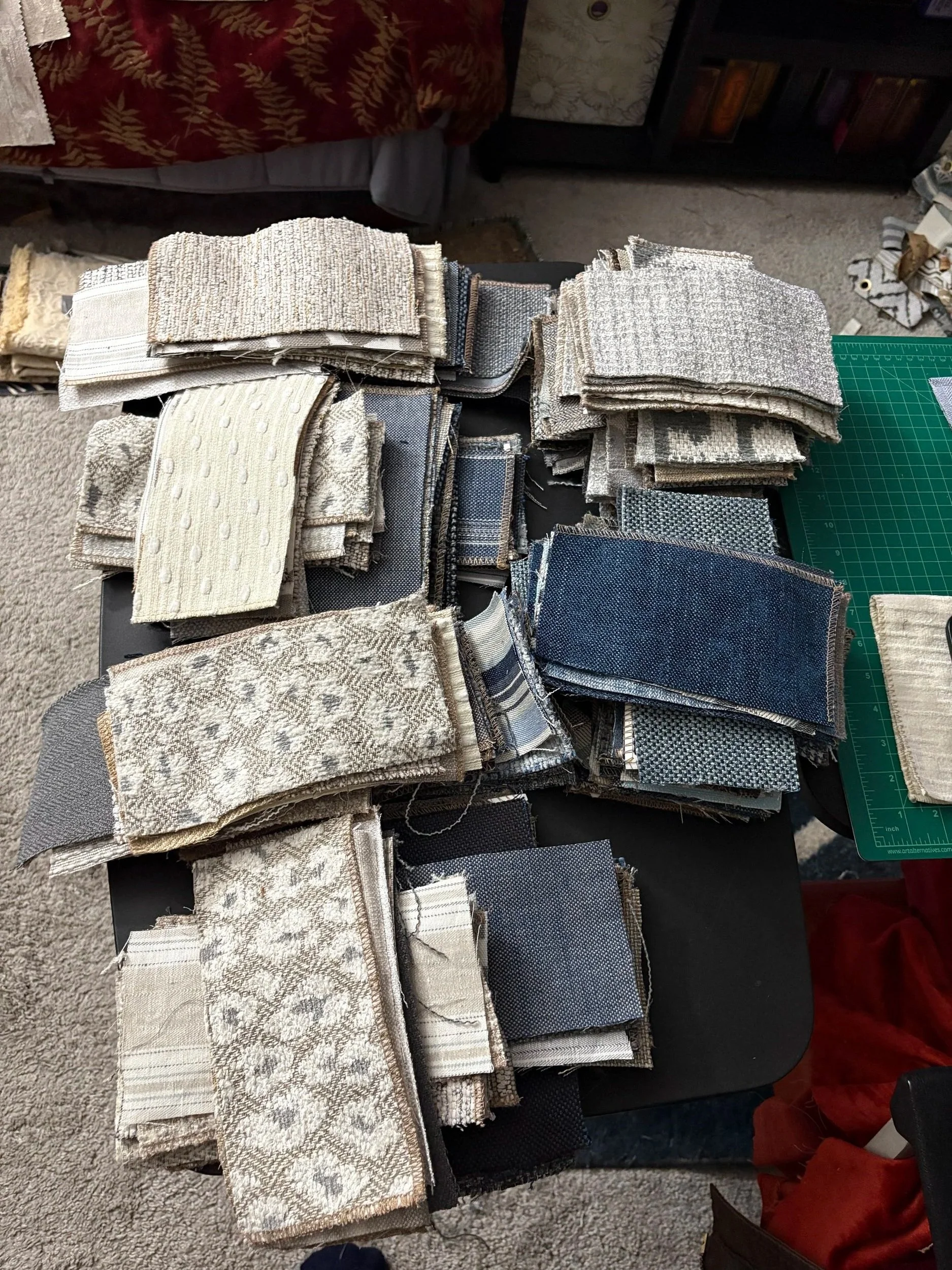
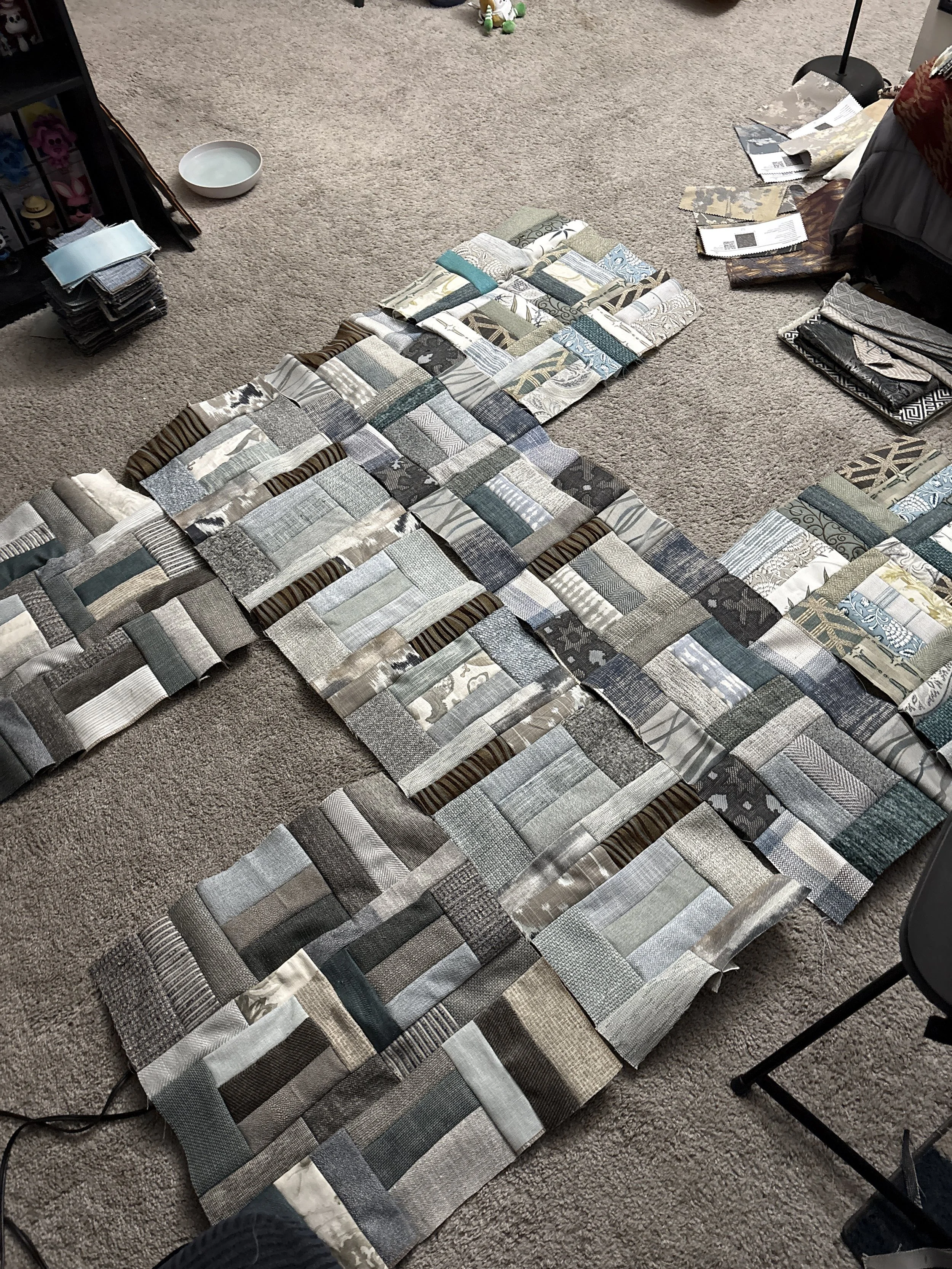
When presented with 488 bricks of varying colors, the solution seems straight forward enough, four 122-brick bags, covering 4 oriented configurations of a basketweave.
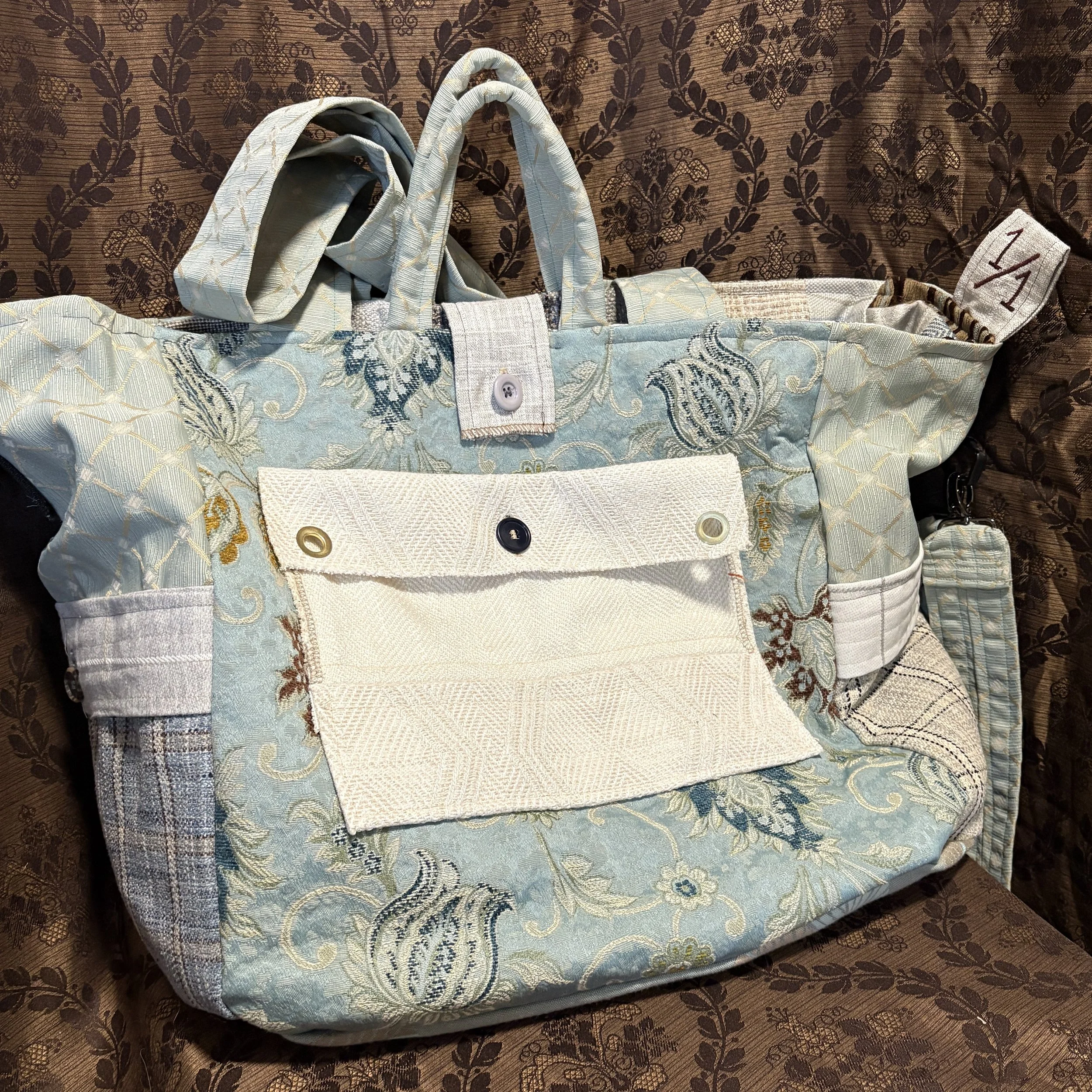
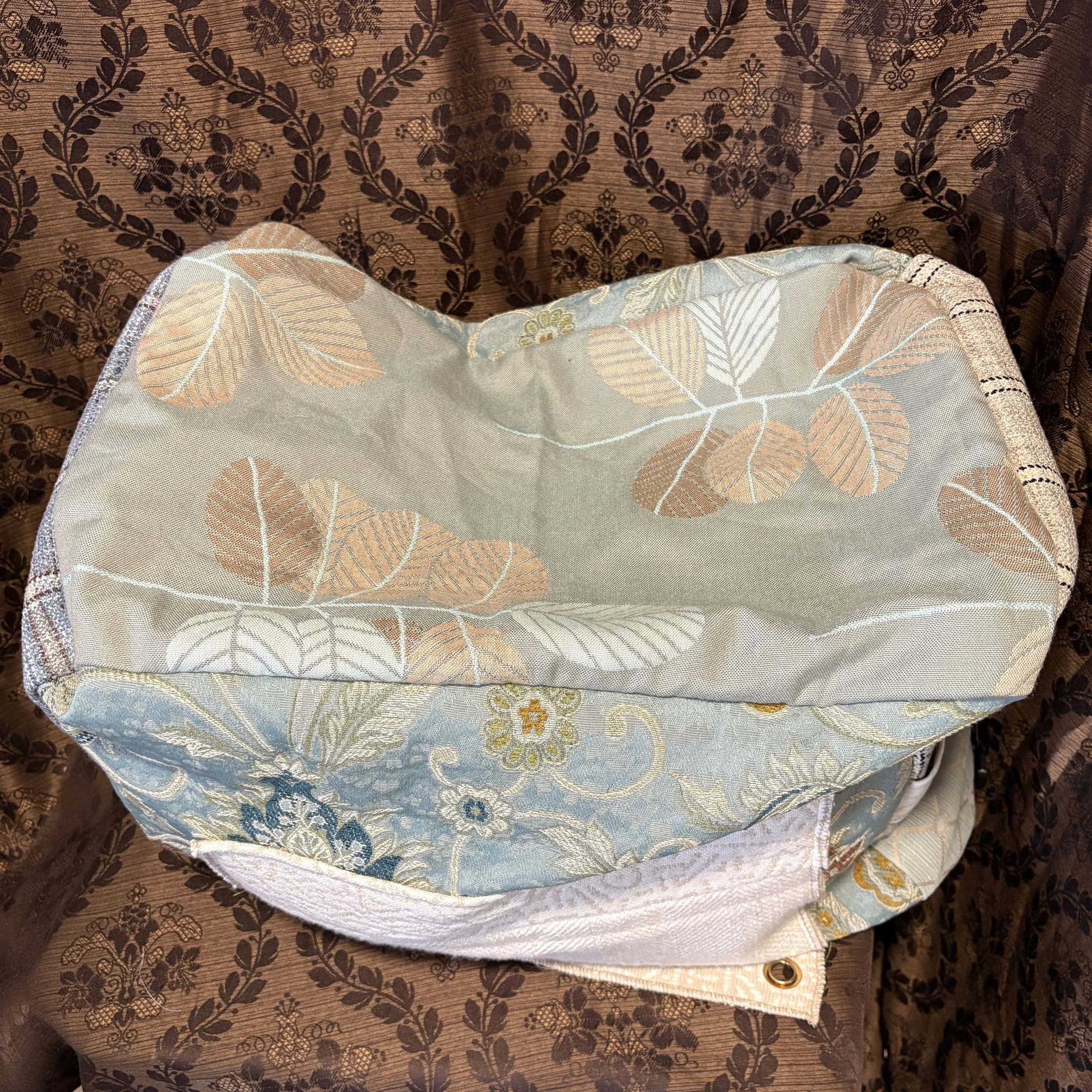
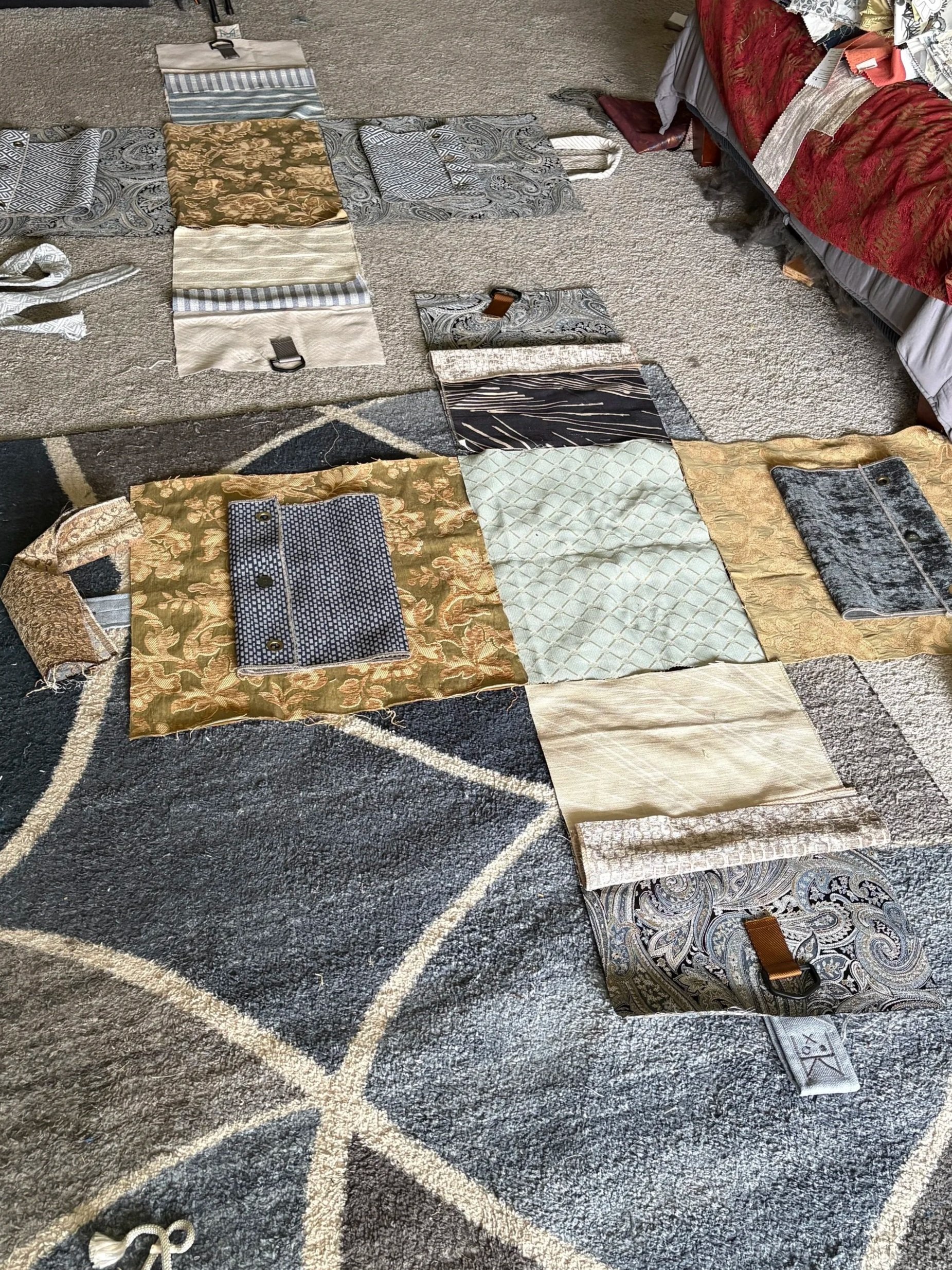
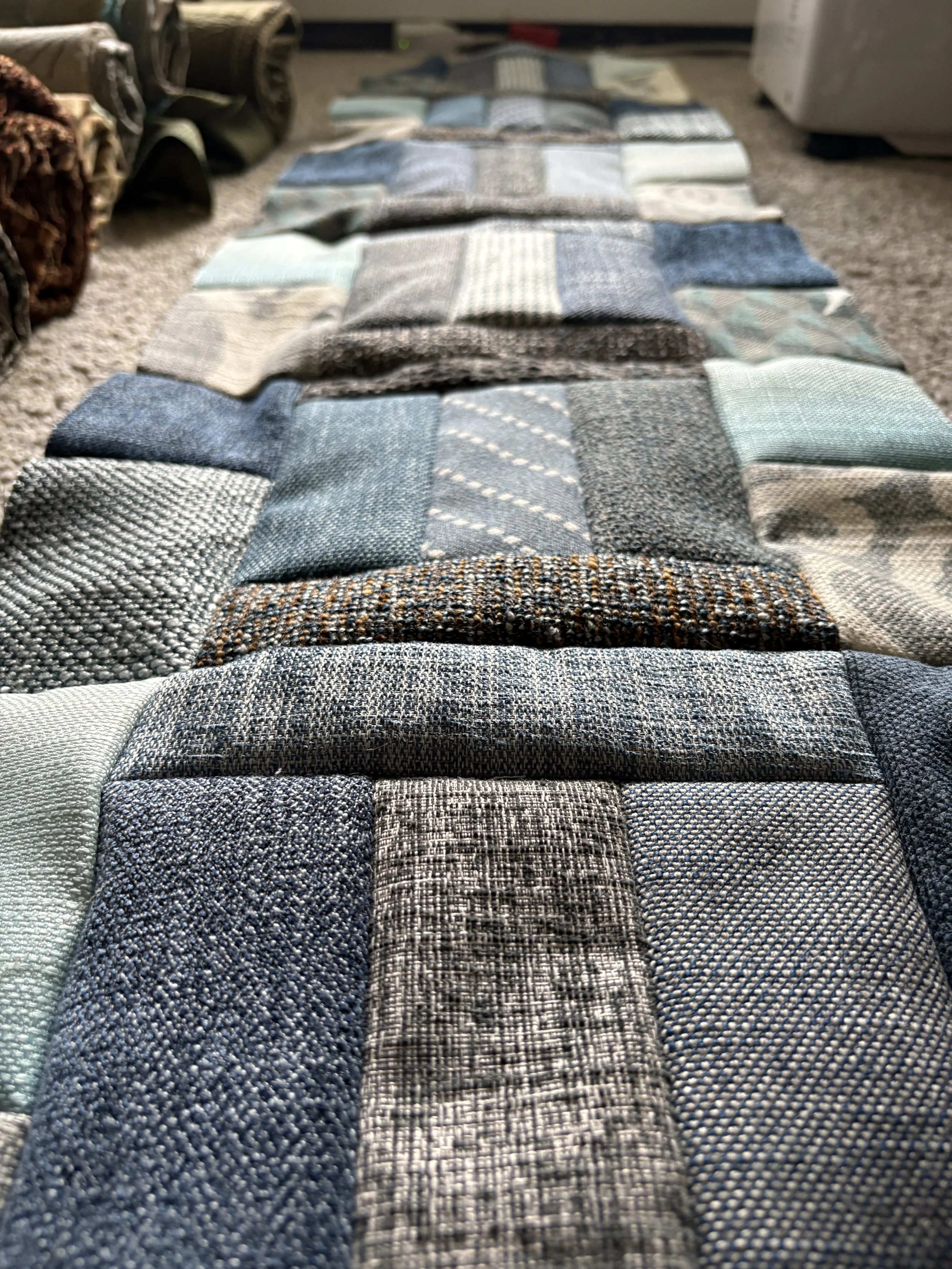
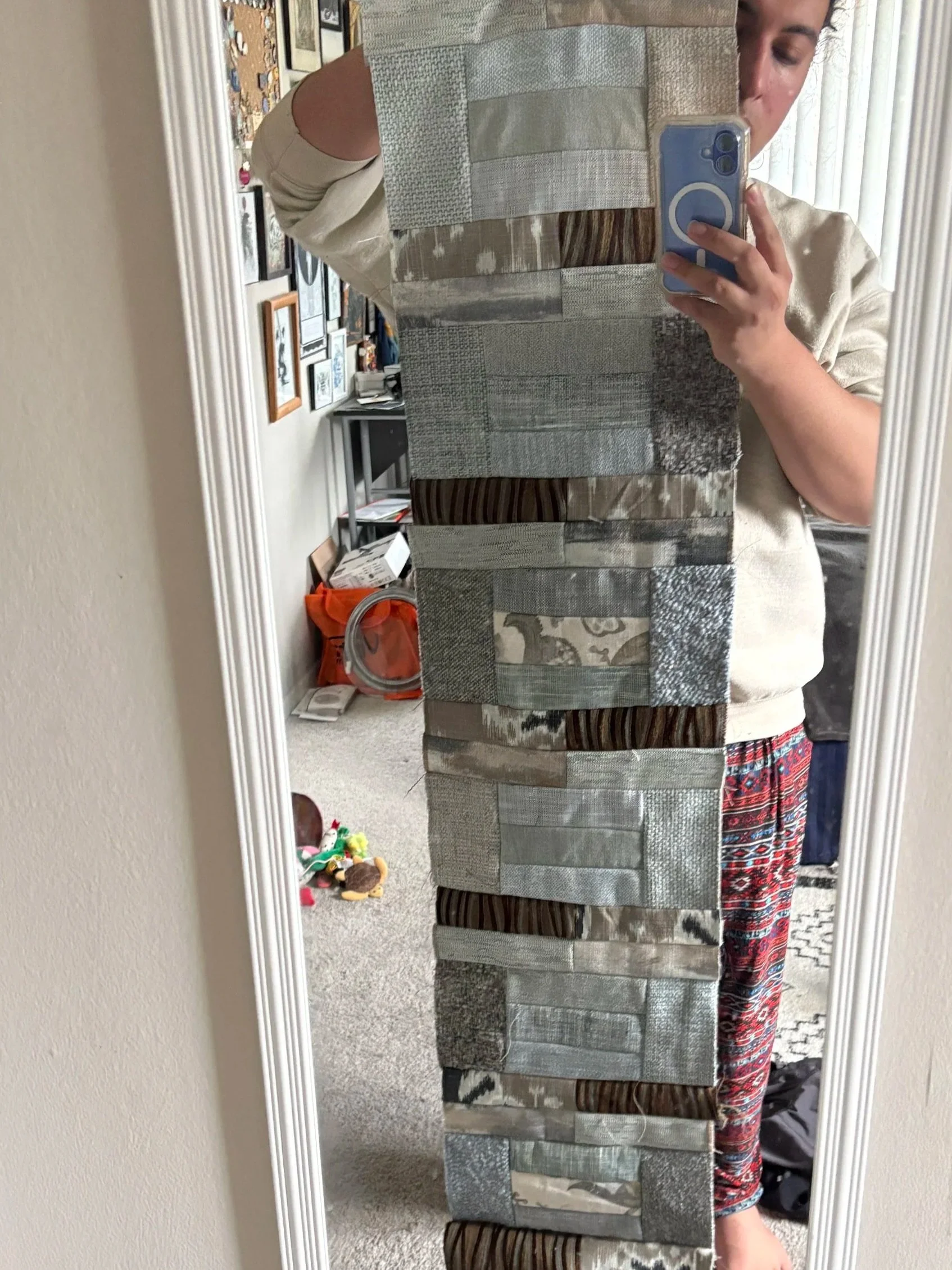
This set was a harmonious combination of the 3×3 basketweave I attempted several months ago and the more recent enclosed triplicate pattern of the past 3 bags, hybridizing so that the weave acted either as side borders or top-bottom borders. I broke the quartet into two sets of twins, a teal-heavy set making the weave become side fixtures, and a blue-tan/grey set with the weave connecting the central runner. These past experiments have been done in tandem due to the modularity of the enclosed triple brick’s proportions being perfect for the bags. The runners are a set of 9-brick panels, two for each side that come together for perfect 14”x20” pieces, tapering post-seam allowance to 12”x18” interiors. I will also note that on the production timeline it is easier to devote one day to crafting the outer shell and straps, one day to the brick-laying and assembly, and a final day to bringing each together (because the risk of needle breakage goes up with each fold of fabric. I was fortunate enough to learn that implementing denim needles into the final step of stitching made the process slightly smoother, with sturdier and sharper needles capable of piercing the thick folds and the rougher paper left on the samples.