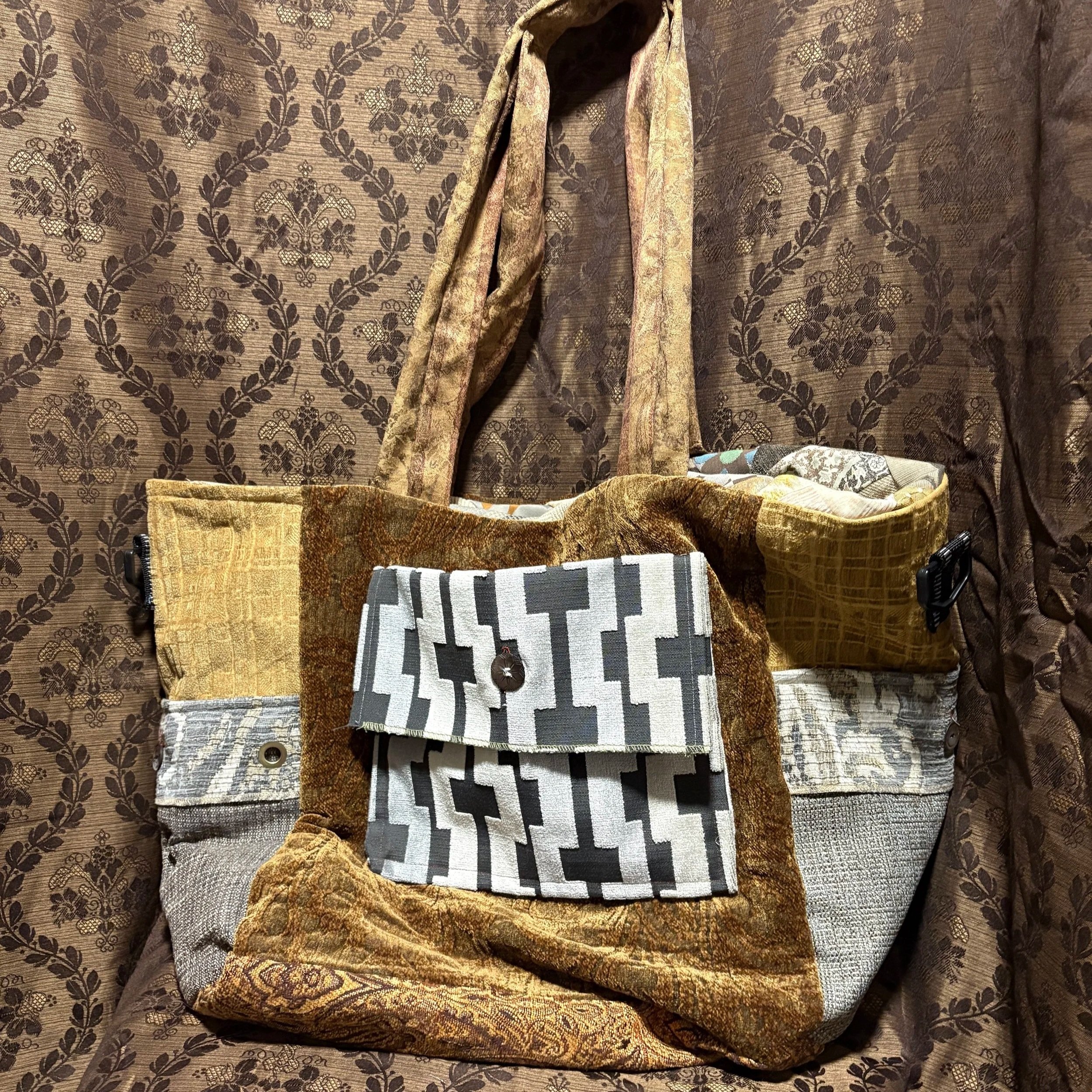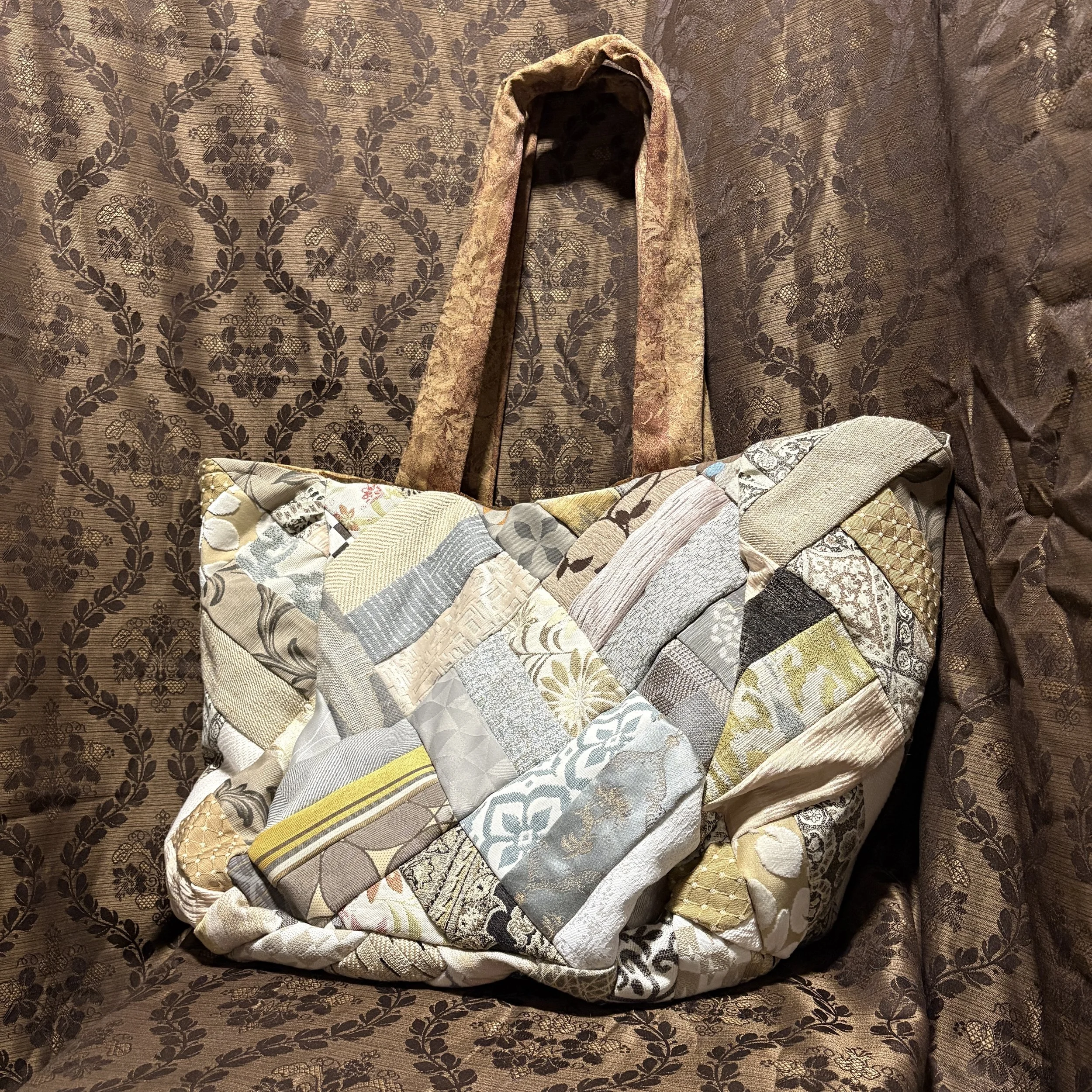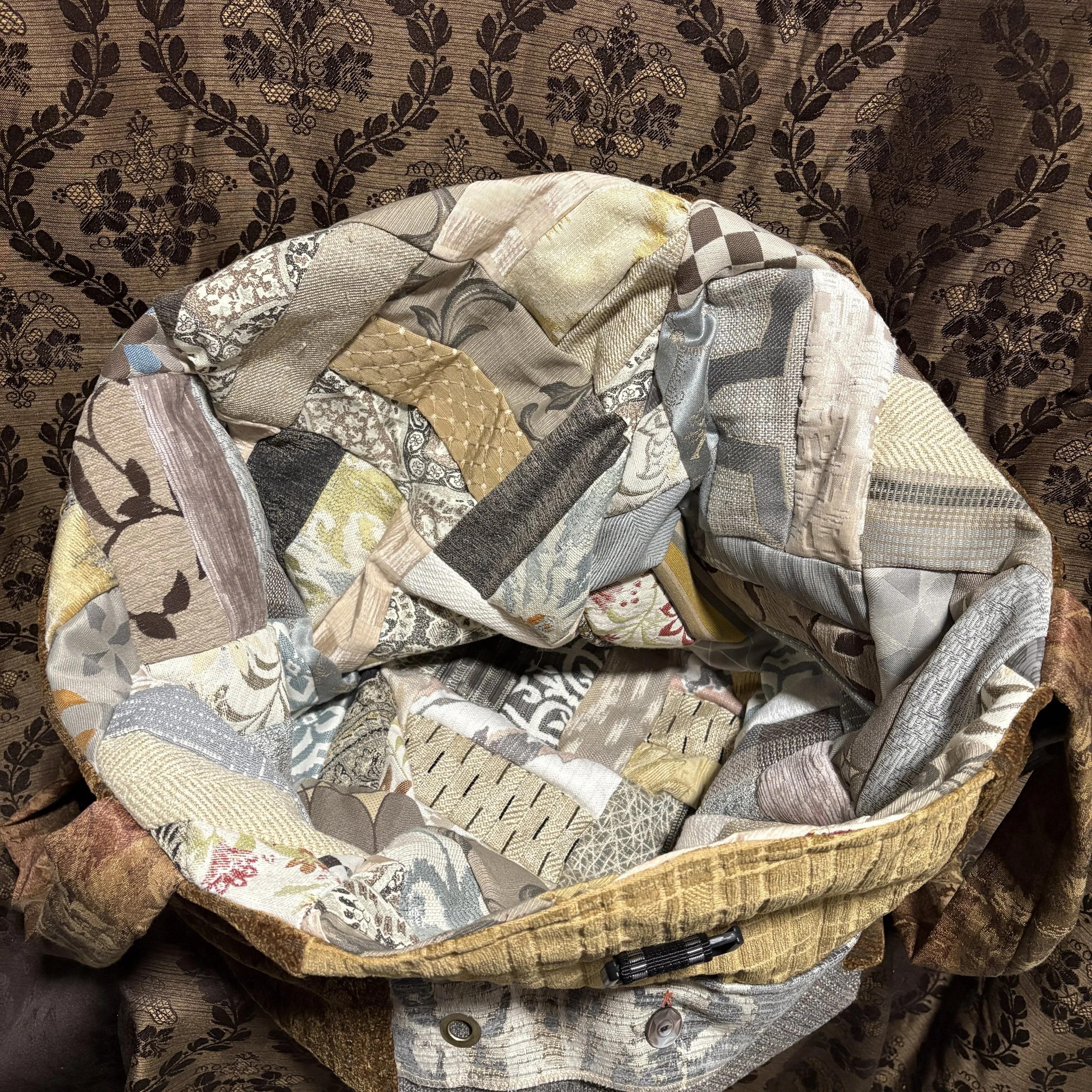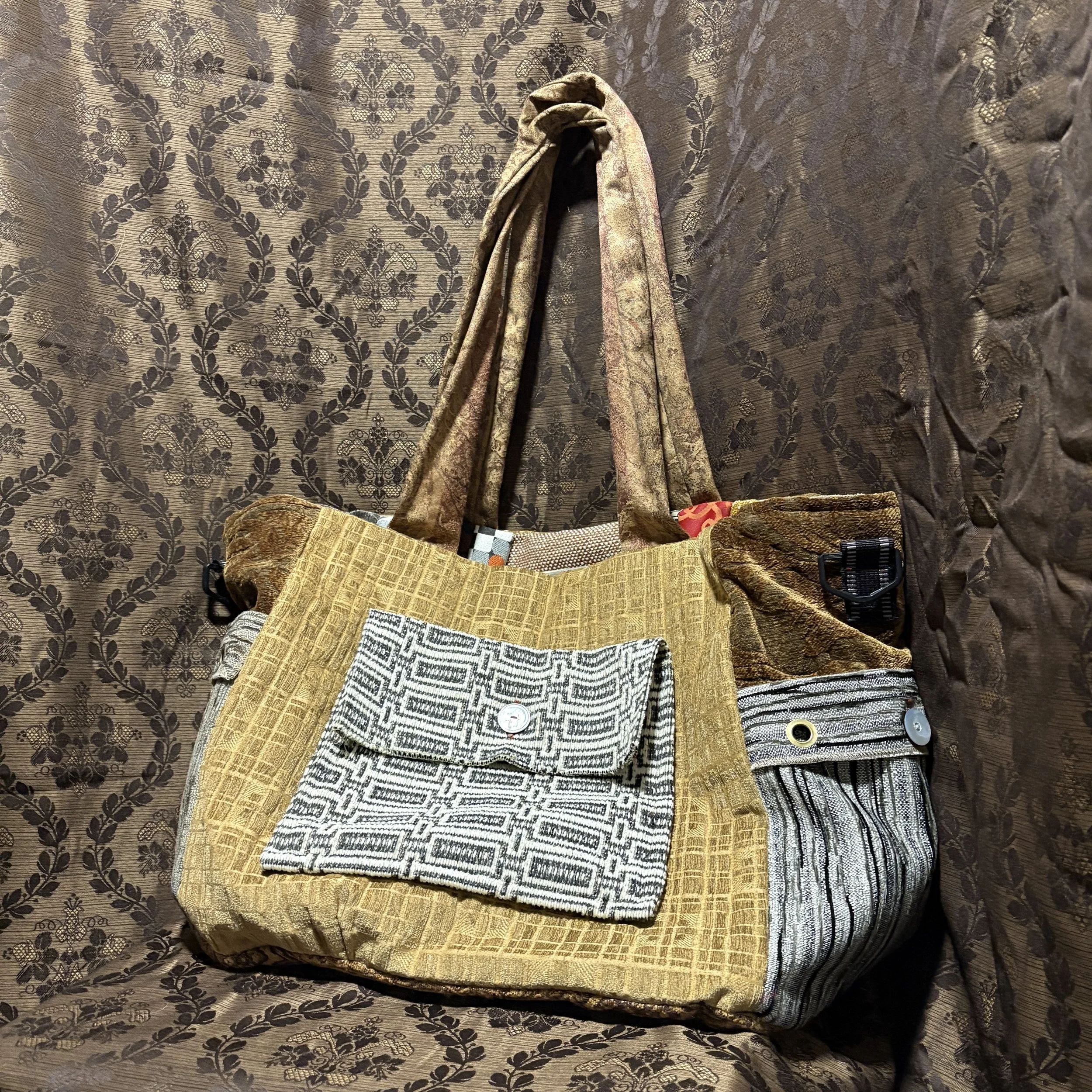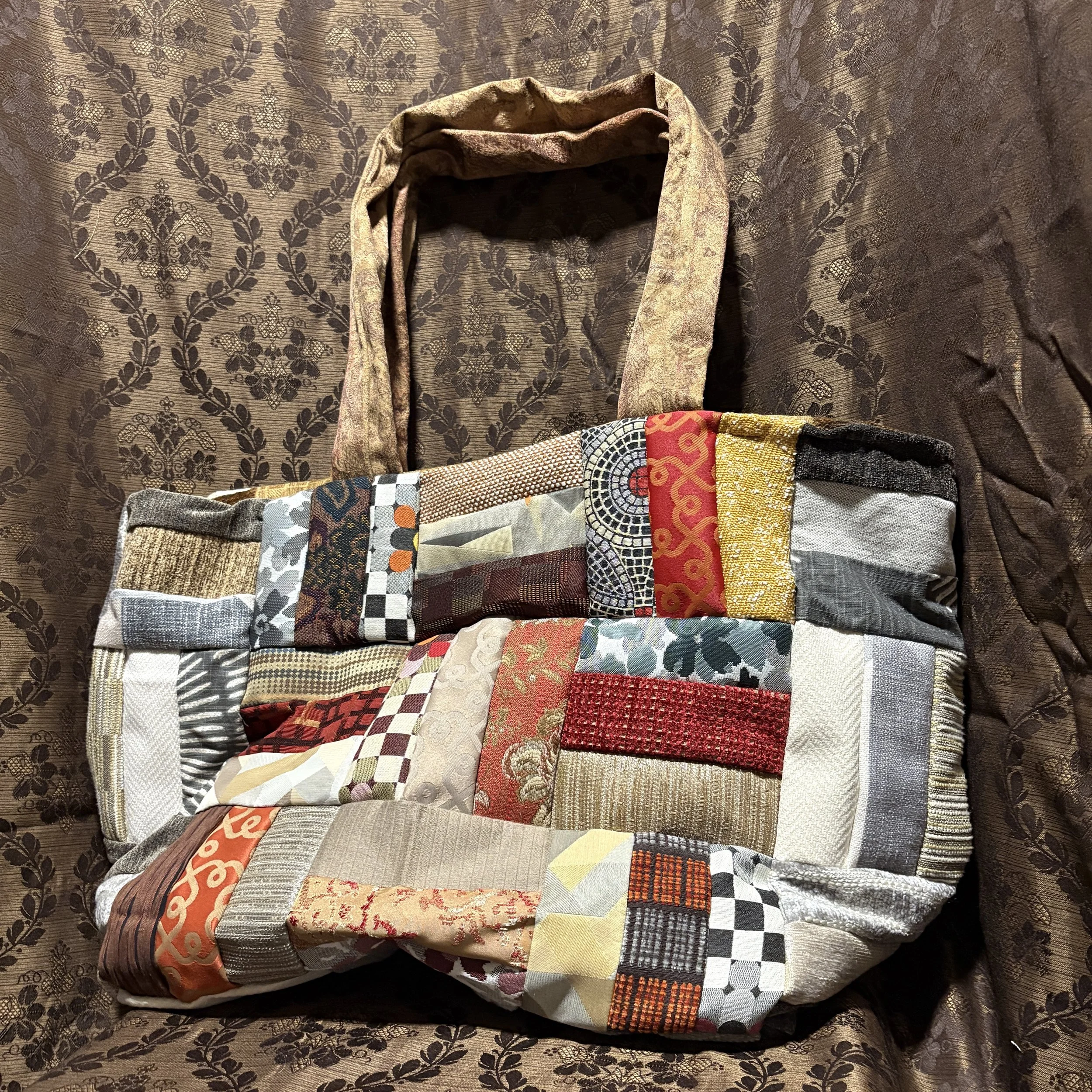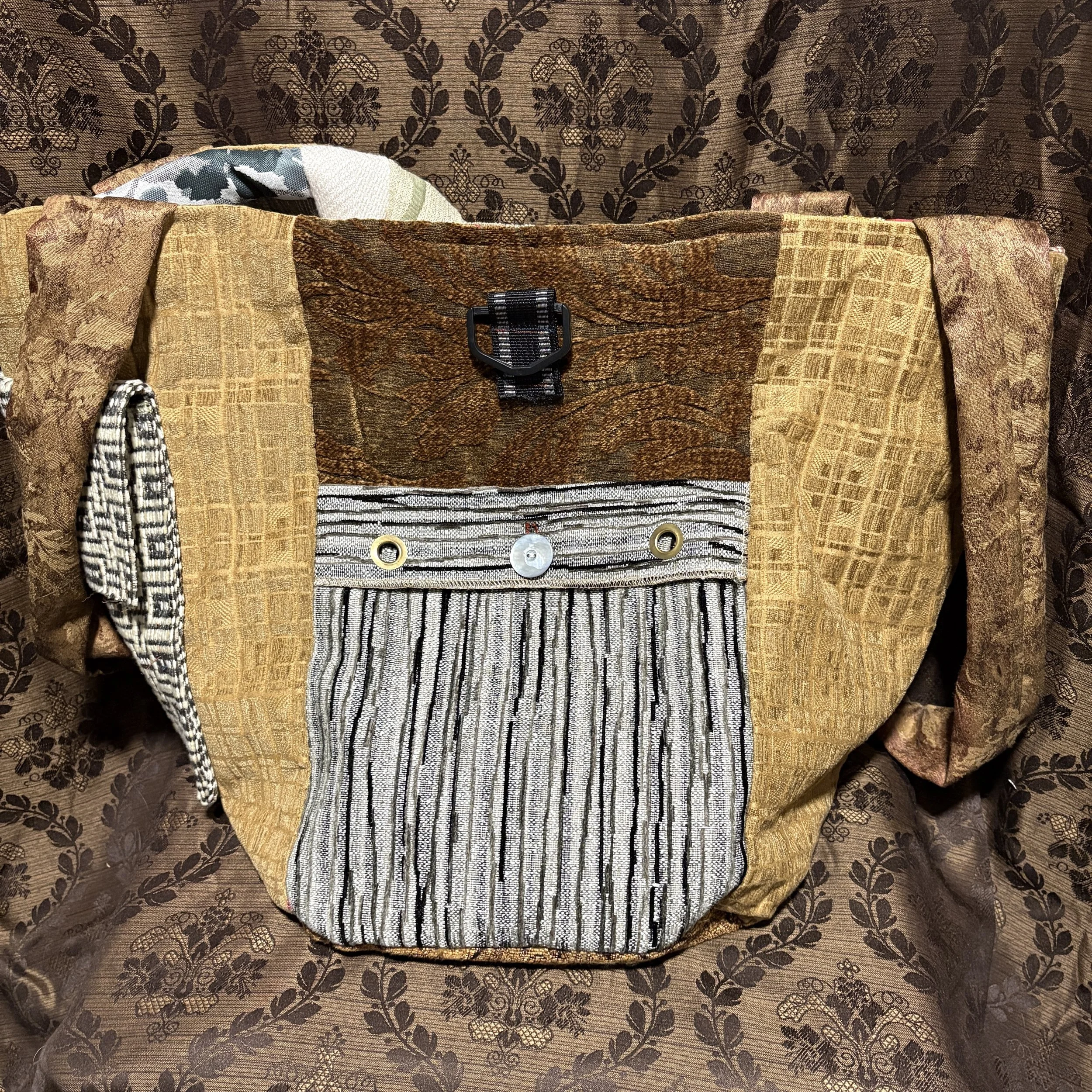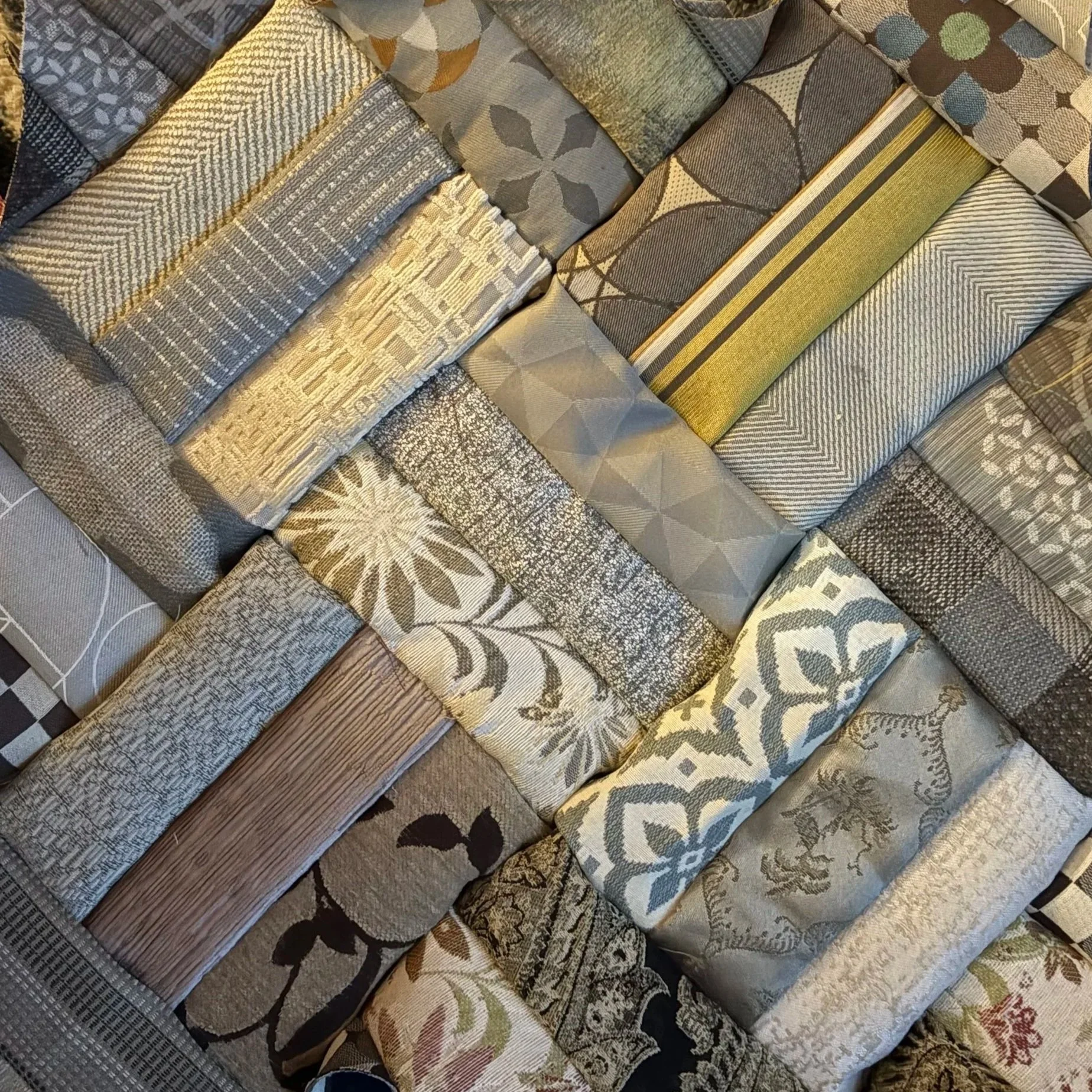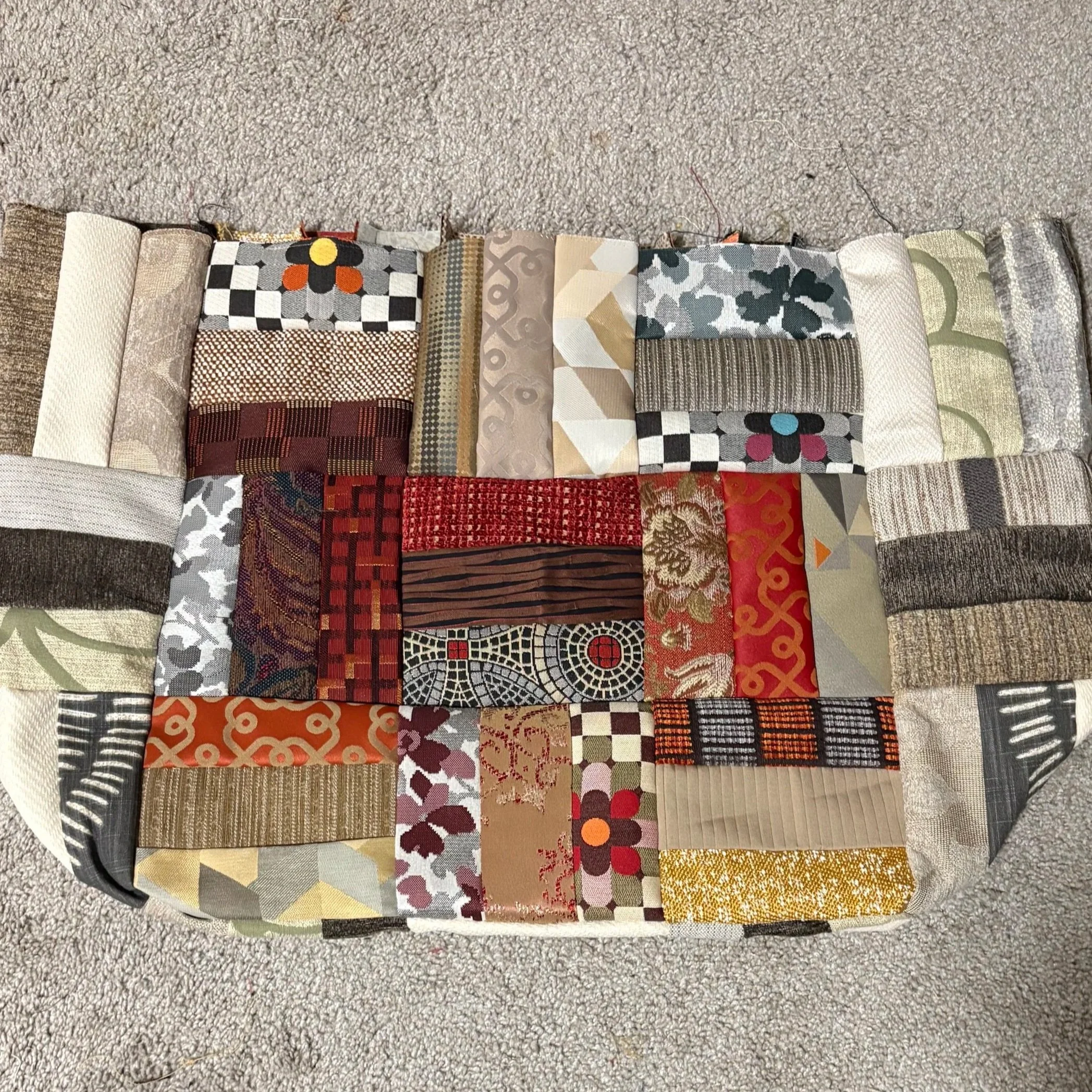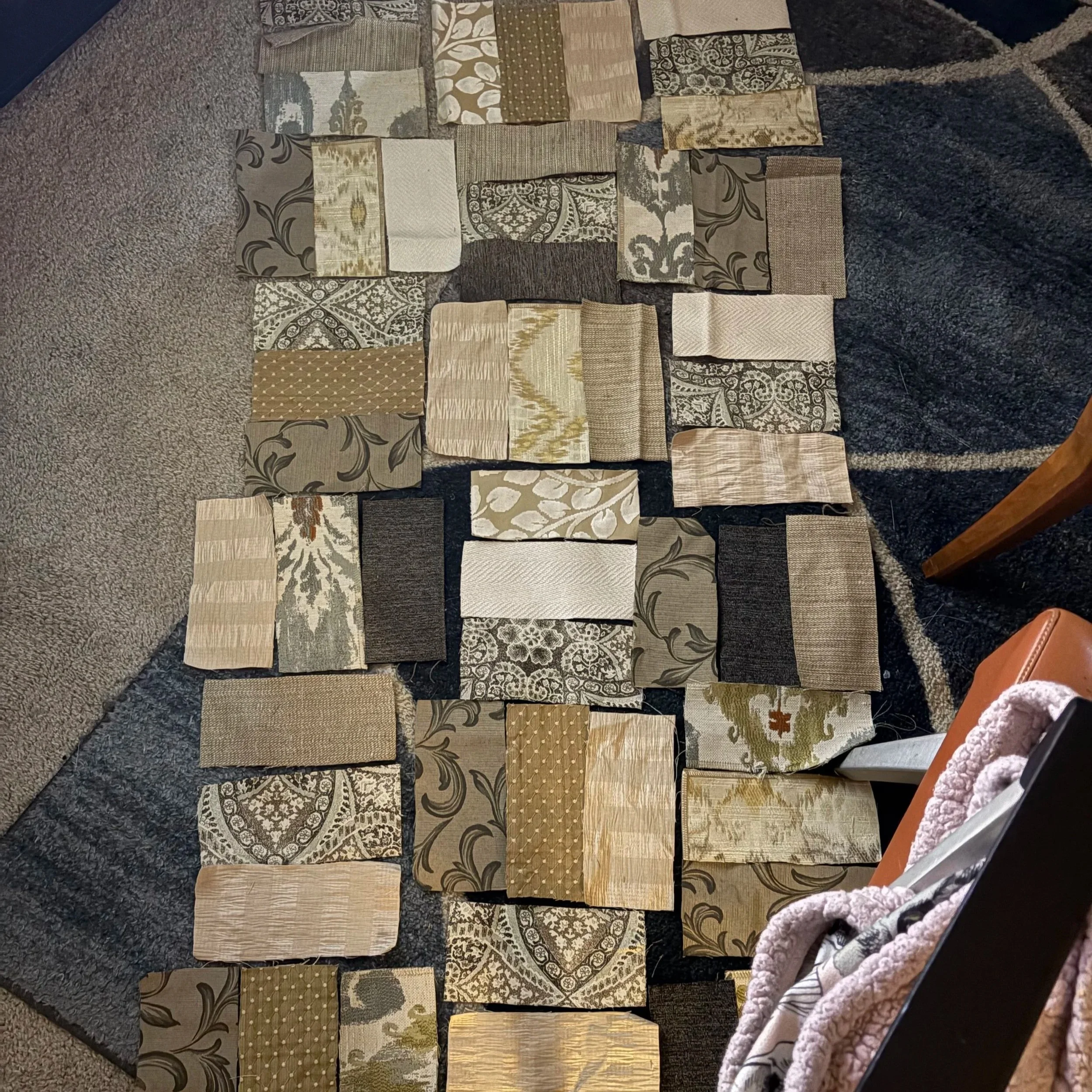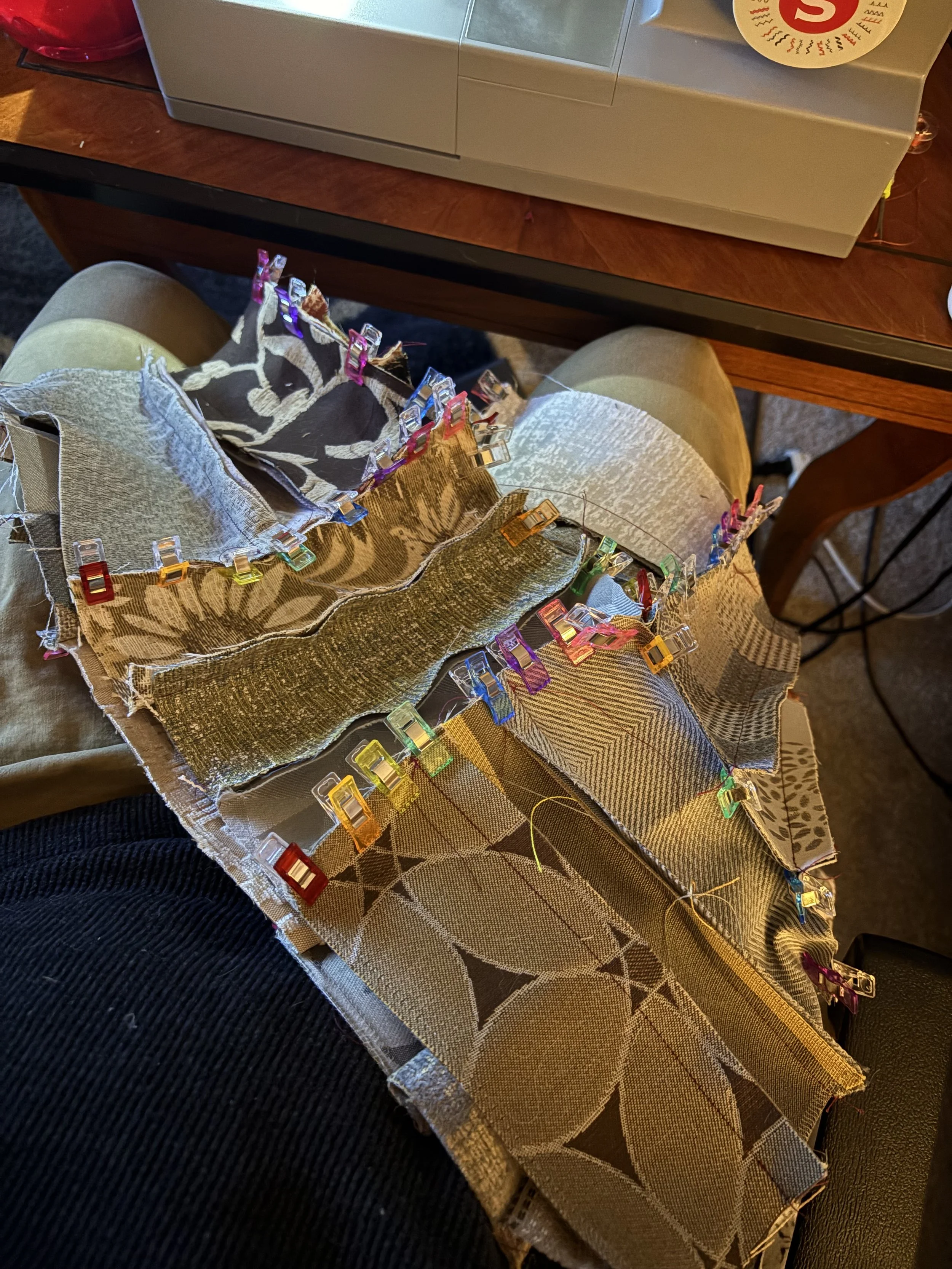
Ratios and proportions made this exploration much easier, with 3-to-1 being the key to the pattern.
This was a twin variation, one straight-laced and clearly delineated, the other askew, turned 90 degrees to create a more mesmerizing final product.
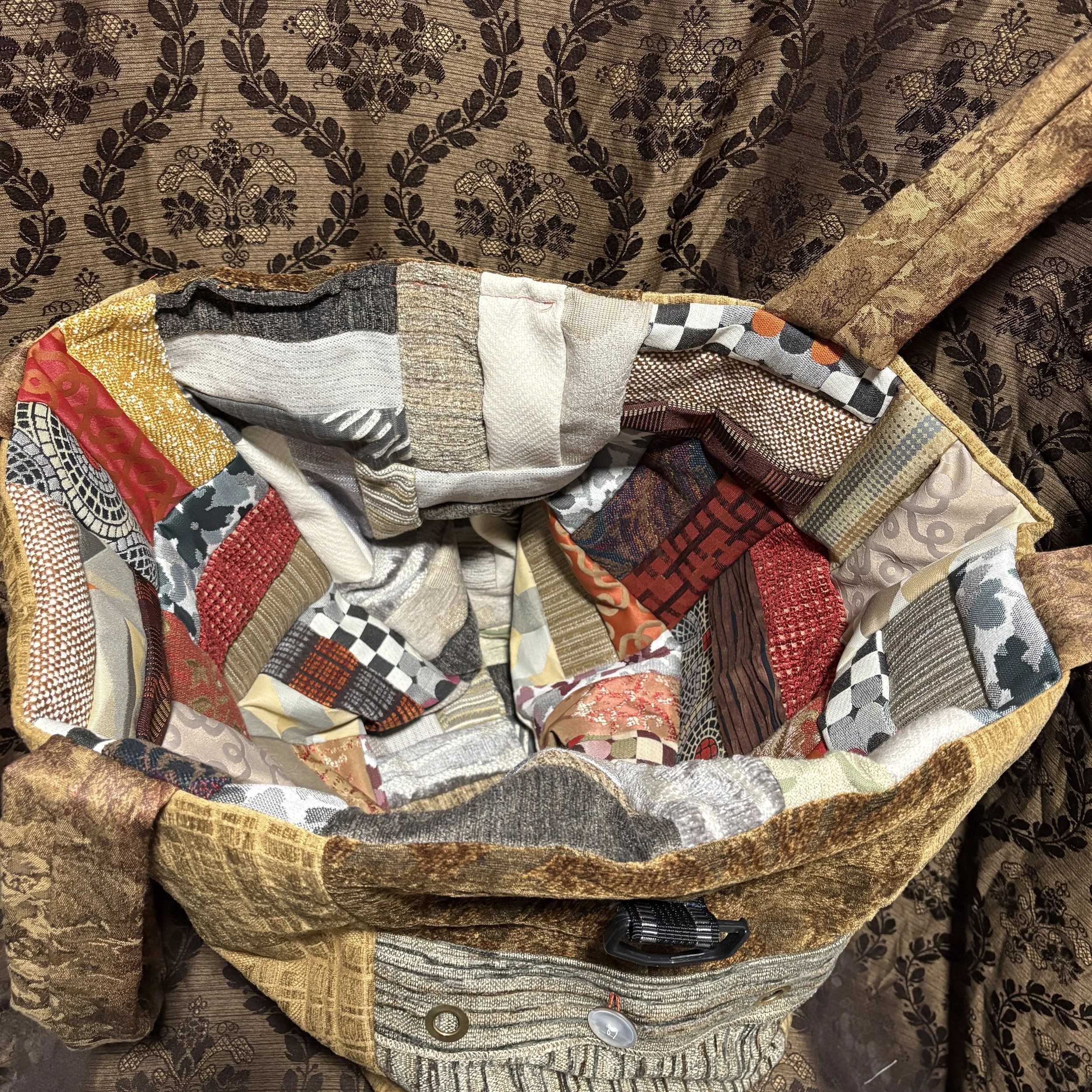
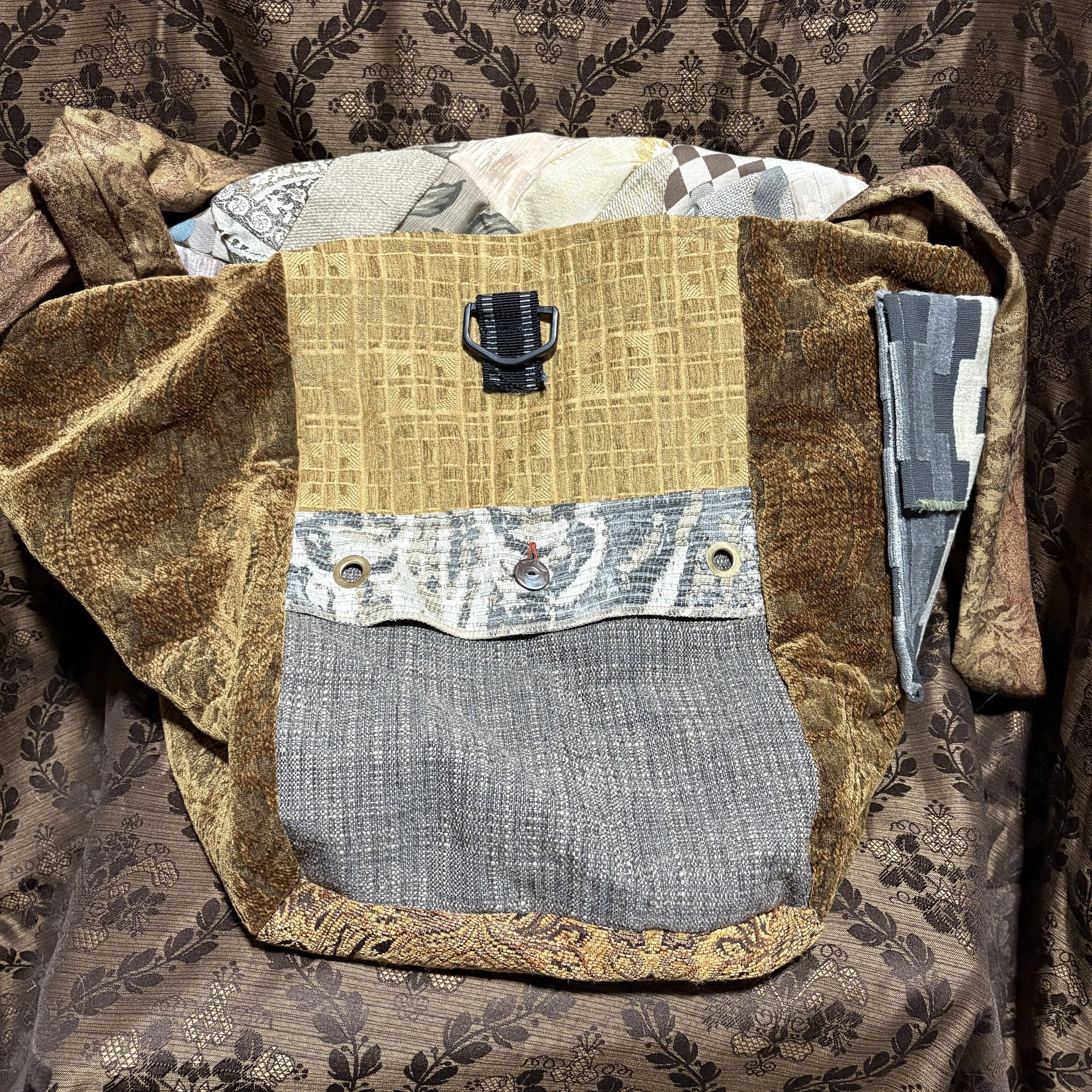
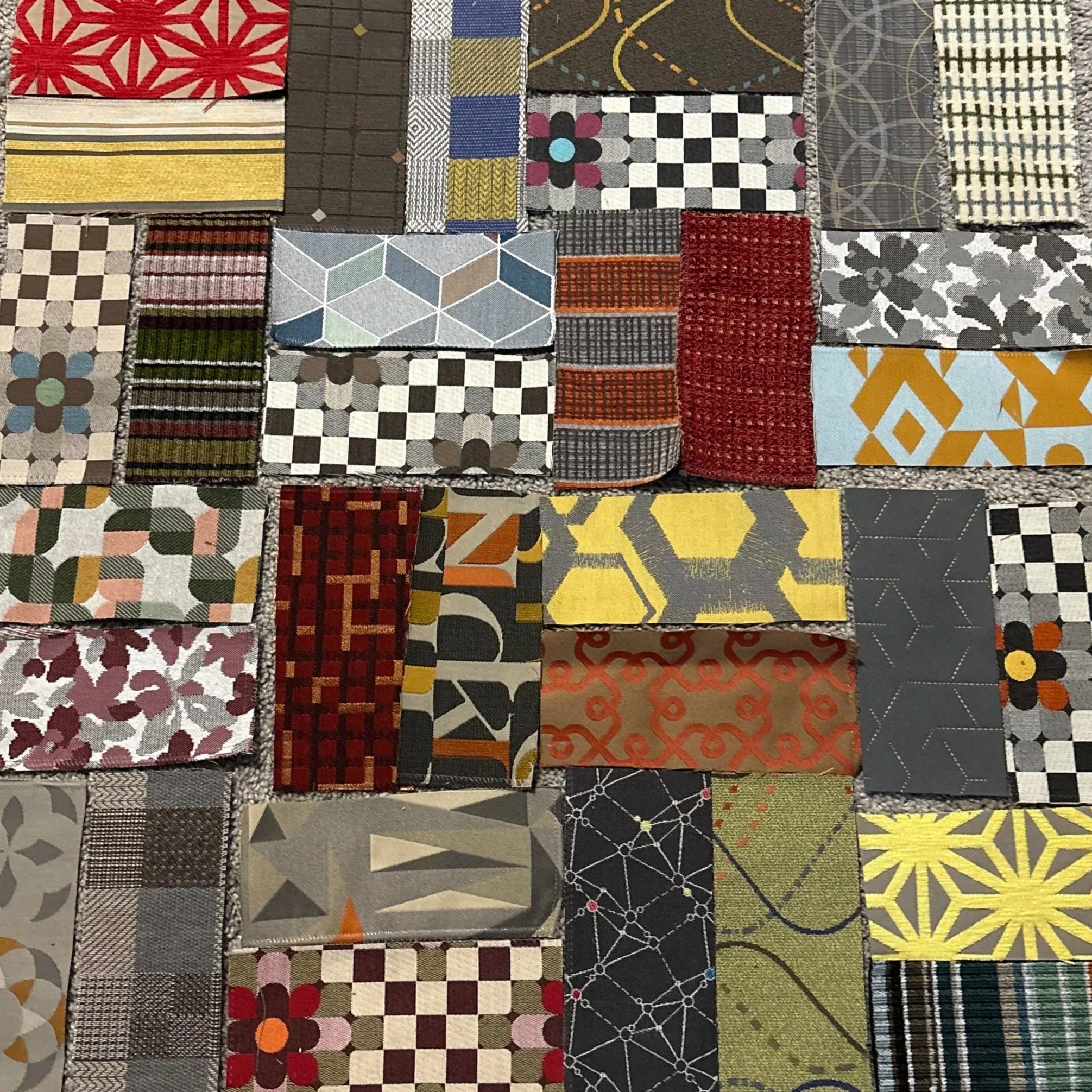
Standardizing the bricks made this experiment a breeze in the beginning, because once the seam allowance was calculated, it was evident that three bricks would take up the 7.5 inch length of another panel. knowing that the totes relied on 18in x 18in main panels and 12in x 18in side and bottom panels made this a fun design challenge in threes. The reason I have referred to these bags as Twins is because their construction and end result is much the same story, but along the way there are tweaks and adjustments that show their individual flavors and characters. The exterior panels utilize the same 4 fabrics to construct their straps, sides, and fronts, though in either case they’ve swapped patterns. But their interior and side patterns are the instances where the real difference surfaces. The first variation was the straightforward basket weave, 3x3 patterns that follow a 9 panel sequence and alternate their orientation, flowing easily into the middle panel and across each axis. The second variation, while originally using the same grid became more complex just by rotating it 90 degrees. The finished 27- piece panels had to be cut to allow for the pattern to properly fit to the panel. It also causes dissonance in the melding of the middle panels. The pattern still retains internal diamonds, and it allows the viewer to have some visual throughline to the other twin. These still feature the pockets and buttons.