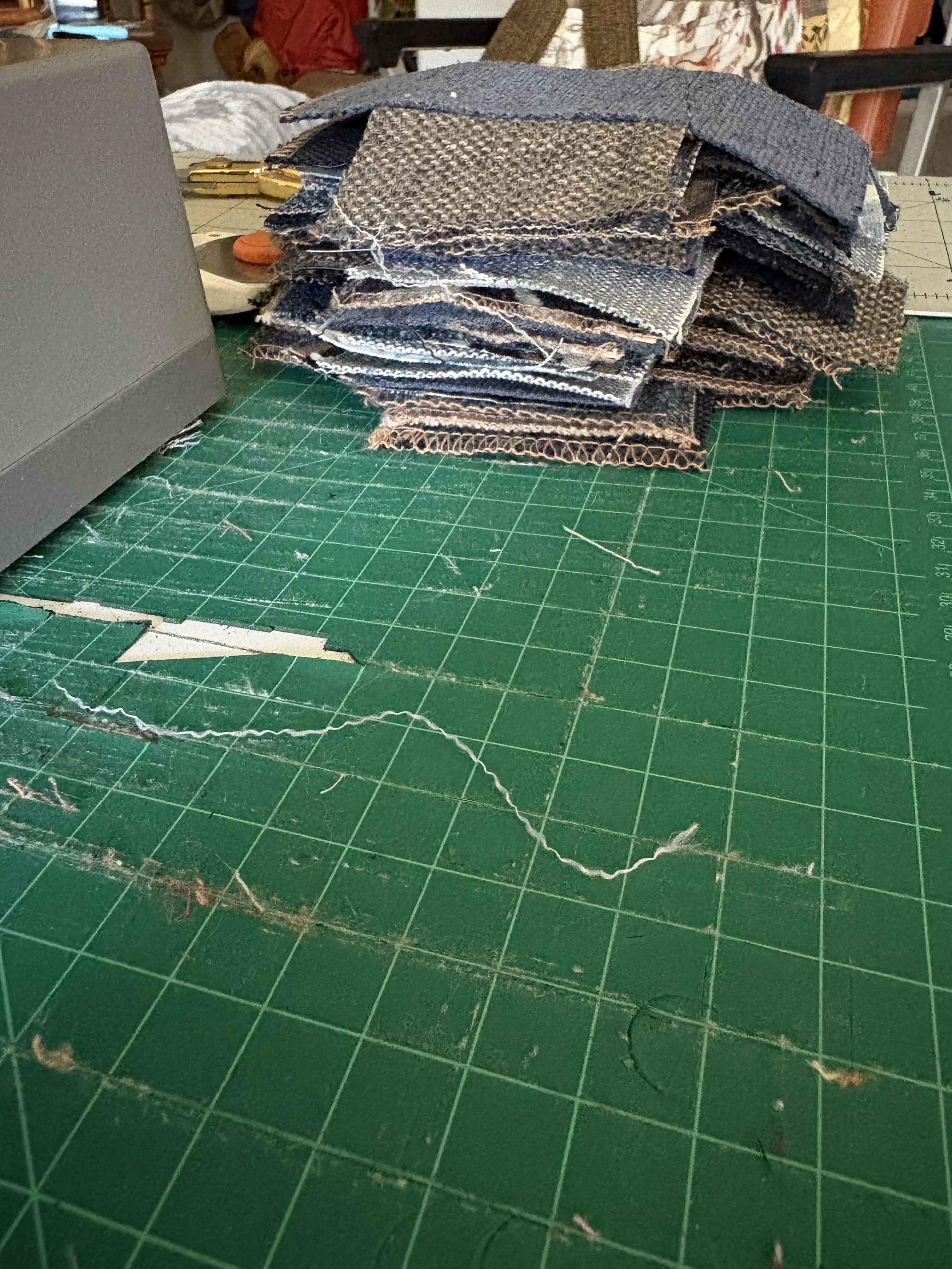
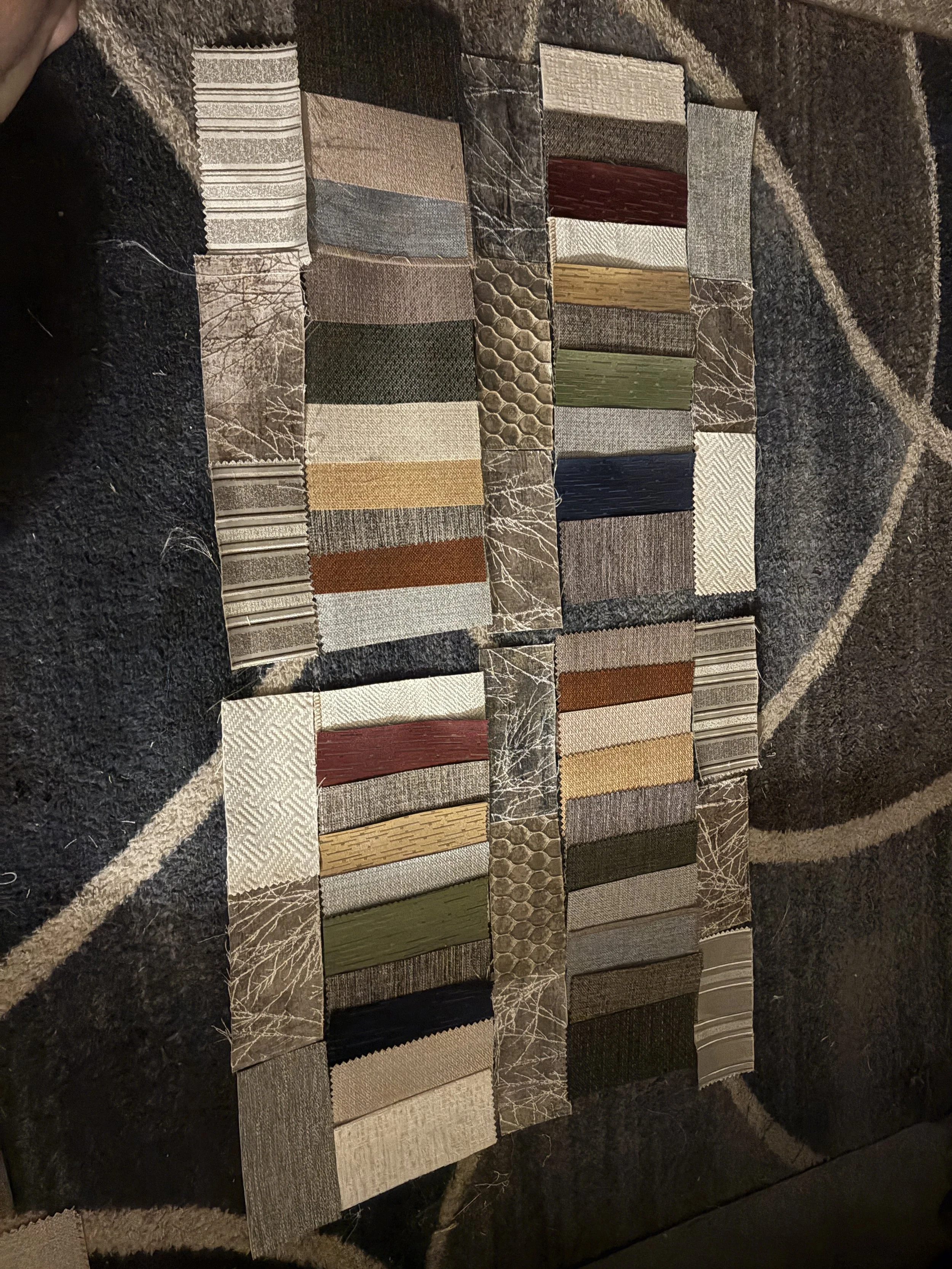
Prep Time is Priceless. With enough prior planning I can churn out so many bags. This septet of bags is a perfect example of the phenomena.
The scars on my cutting mat show that my rotary cutter is putting in the hours. While tedious, it’s all necessary.
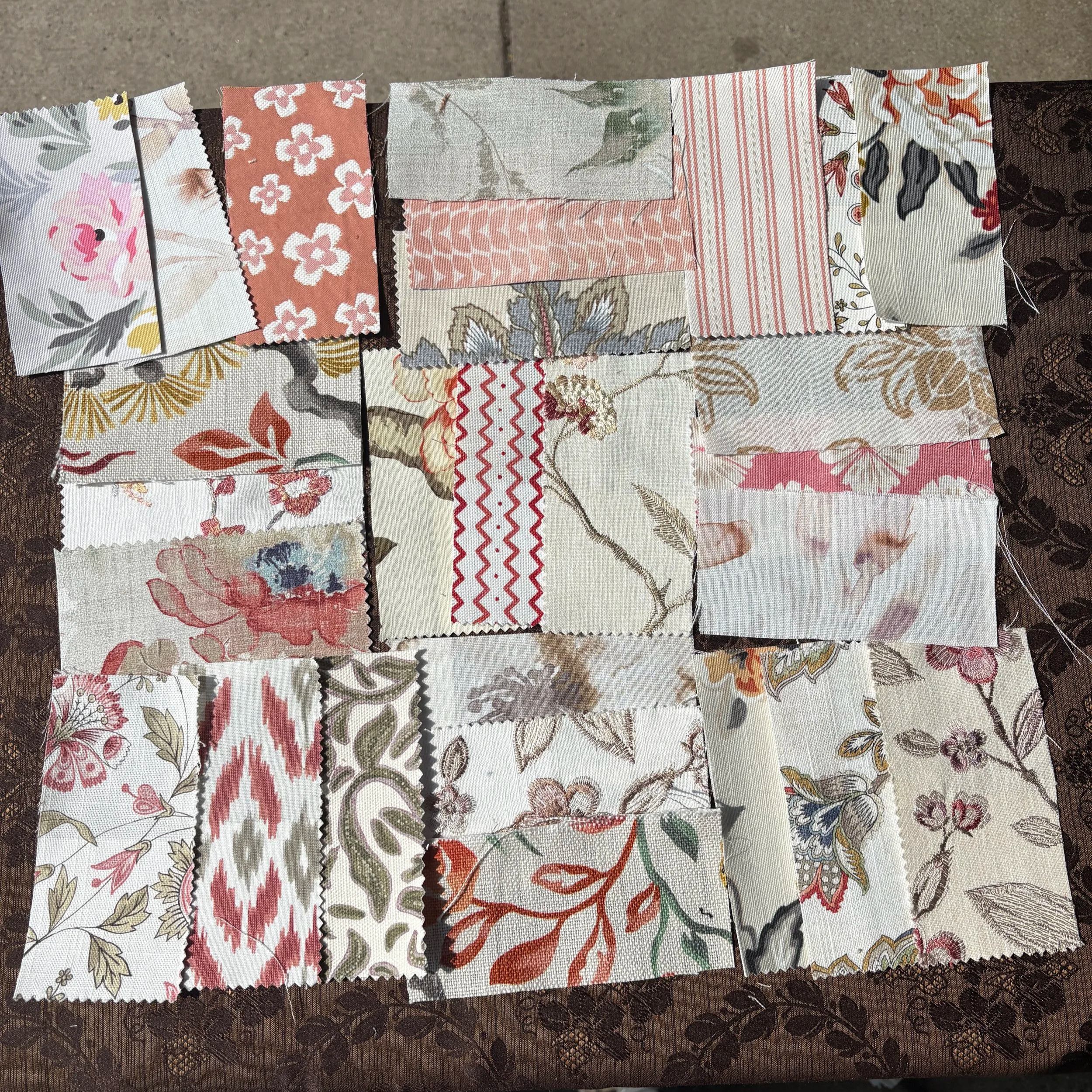
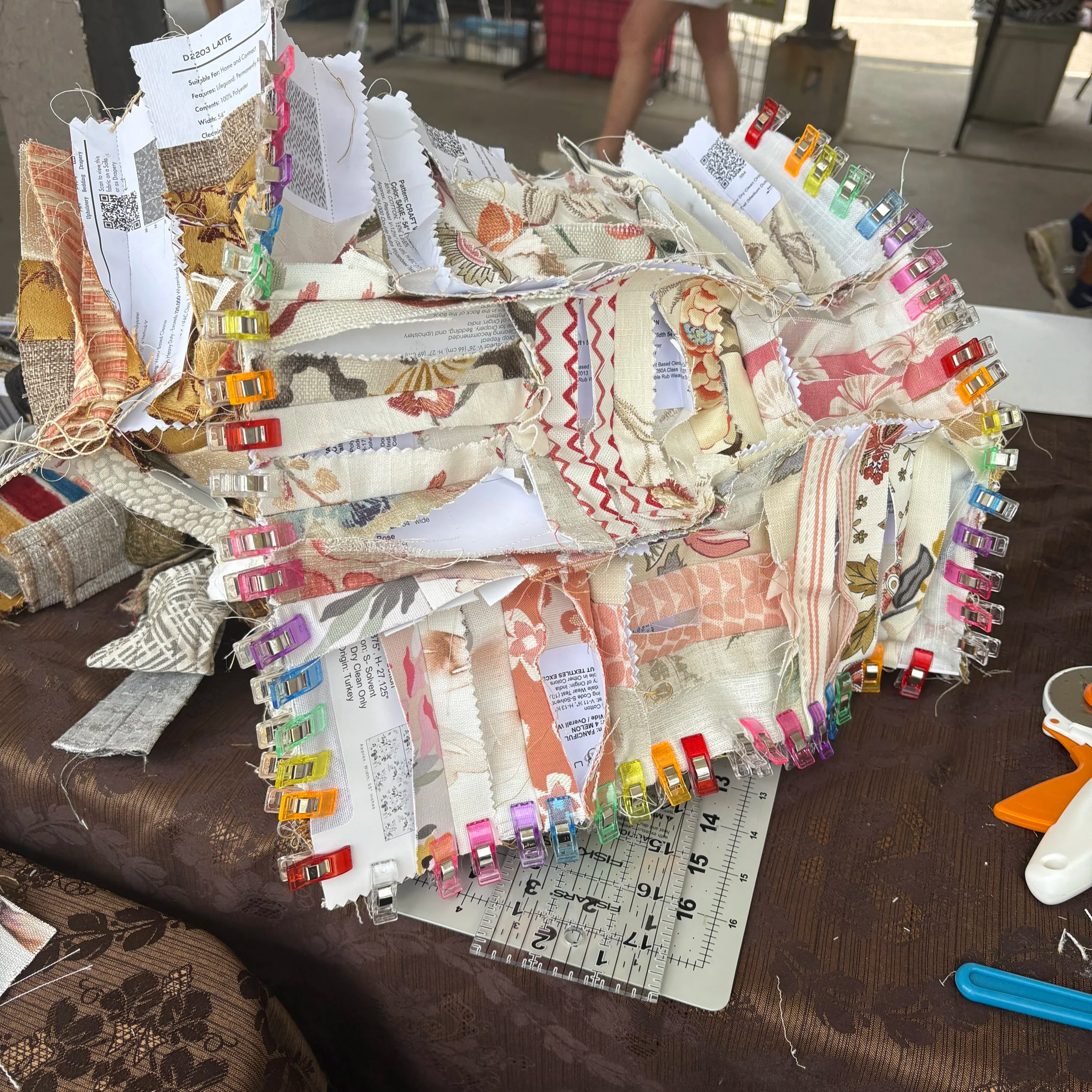
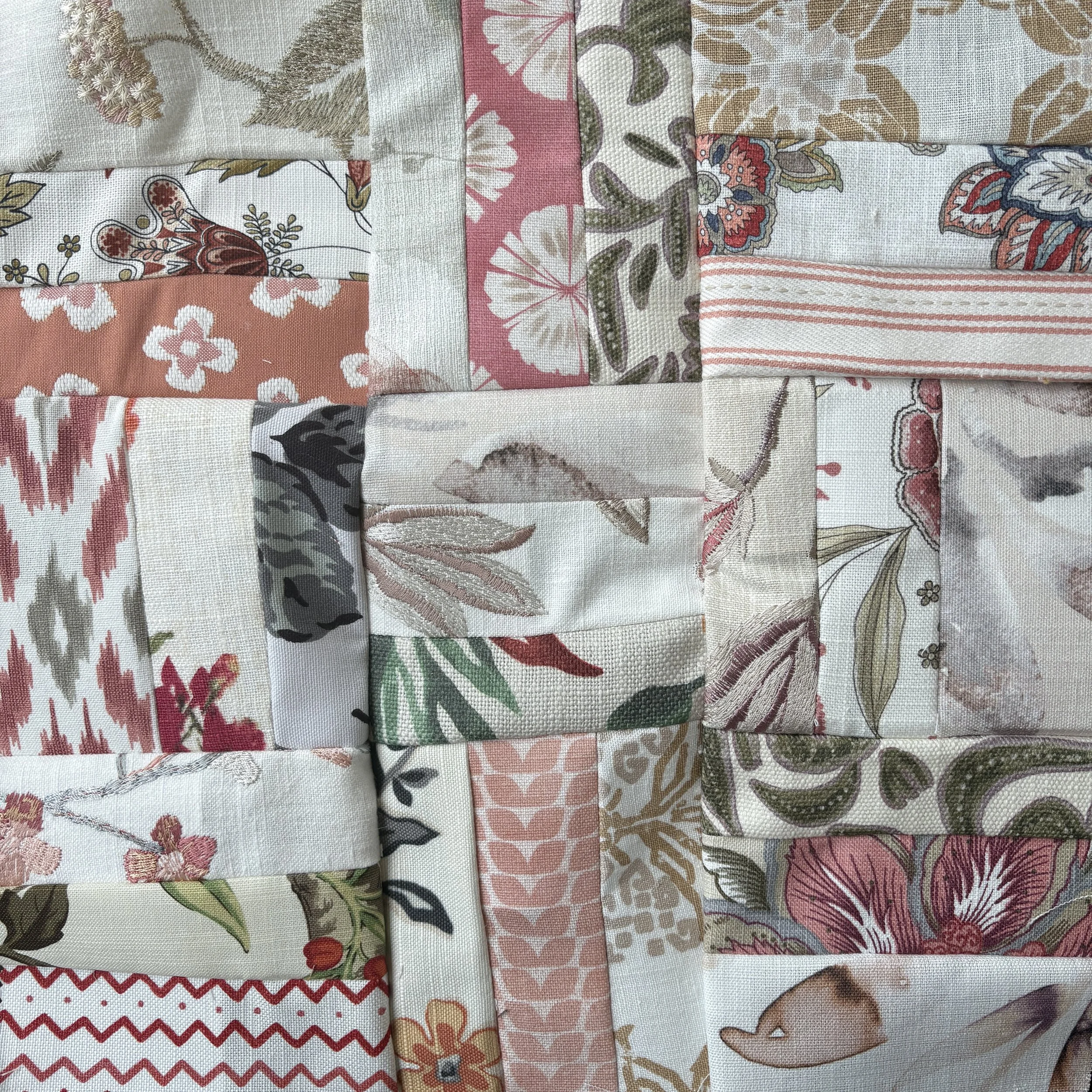
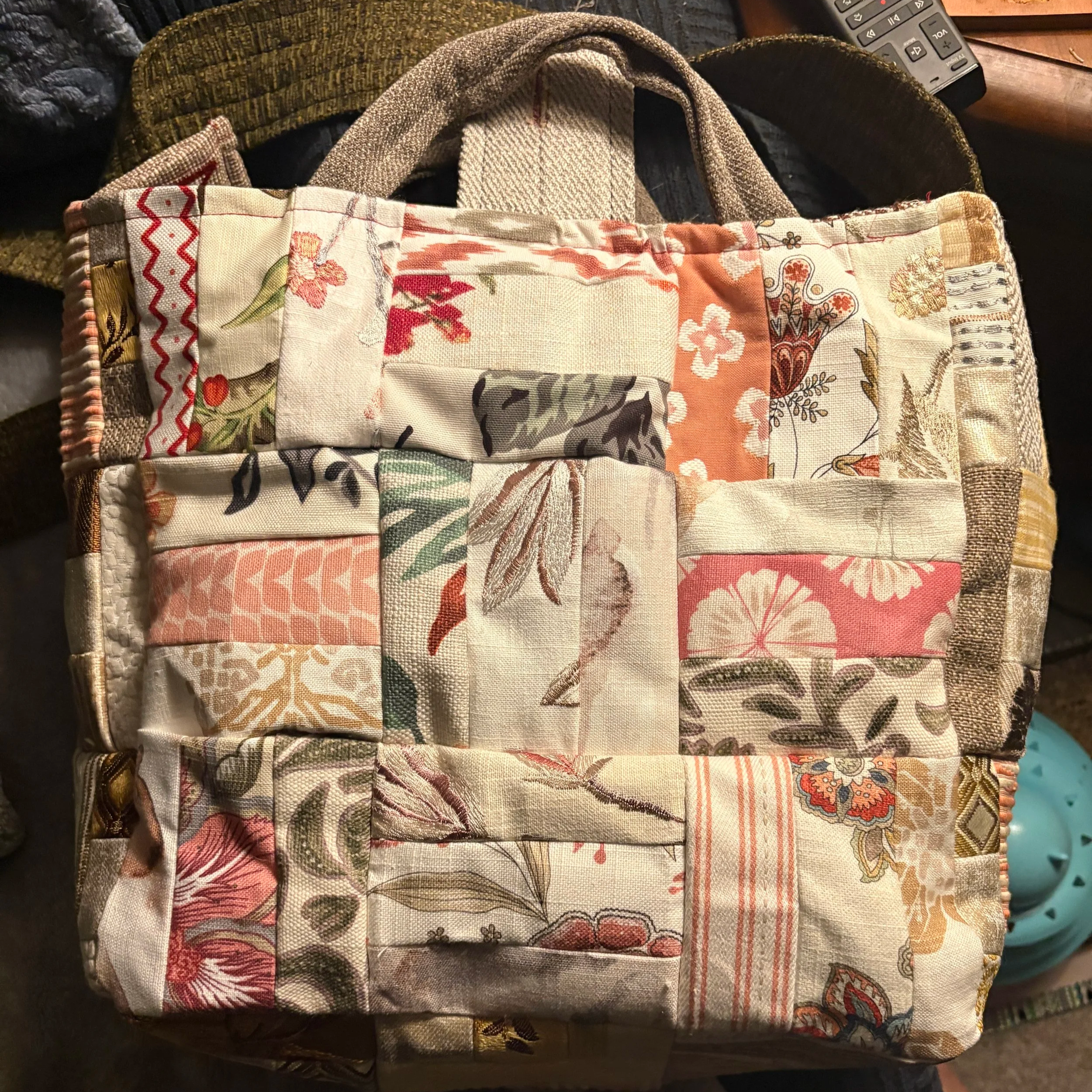
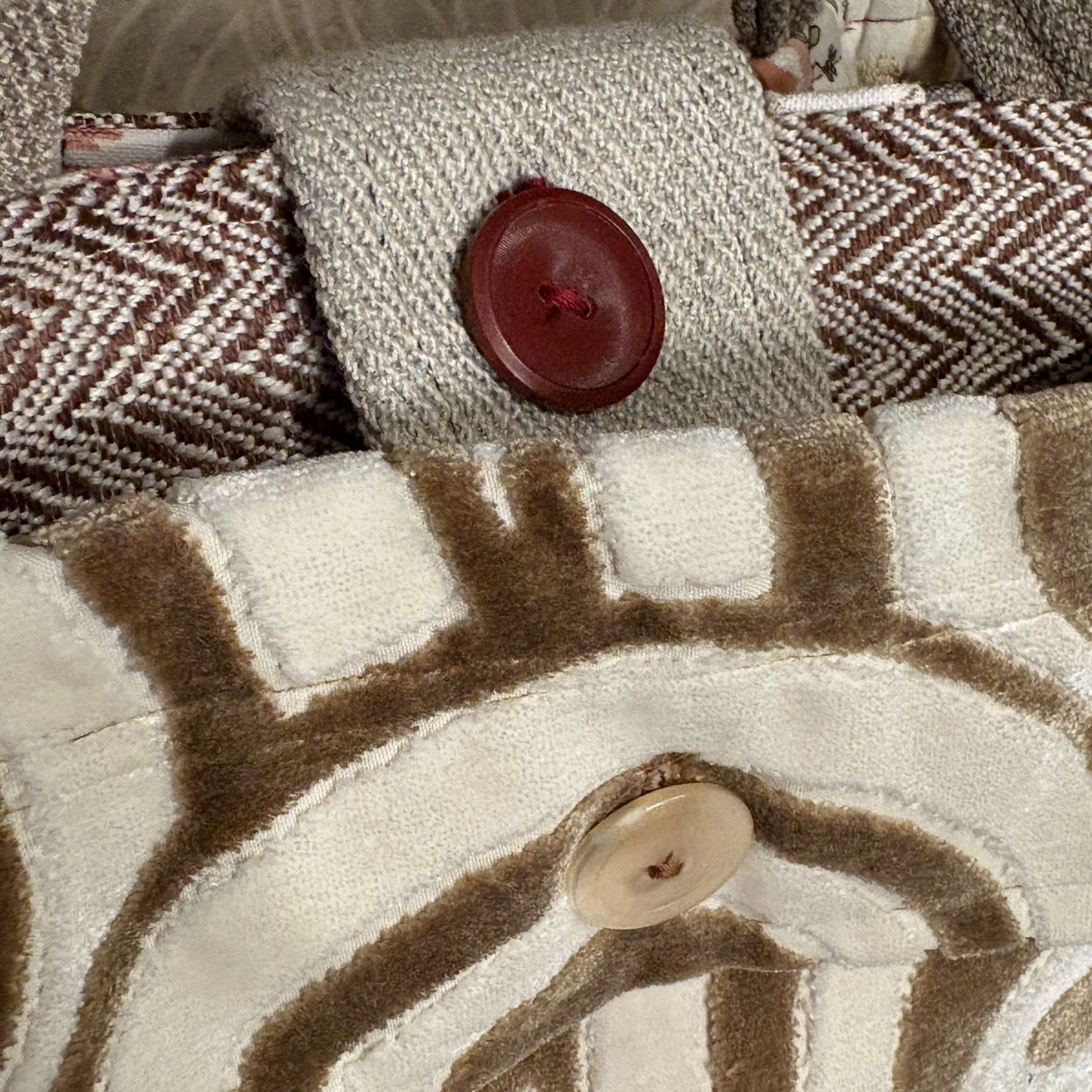
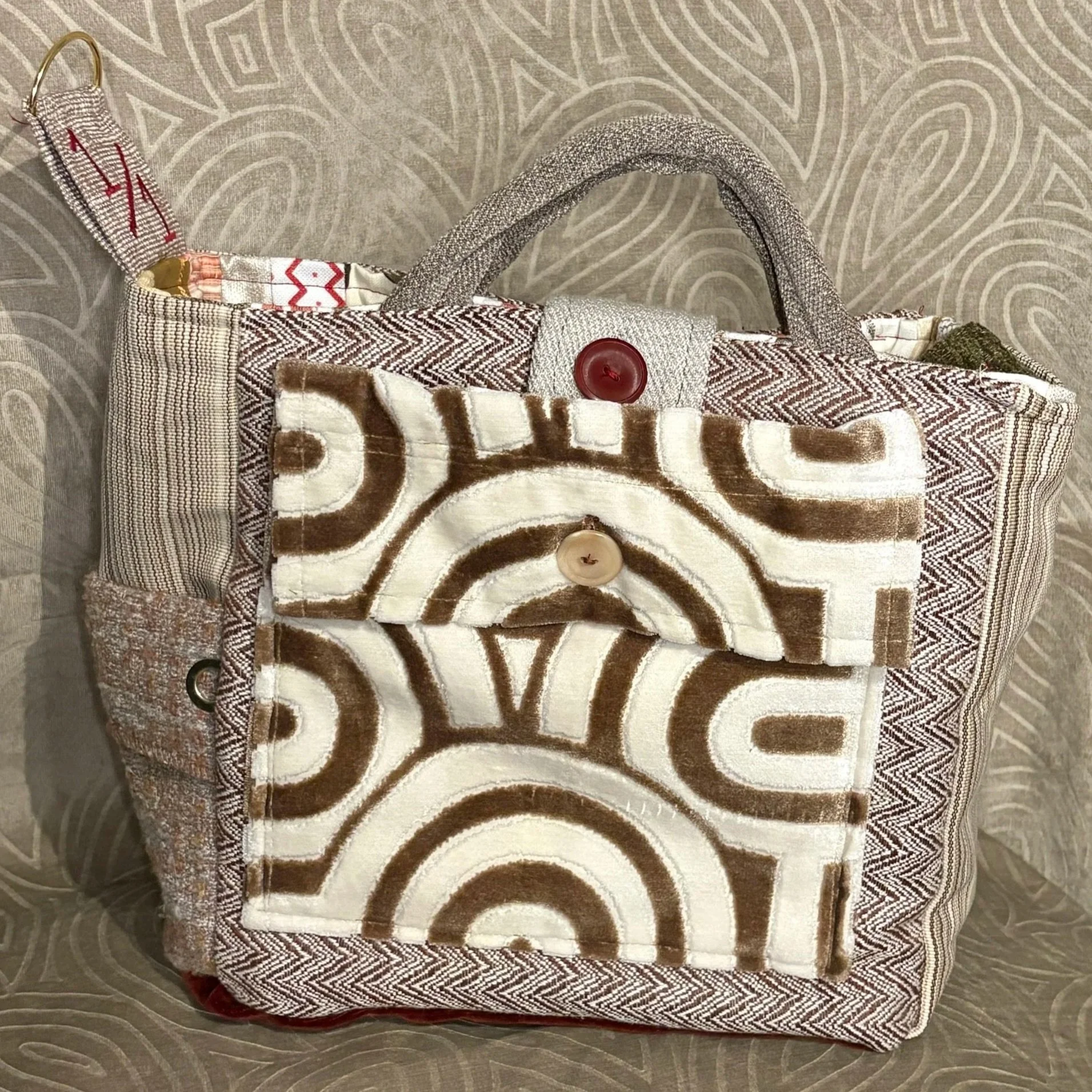
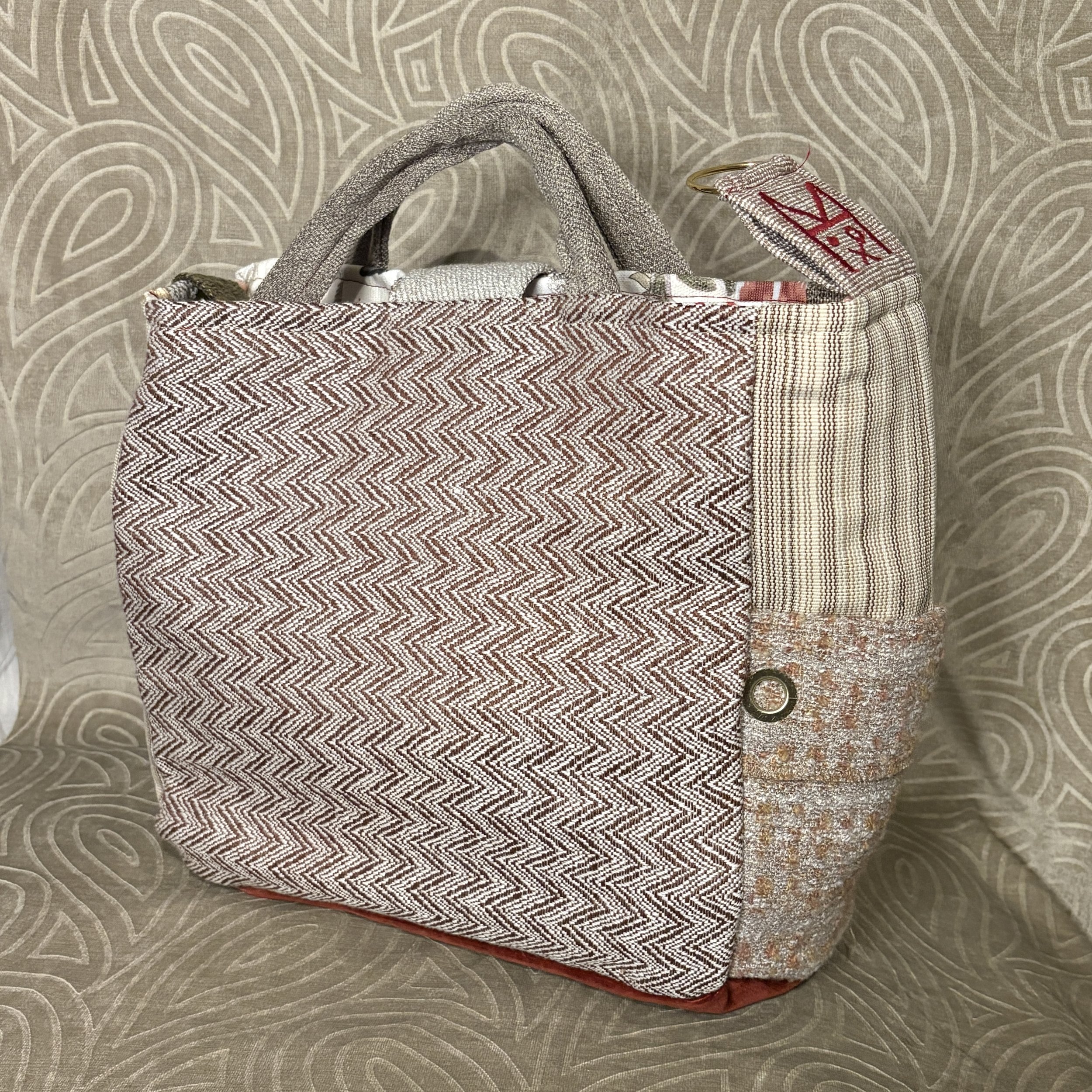
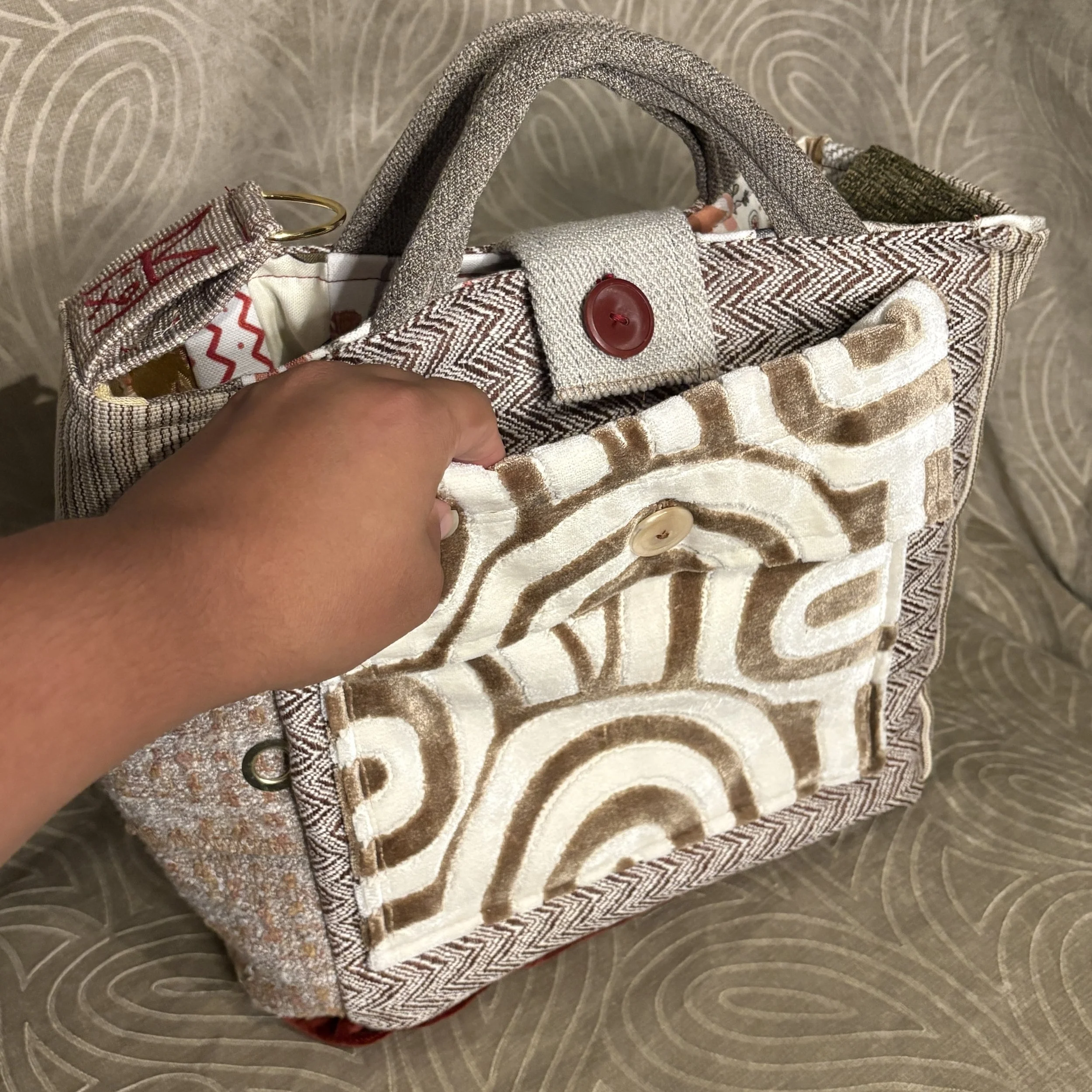
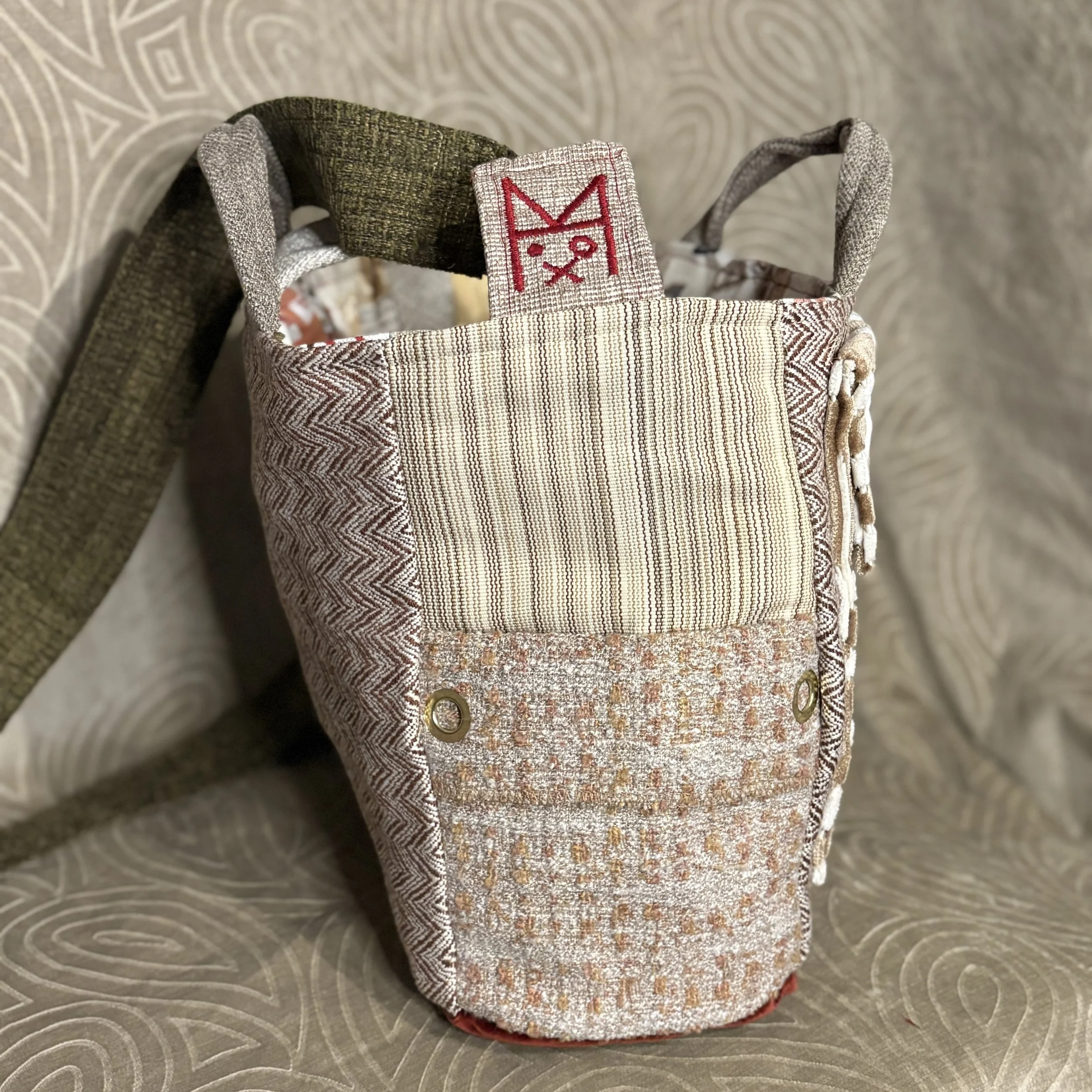
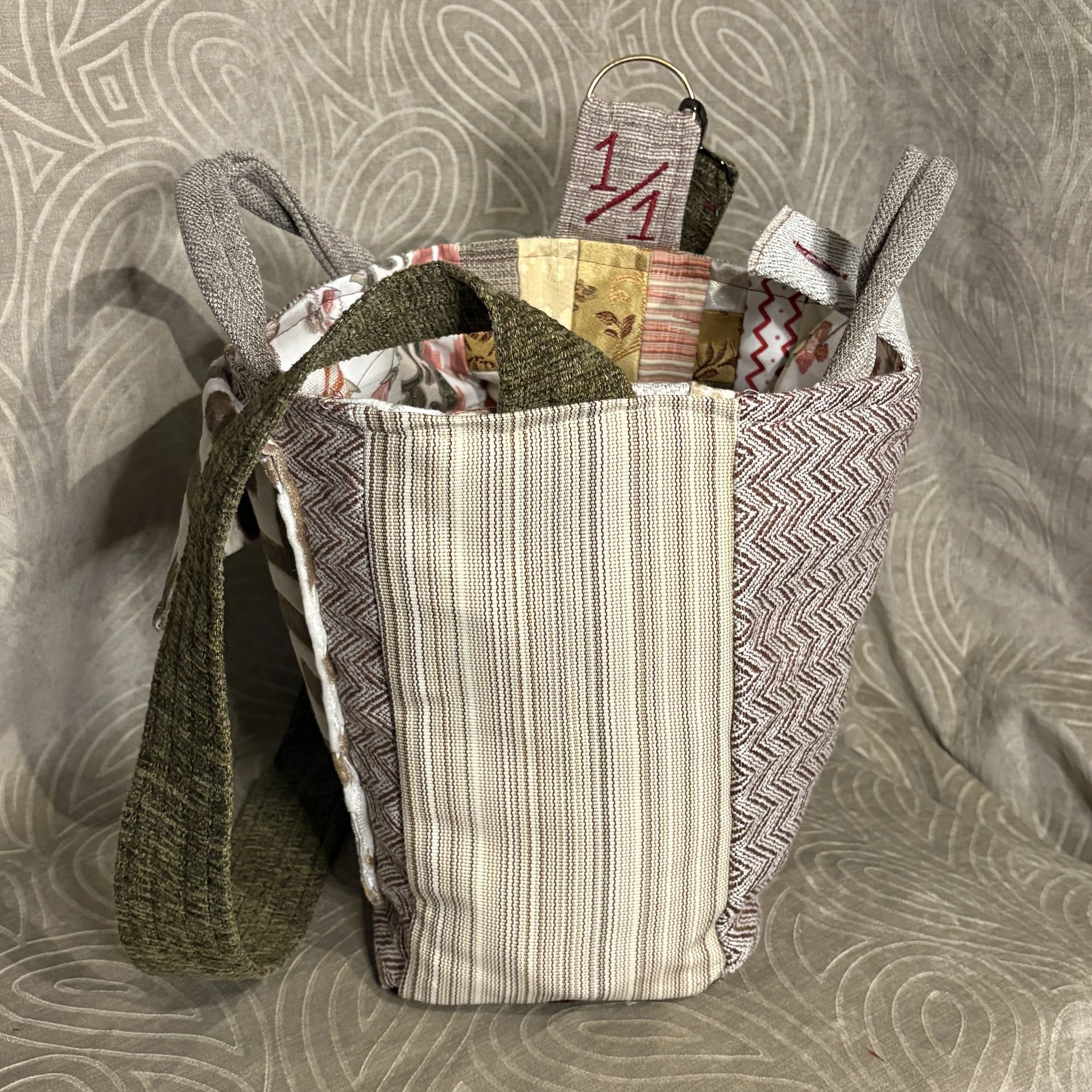
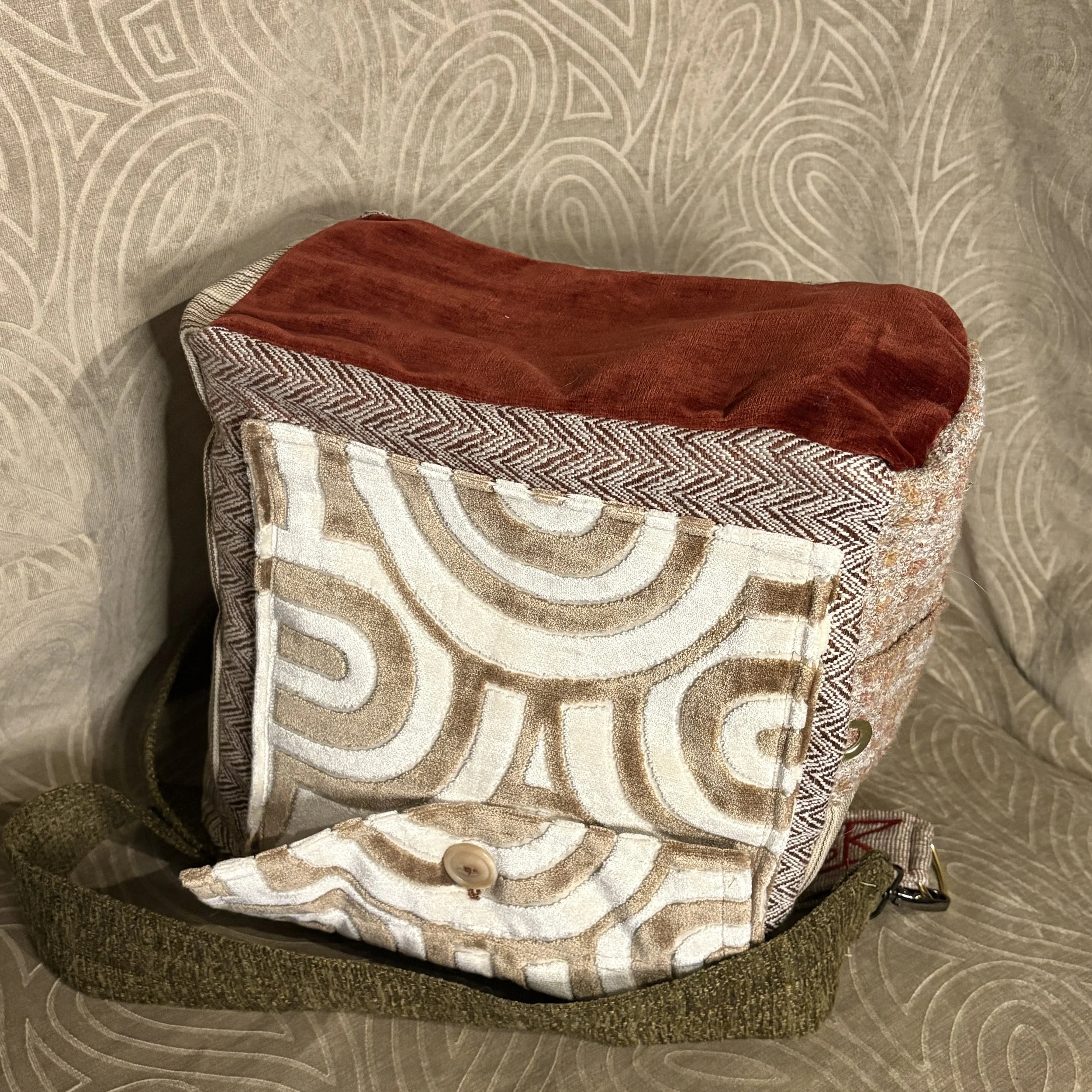
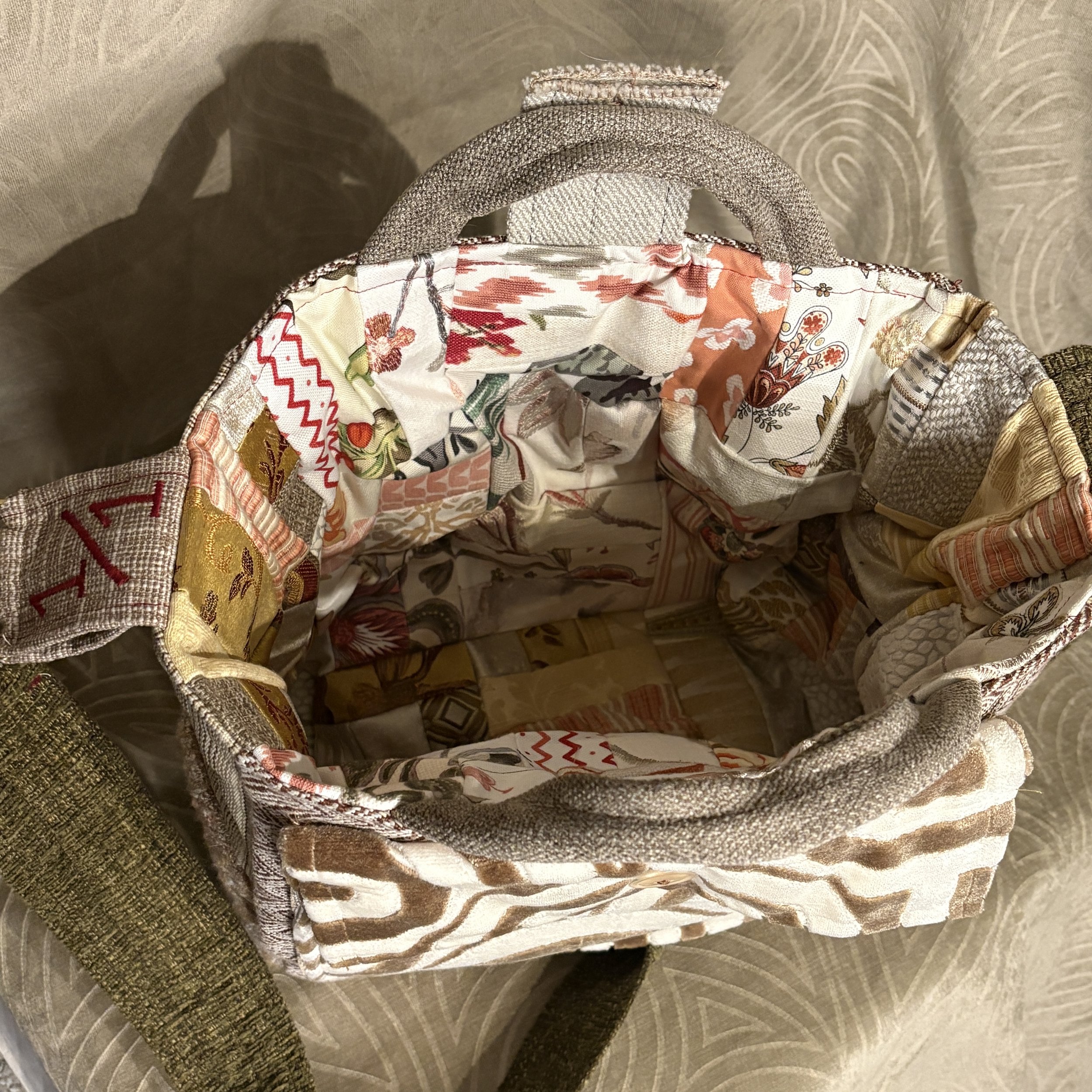
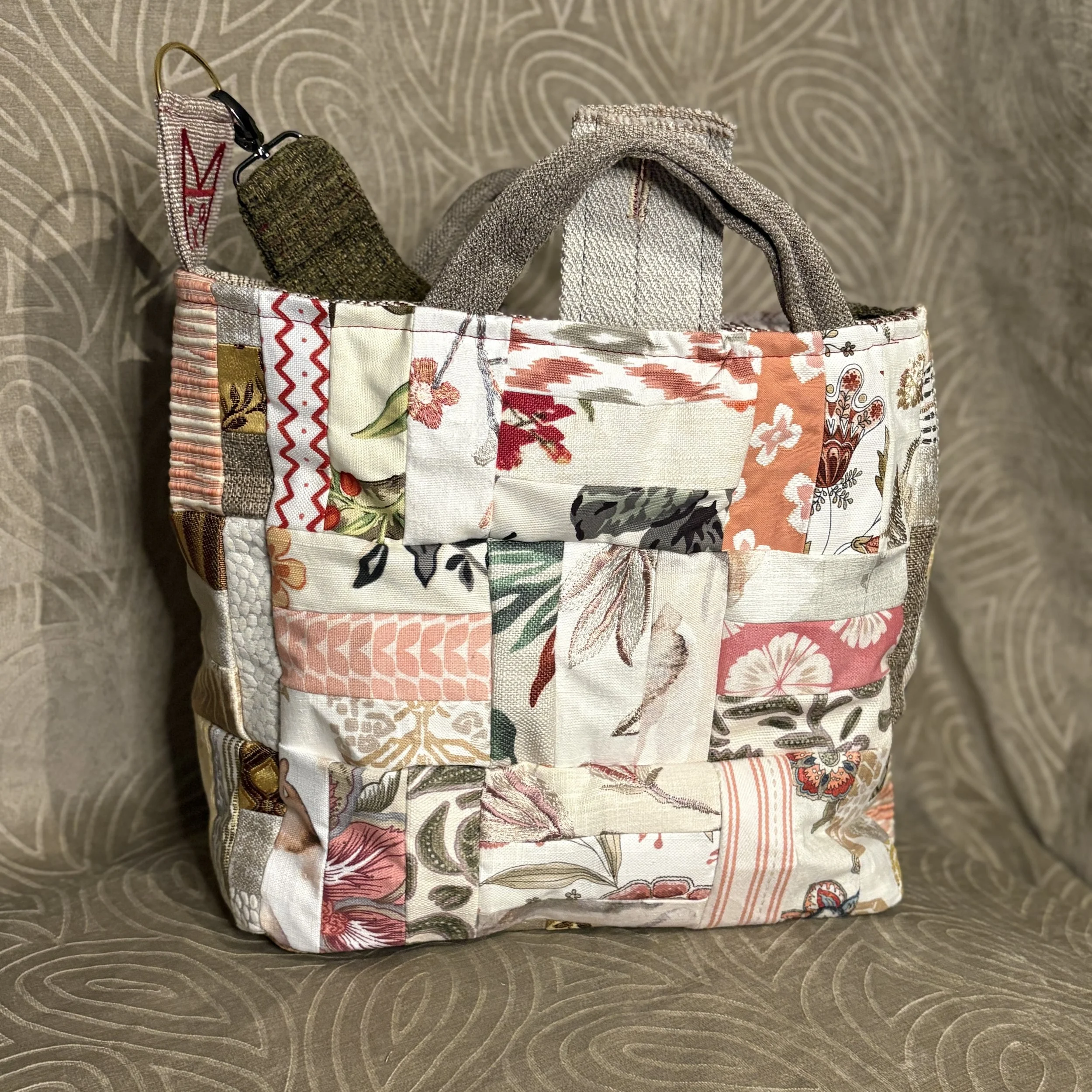
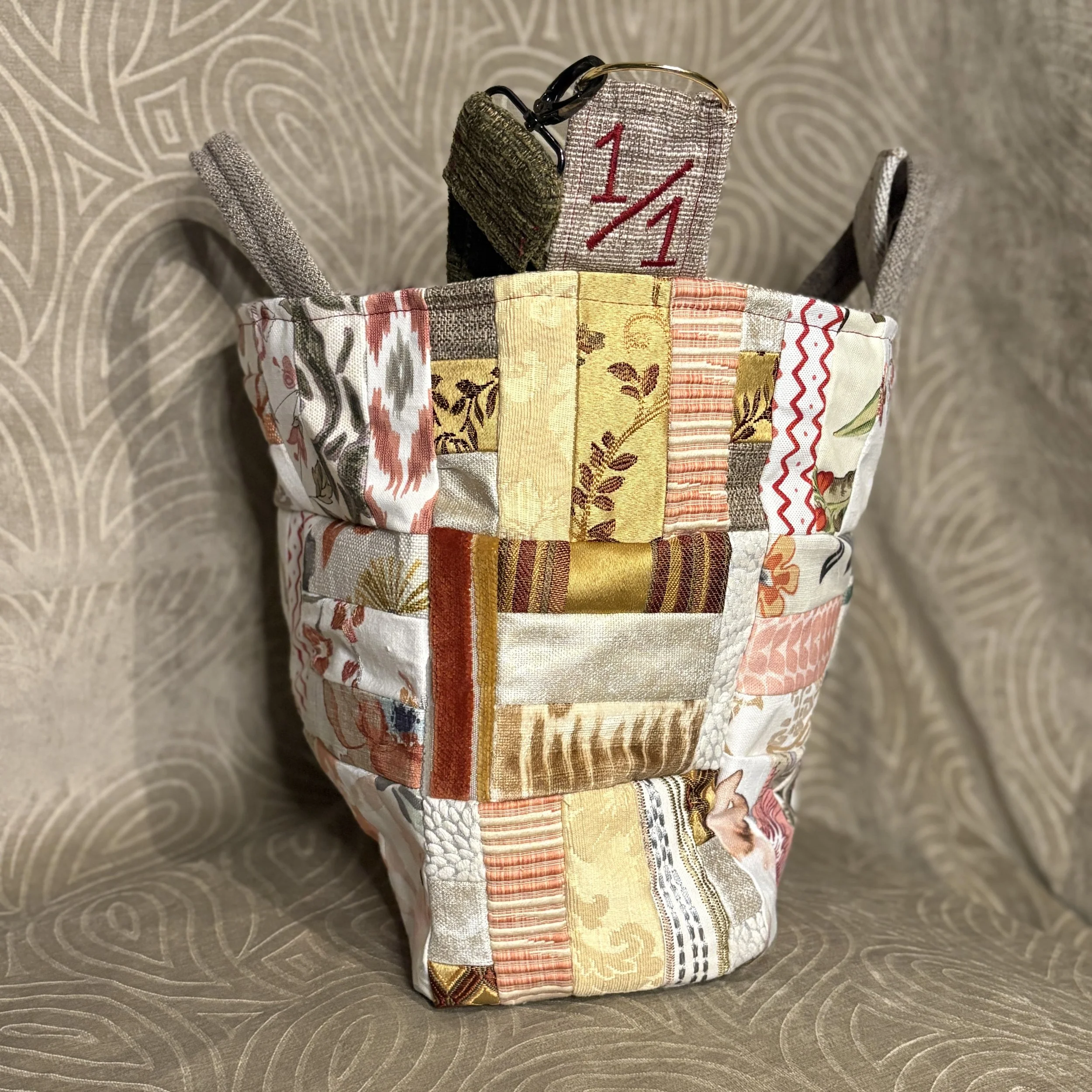
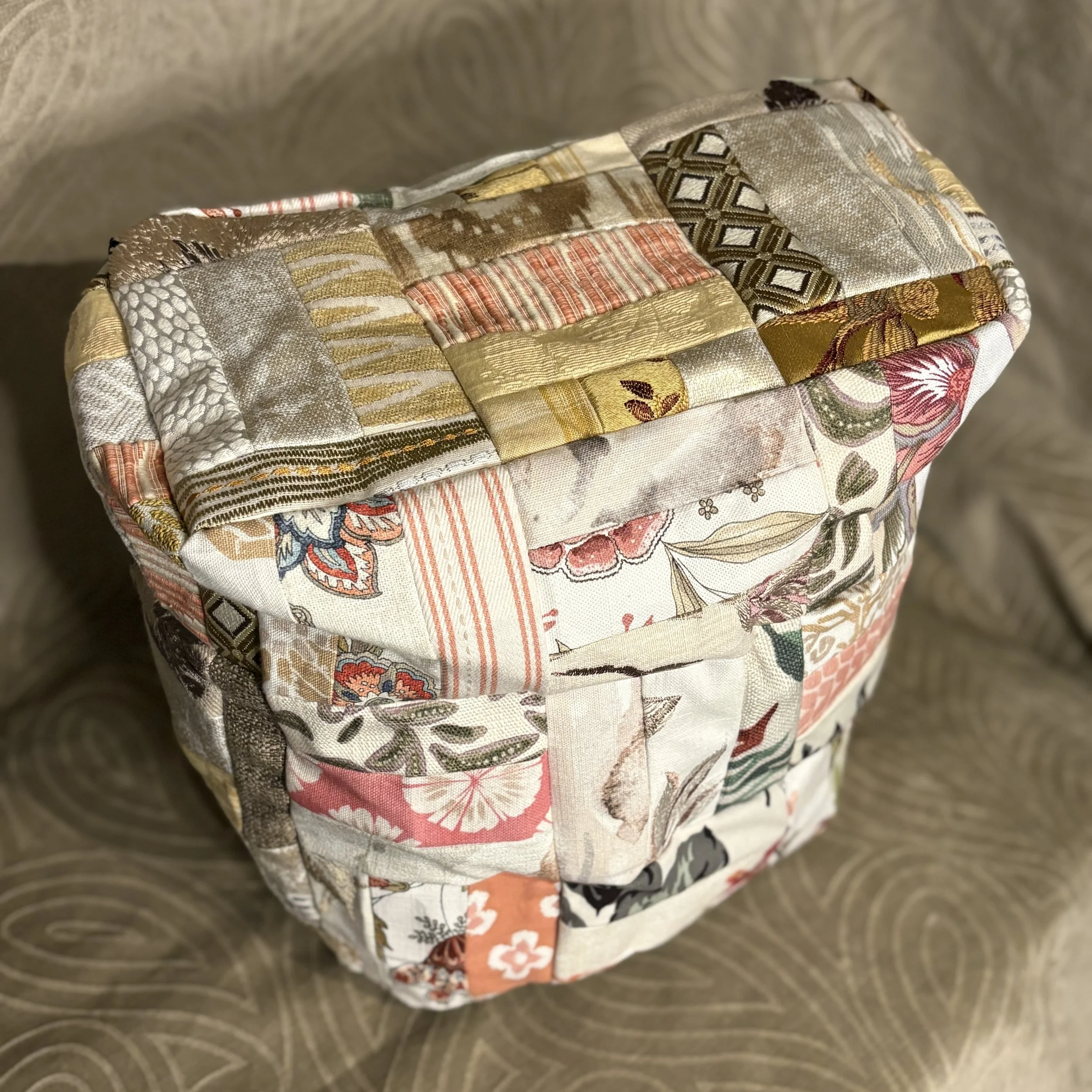
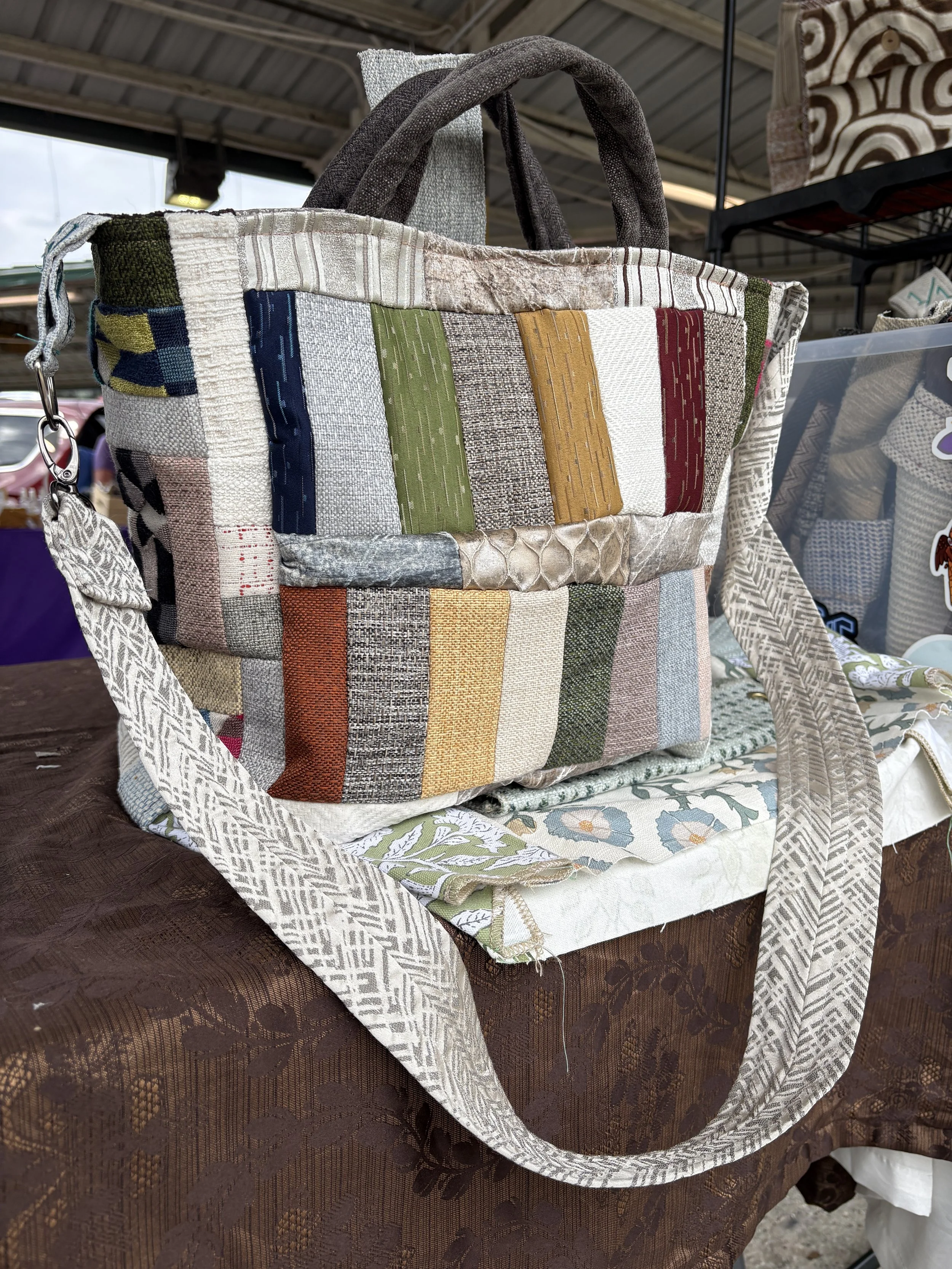
Another instance of creation born at the market table rather than on the Studio floor, in this case a rather flowery affair, and one I was aware wouldn’t be too much of a strain on the brain. This VHV (Vertical-Horizontal-Vertical) Basketweave was a reflection on the last bits of Summer, very breezy, very sunny, and yet grounded as the autumnal transition awaits around the bend. I made sure that the runner had golds for sunrays and that the overall palette was one of light florals, complimenting the muted red and brown of the exterior shell. As I remark, the thread color choice for the MHD Tag is most often Teal or Blue-Green, but there are always exceptions to the rule, and with this scheme, a Dark Red/Maroon Logo was fitting.
These entries are bookended by market bags, with the quintet in the middle being created in the weeks between. The market is a mere 5 hour chunk of one day of the week, and I cherish this period, as there are children who come over that have either never seen a sewing machine in action or are familiar with work done by their parents and grandparents that they will immediately associate with the work being done in front of their eyes. One of the funniest repeated interactions I tend to have is that when passersby do have kids with them, they often say, “Look at what she’s doing on the machine,” and I, who have my head down, proceed to pan my face upward for them to rapidly correct themselves, “OH! He!”. This tickles me every time as someone who doesn’t care what I am being referred to as, and I proceed to shrug it off. The thought/perception of myself or my craft being inherently feminine doesn’t bother me at all. If anything, it makes my participation a bridging factor, with me seeing the merit in the work already having been done and seeking to intersect further by making my own mark/spin on it. (Yet more interdisciplinary dimensions to this as an experiment within craft-space)
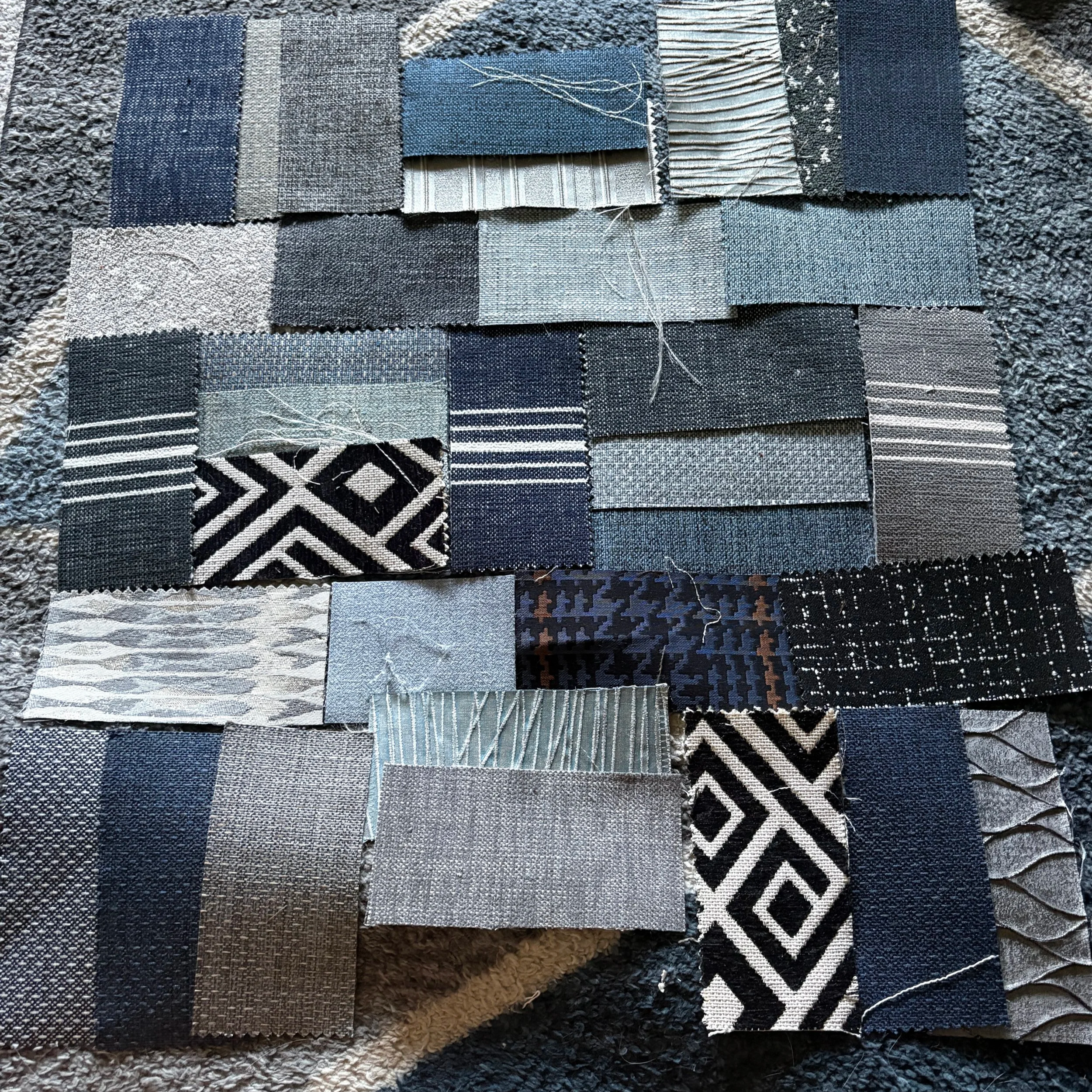
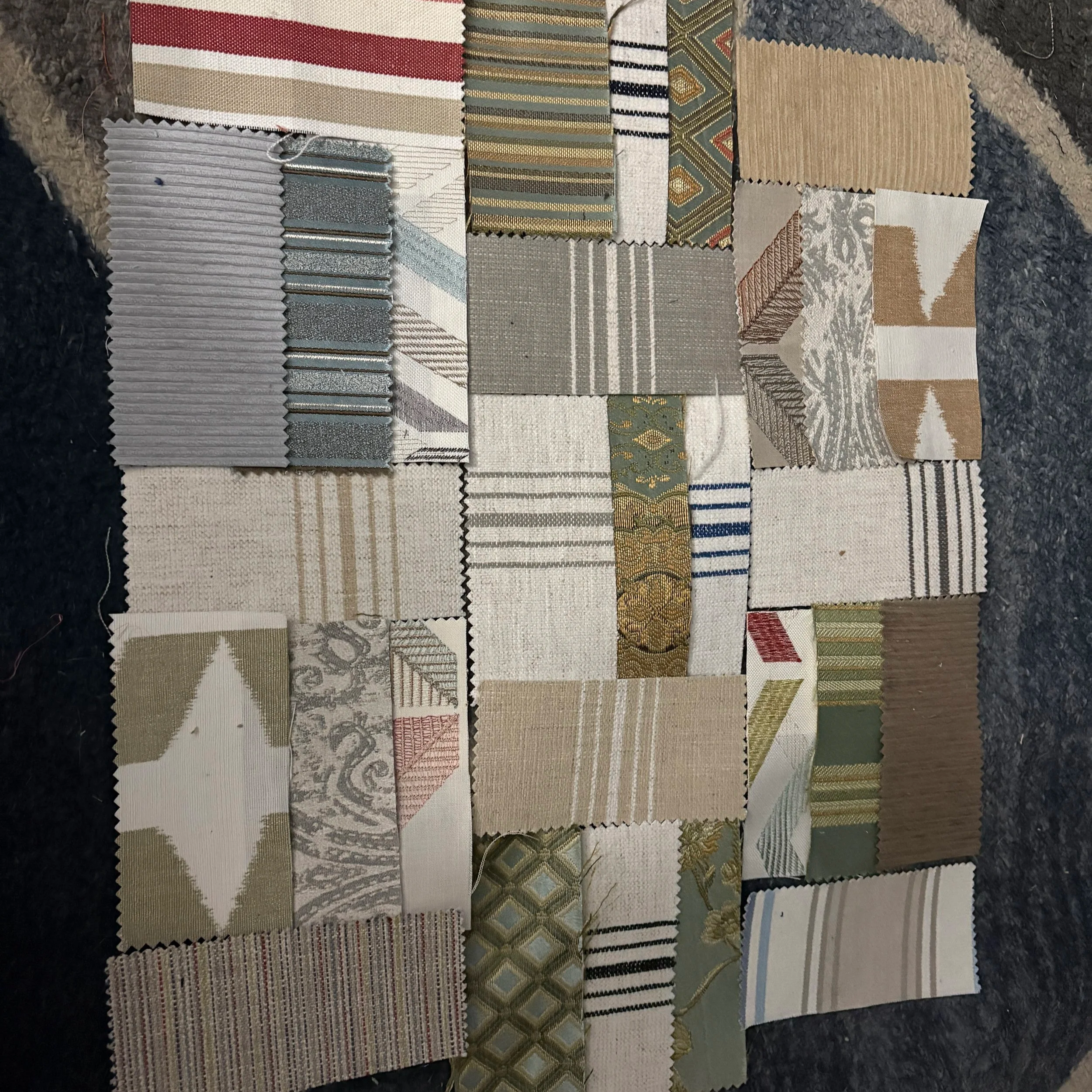
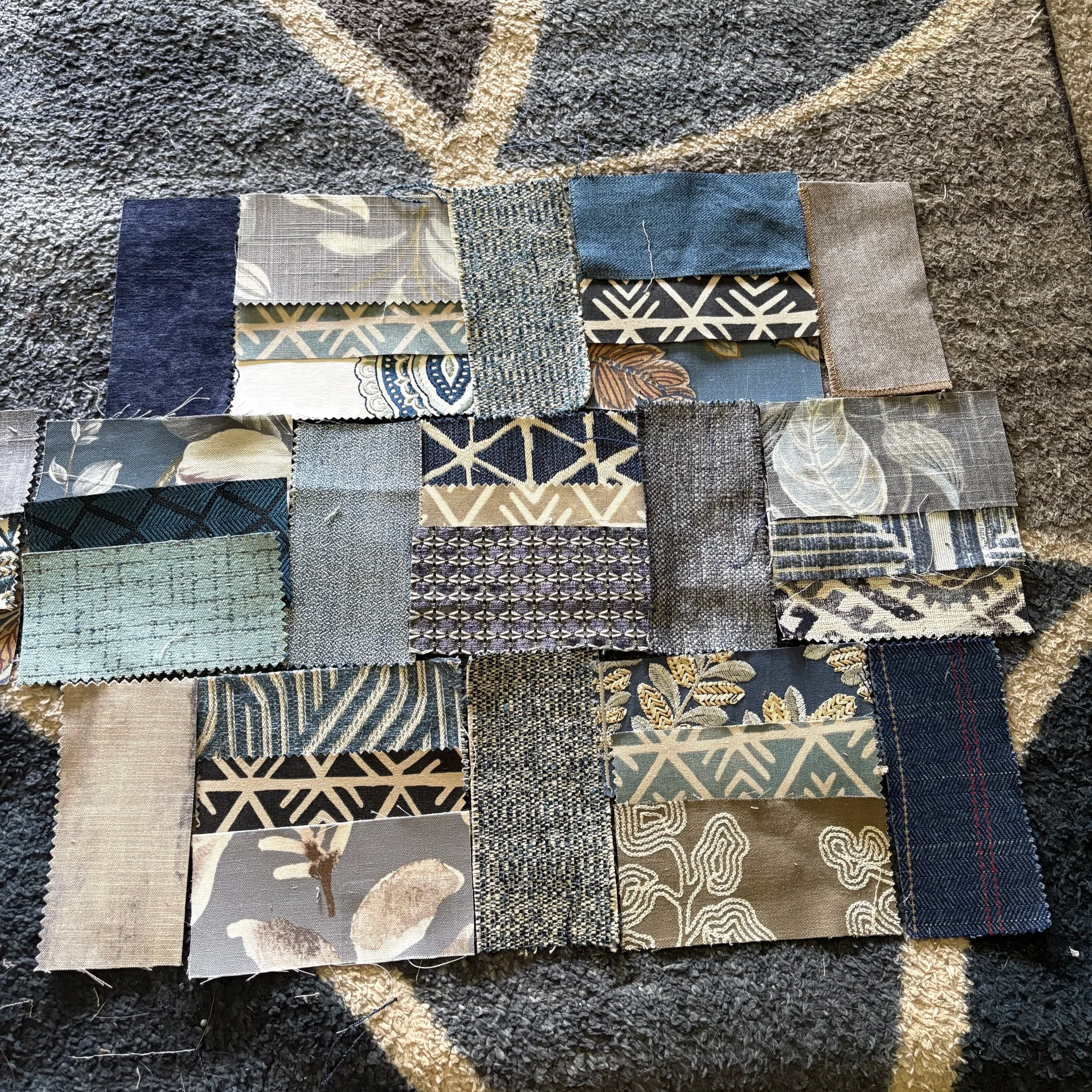
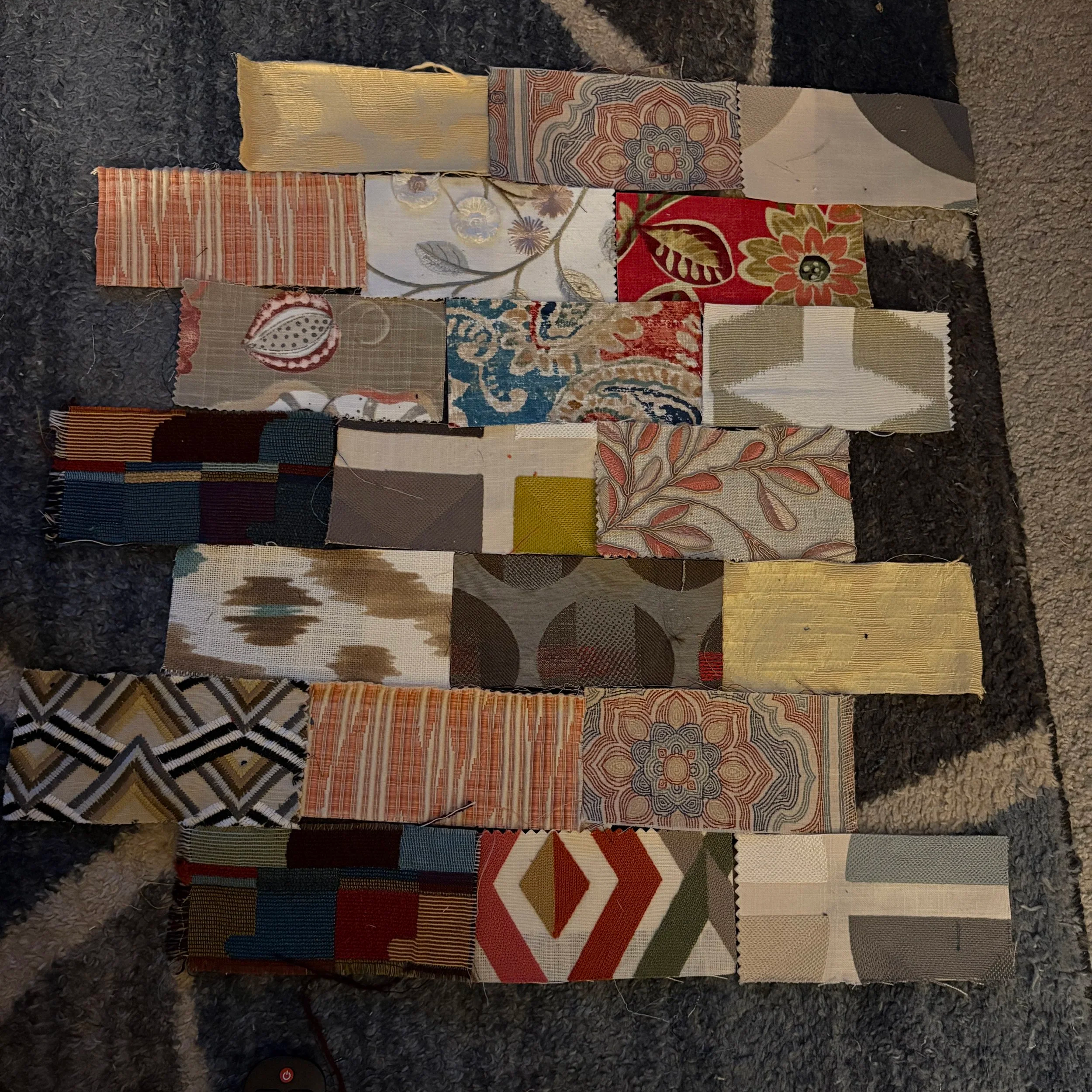
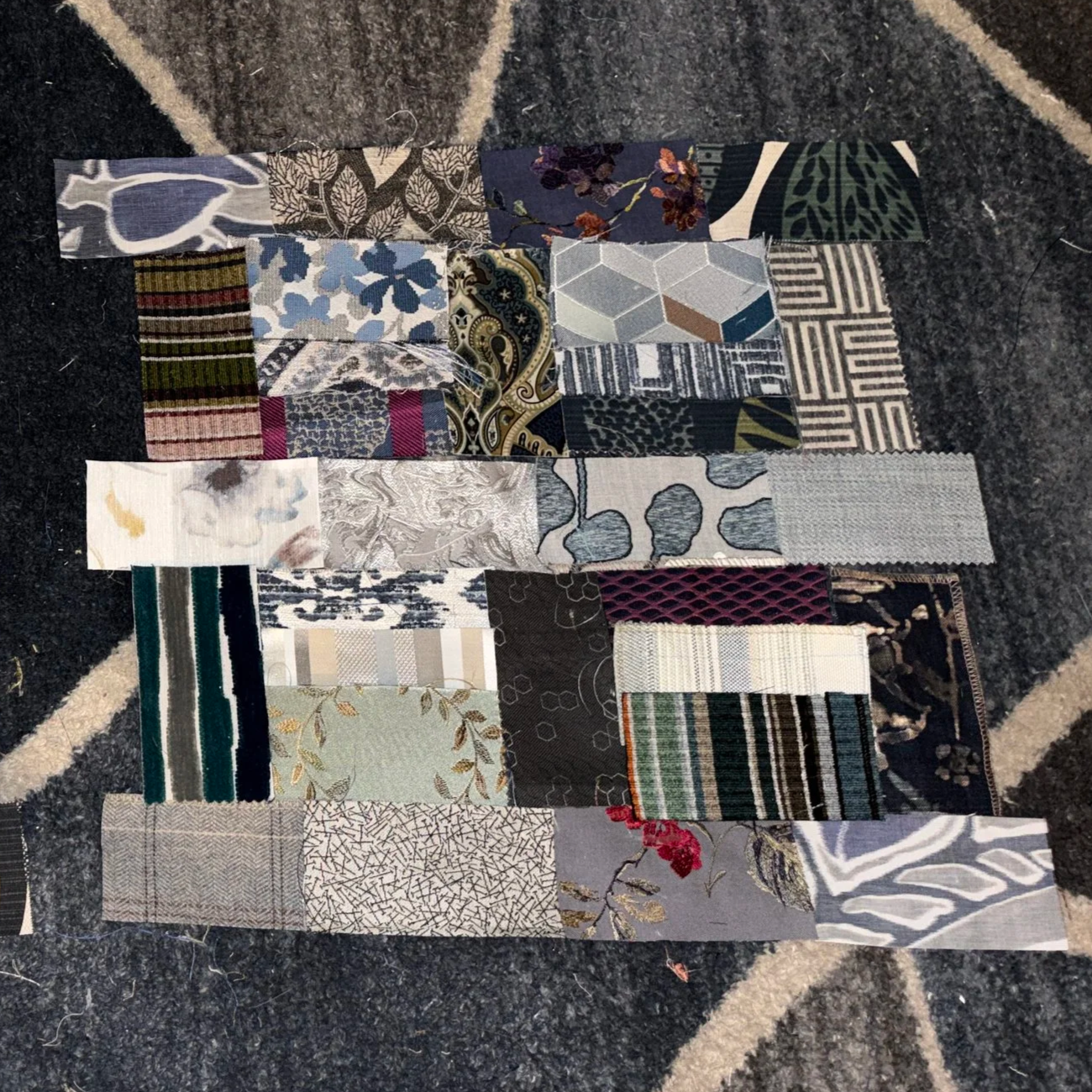
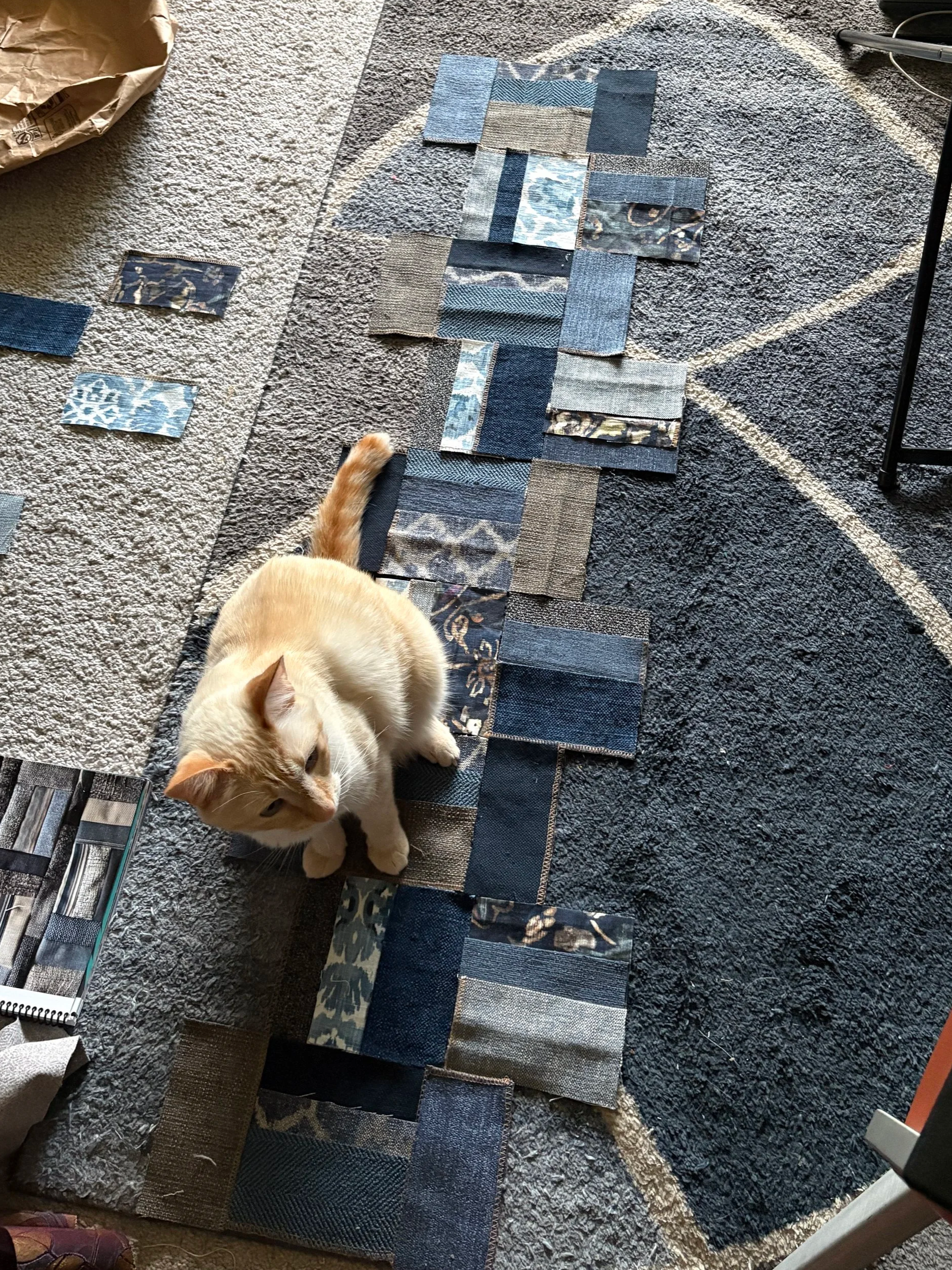
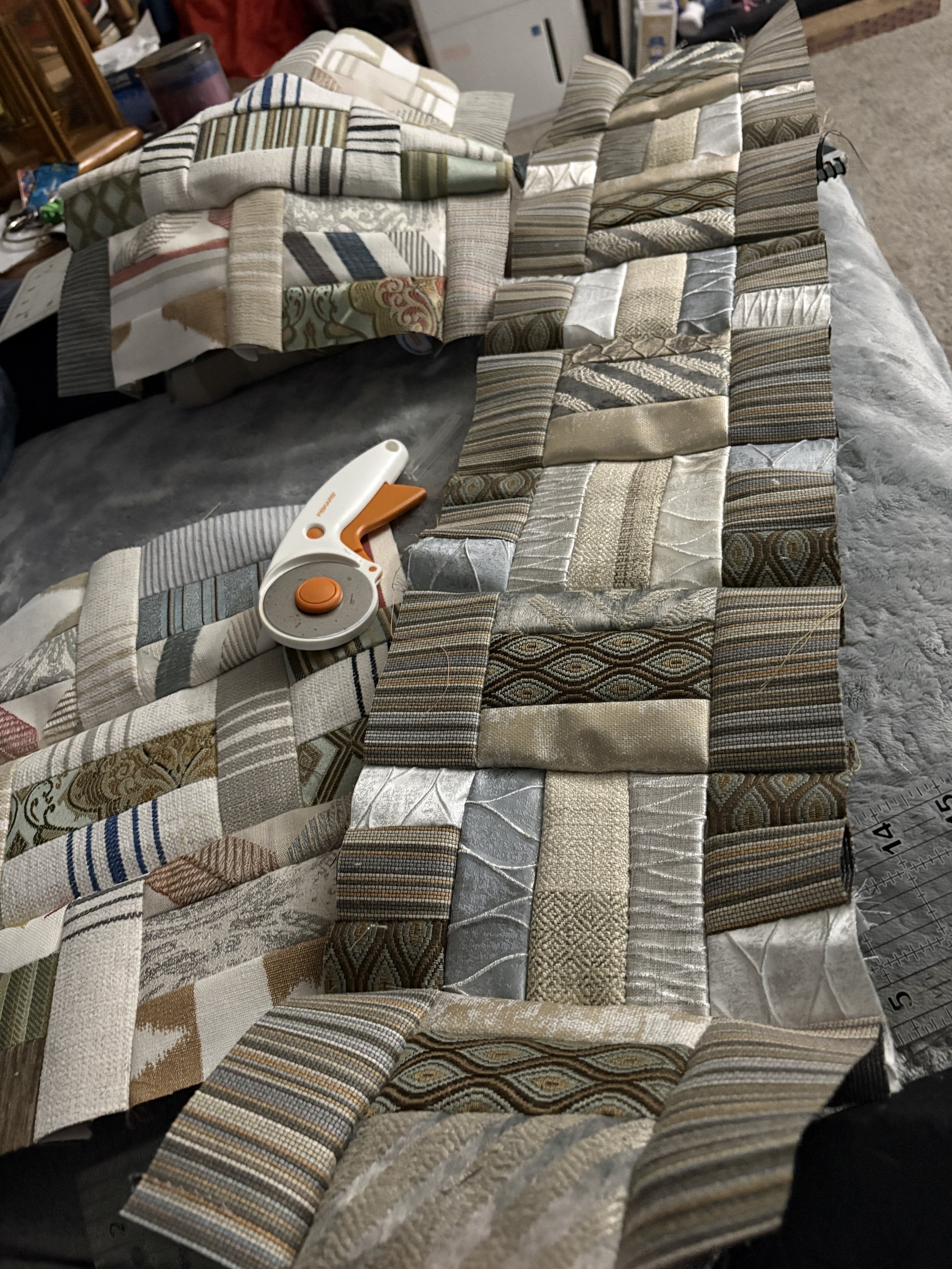
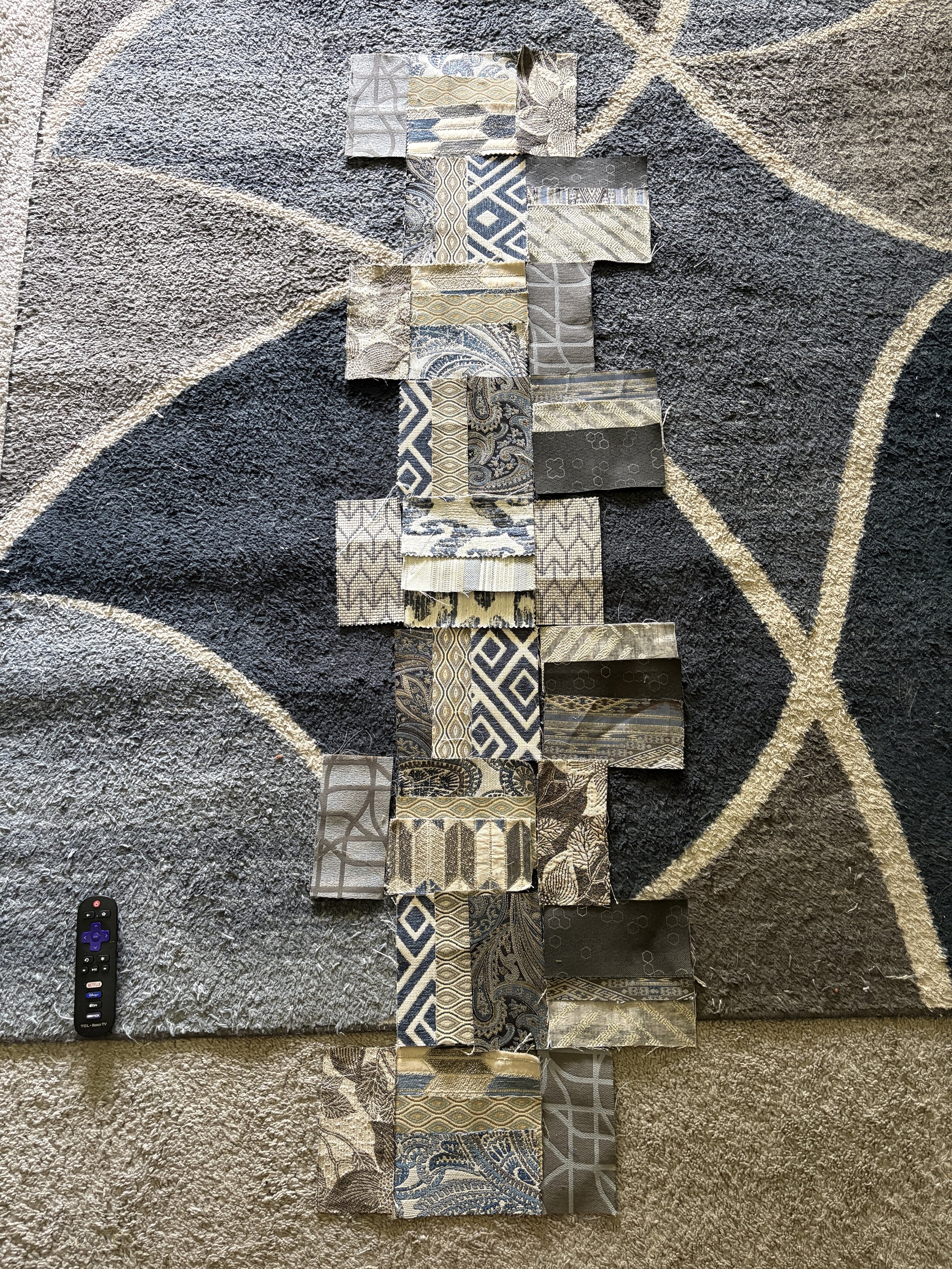
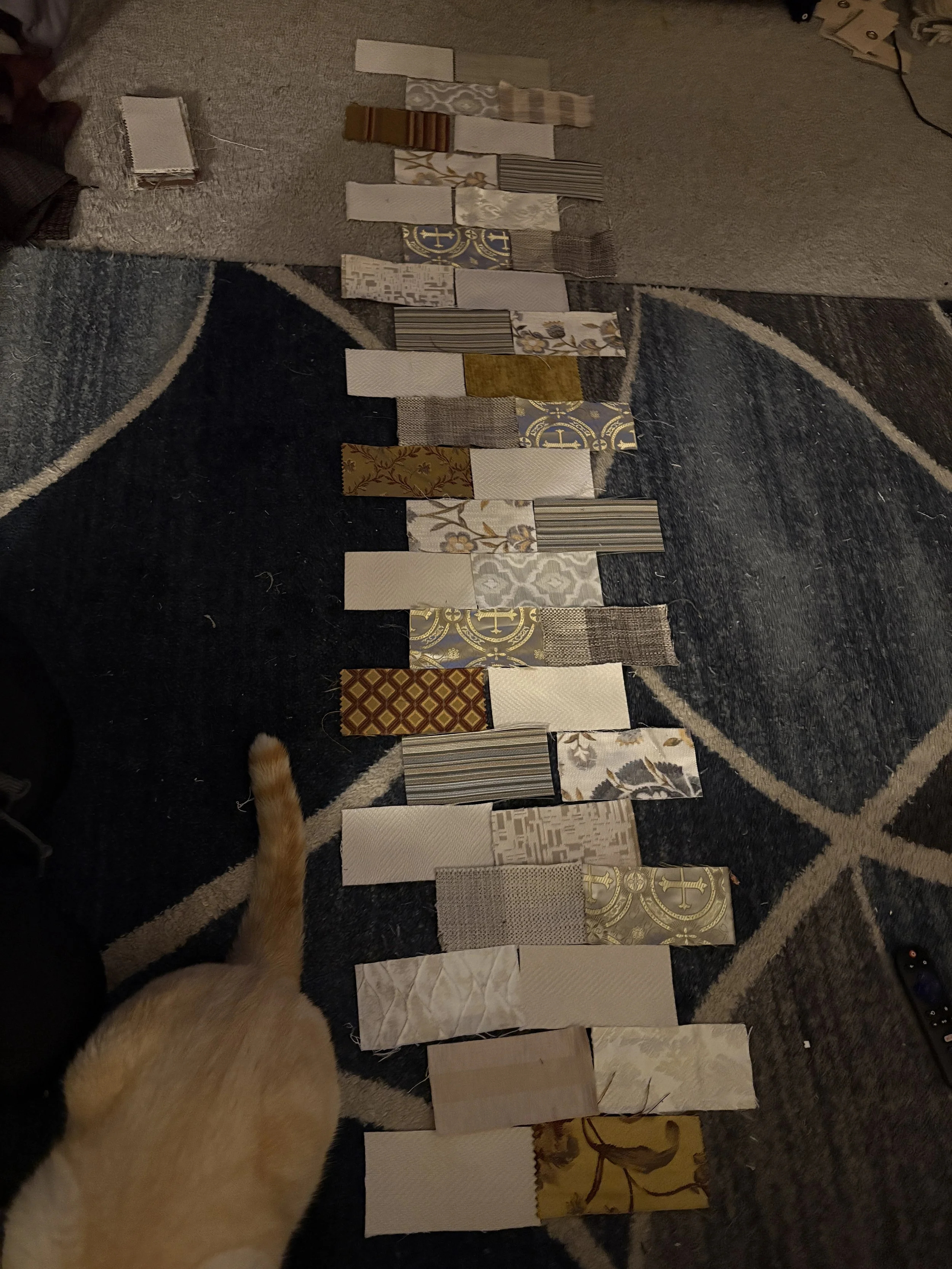
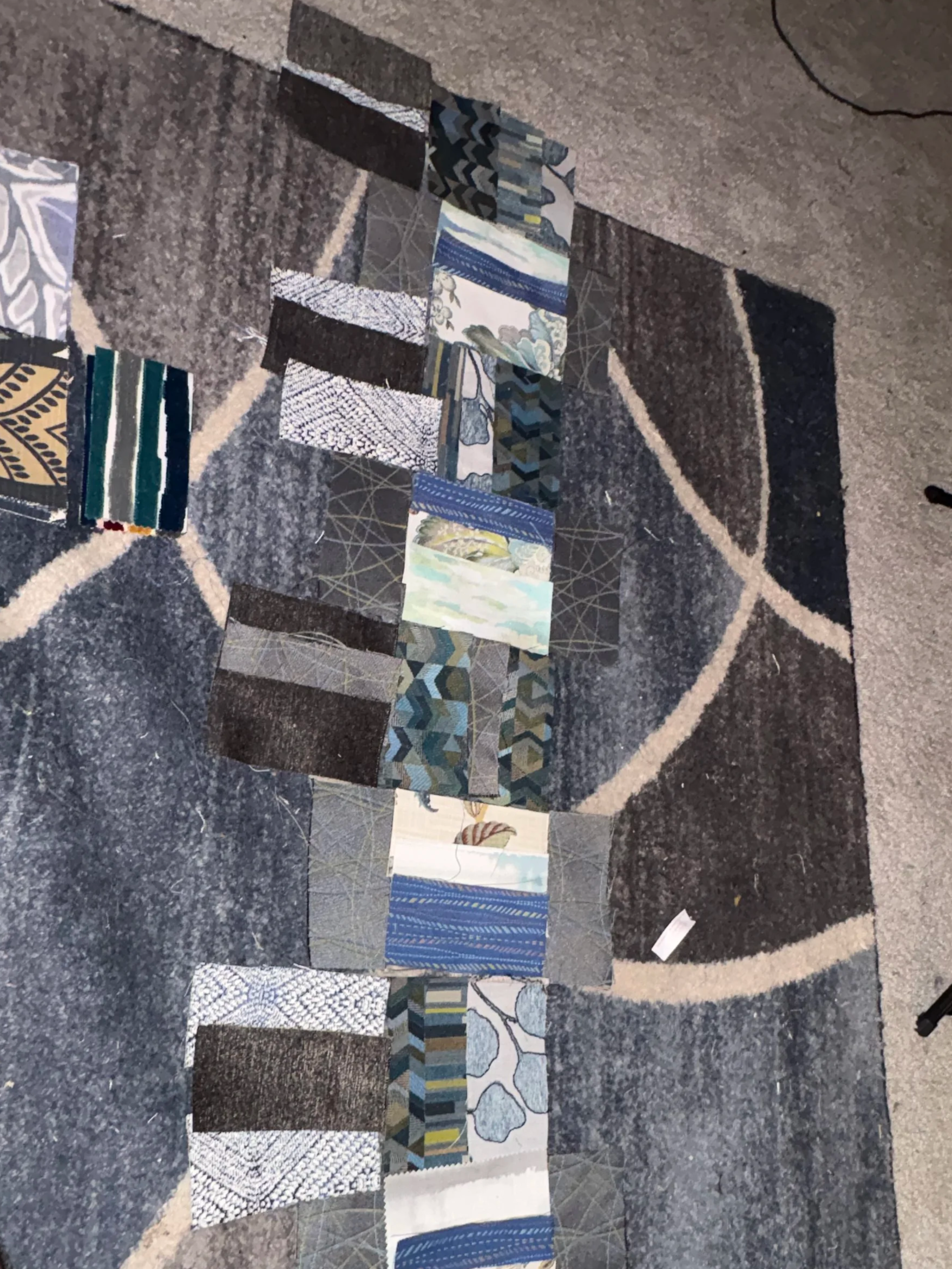
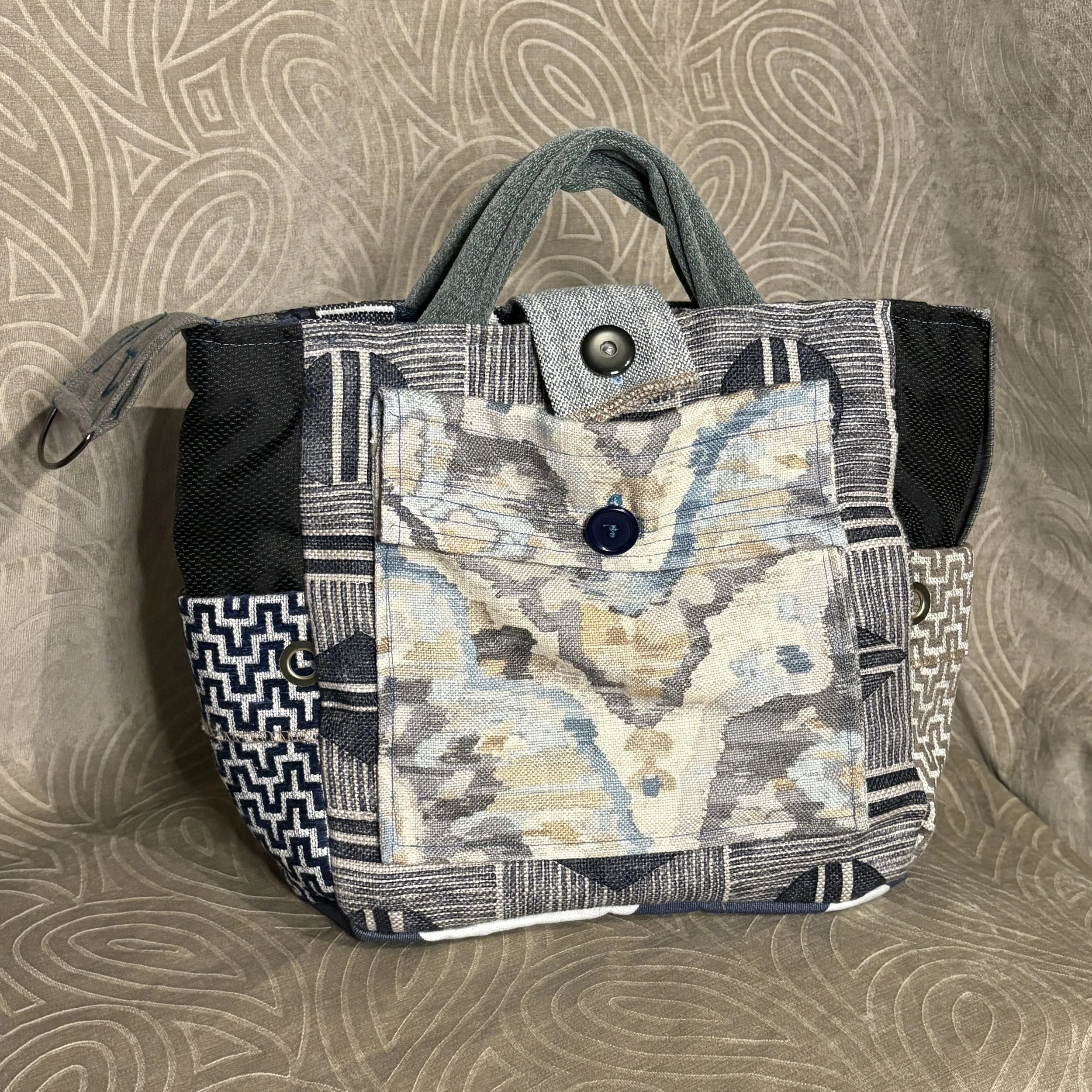
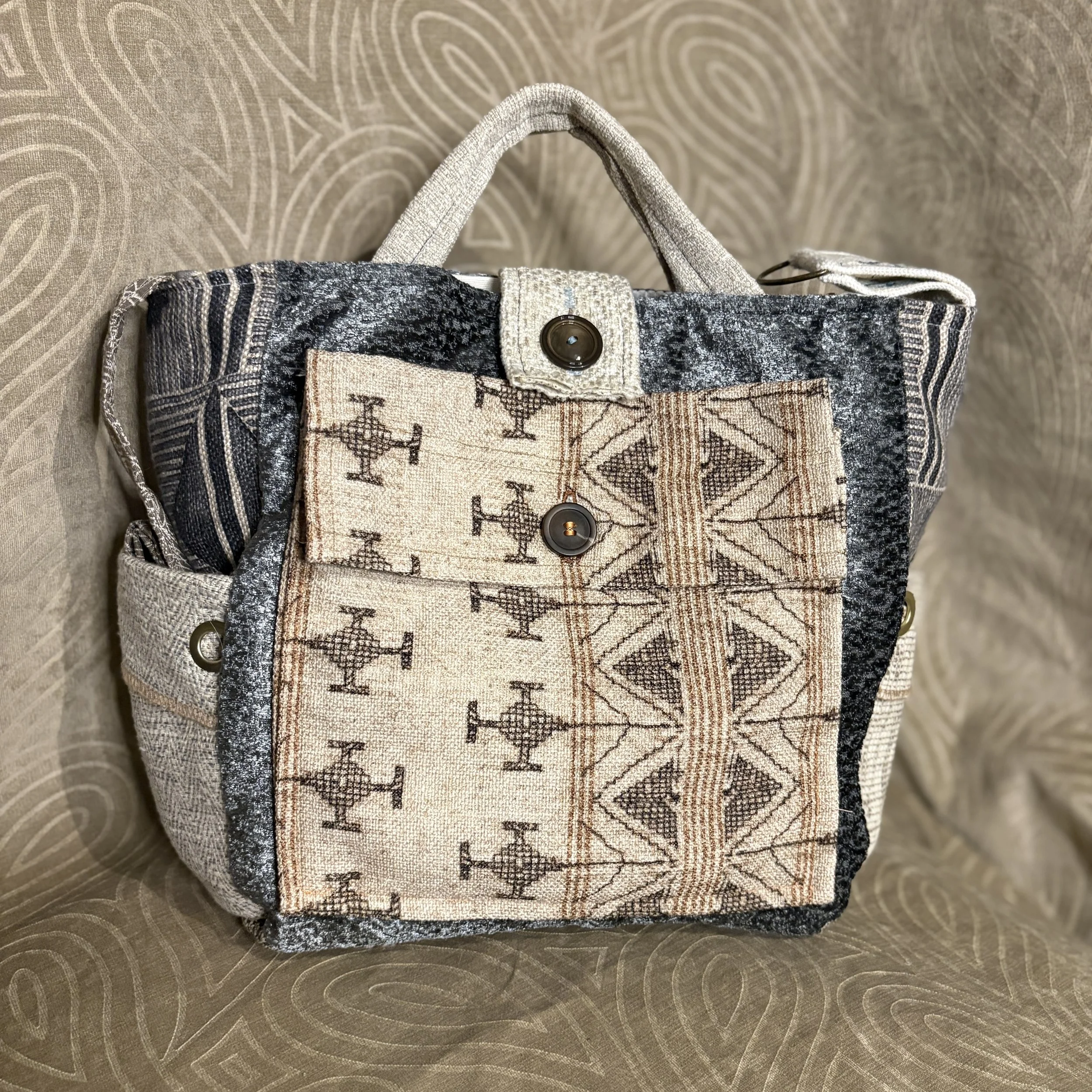
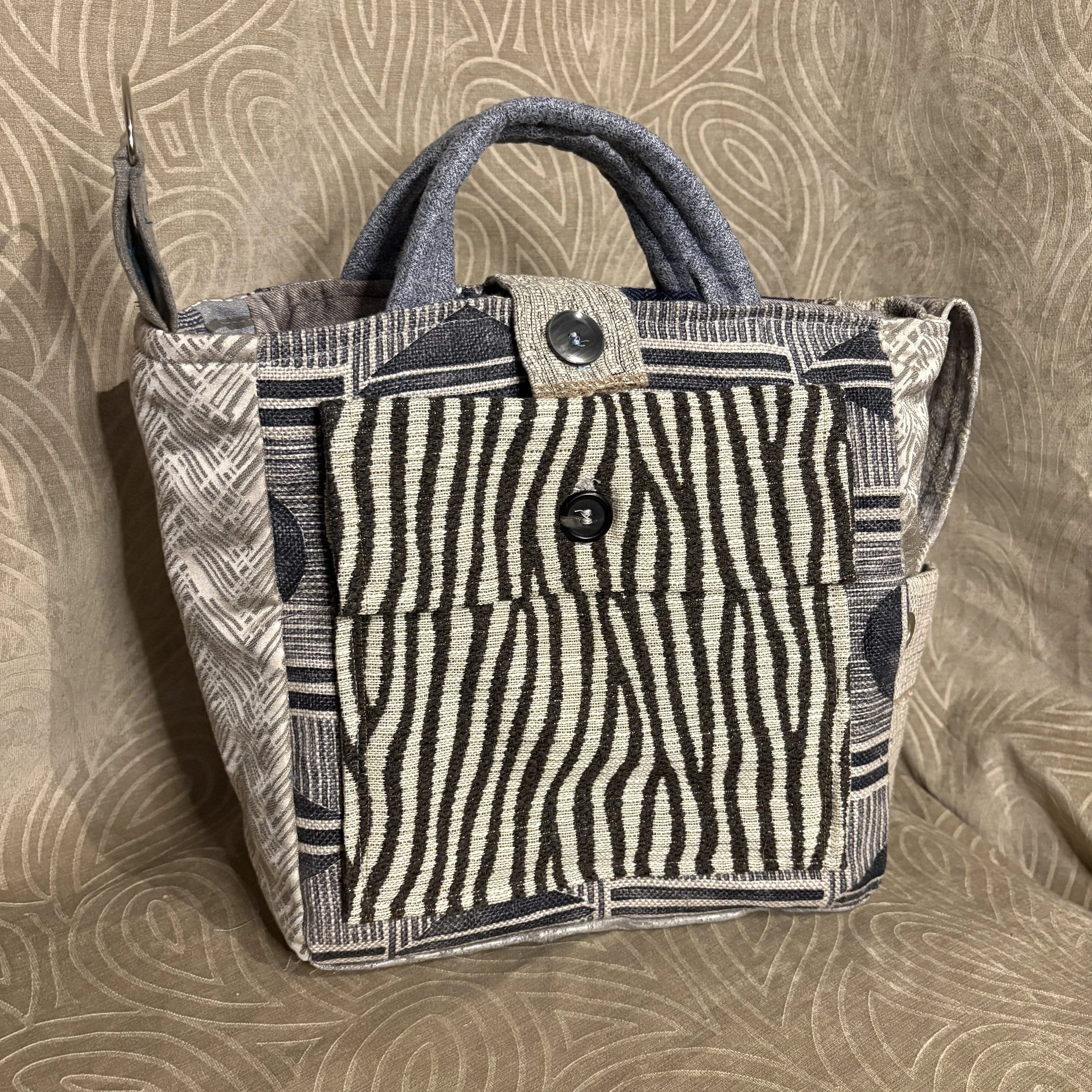
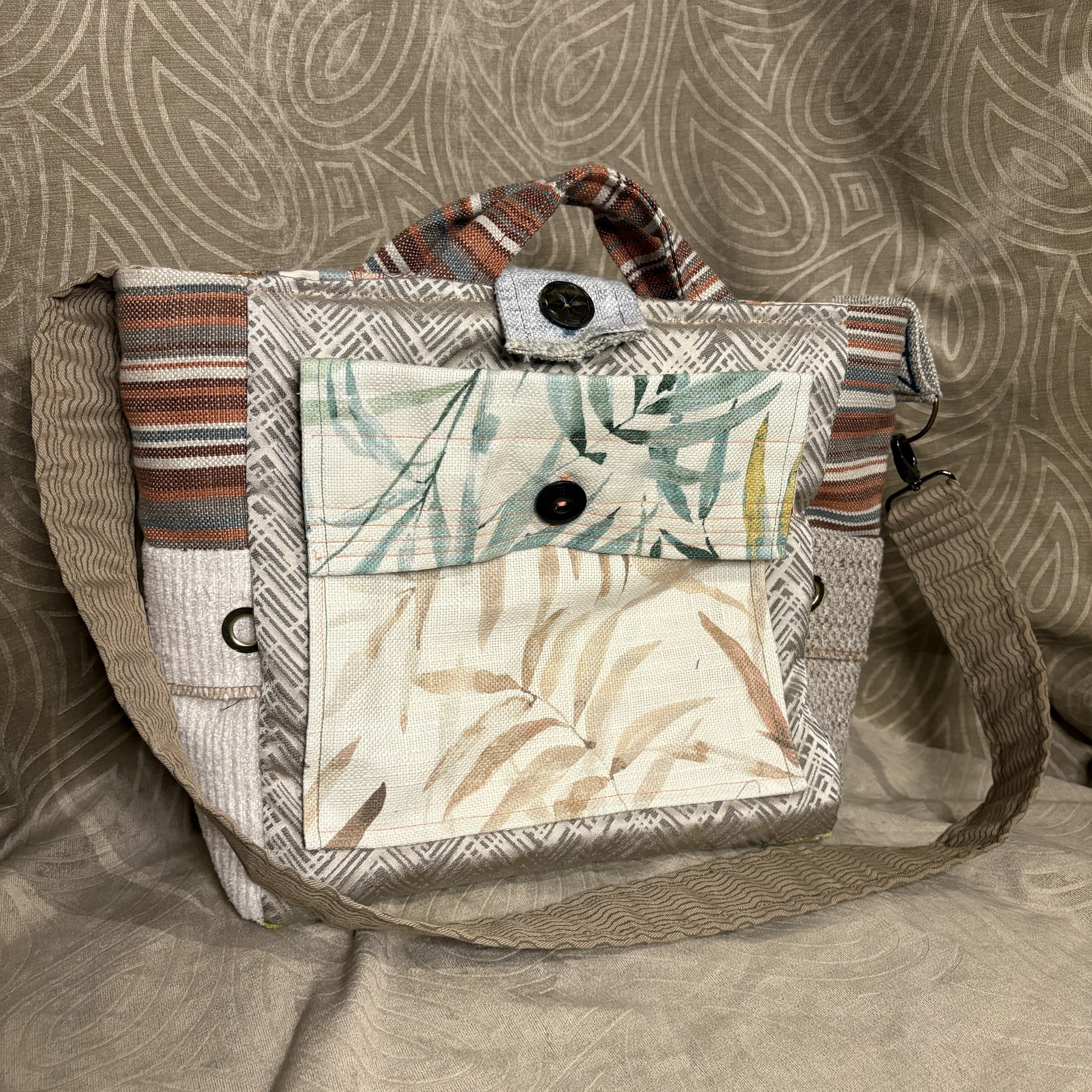
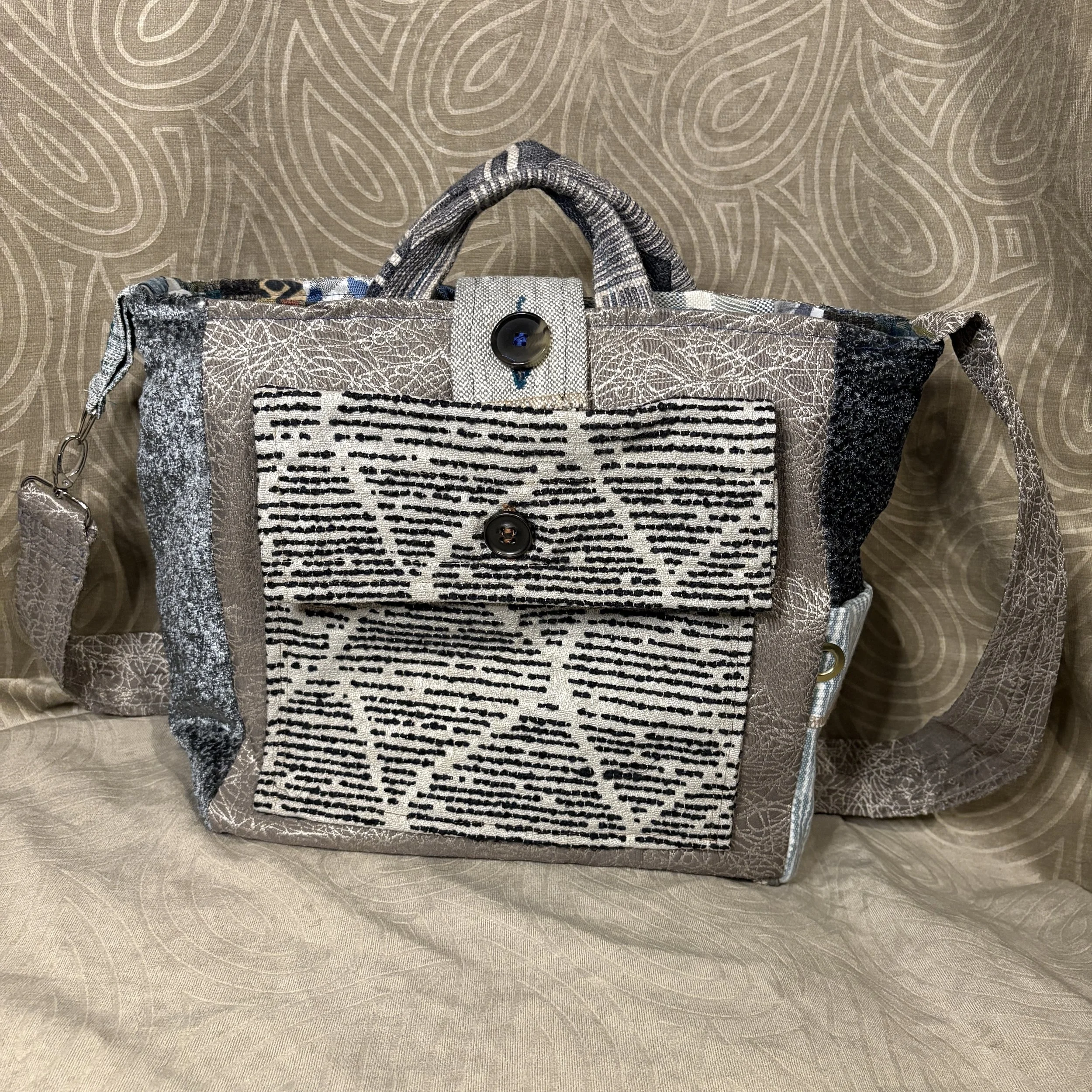
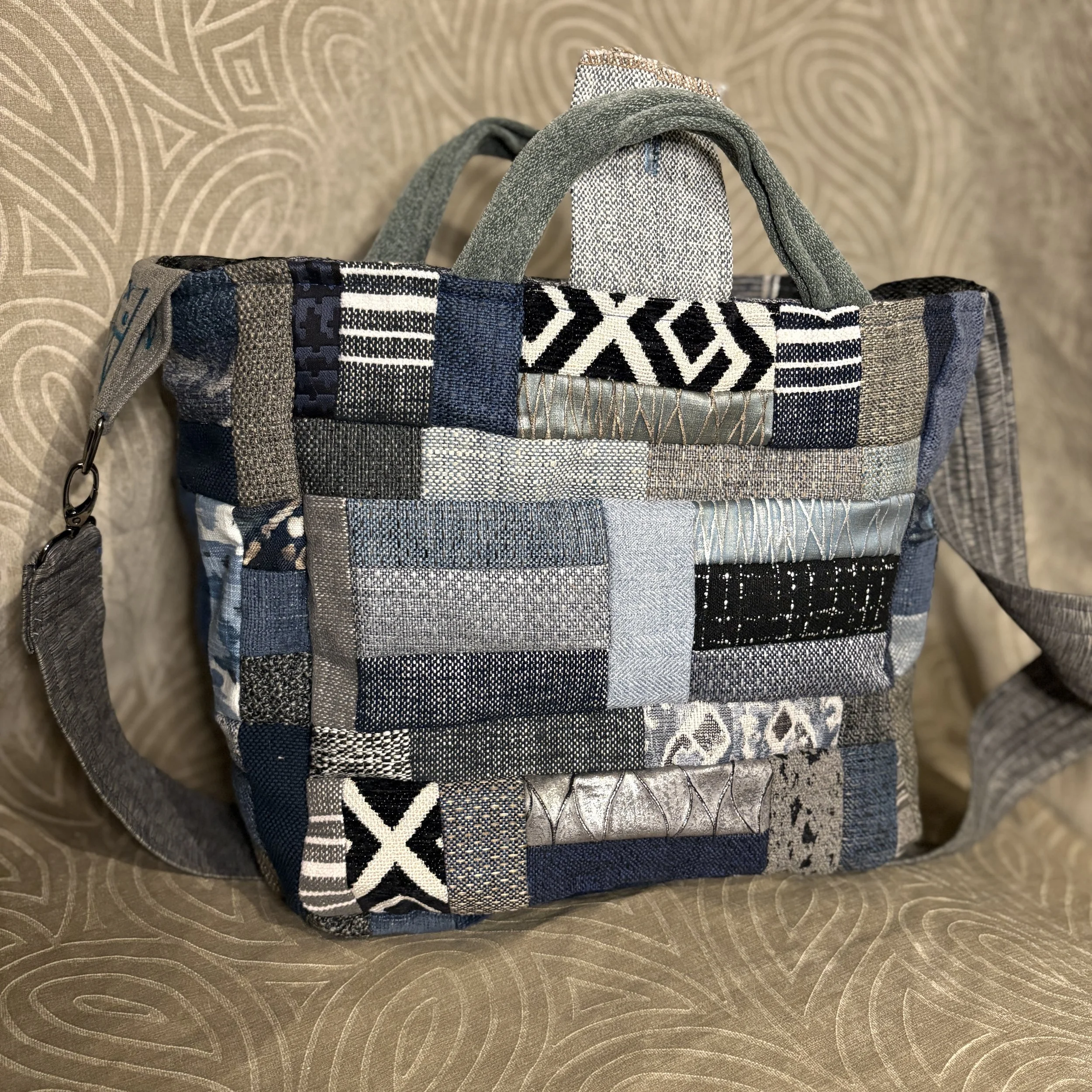
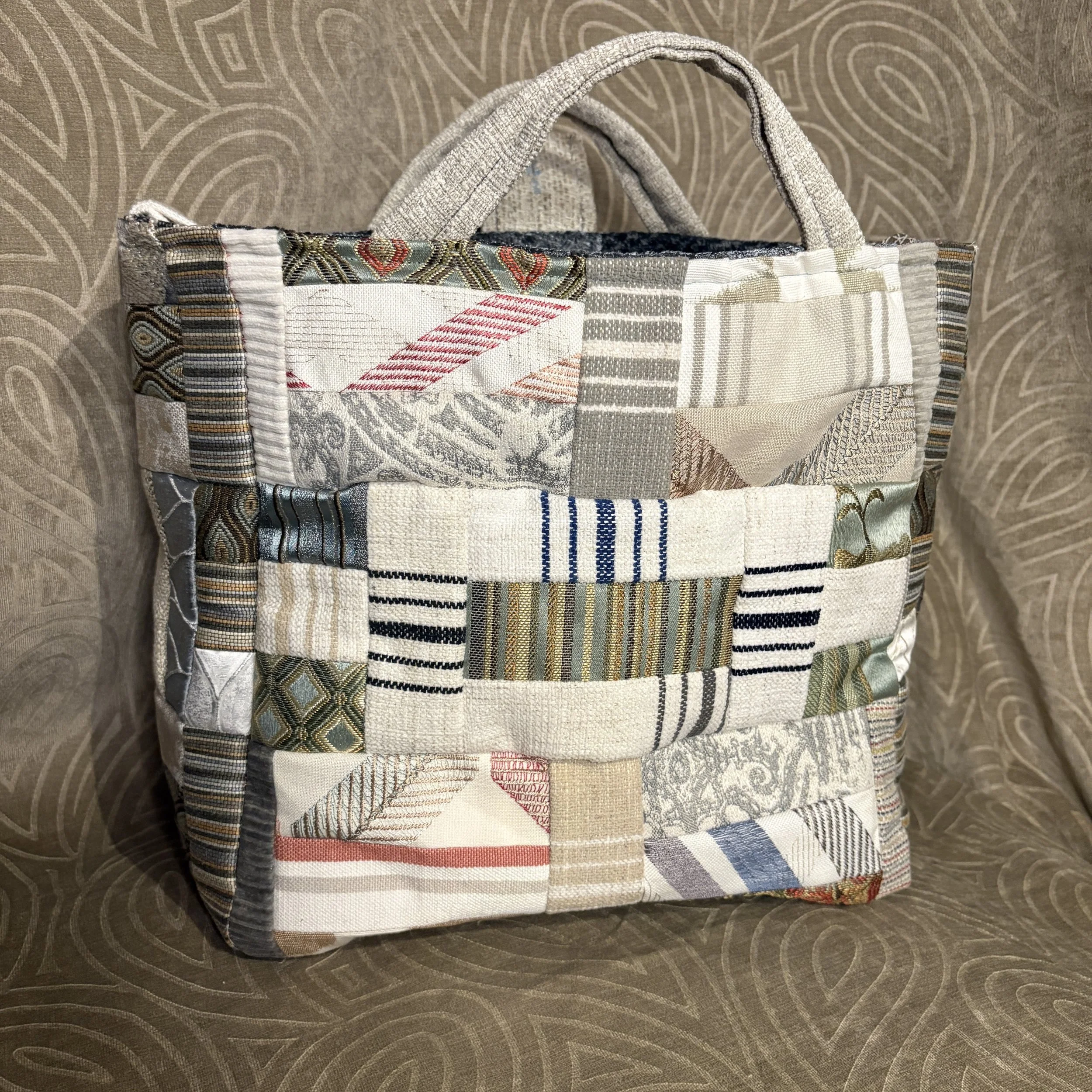
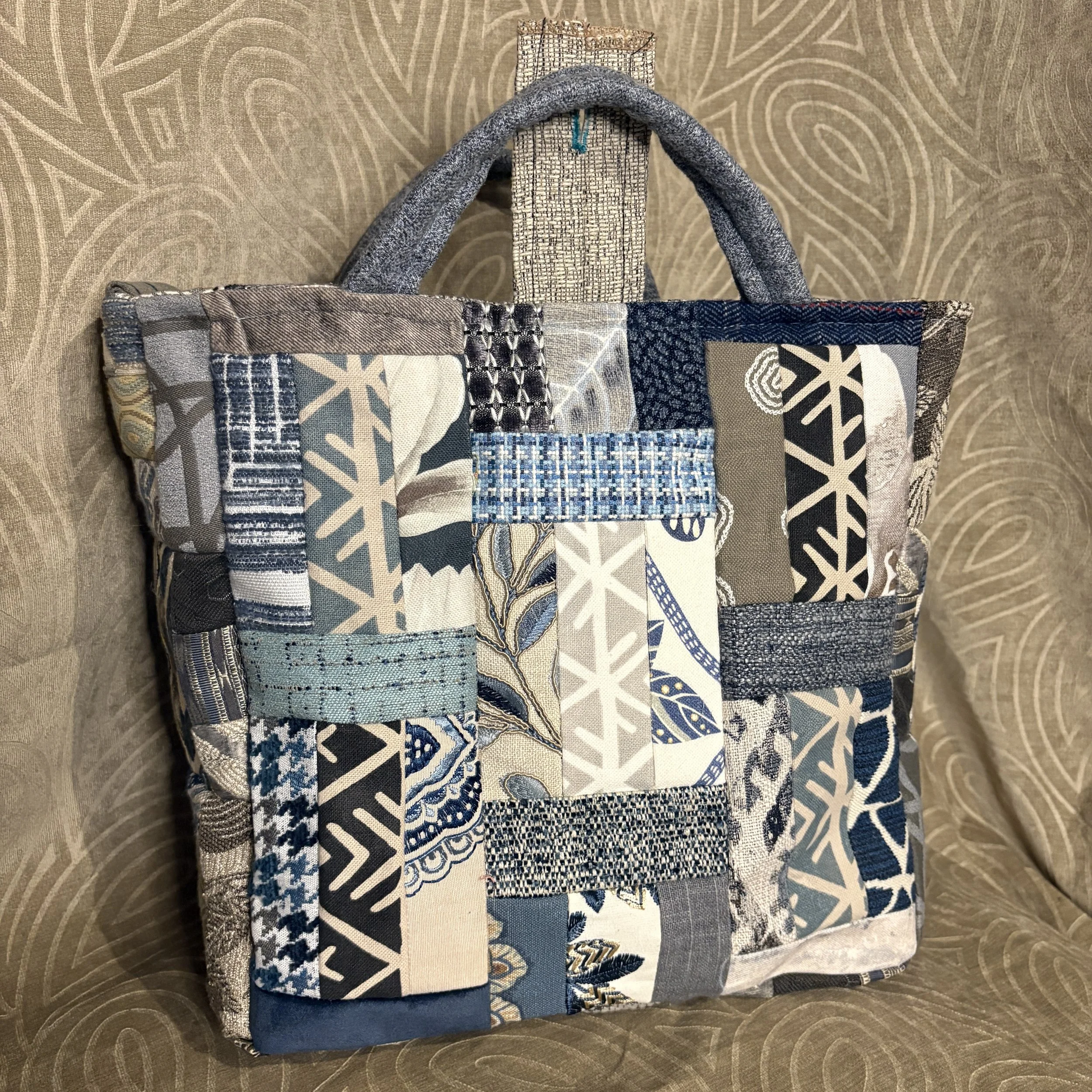
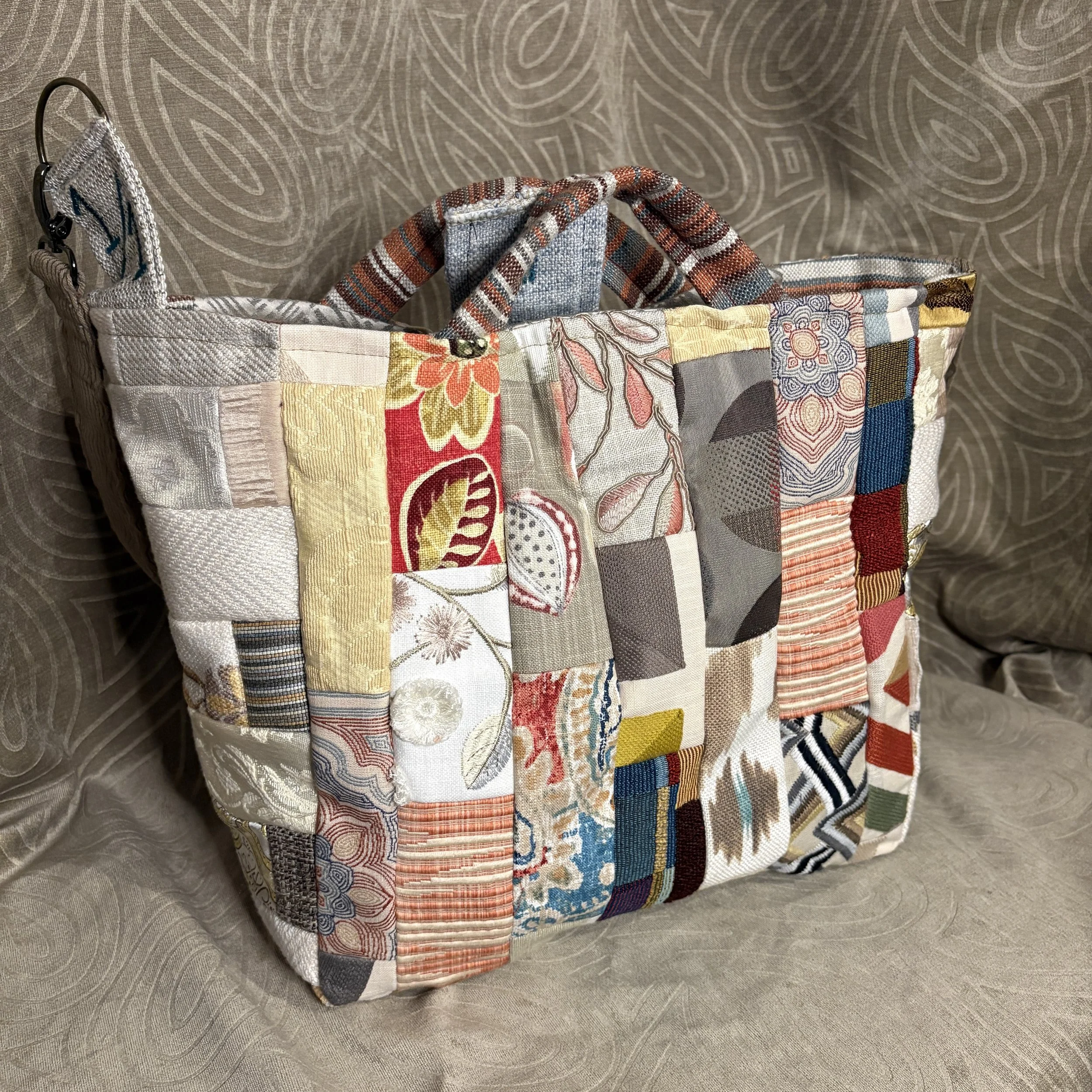
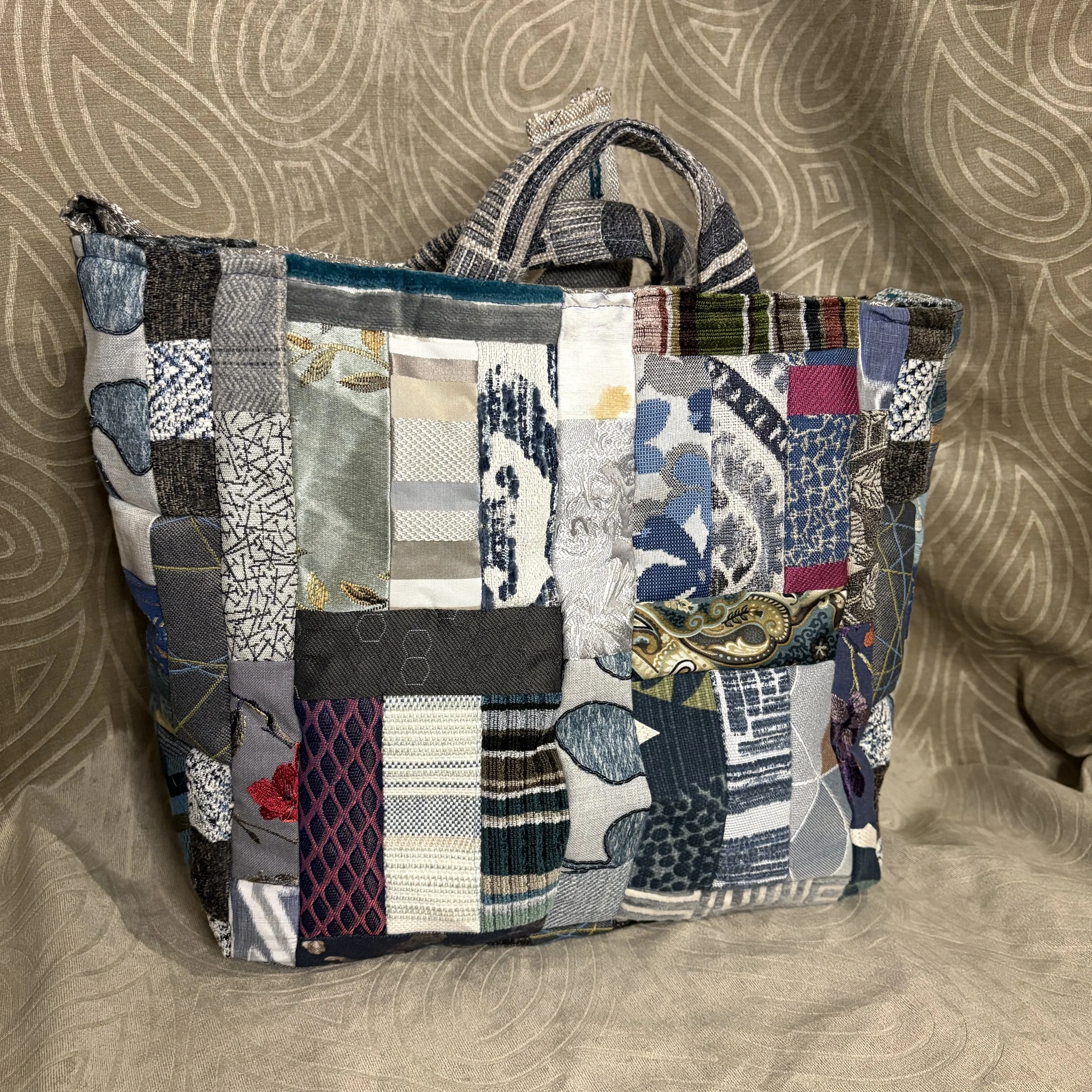
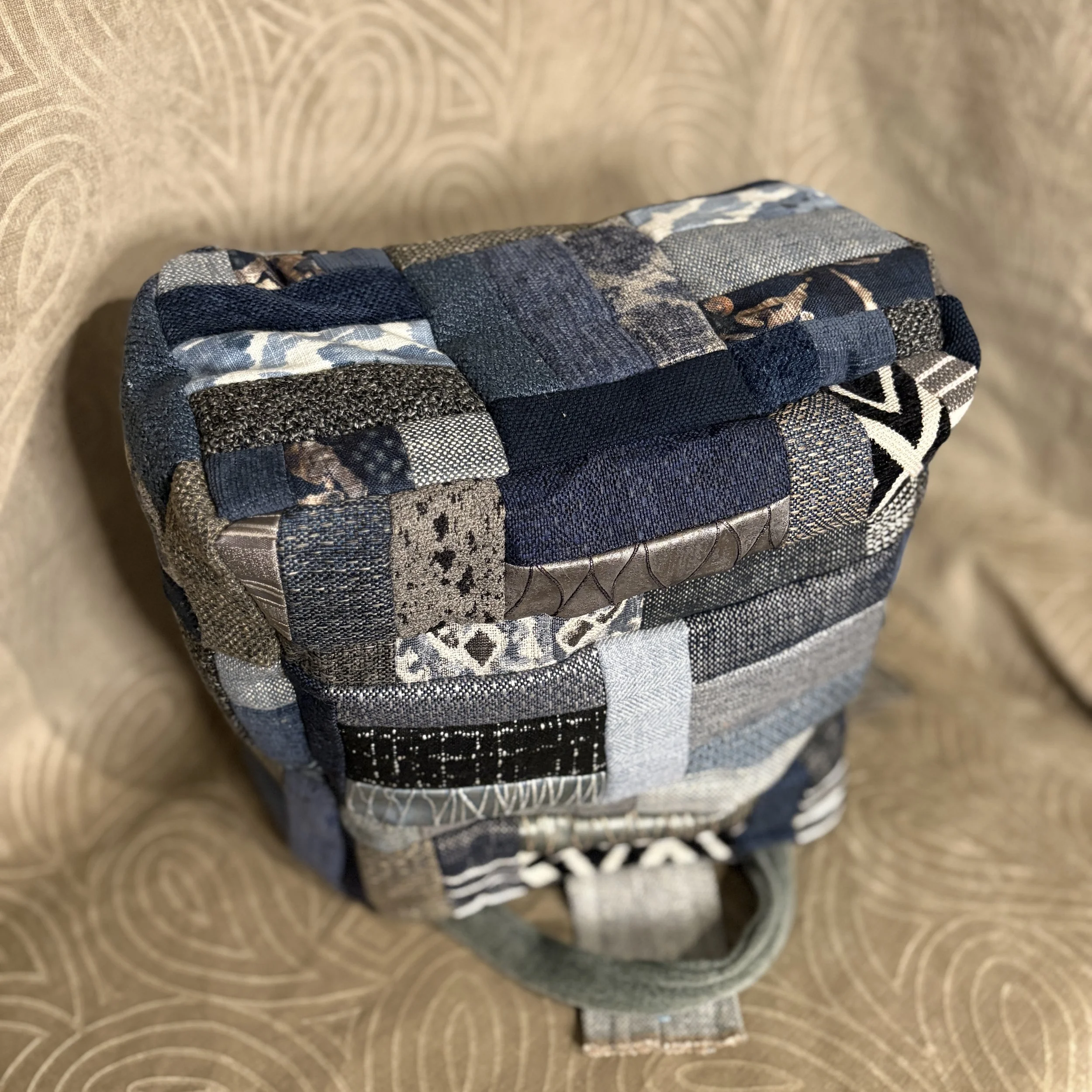
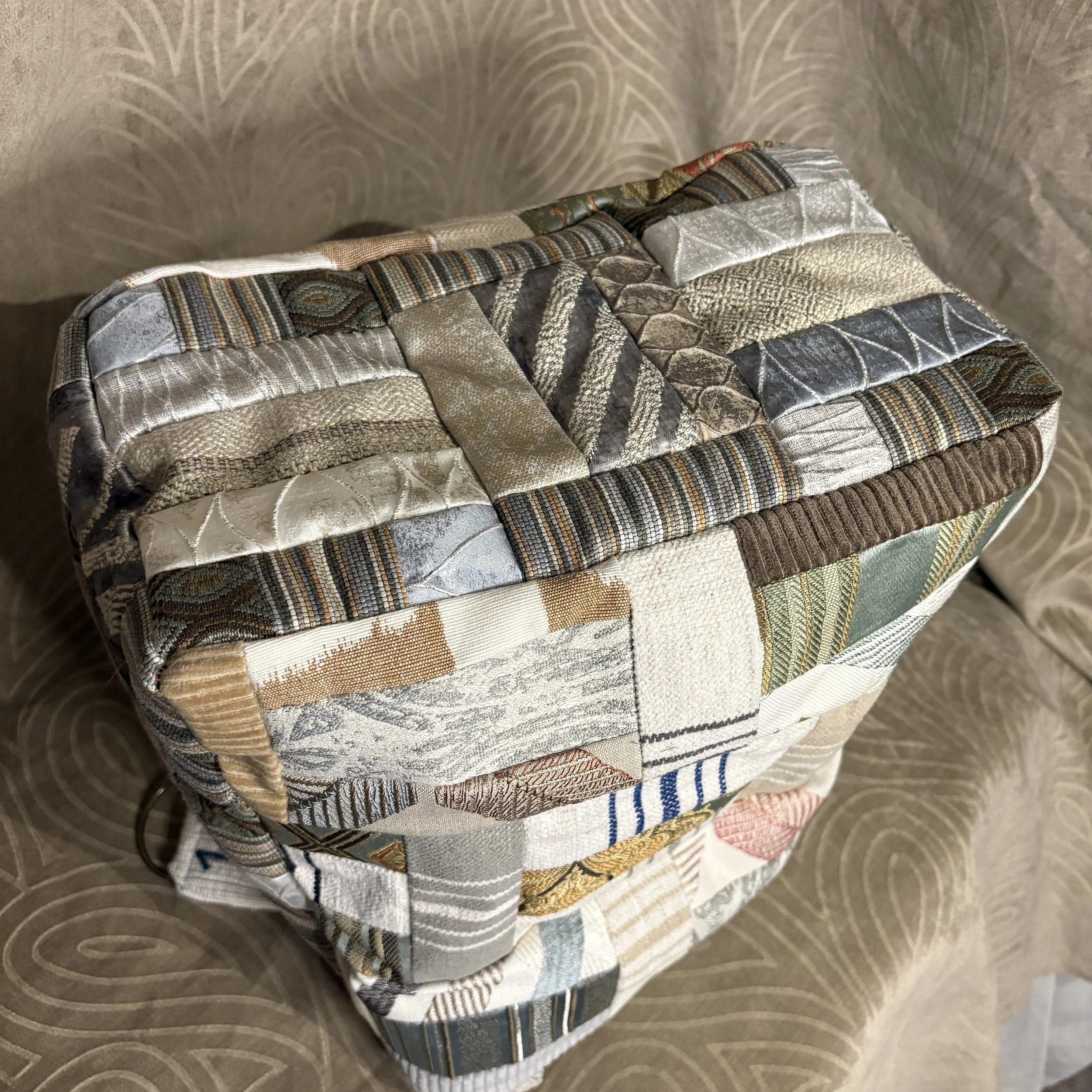
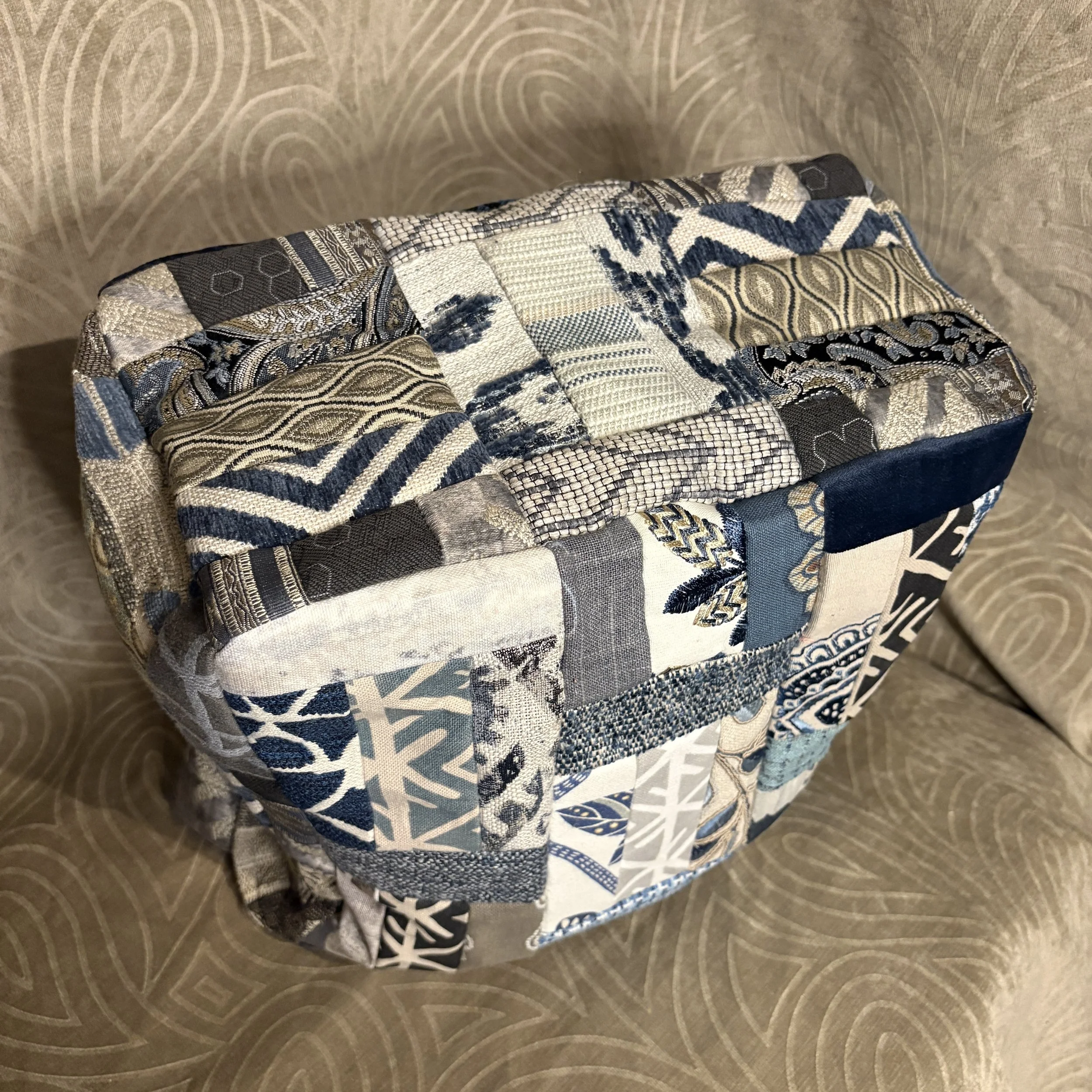
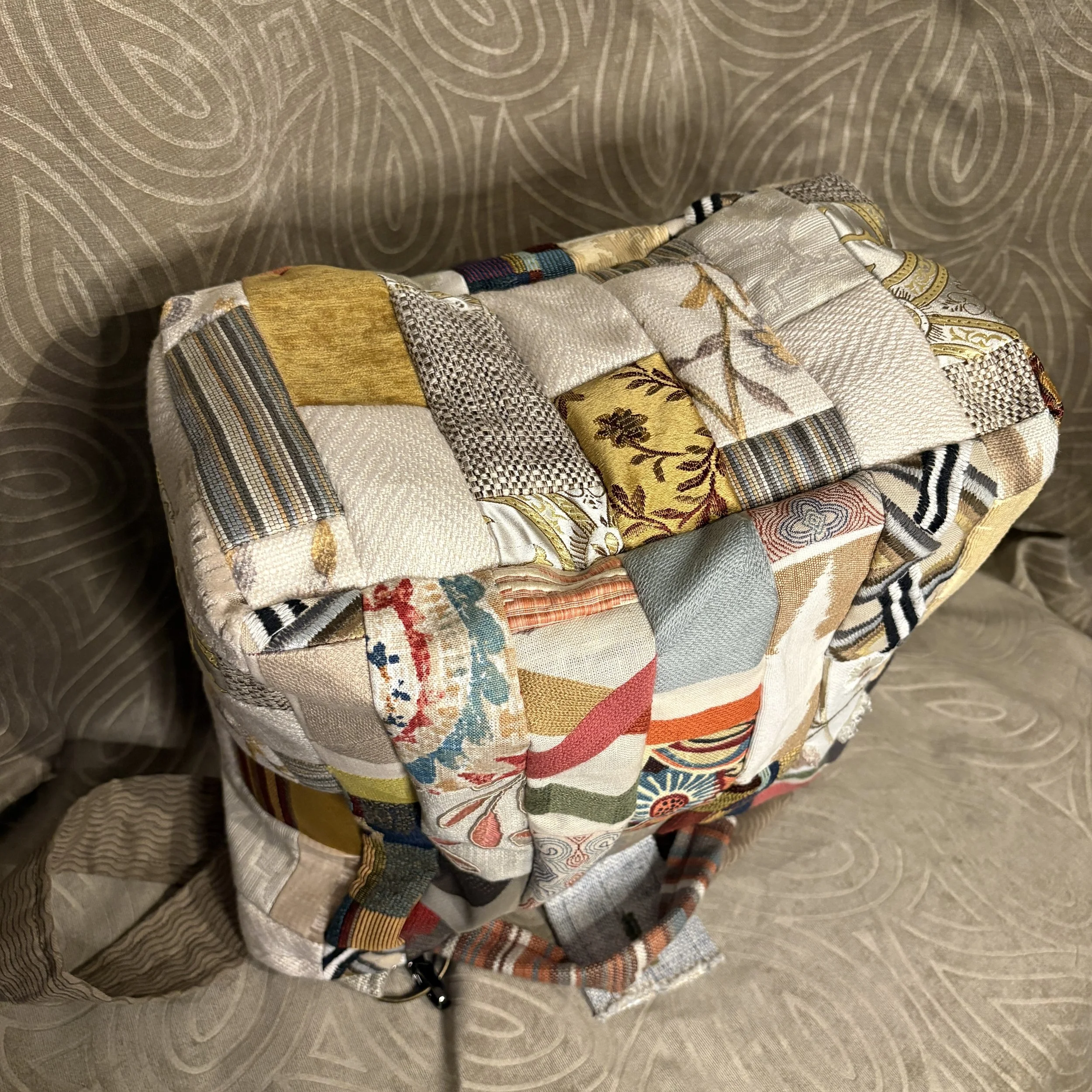
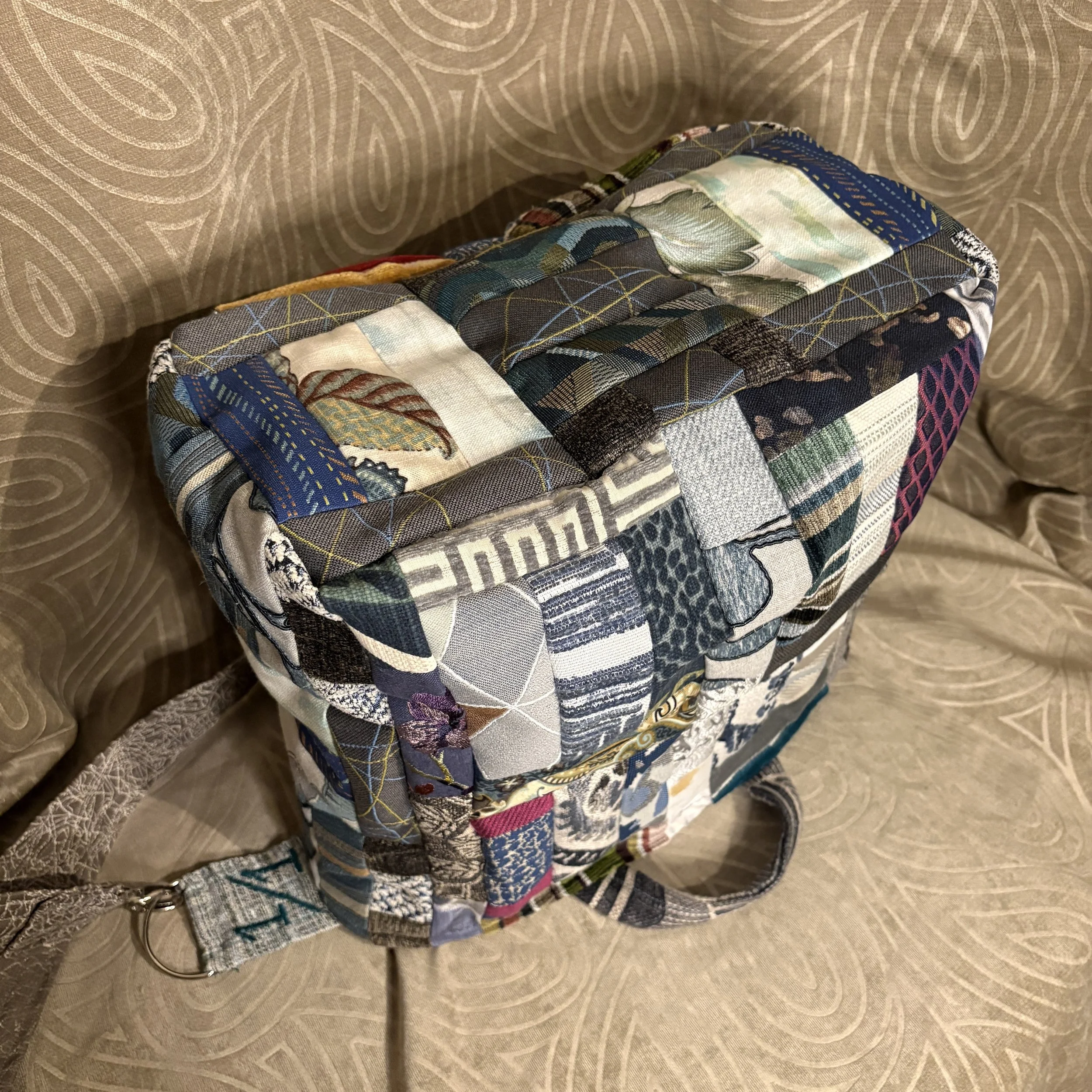
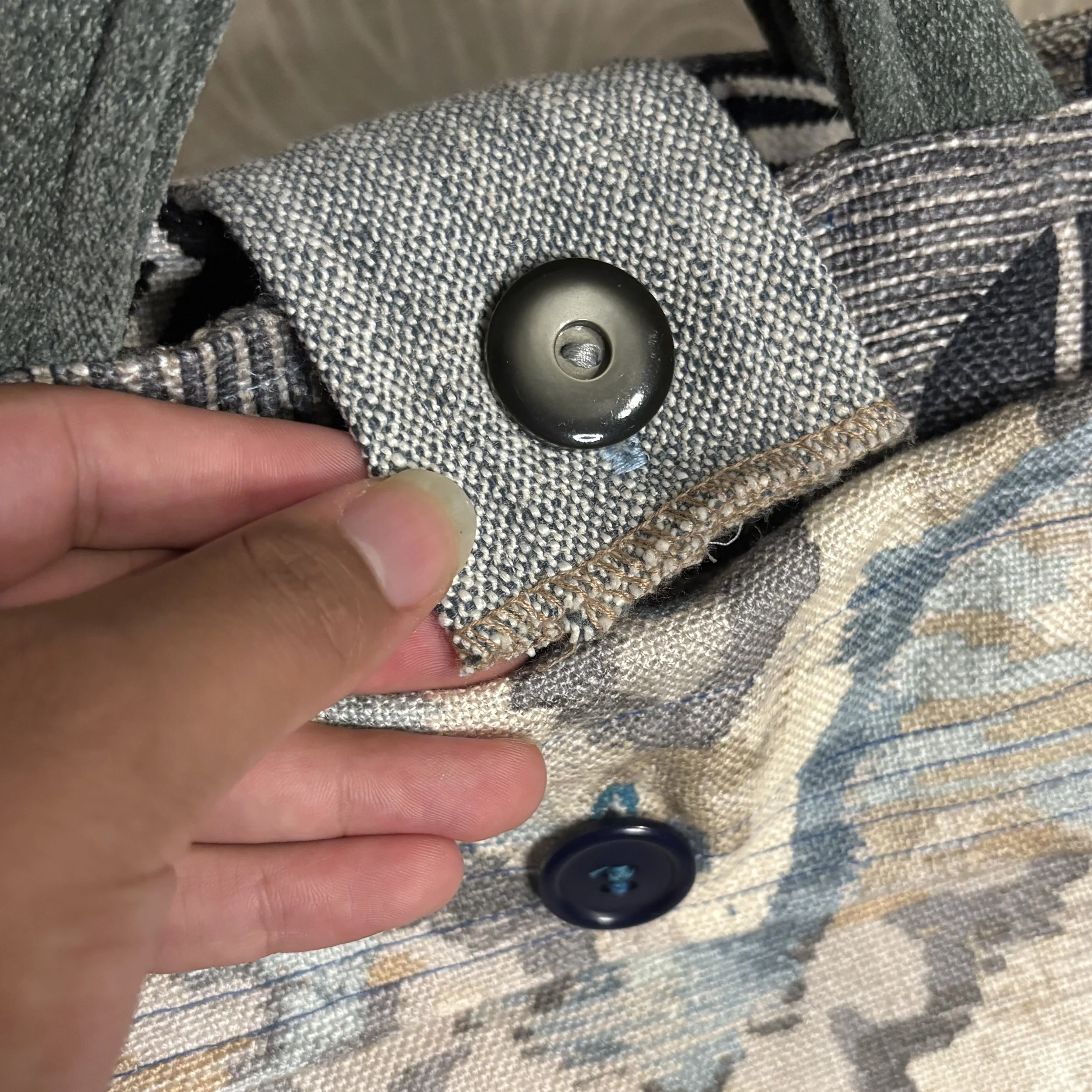
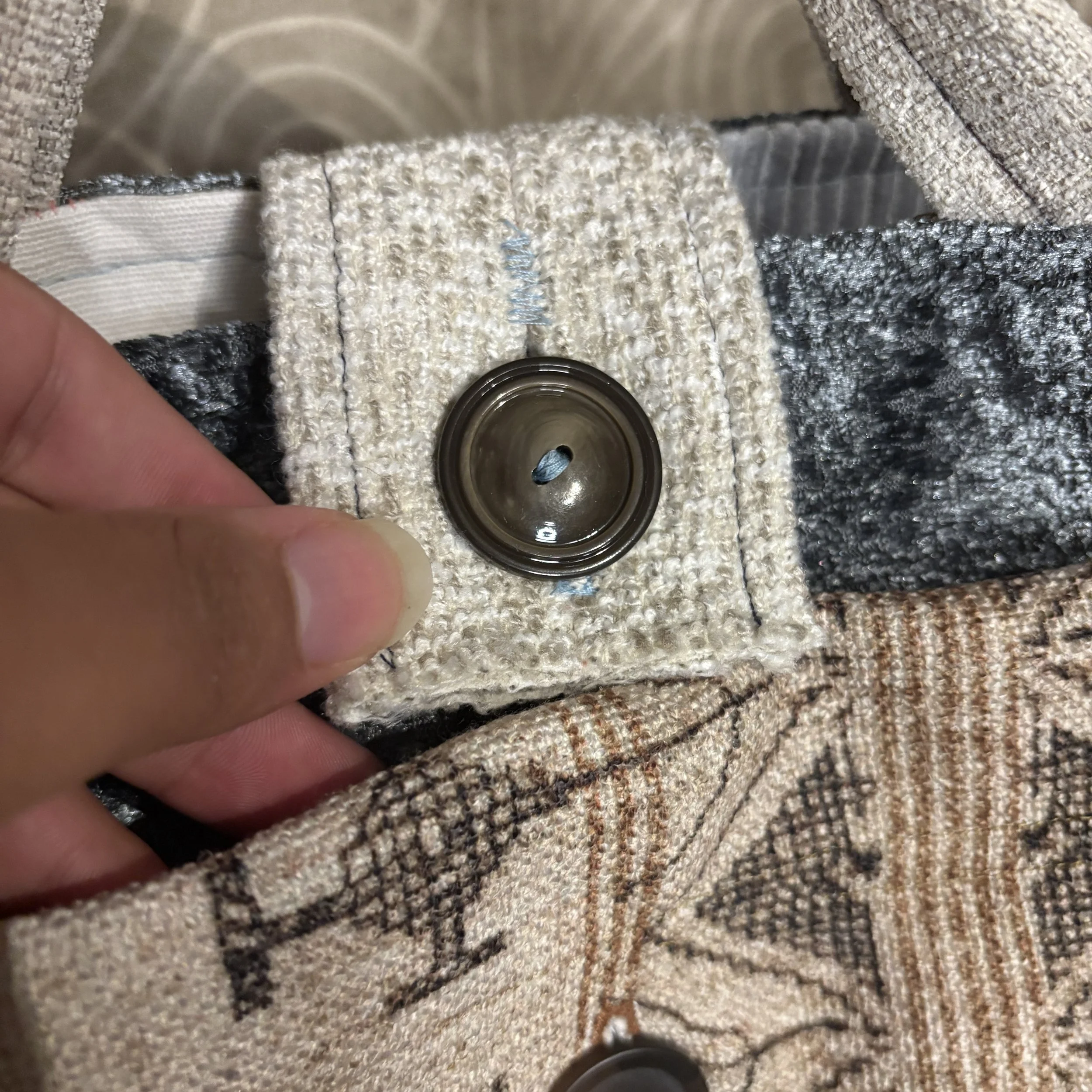
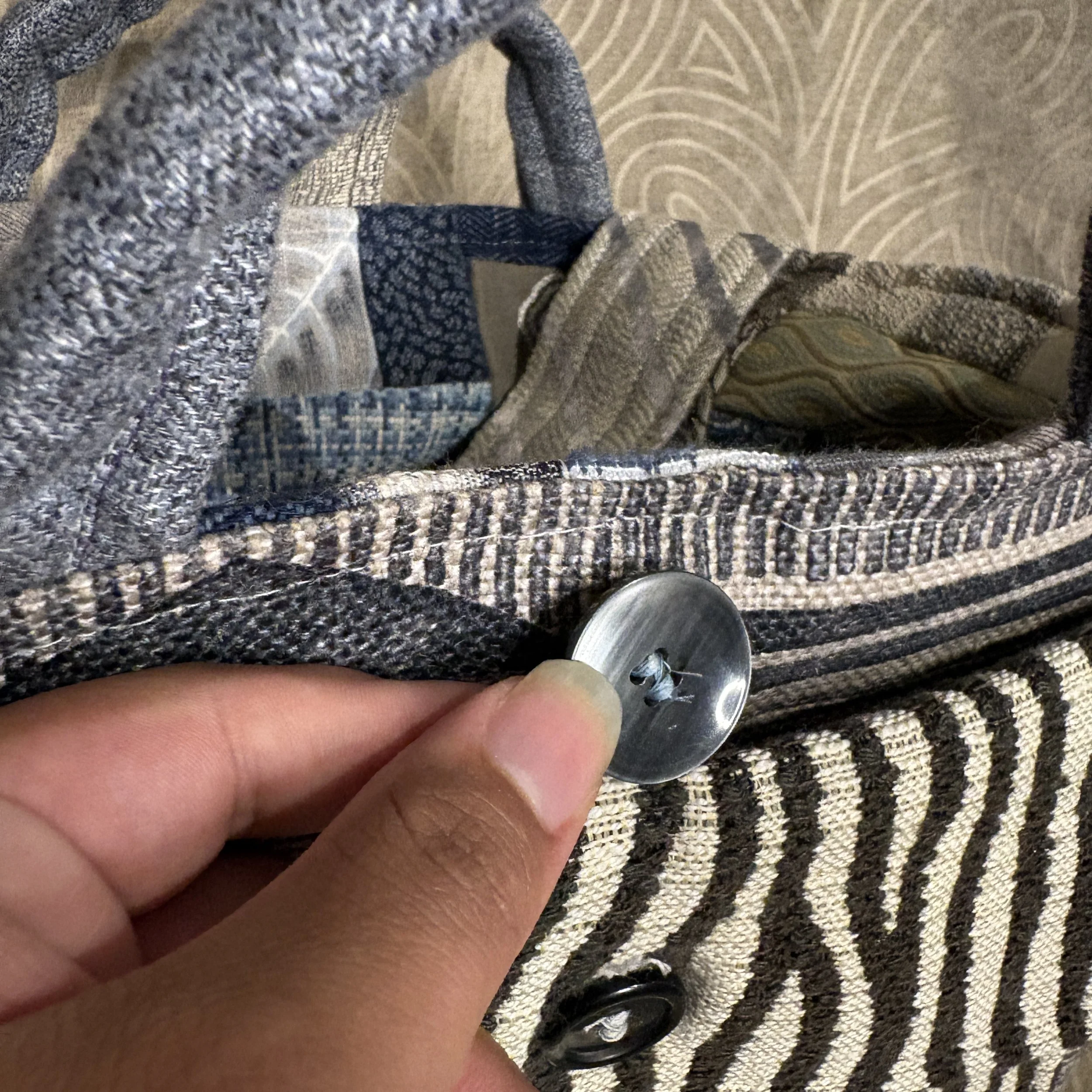
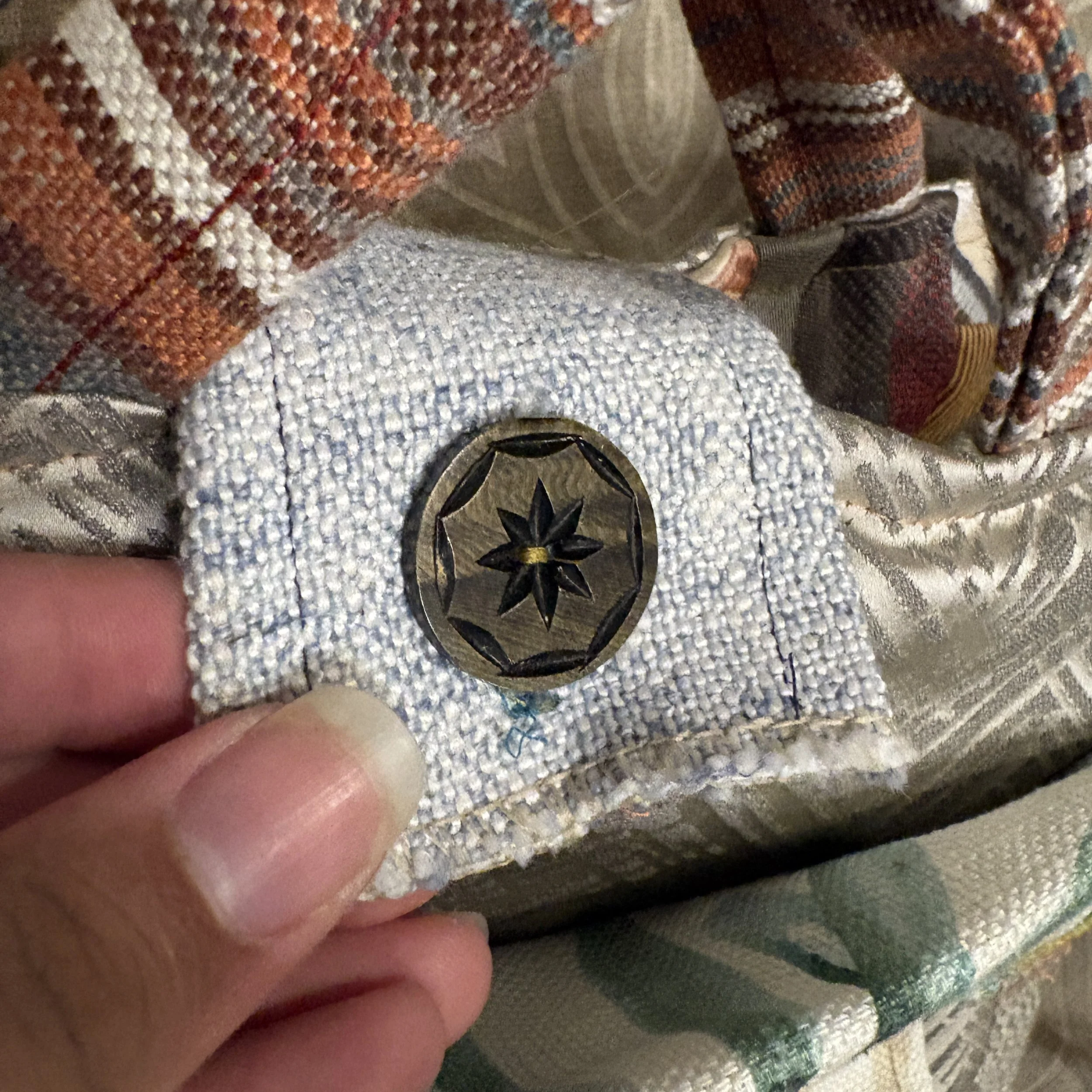
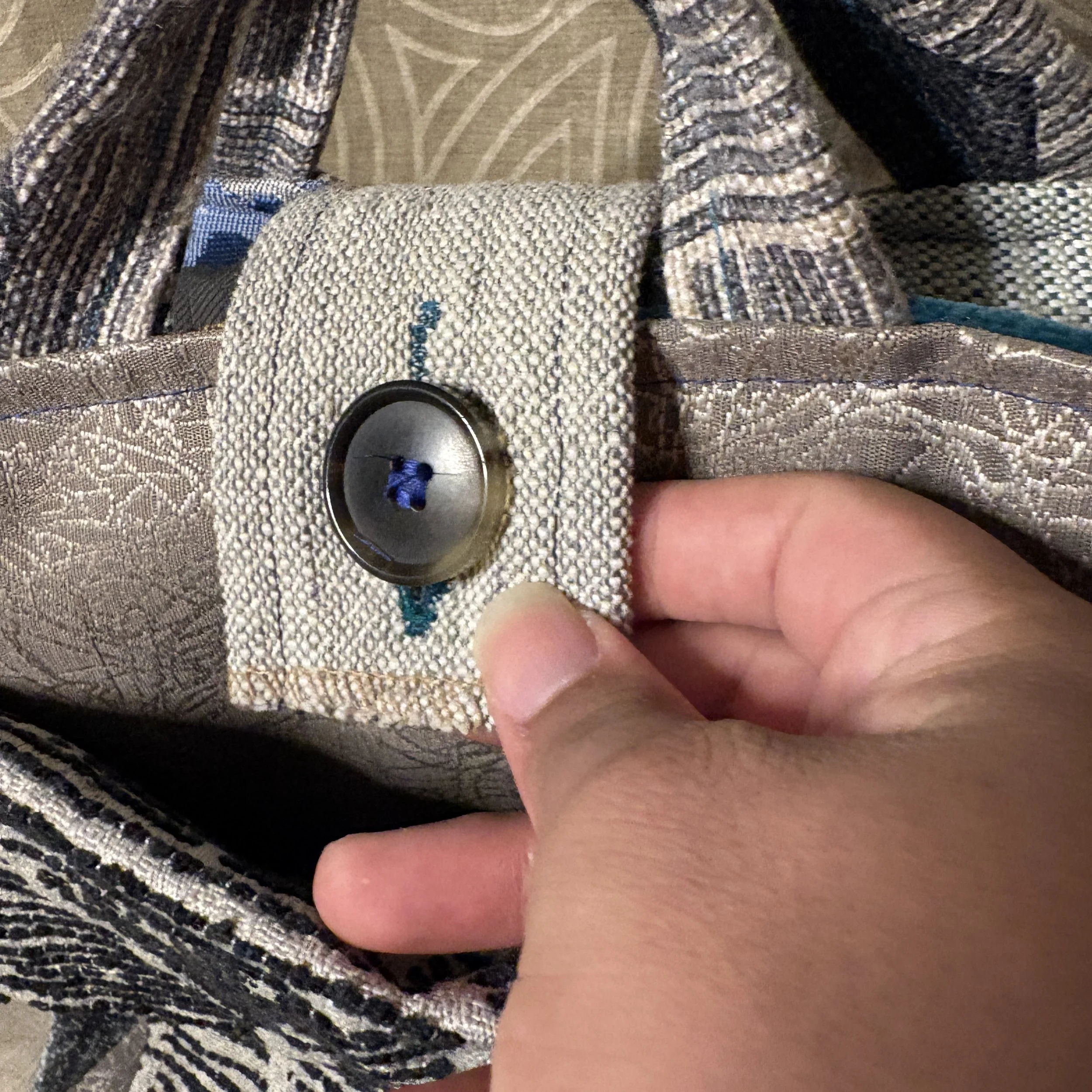
These are 5 bags made with the express purpose of crafting inventory for the booth, with the prep work of 1000 cut bricks already out of the way. I spent two solid days on piece after piece, having made the 6 other bags with half of the load, and these making use of the other 500 bricks. The ideas don’t form themselves purely off of luck or my own foresight, but rather it happens in a symphonic and harmonic way most of the time. I find sets of two or three styles that go together as a baseline and they act as the base for either the main panels or the runner and from there I find bricks that fill in the gaps. It works out more often than not, though as you may see, some discordant pieces do come across the assembly line once or twice.
The left-most bag was actually a semi-commissioned work, with the prompt having been, “I would love a bag that goes well with Jeans, I tend to wear them a lot and believe a blue bag would work,” having pointed to the enclosed horizontal weave pattern in the selection booklet. I, not wanting to disappoint, offered the blue-grey spill shell as the exterior and immediately got to work when I got back to the studio, finding all of the denim-adjacent colors I could. I came back the next week with it ready for pickup, to no avail, and again I am reminded to get payment up-front. (That said, I still sold it, so all’s well)
The other bags came as exercises to use sets I already had siloed away, stripes and snowflakes, or, in the case for the rightmost two bags, catch-all bags where the bricks being used would be myriad samples across the board, and I affectionately referred to as “Mosaic” for their variety and cohesive capability. There was the 3-by-1 pair that I hadn’t attempted in a while, and from that bred the autumnal usher, counterpart to the last chance summer floral from above and the blue-grey twin. The other two were freer to exist independently, with the soldier bond being my first attempt since the big bags in doing something like that, and the other being a better-photographed variant of the green ornate bag that sold at the market before being properly documented. Being a one-man band can be difficult at times, but as I have learned, momentum carries, and I eventually reach the finish line regardless.
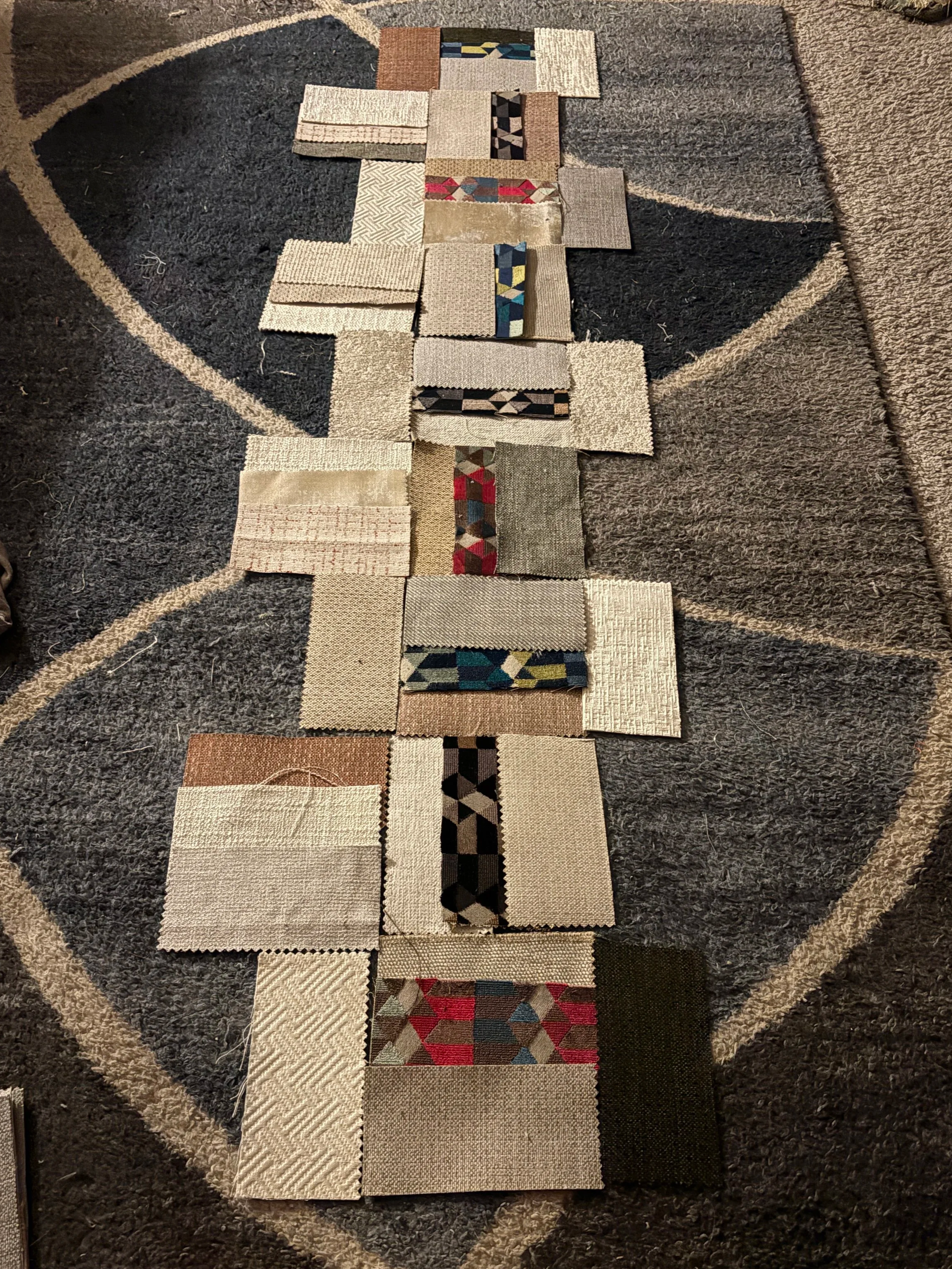
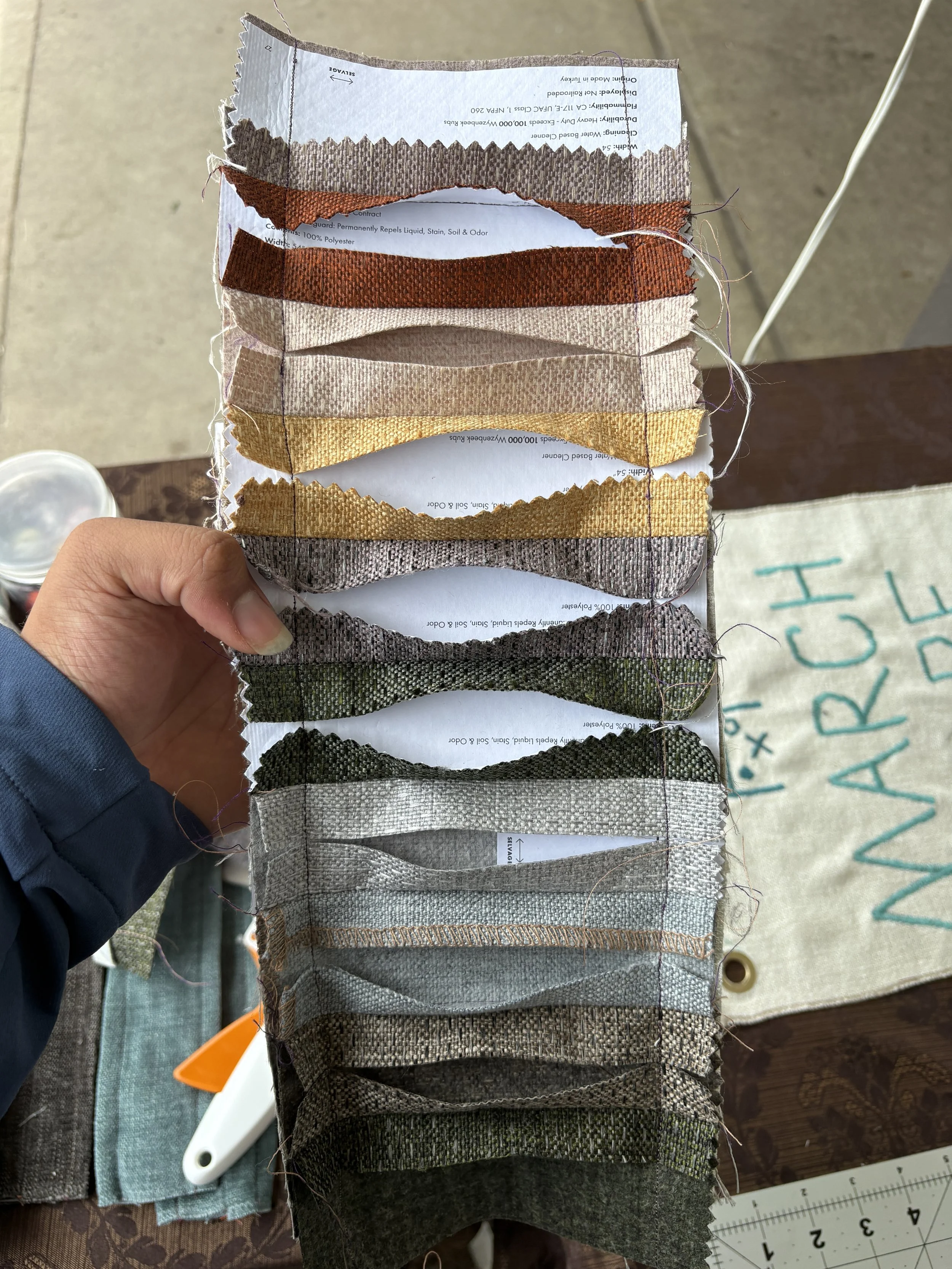
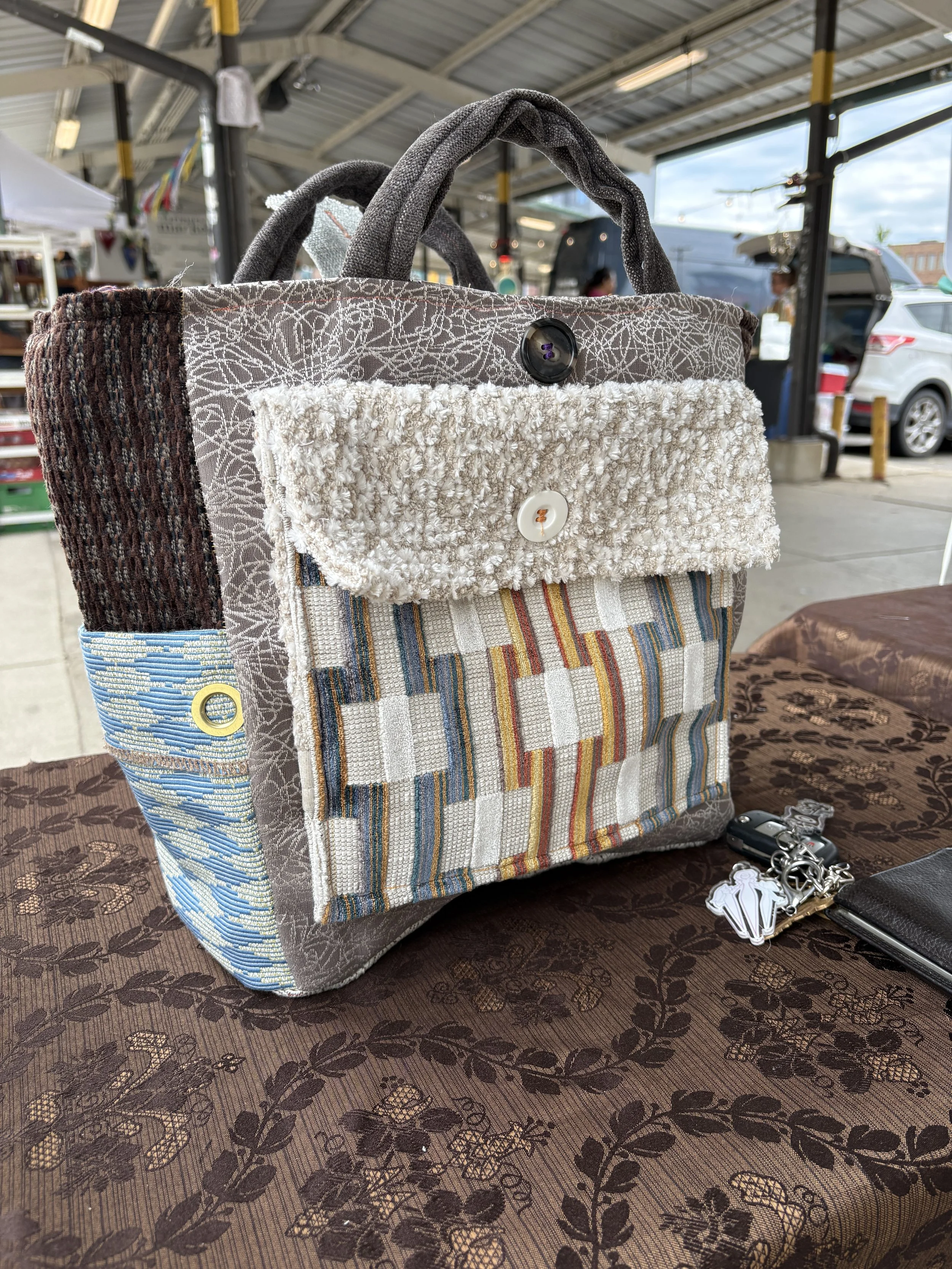
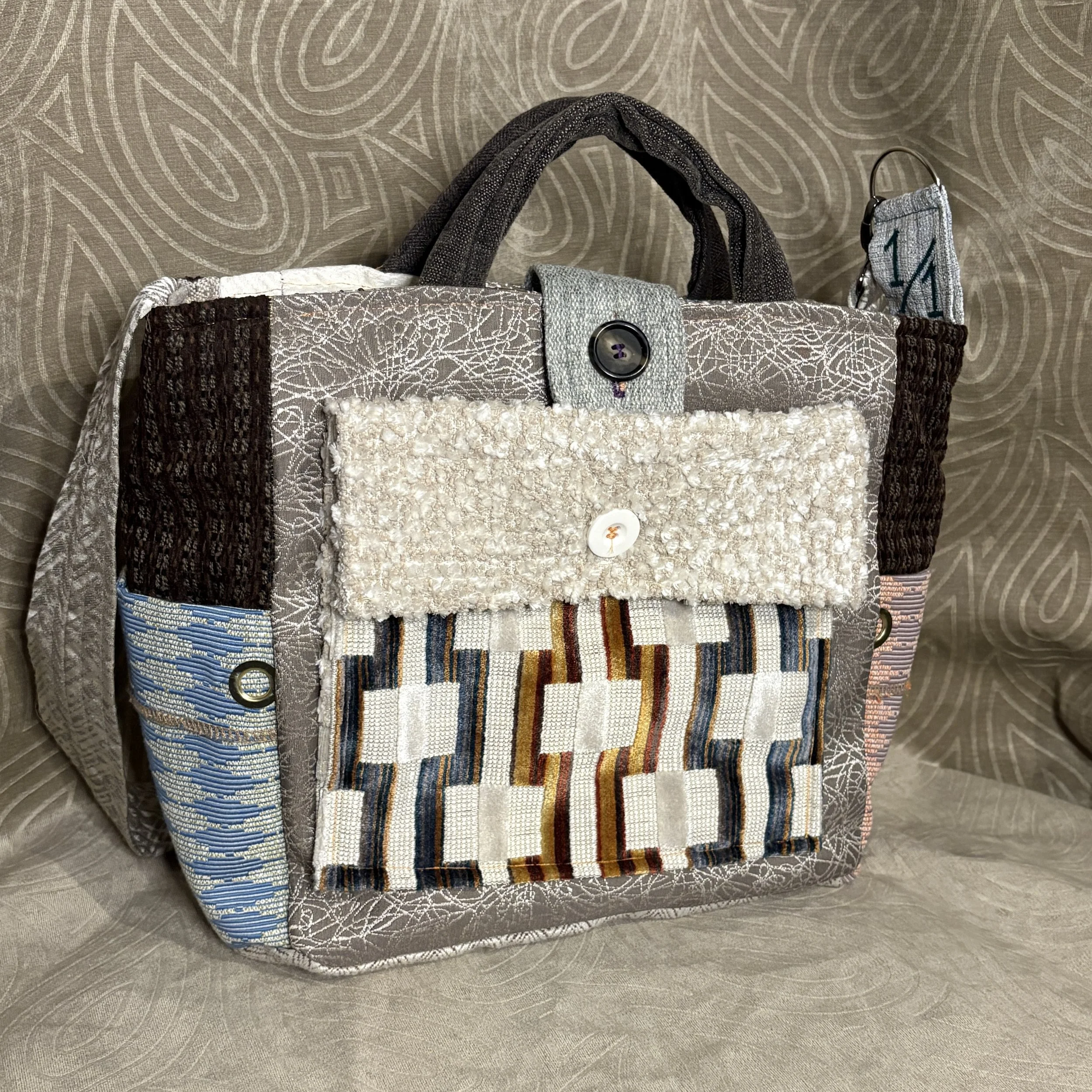
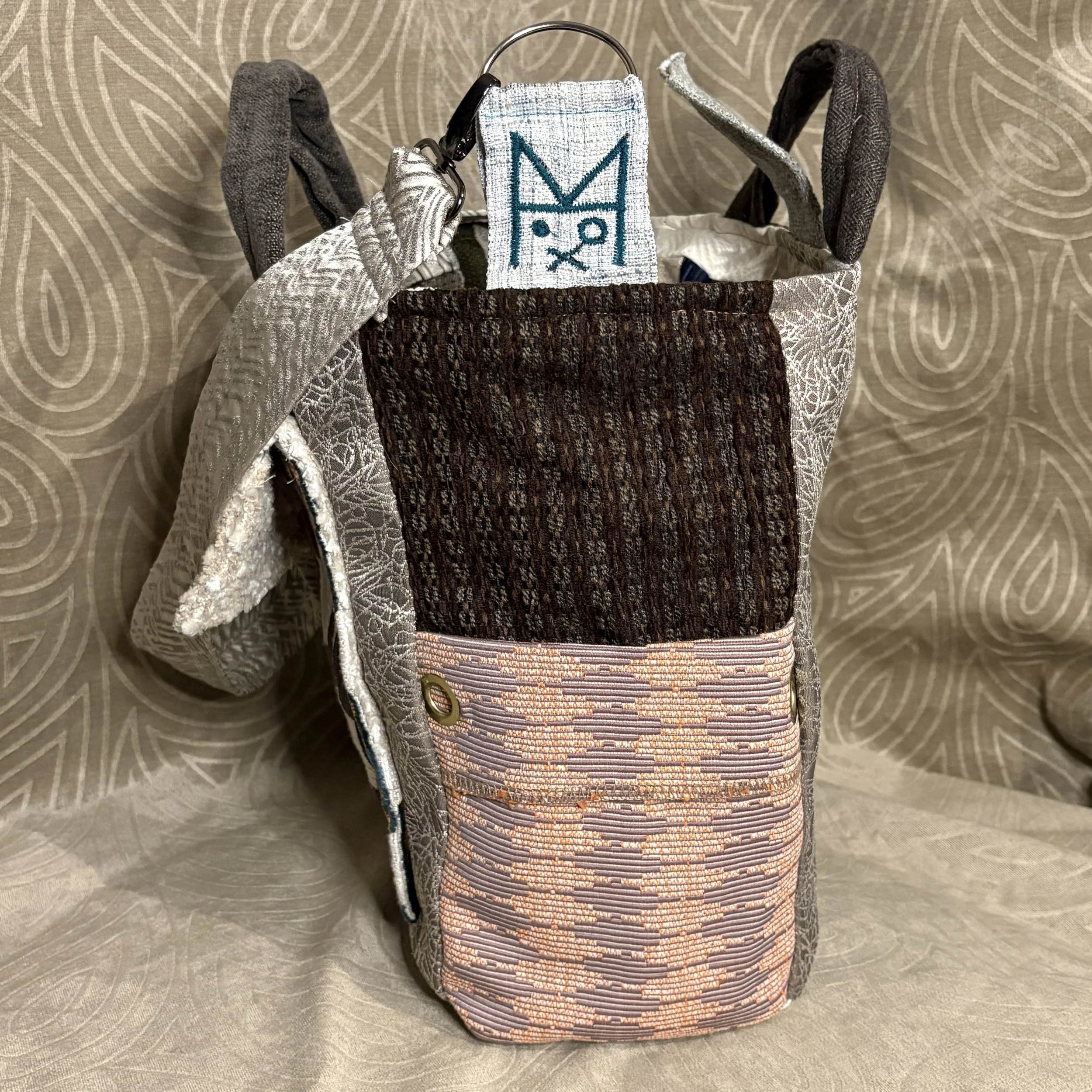
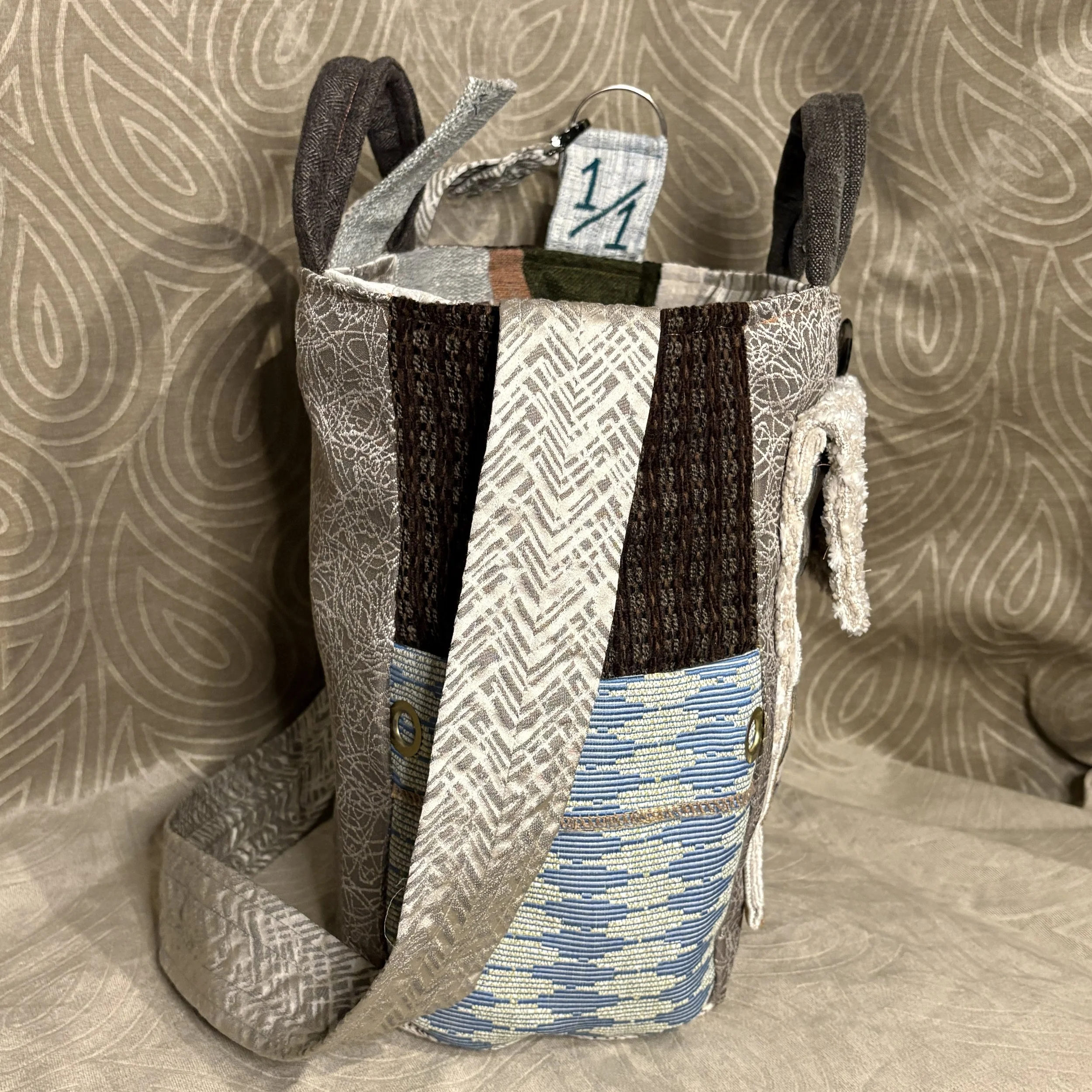
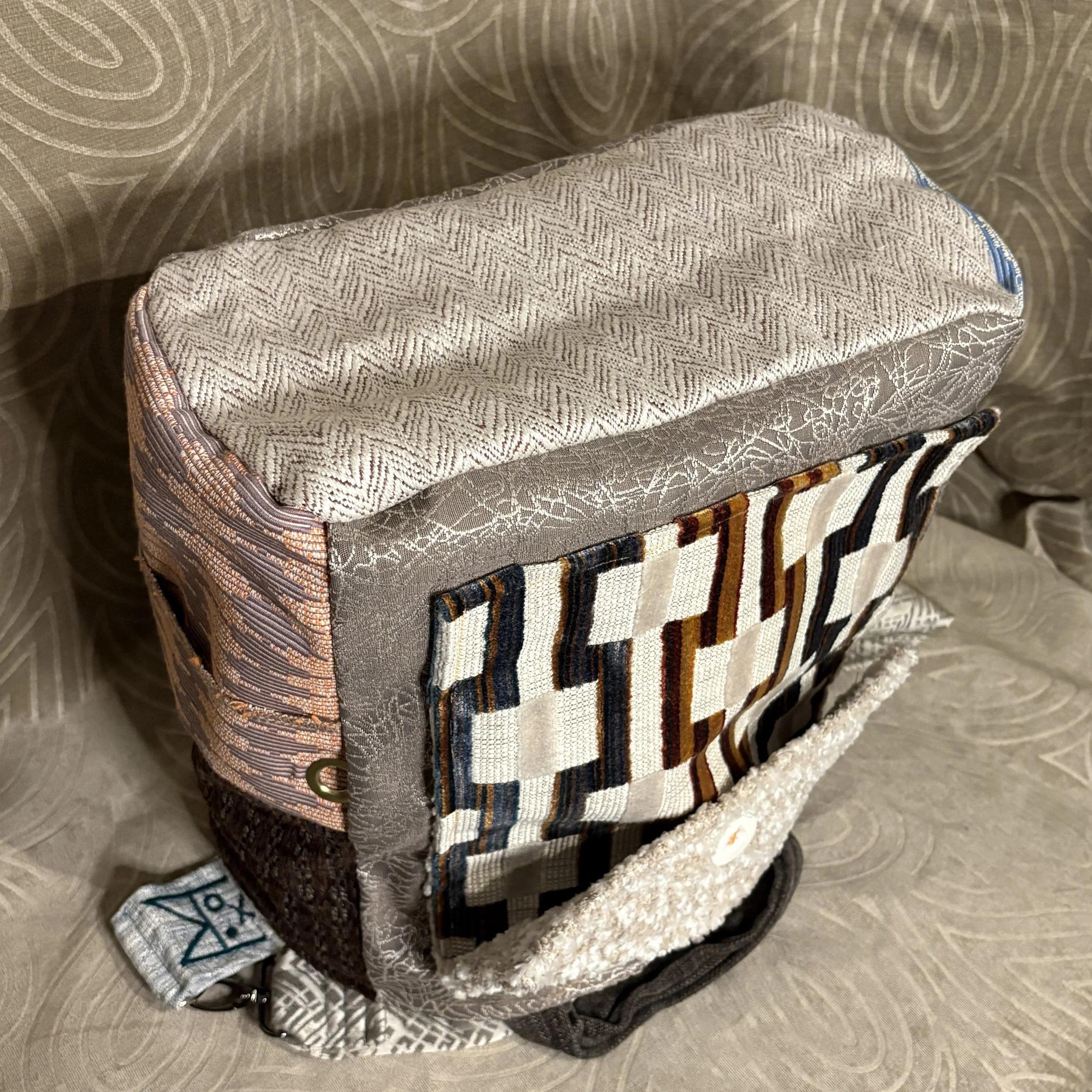
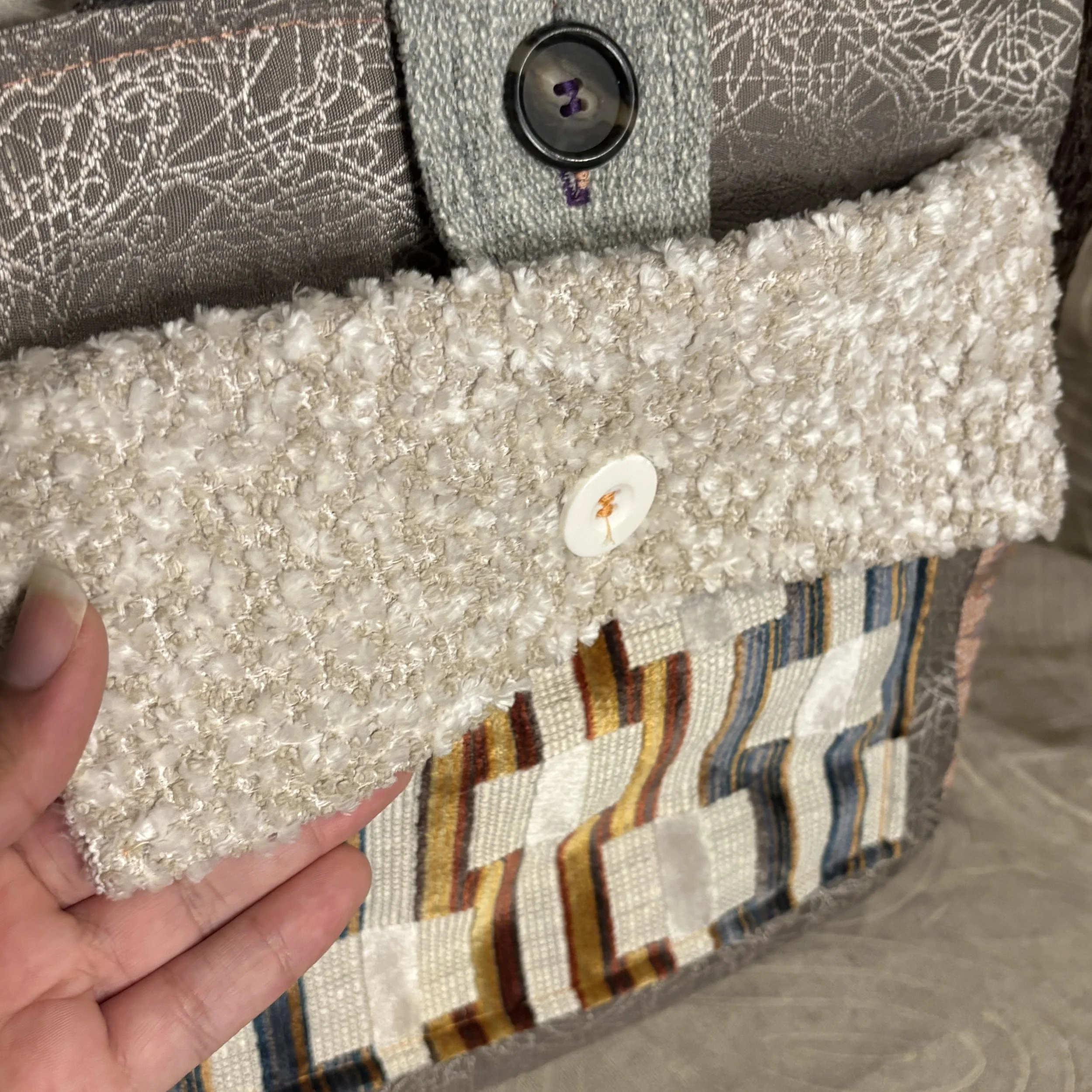
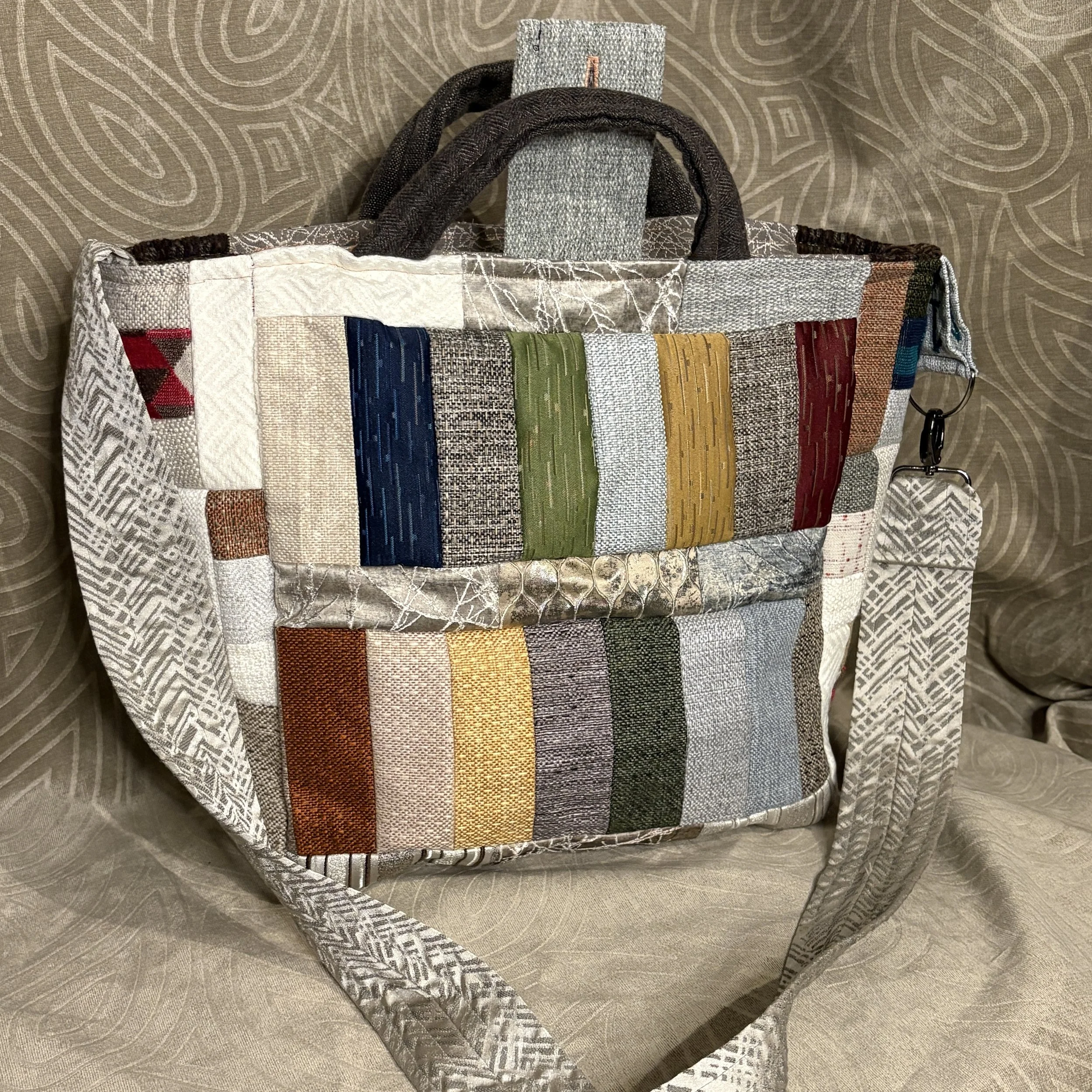
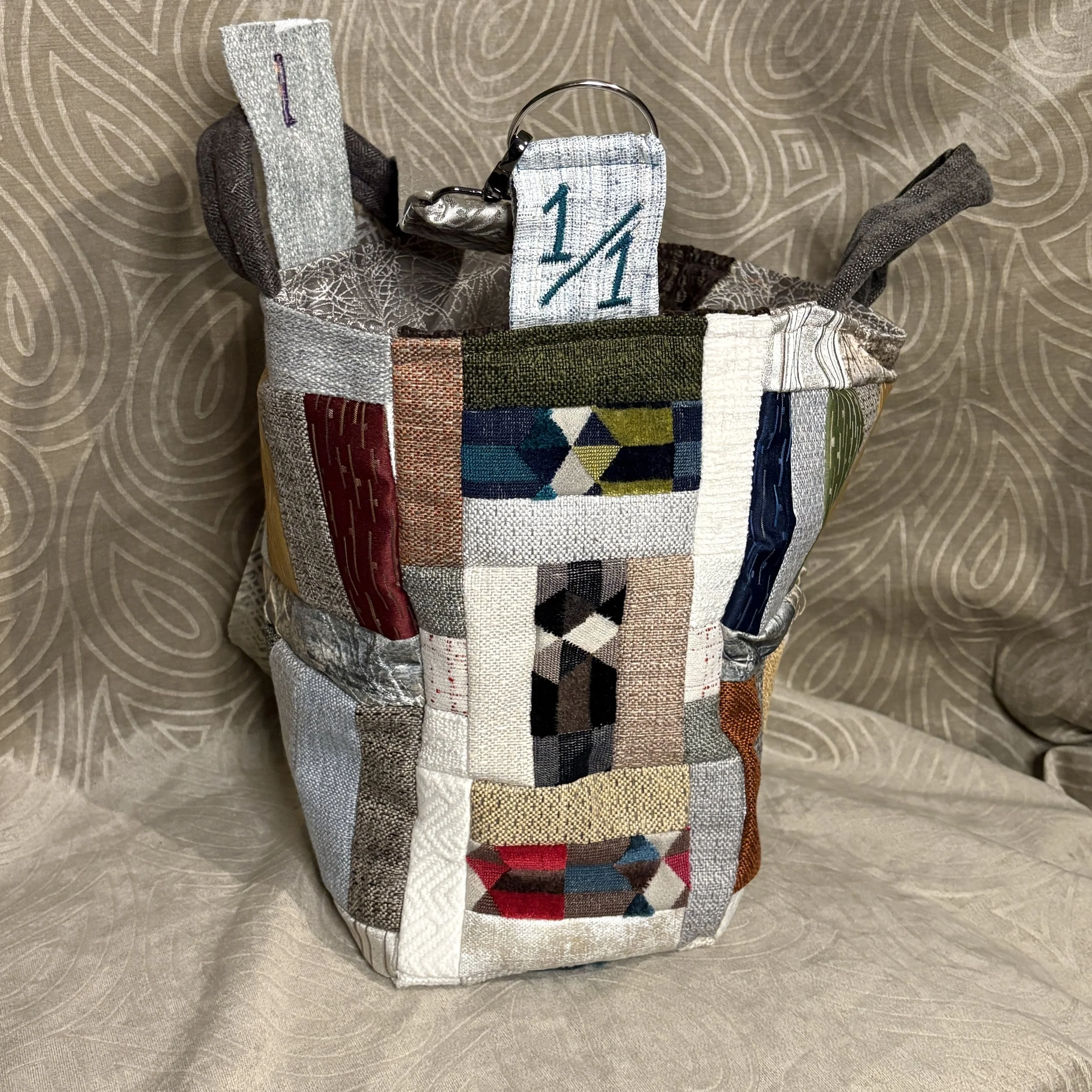
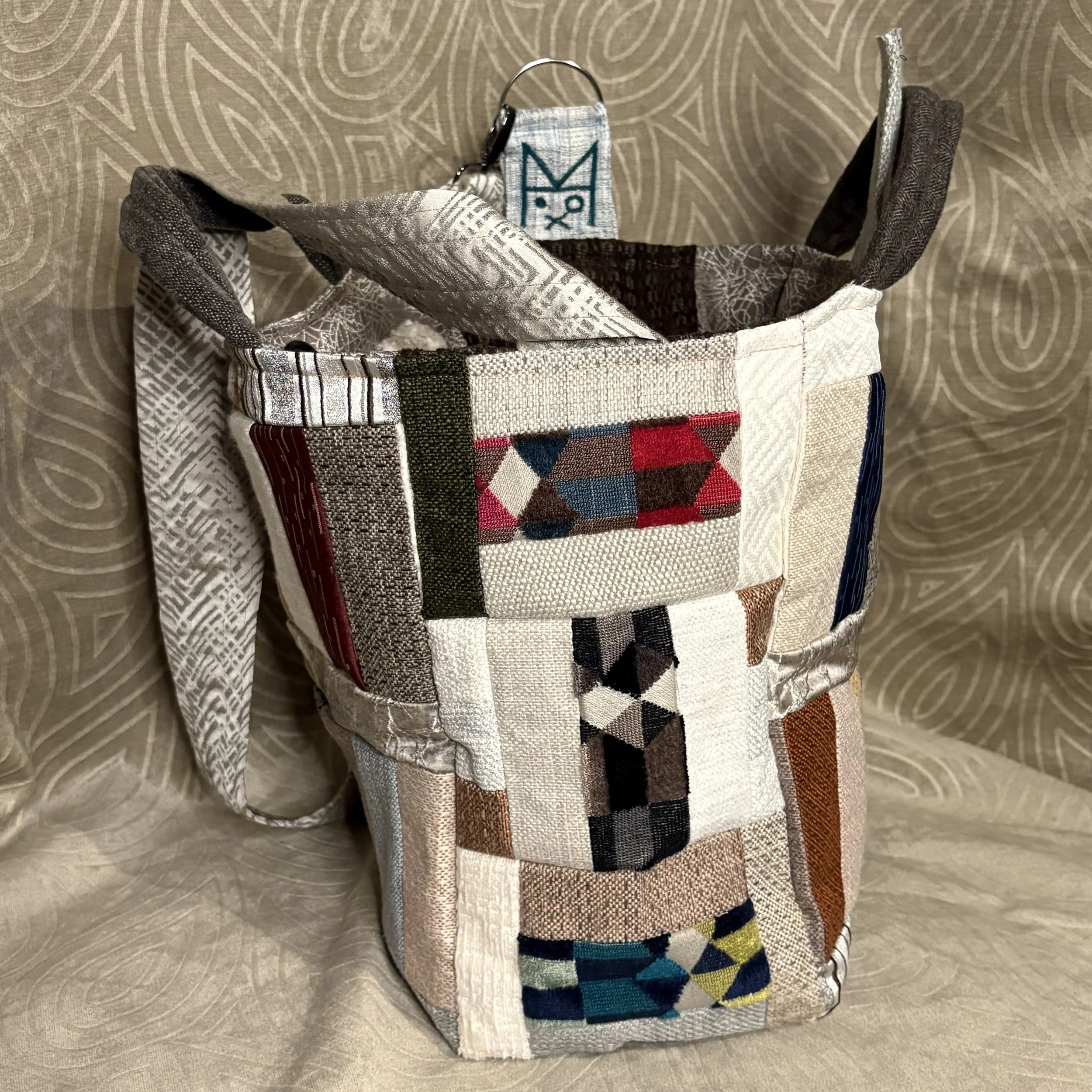
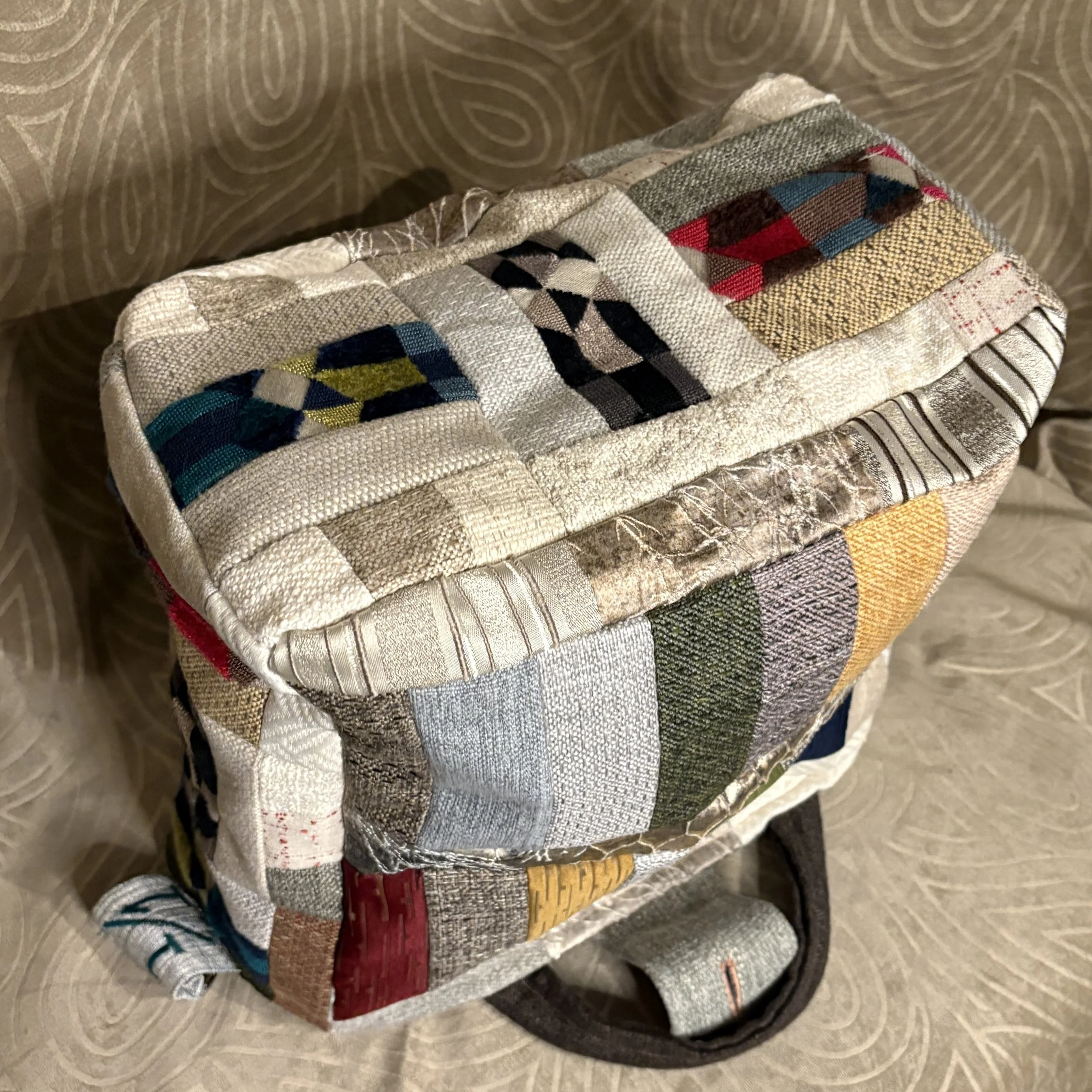
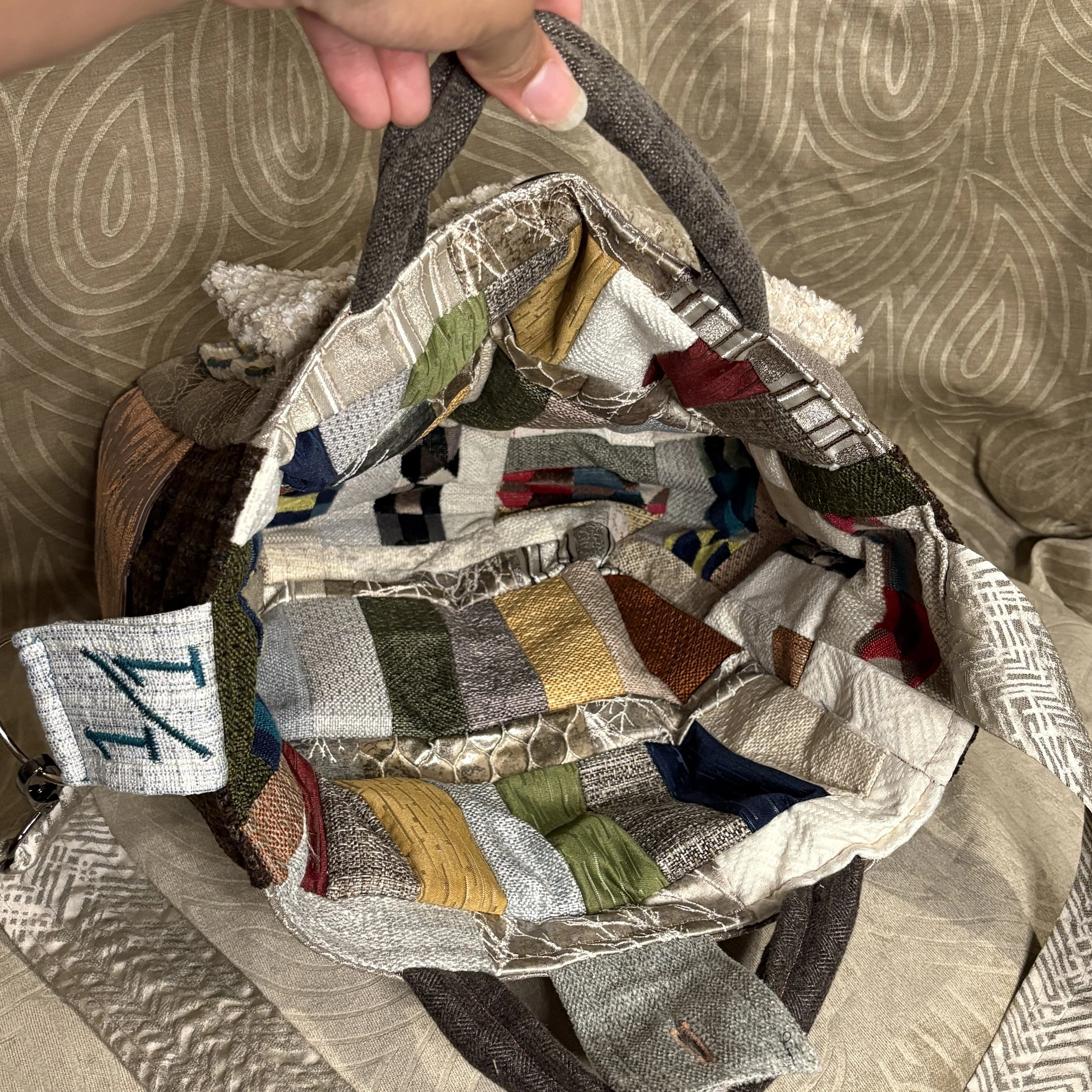
This last bag is one of my favorite projects to date, not only as a makeup call but also as a story-telling device to show that time may pass, but a commitment can still be seen through. Prior to me leaving my last job, I was a Public Relations Ambassador for a Hardware/Design Company, and at one of my last stops, I managed to befriend the receptionist at one of the Detroit Firms, and they wound up ordering charms from my site (We all cheered!). I stated that I take scrap fabric if offered, and they said they would hold onto any that came their way. Fast-Forward a few months, to when I went on a Detroit Architectural Firm crawl, and we visited the firm to say hello, and waiting there for me was a bag of material! I was ecstatic and knew the bag I made would have to be spectacular. The fabric was vibrant, and I knew the pattern I wanted to go with, a make-up to a relatively simple large bag iteration, the combination stack bond (that I had made all white for some reason). I got to work on sunday making the subtle spectrum with alternating bands of Red-Yellow-Green-Blue across the top and bottom, diffused by neutrals and divided by metallics. It was also punctuated by the runner with the trifecta of accent bricks in the center of each panel, as well as the complimentary colors of the exterior shell. I called it the “Hot-Cold” shell due to the pocket colors and the spectrum on the main pocket. I made the joke that if no one winds up buying it after a while it would become my personal bag, and that might end up being the case eventually.
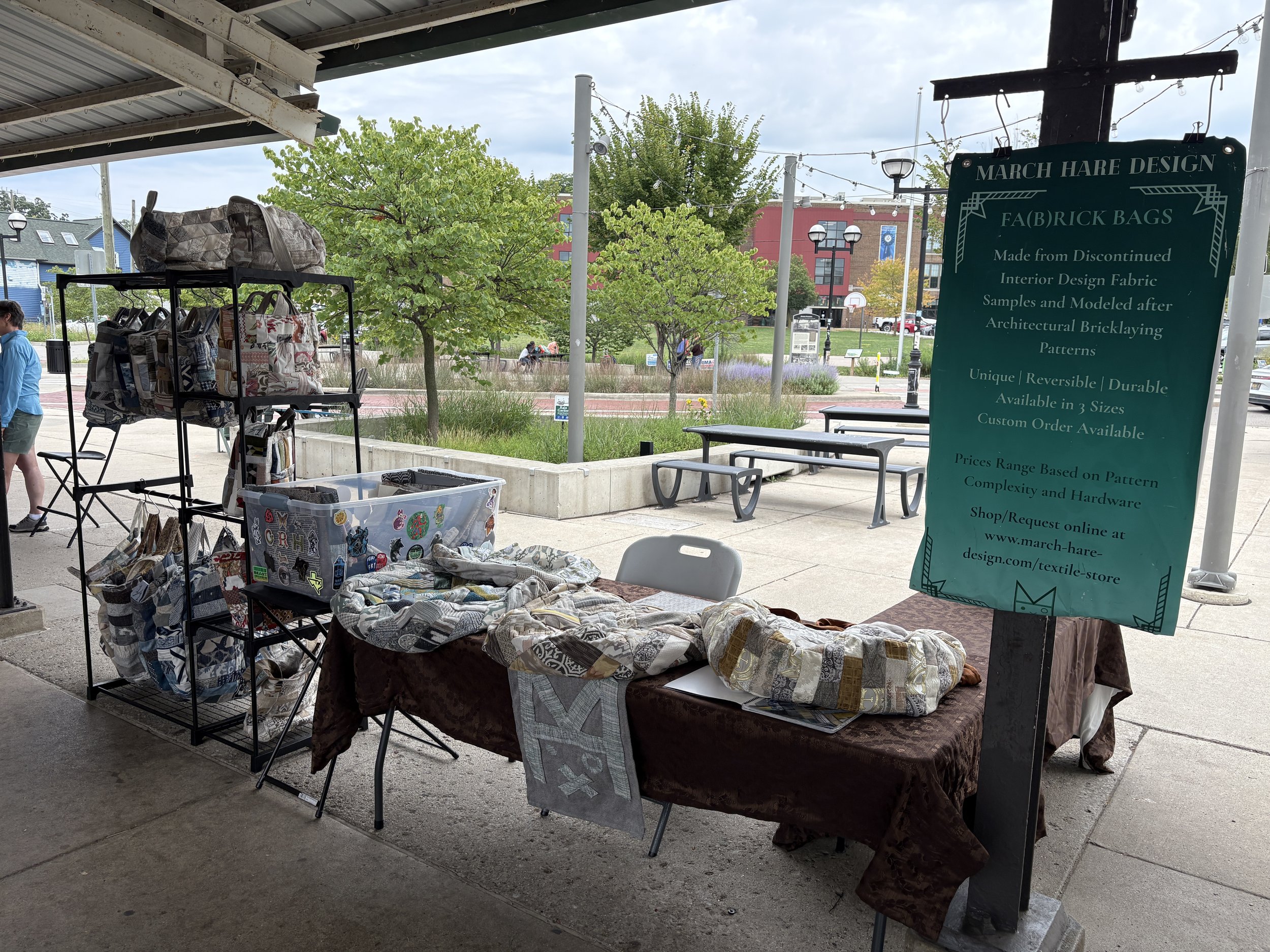
Growing Pains are to be expected in your first real year of operation, with the addition of a new shelf to battle the wind, or a new table to expand the surface area for me to spread both the bags and my tools. Each week I find myself in a game of Tetris, finding the most optimal scenario and configuration for the bags to be presented.
I thought it would be a good idea to have the small and medium bags in the large tub so that people can come and sift through them for customs, but people are slightly less adventurous than I thought, so I’ve begun to lay them along the side table or to just pull them out as example pieces so that they can get the gist of the custom process.
As a tactile learner, it makes total sense to allow for touching, but the general populace gets skittish, I should ensure that they know that if you aren’t flipping the bags inside out, you aren’t getting the whole picture.