It may take a bit of time, but networking does work, and in some cases, it breeds some pretty neat products.
I managed to make eight bags from the material that was sent to me, and sharing the results here is my way of extending my gratitude.
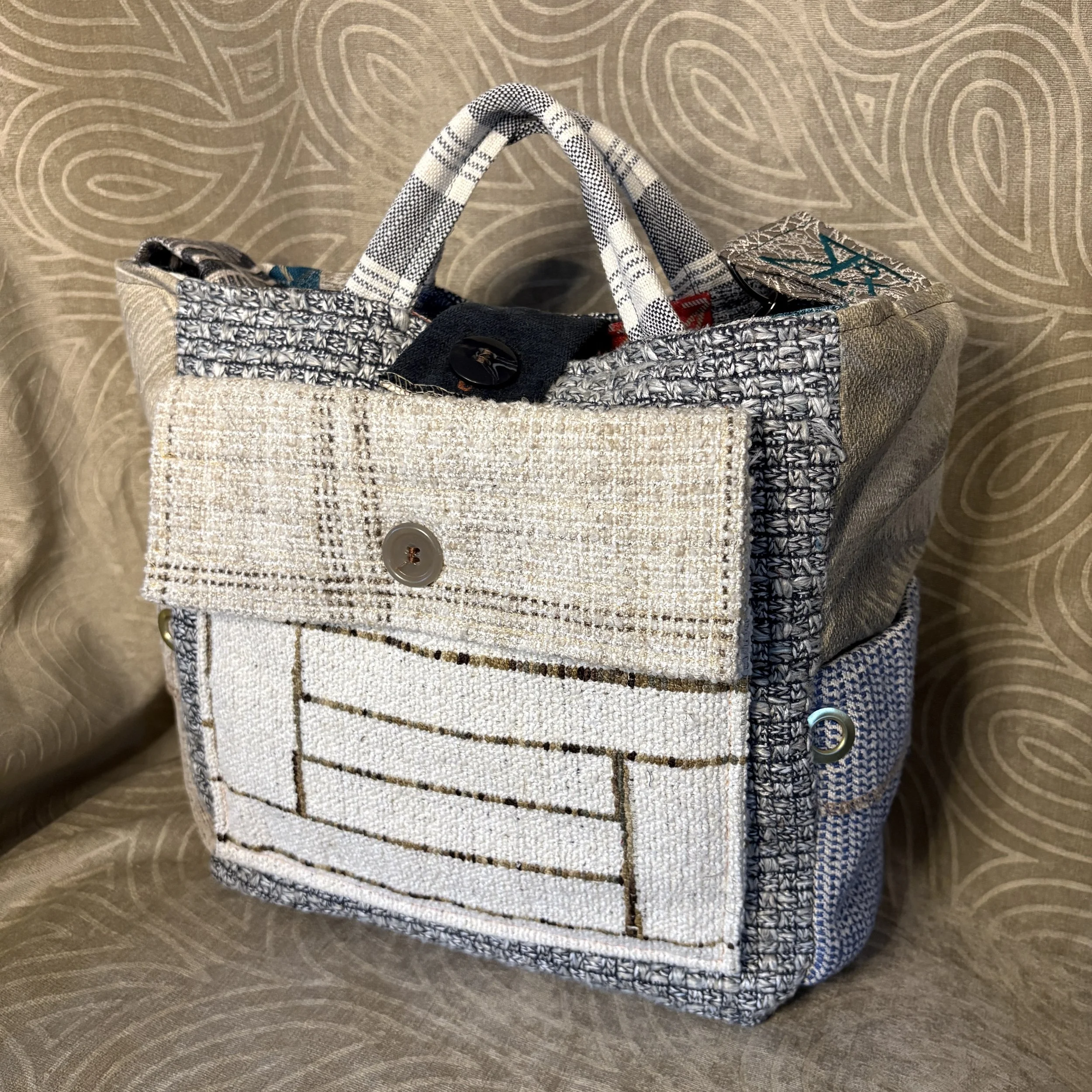
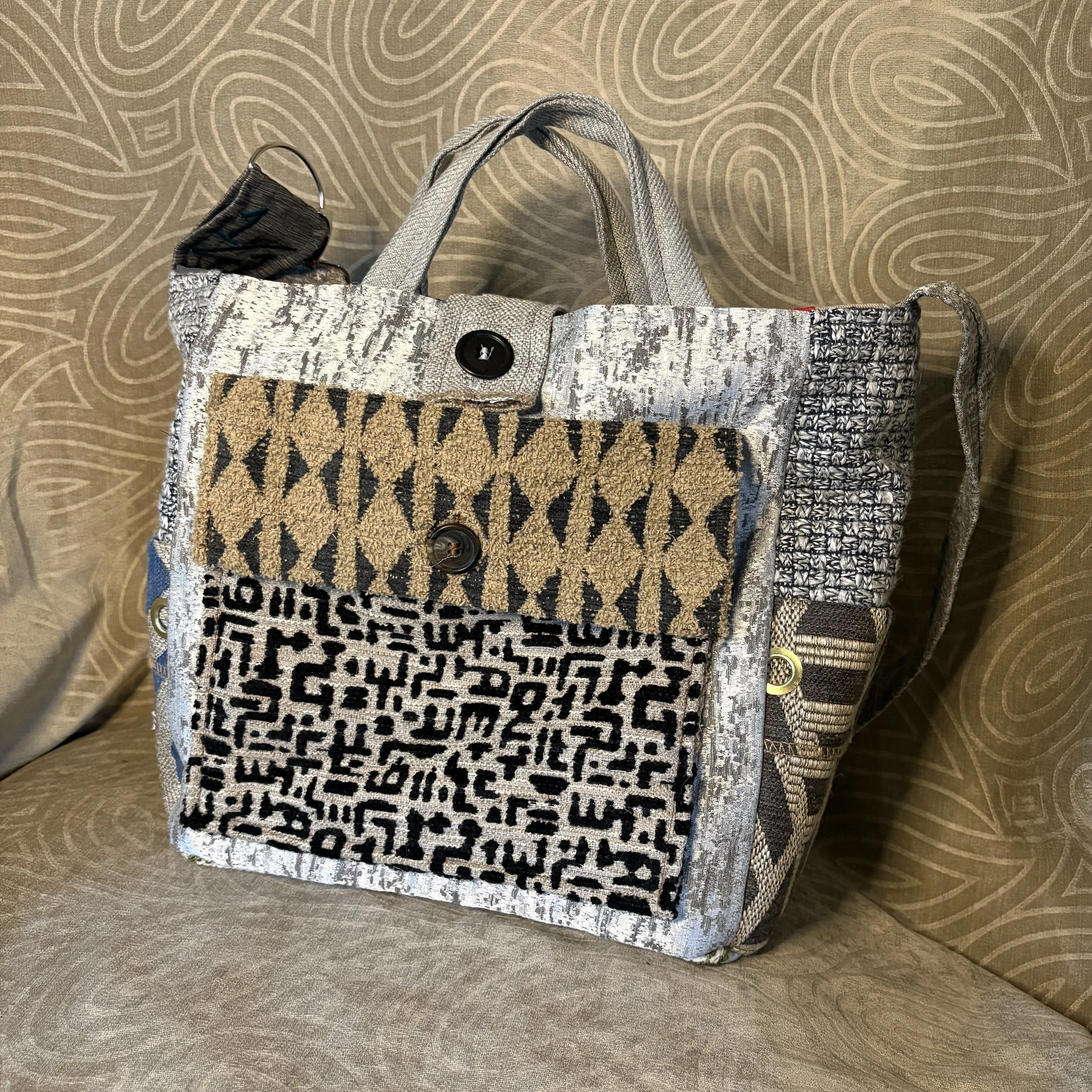
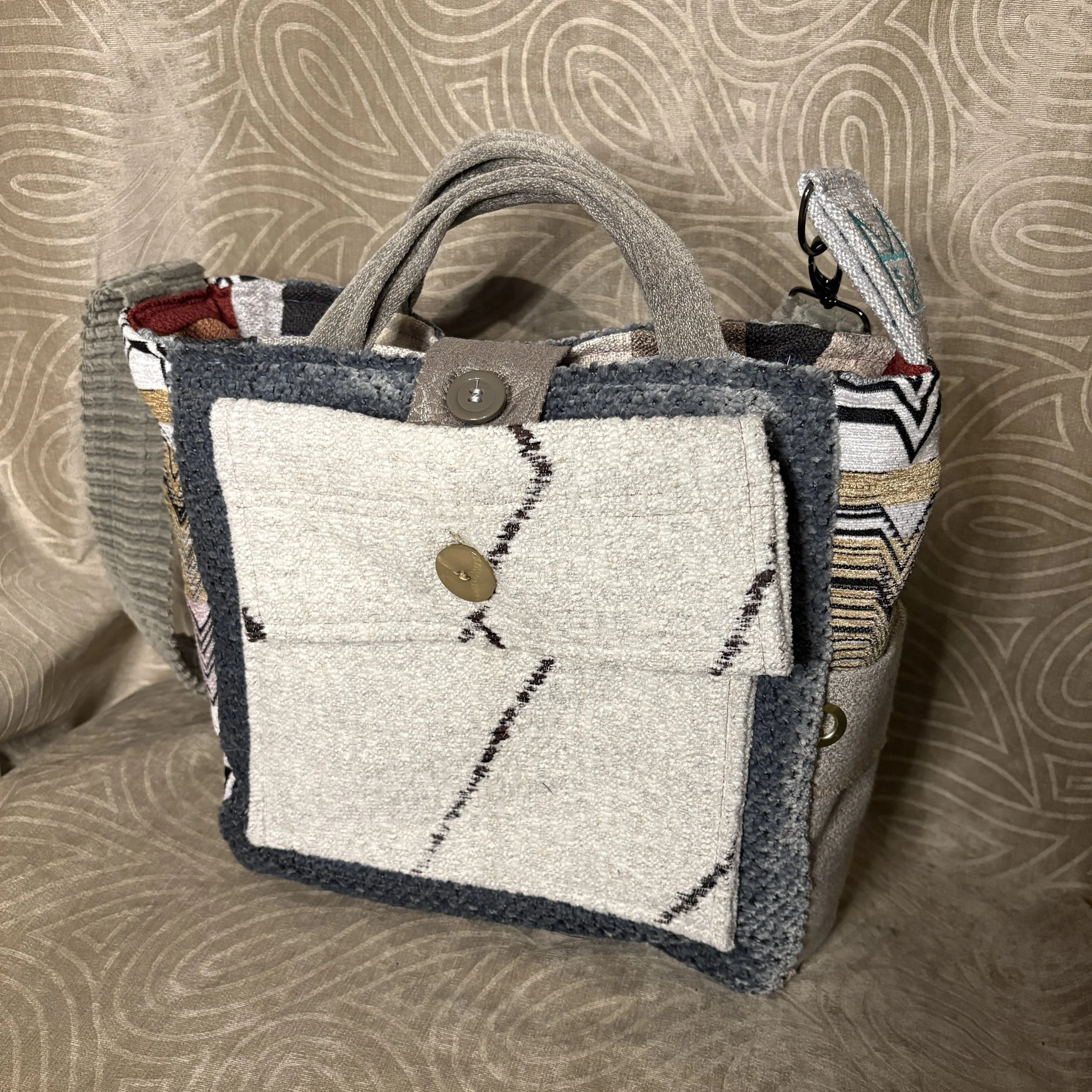
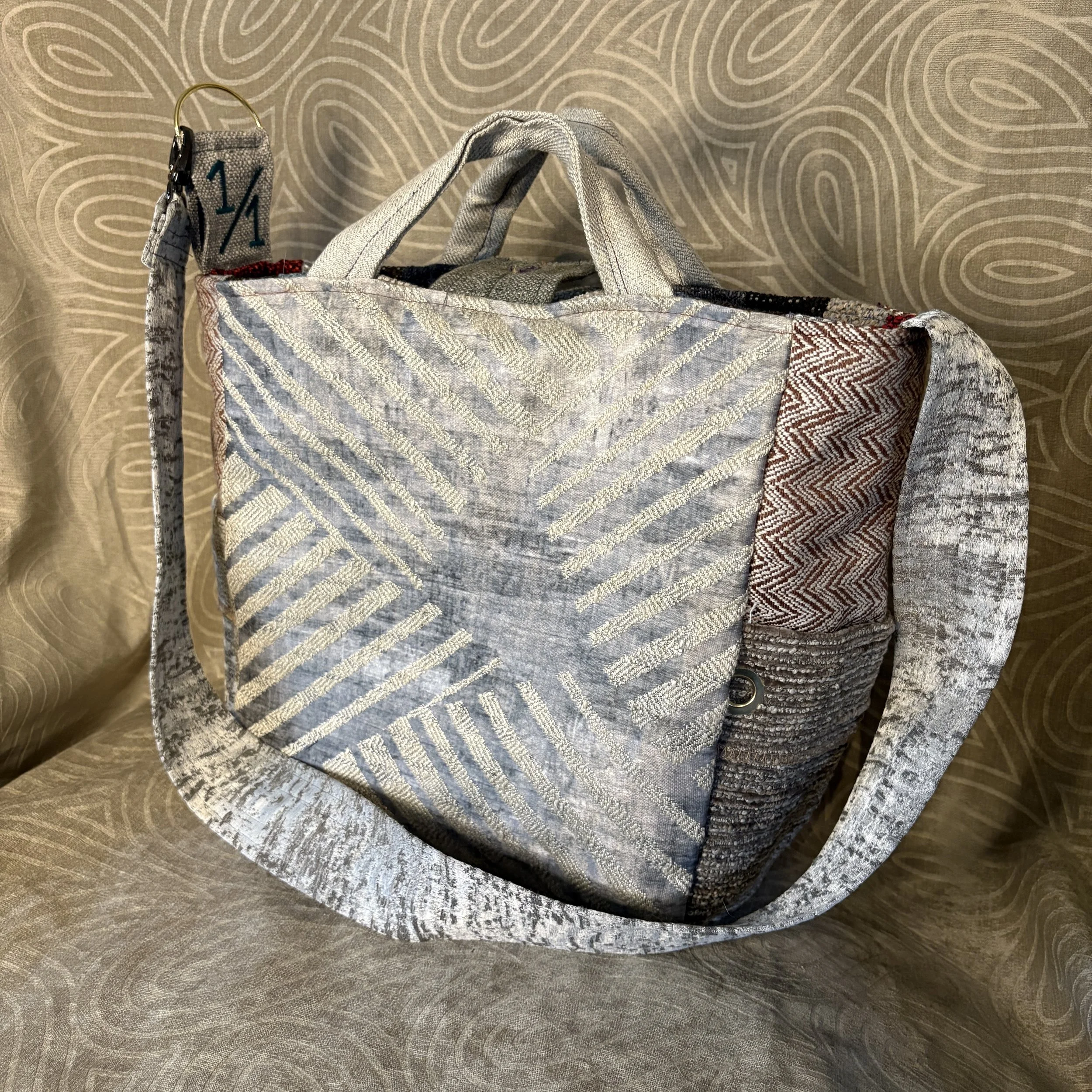
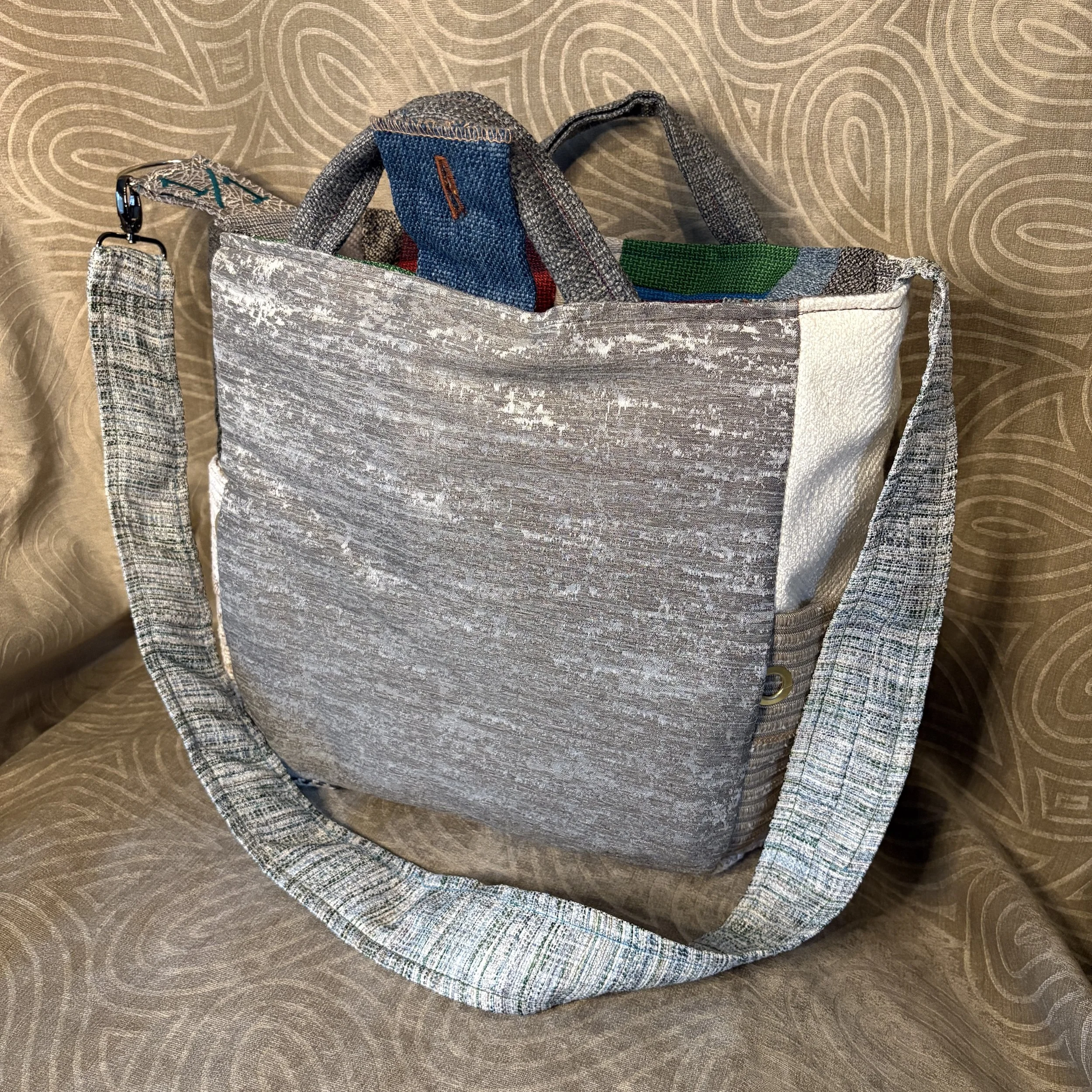
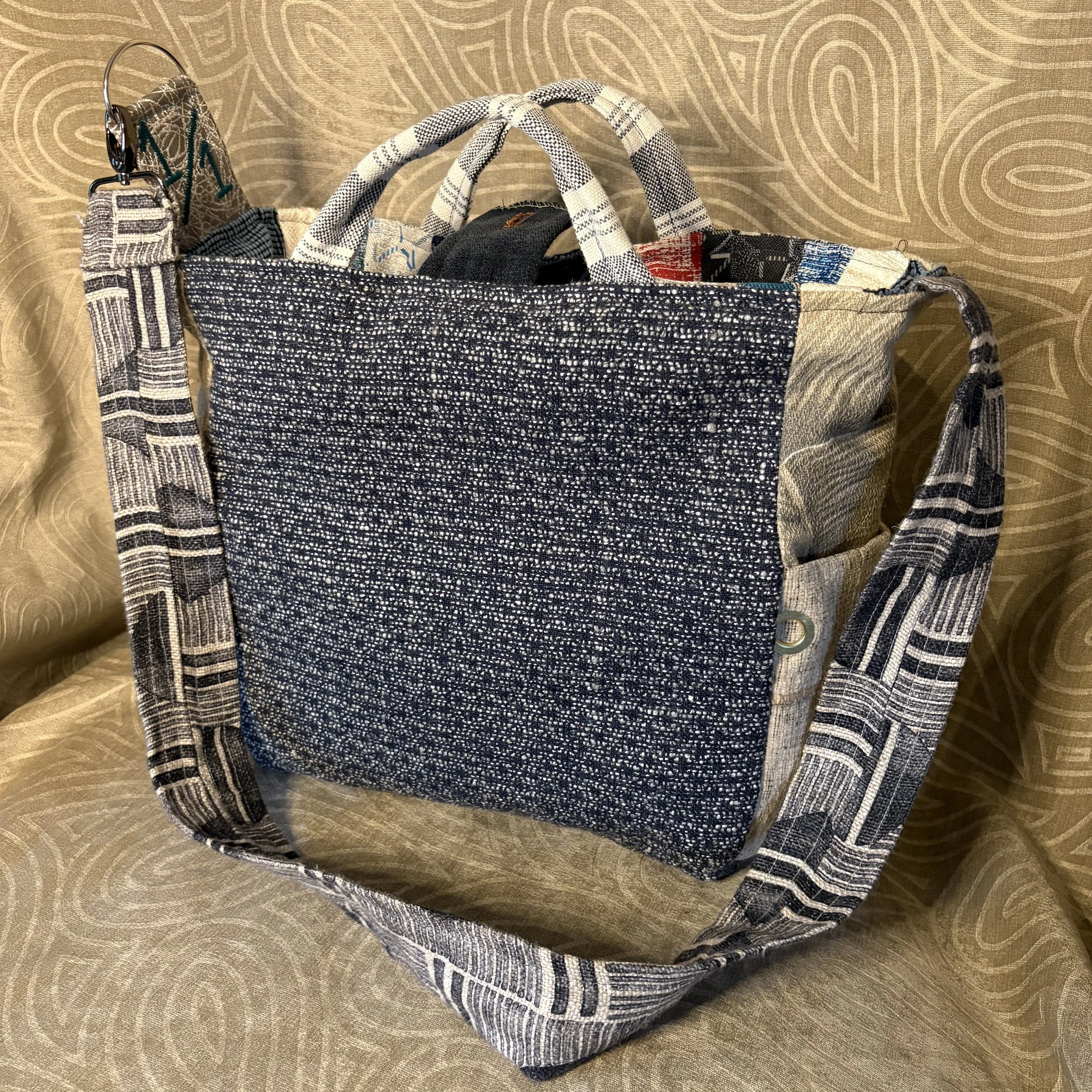
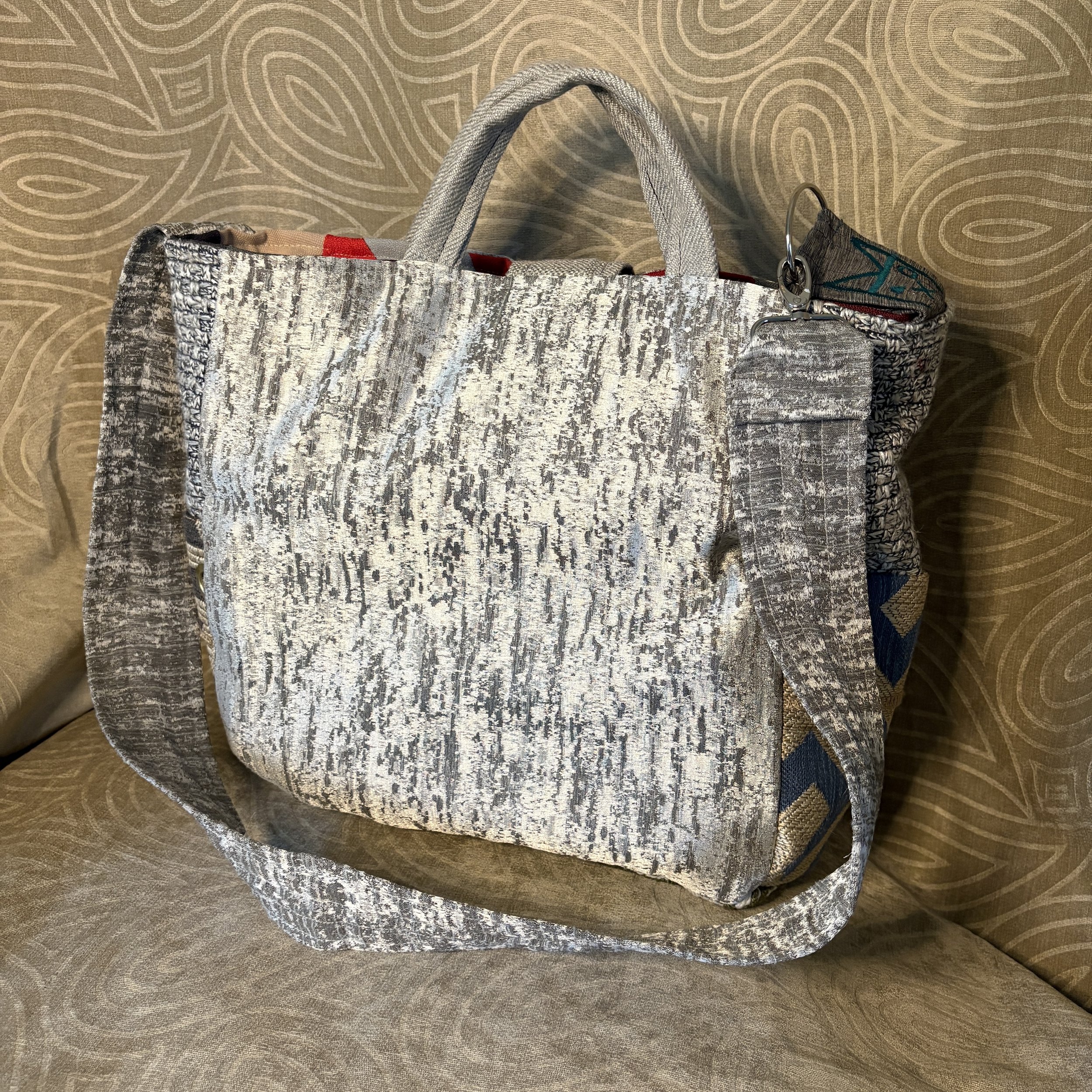
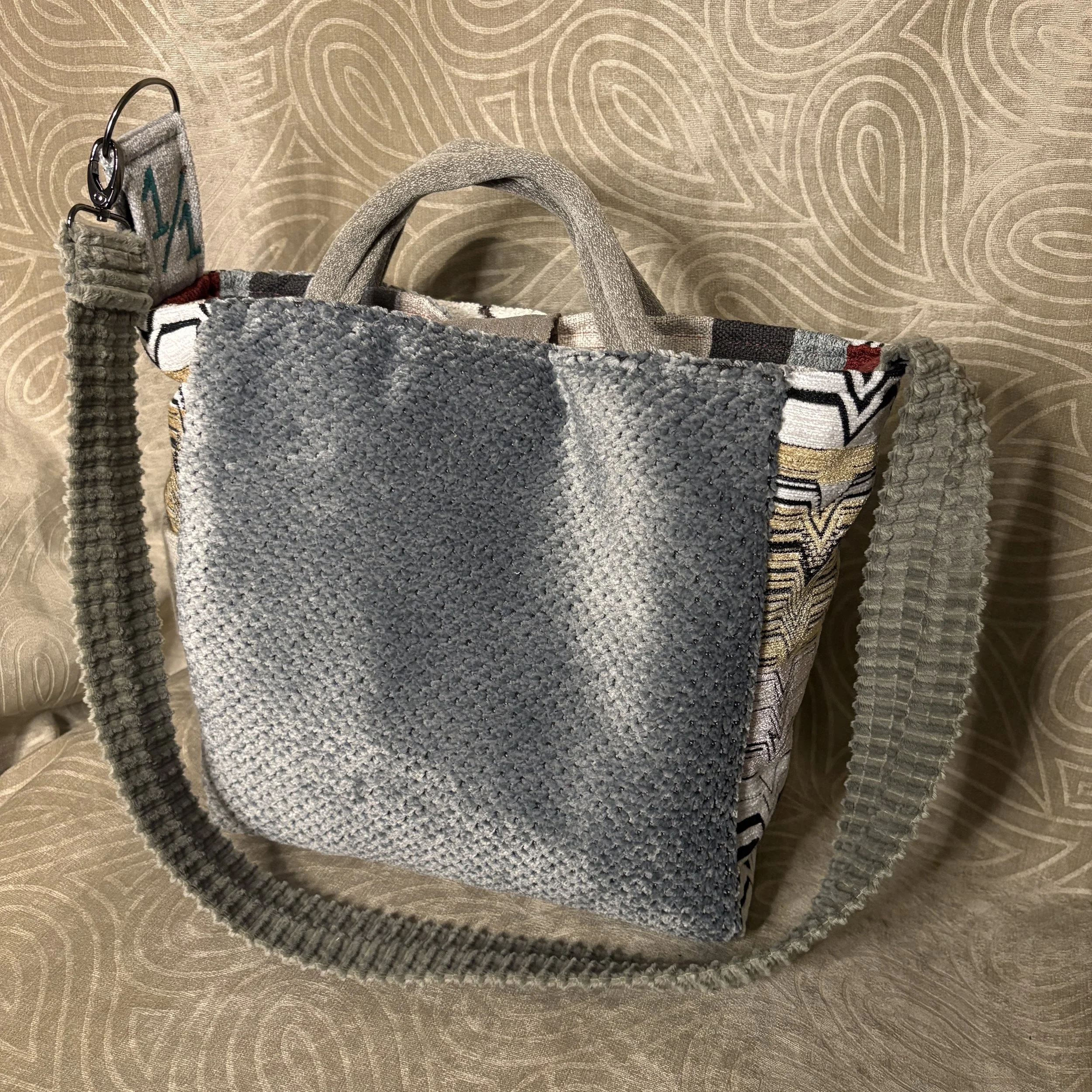
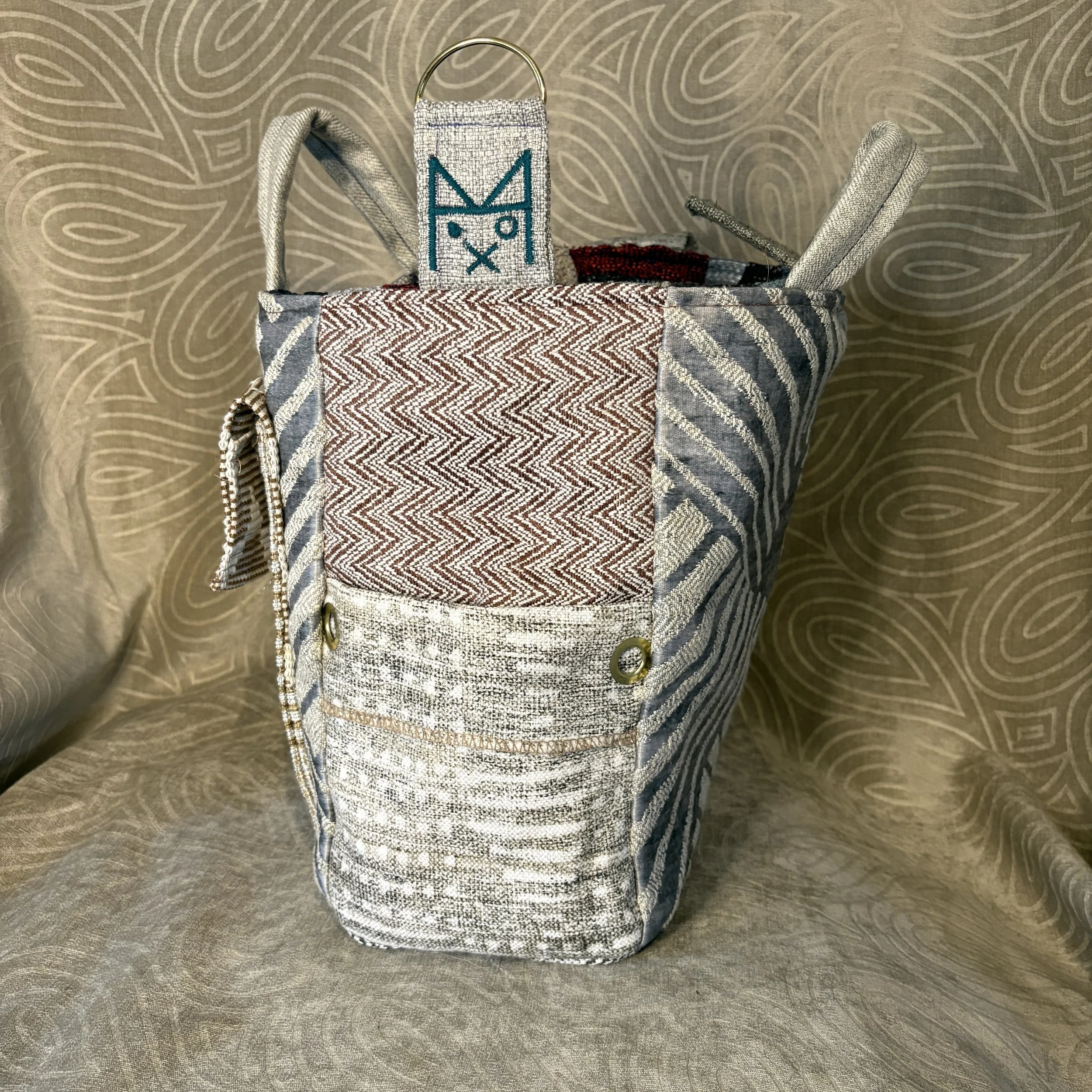
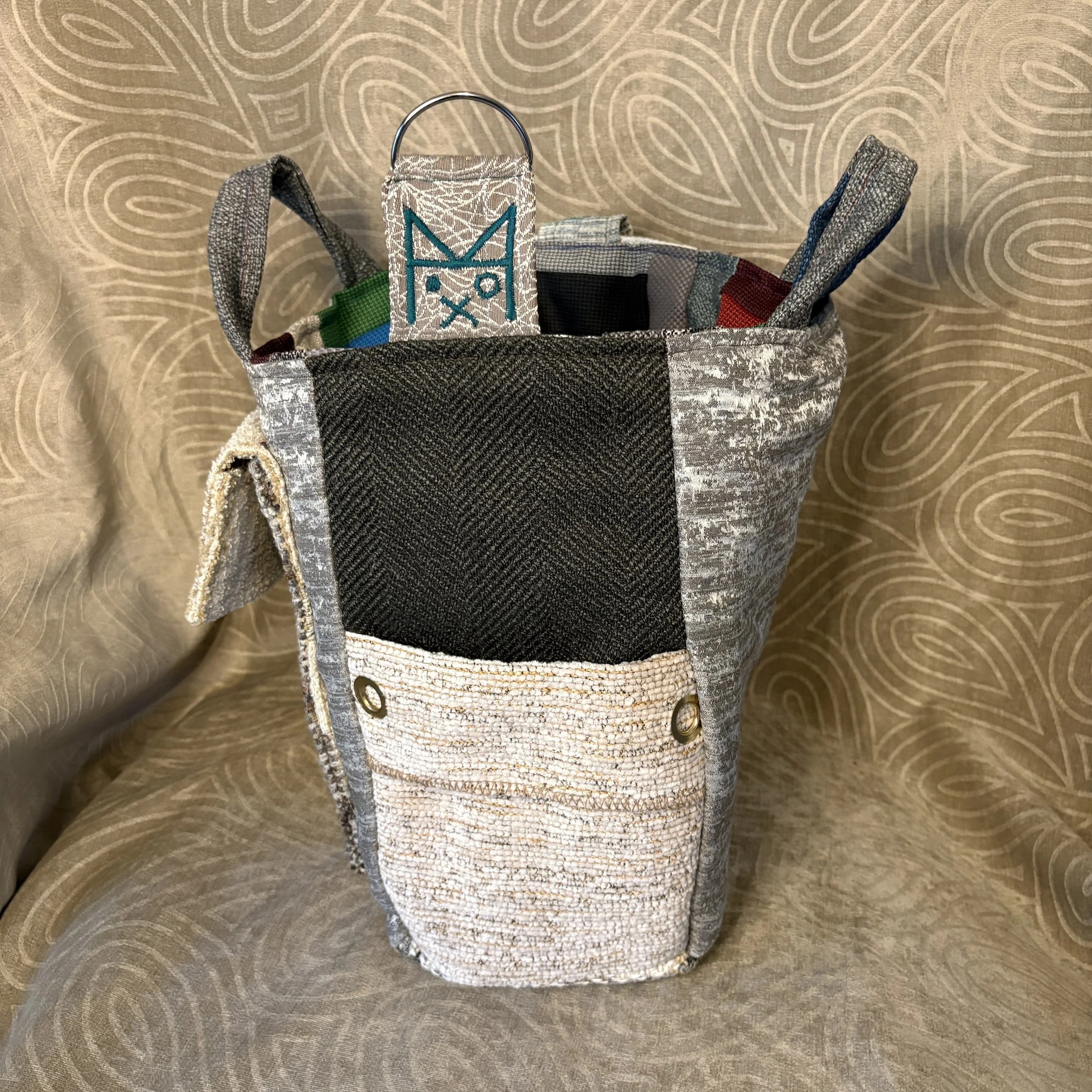
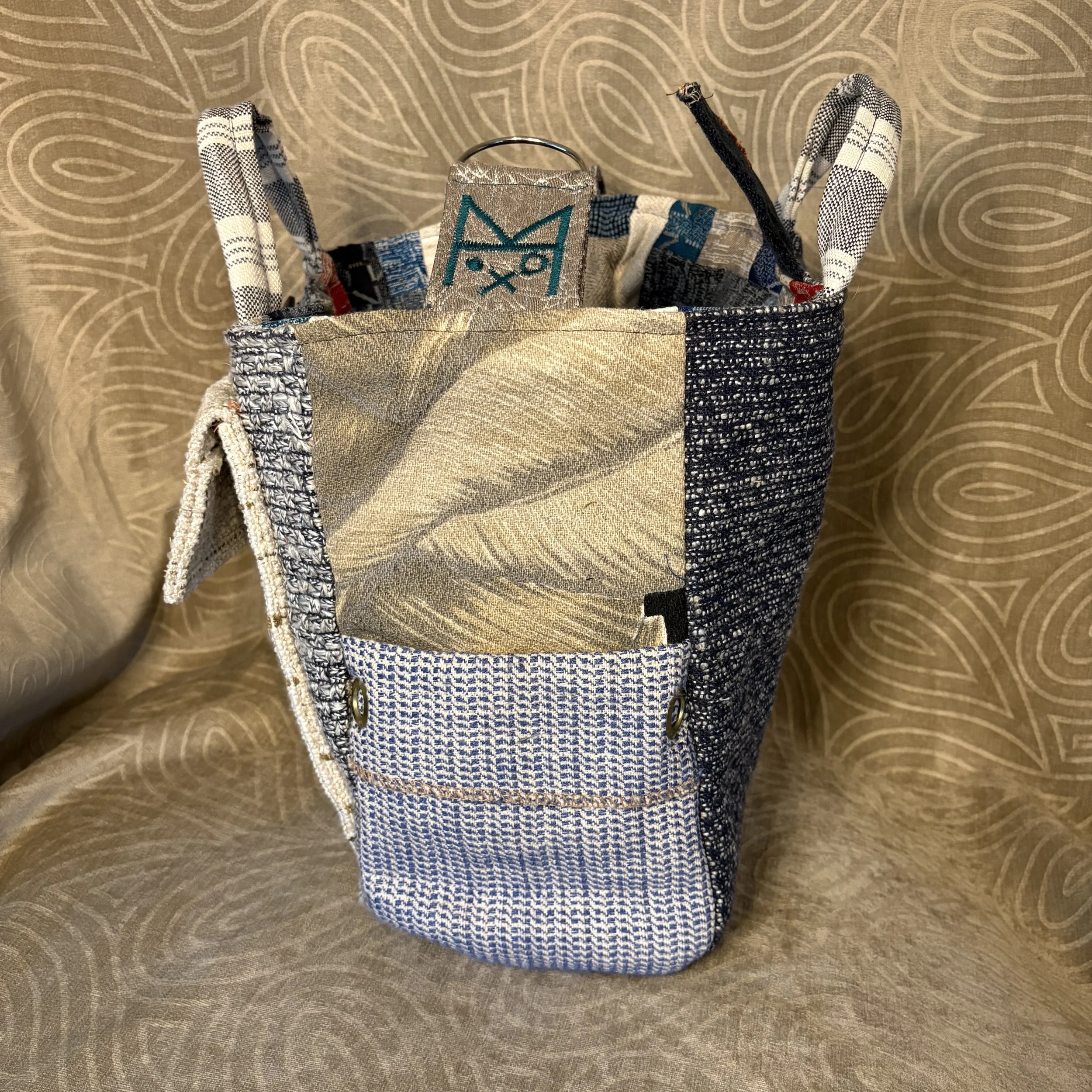
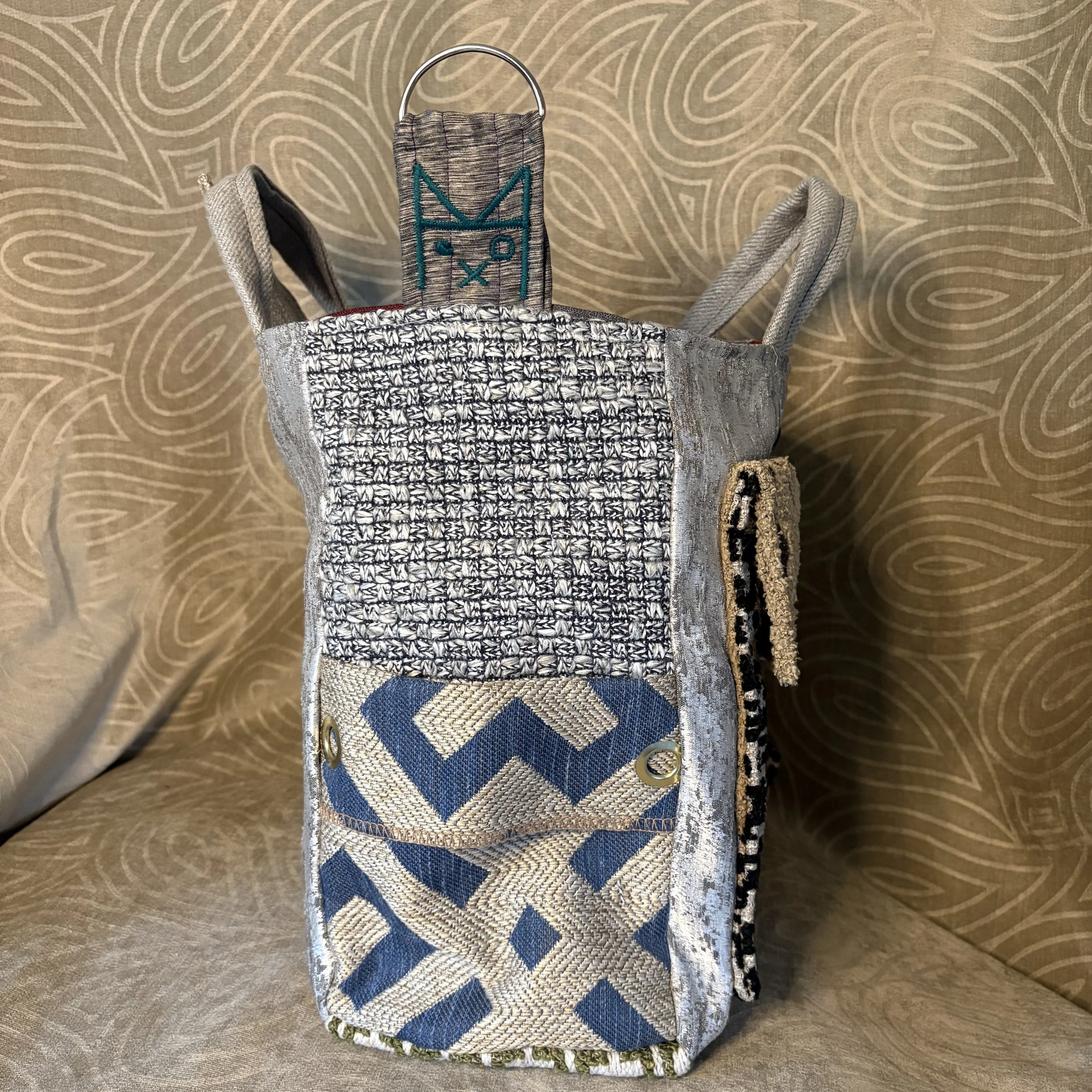
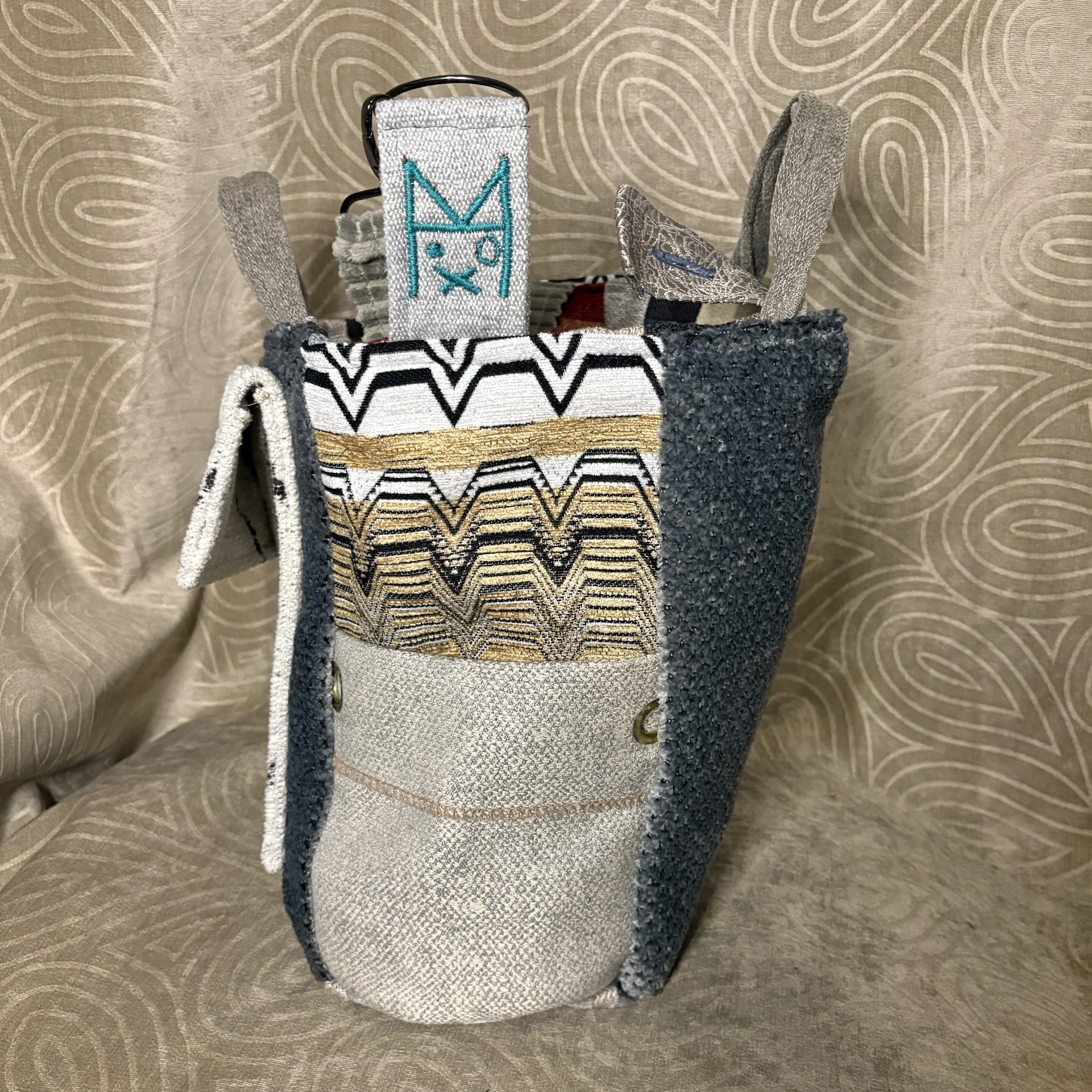
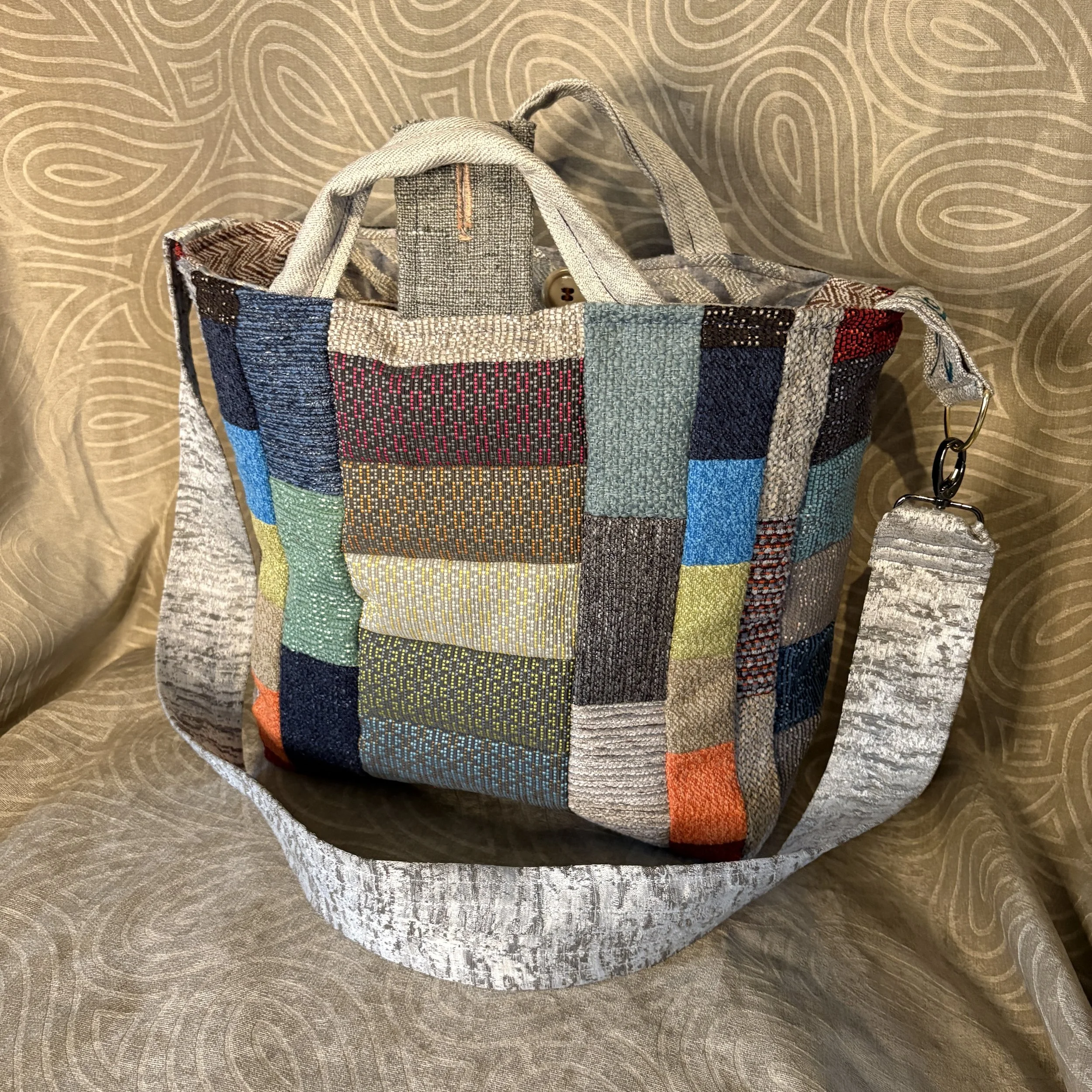
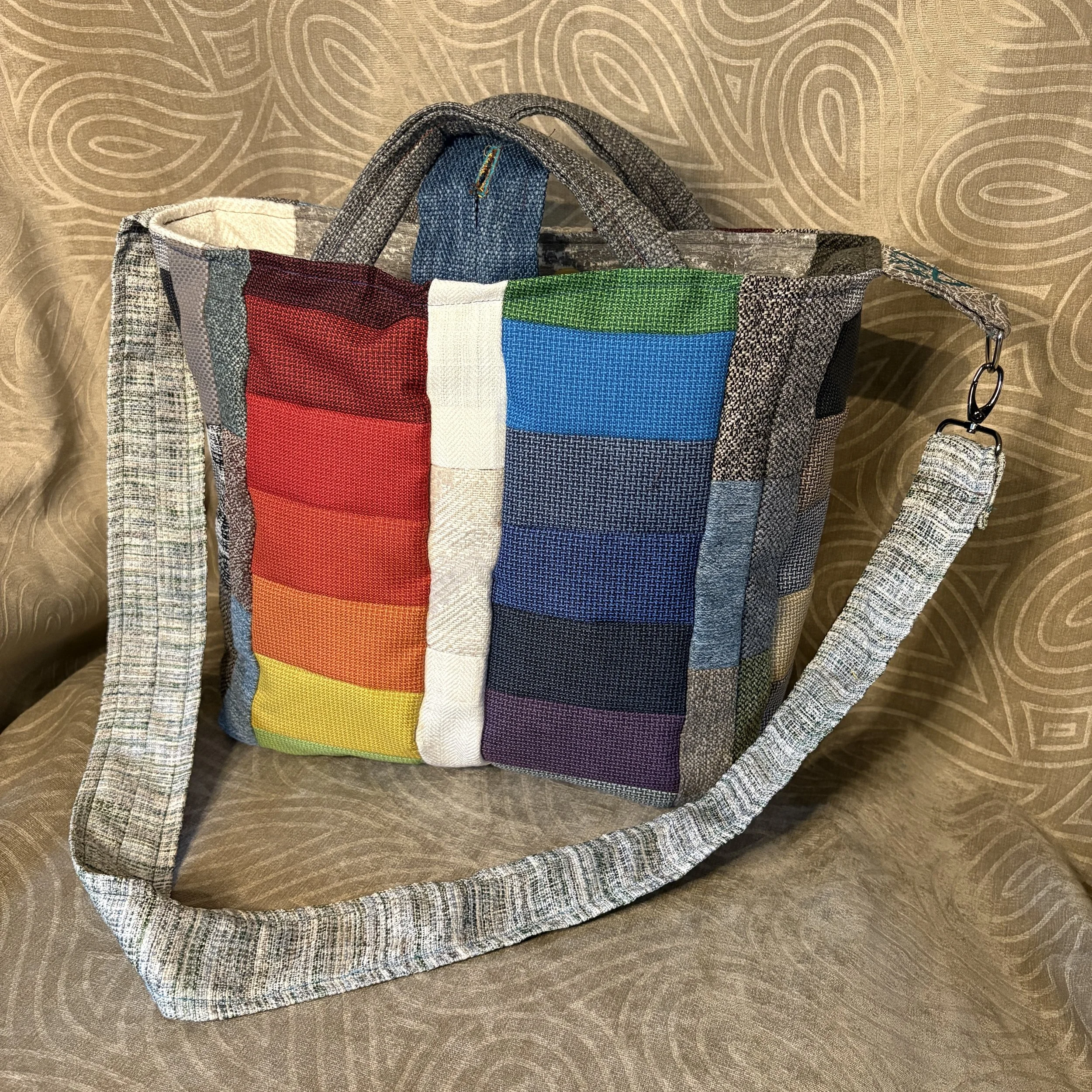
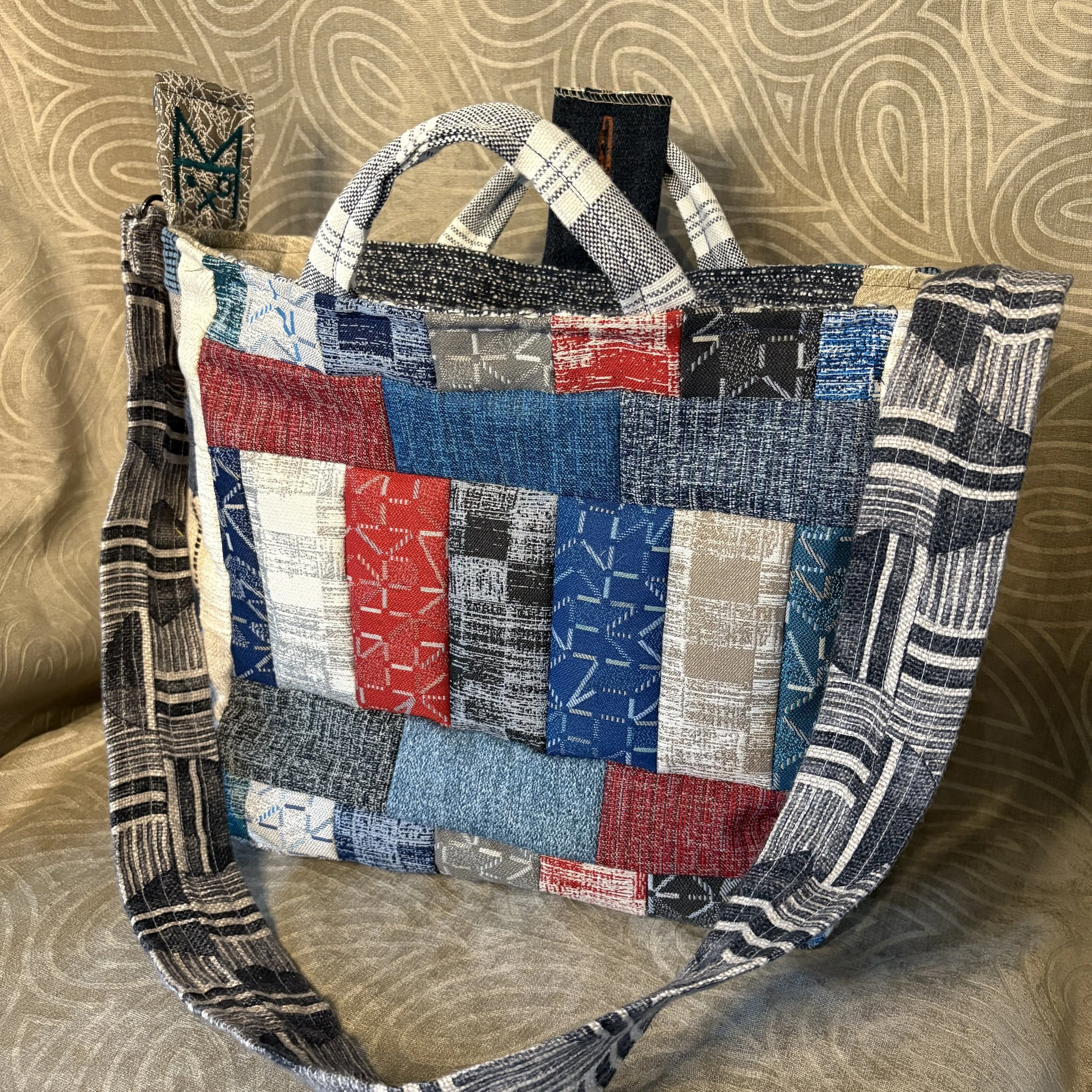
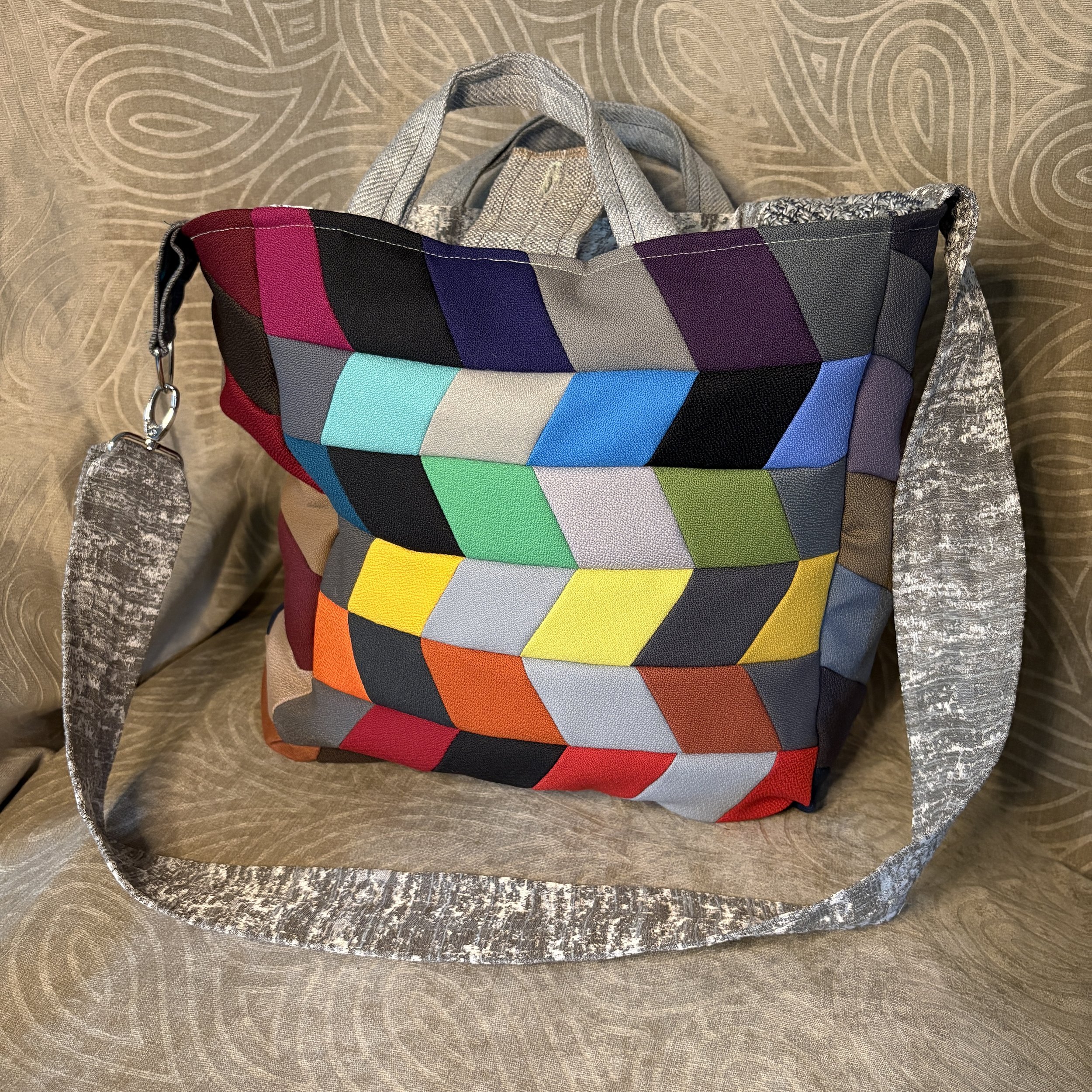
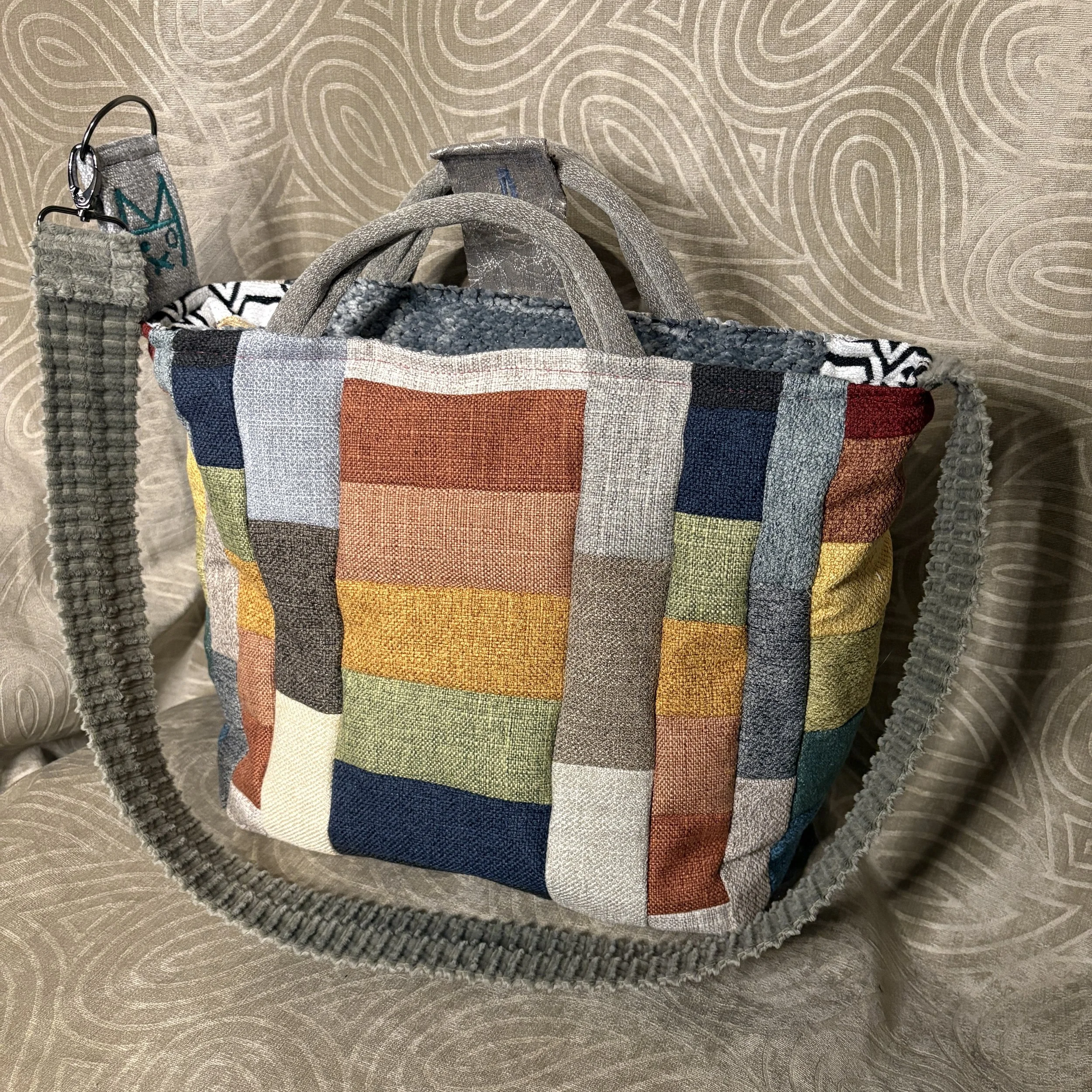
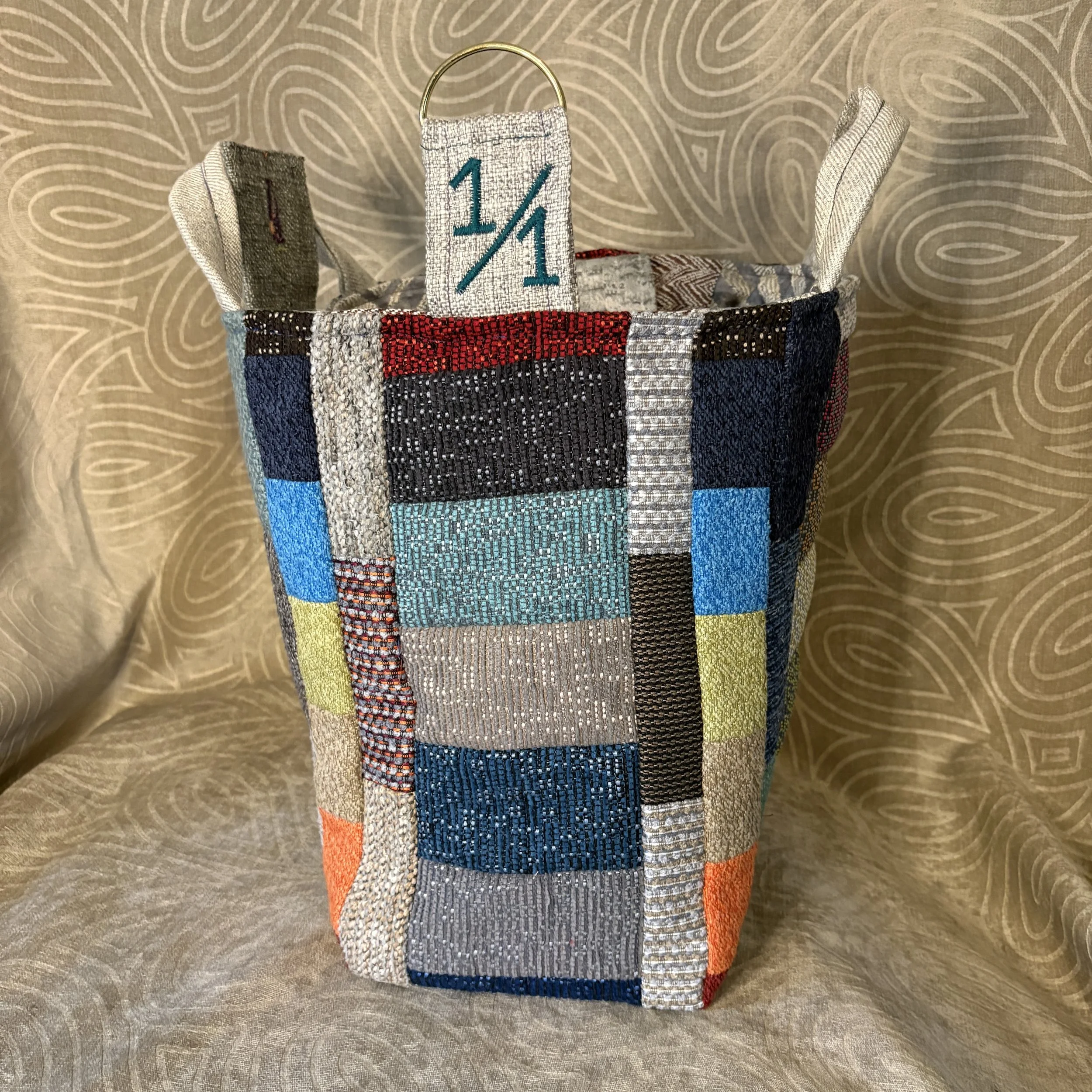
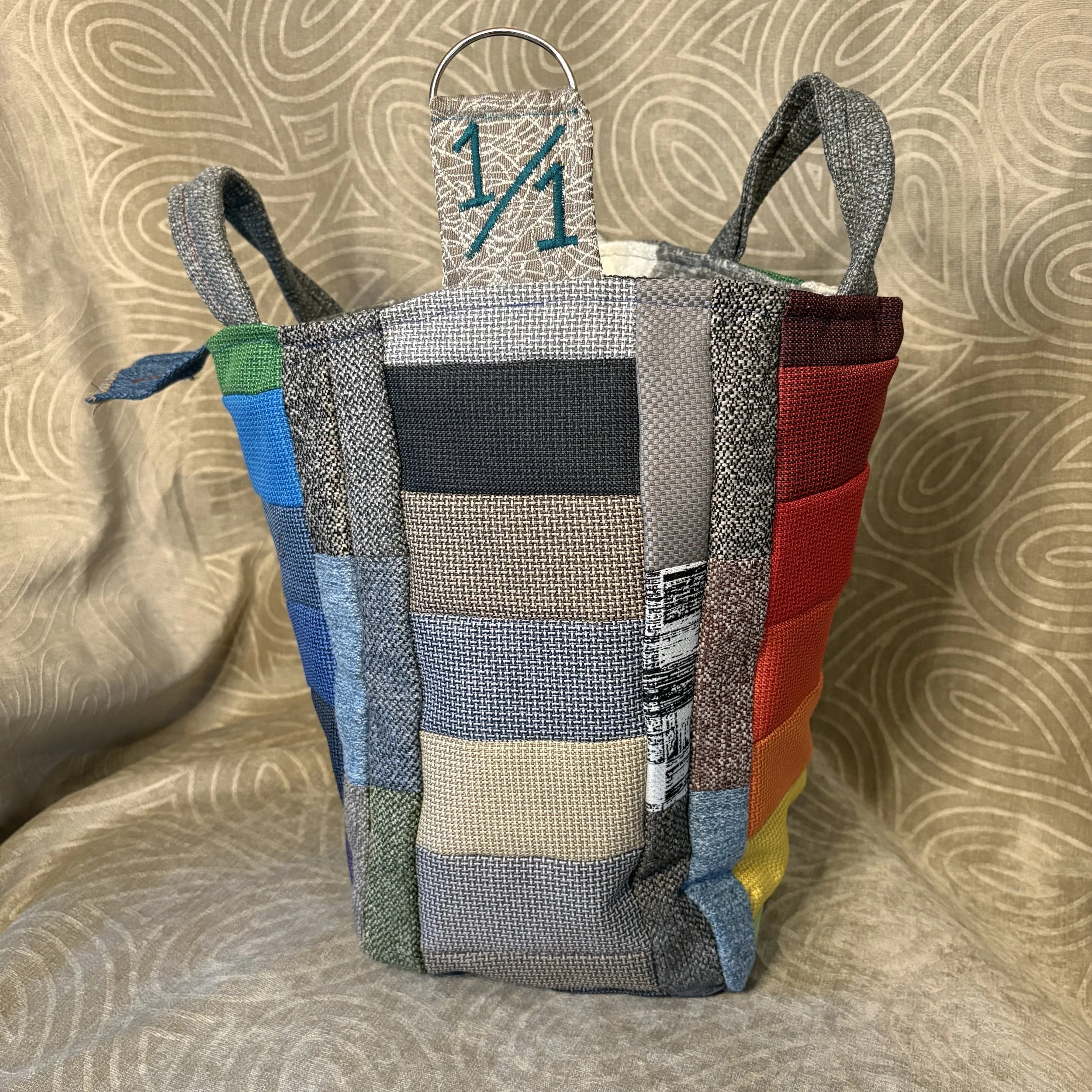
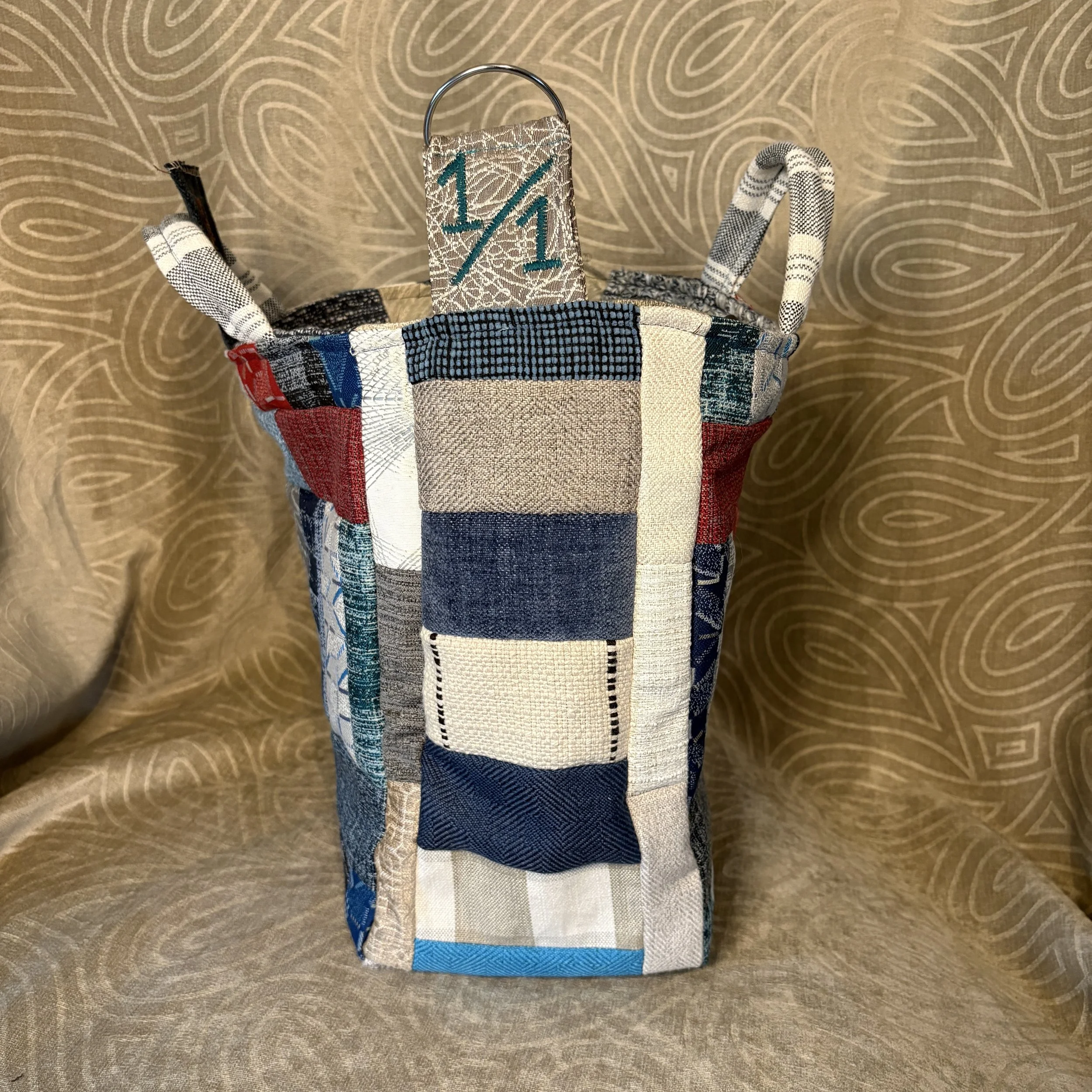
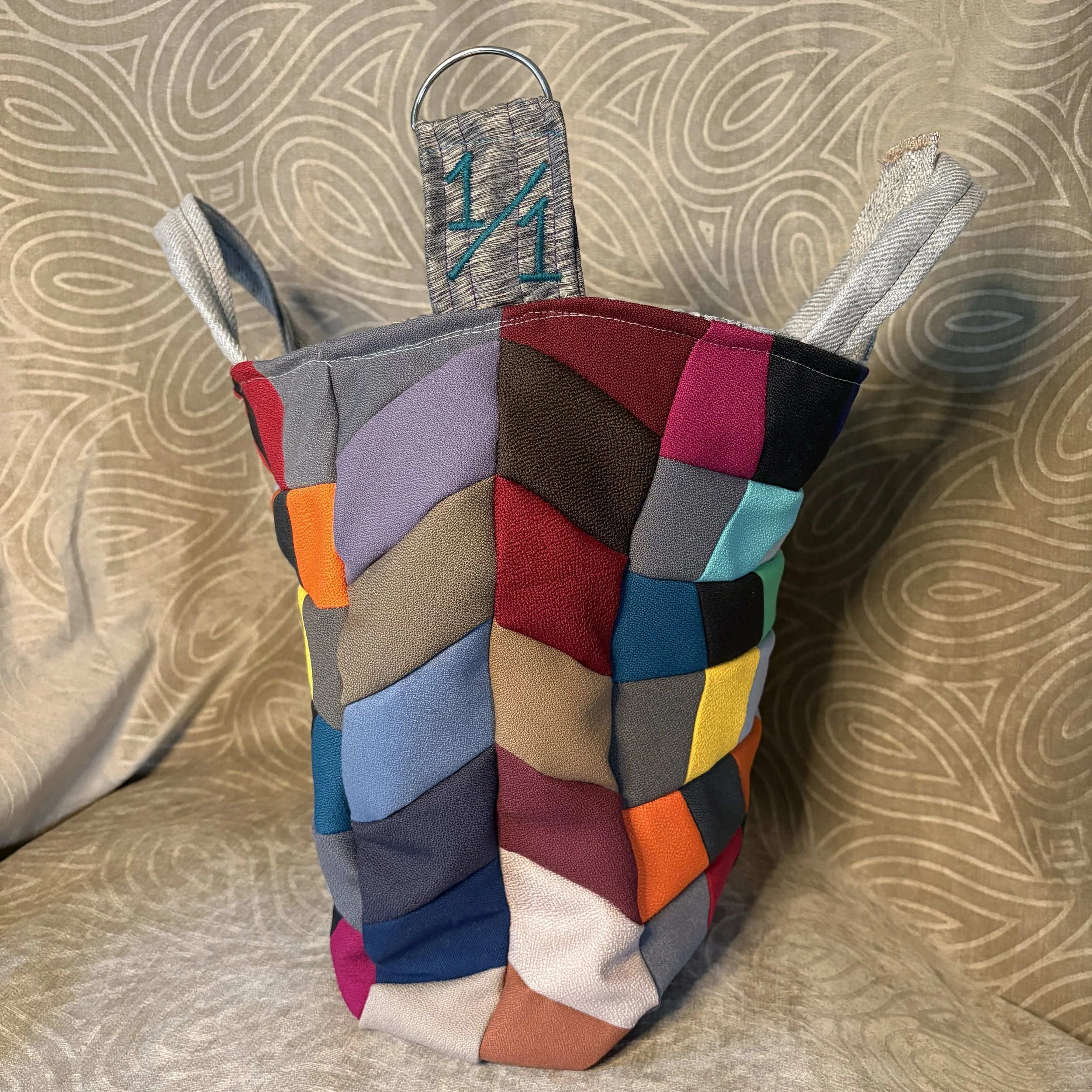
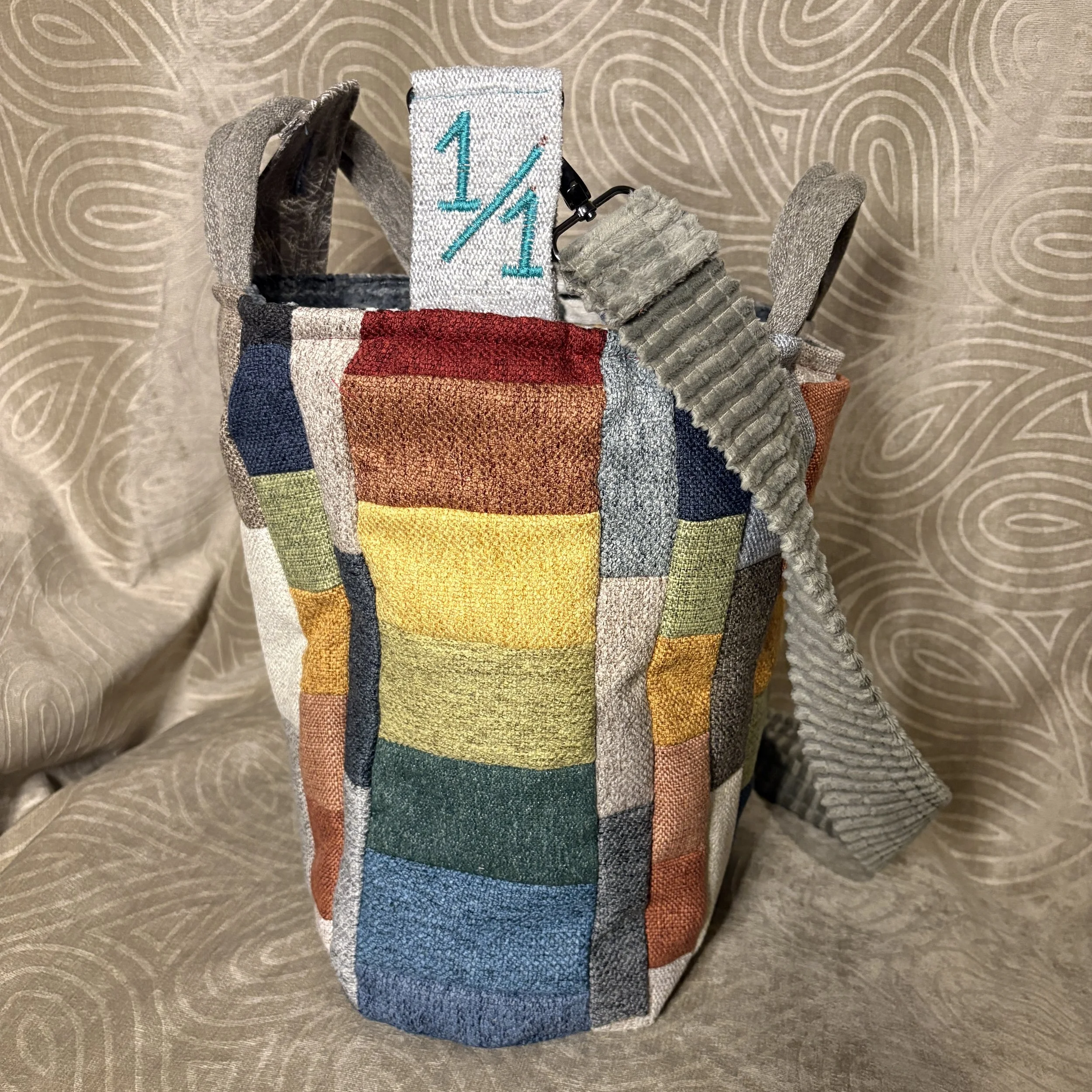
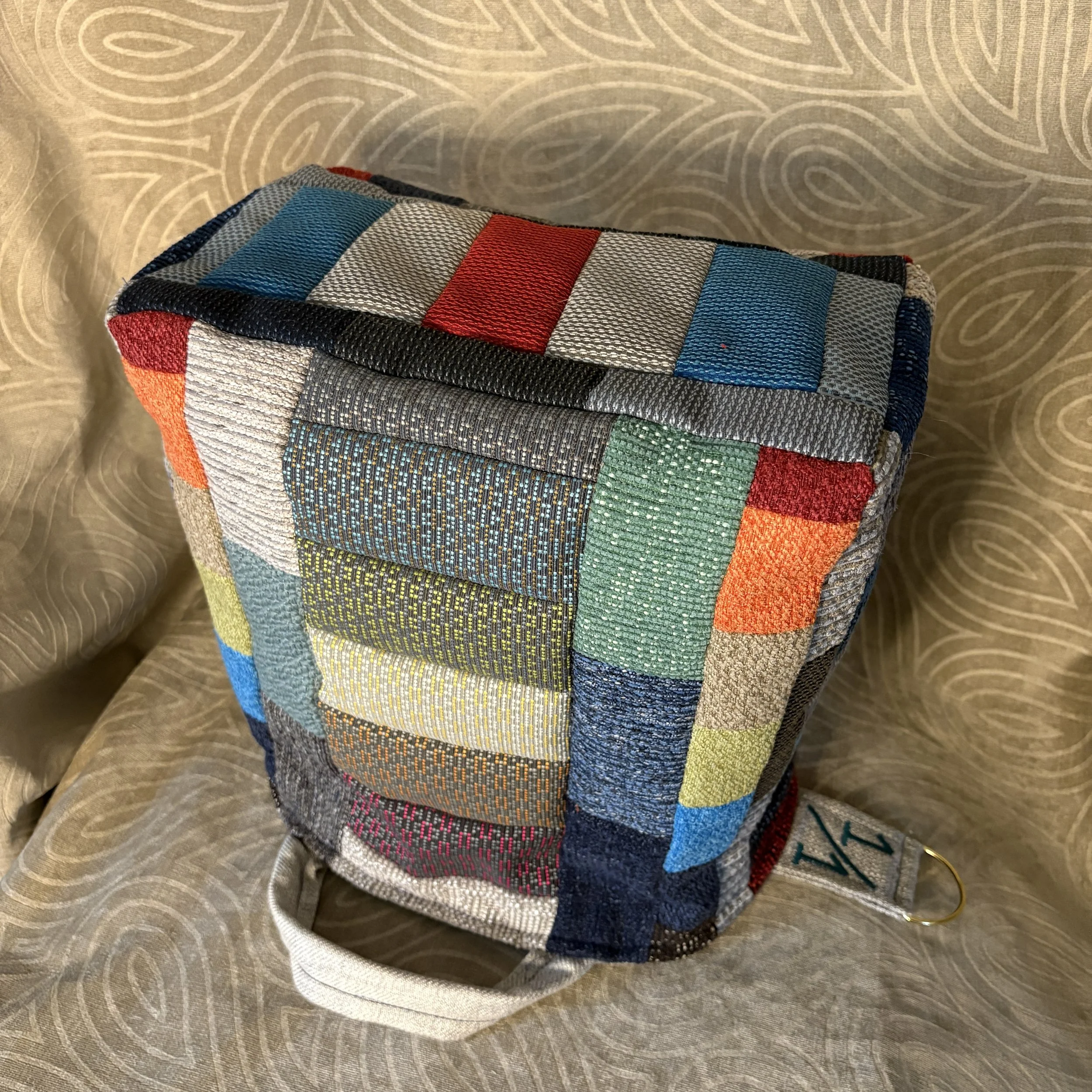
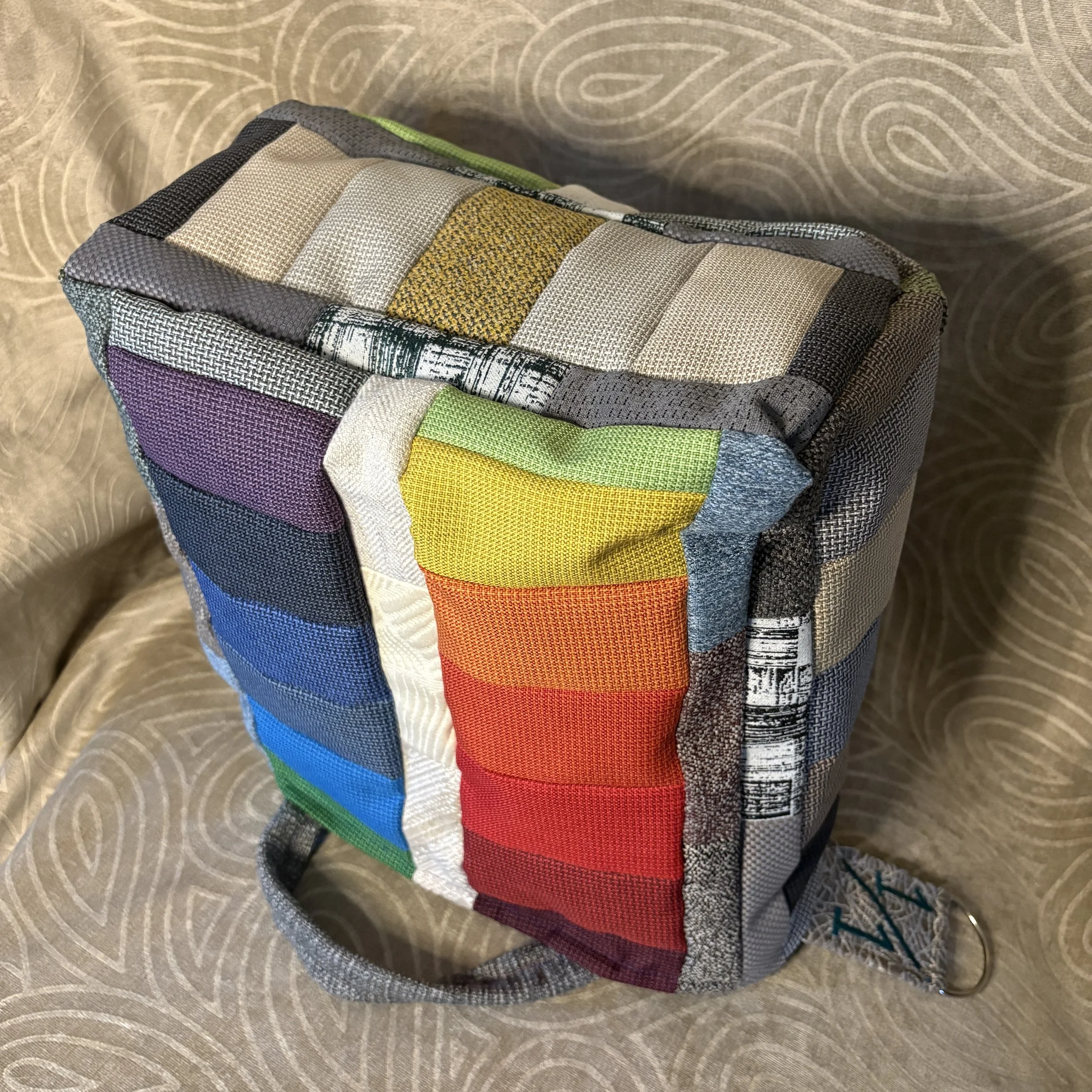
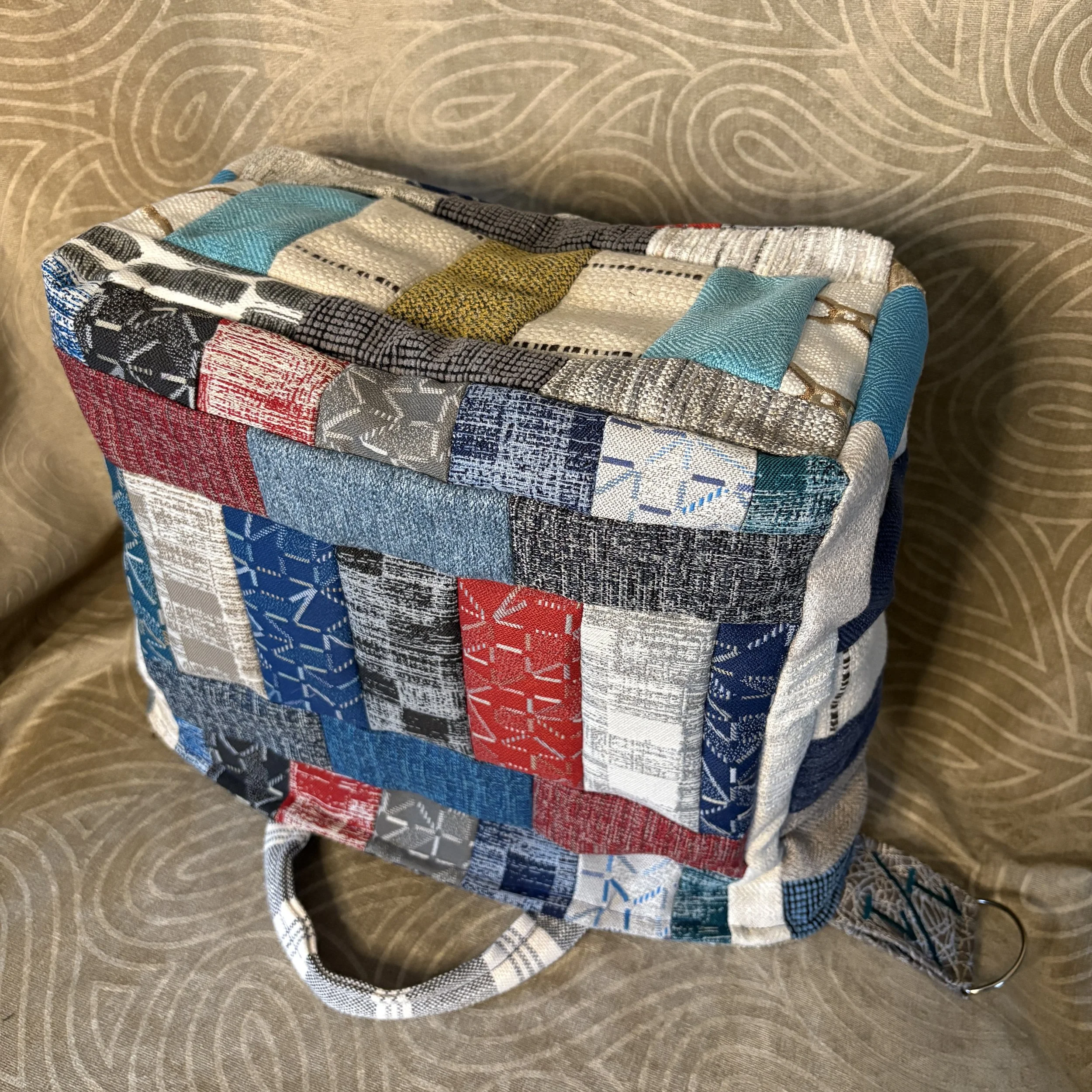
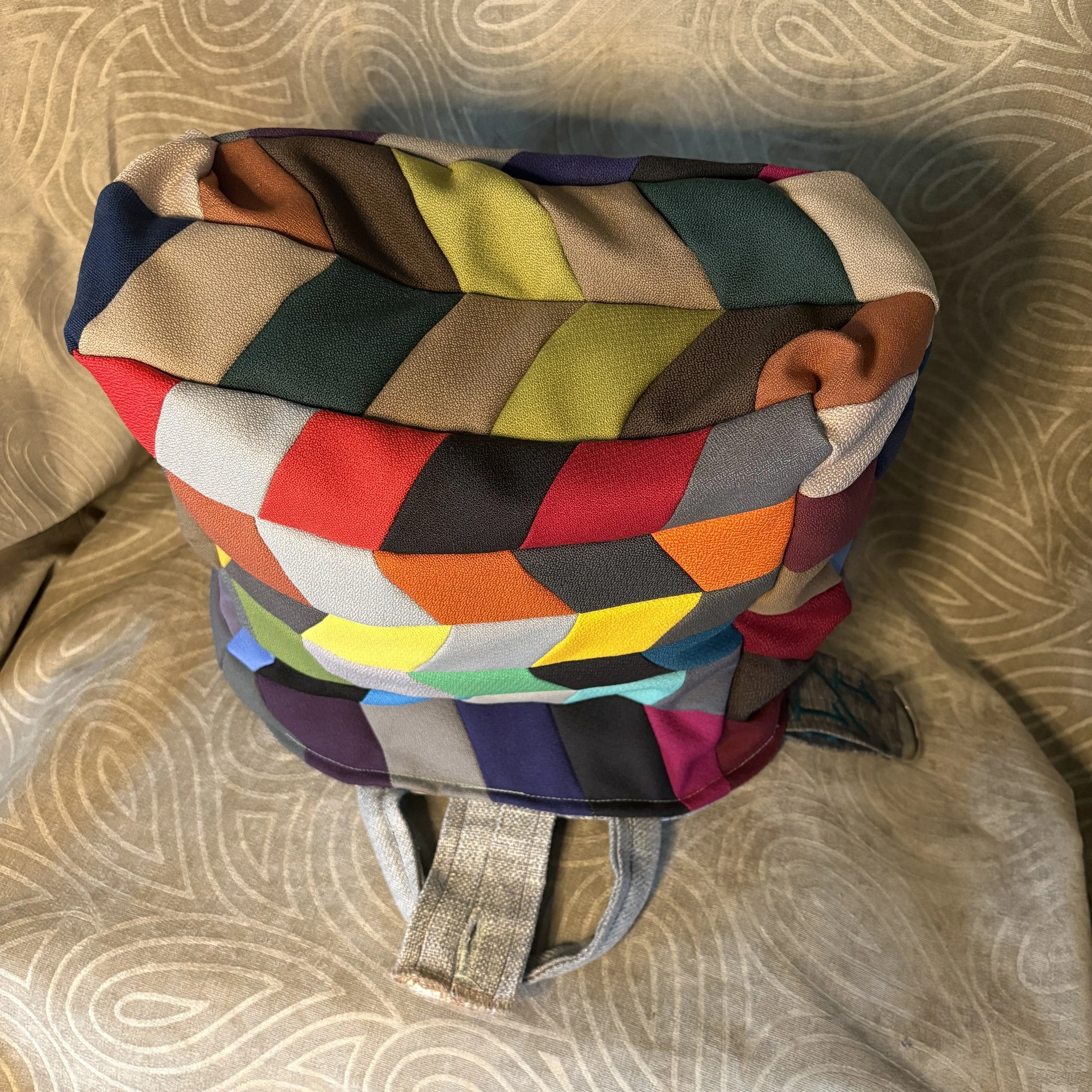
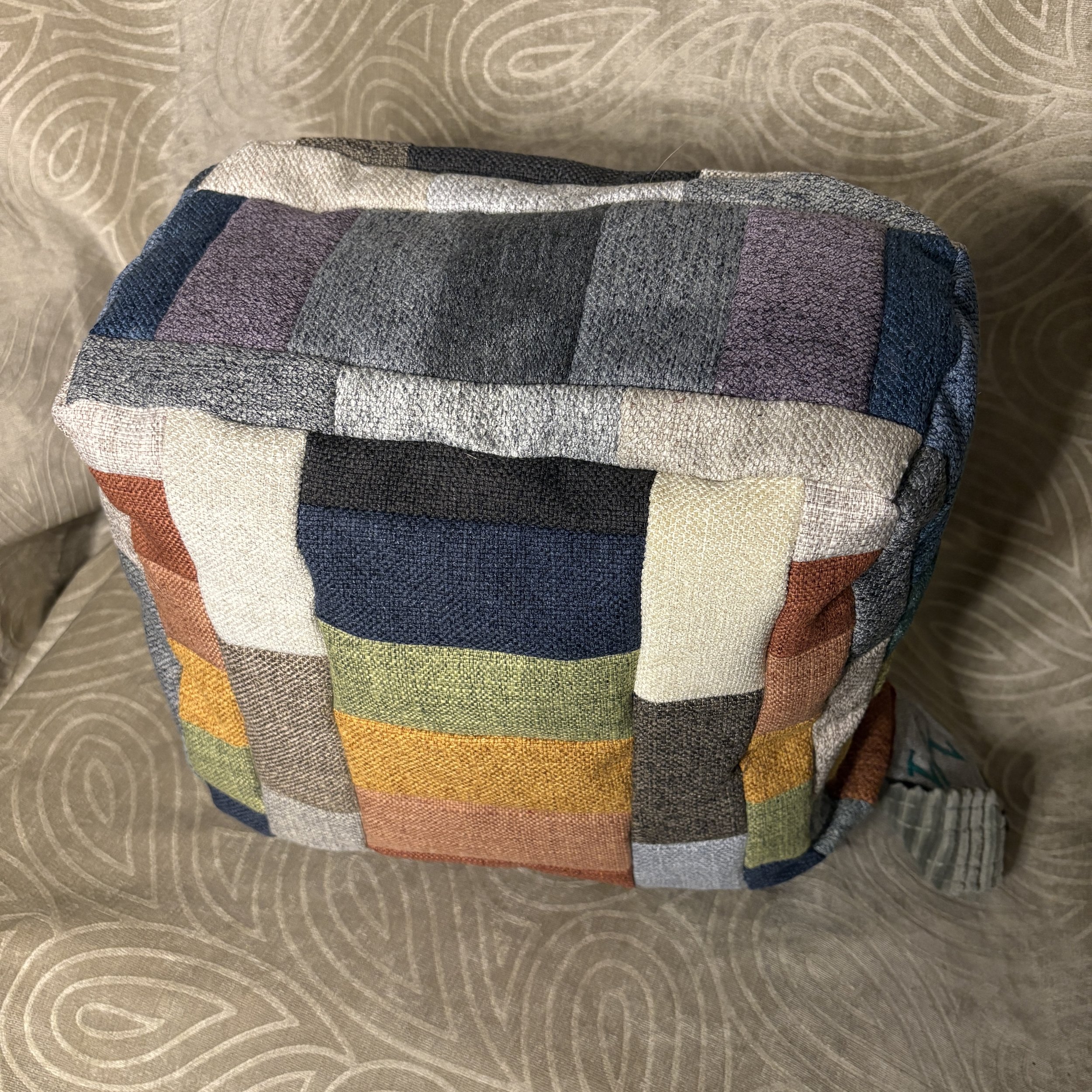
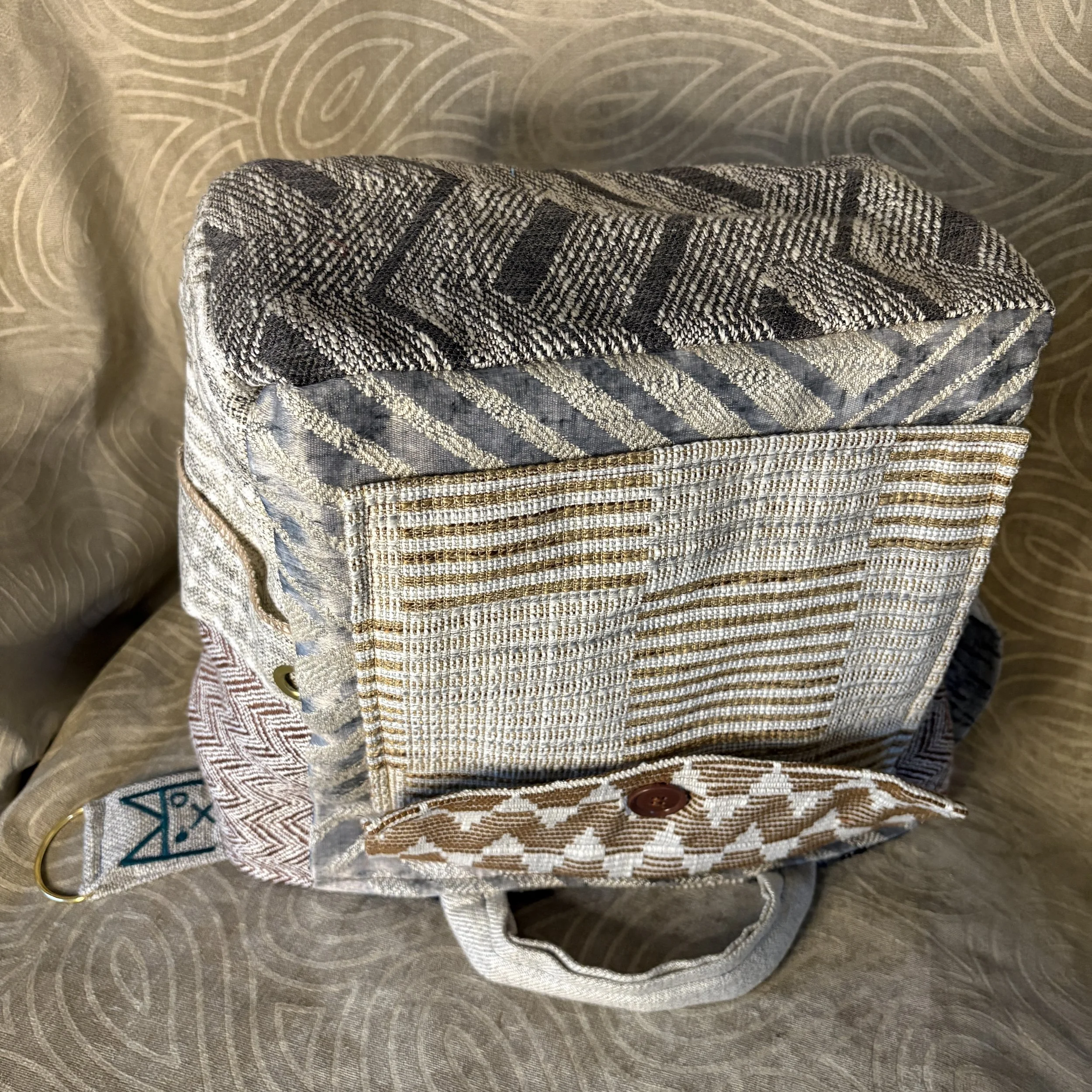
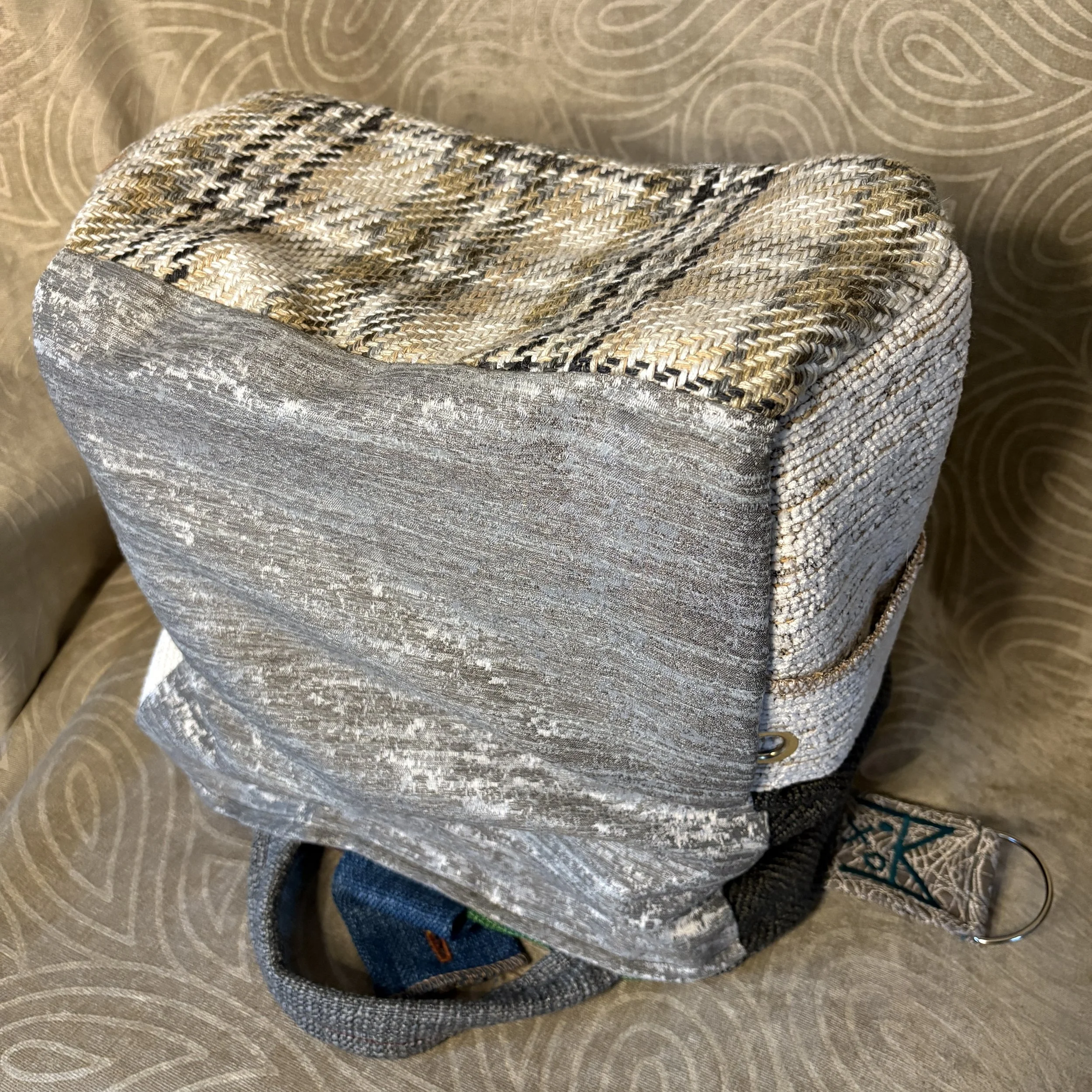
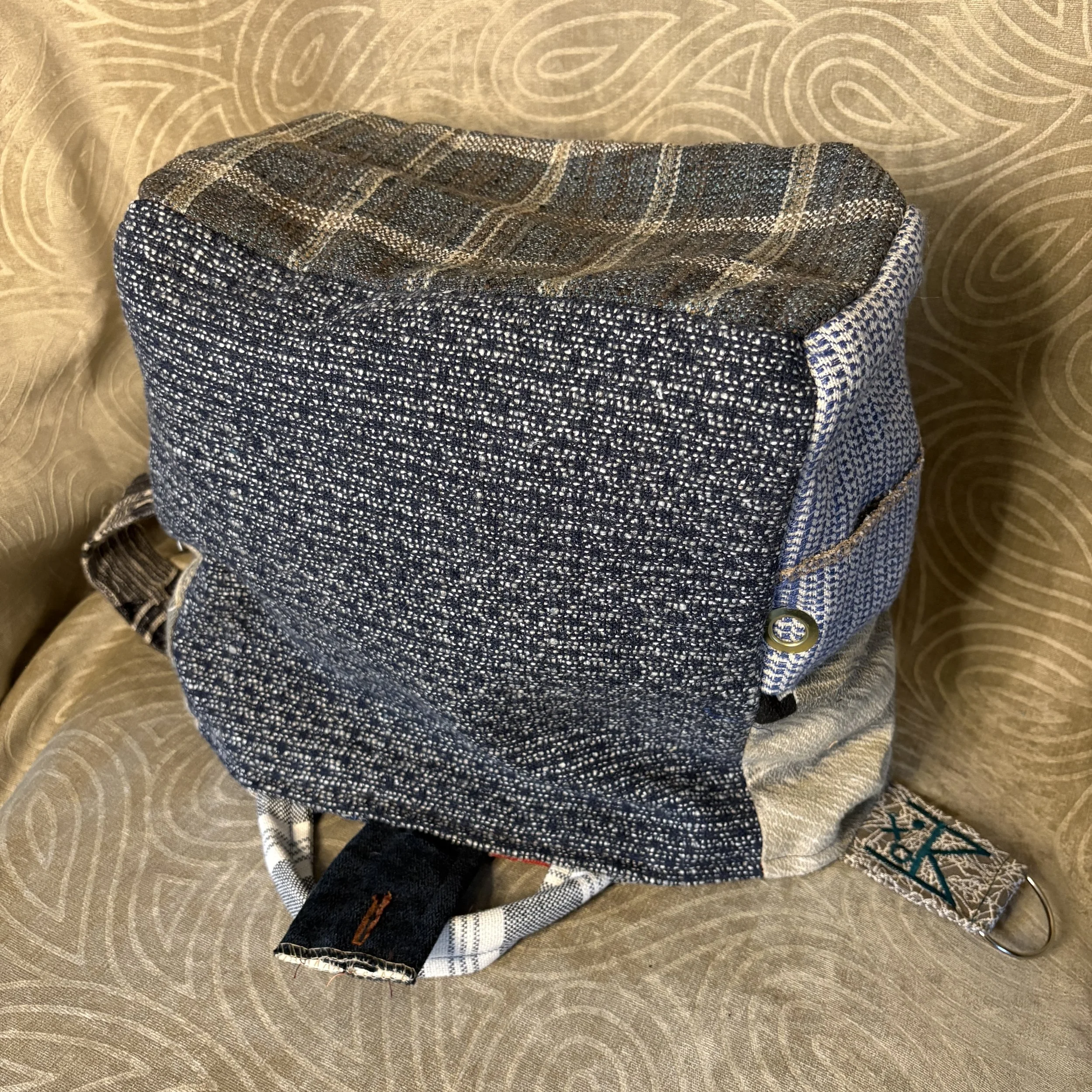
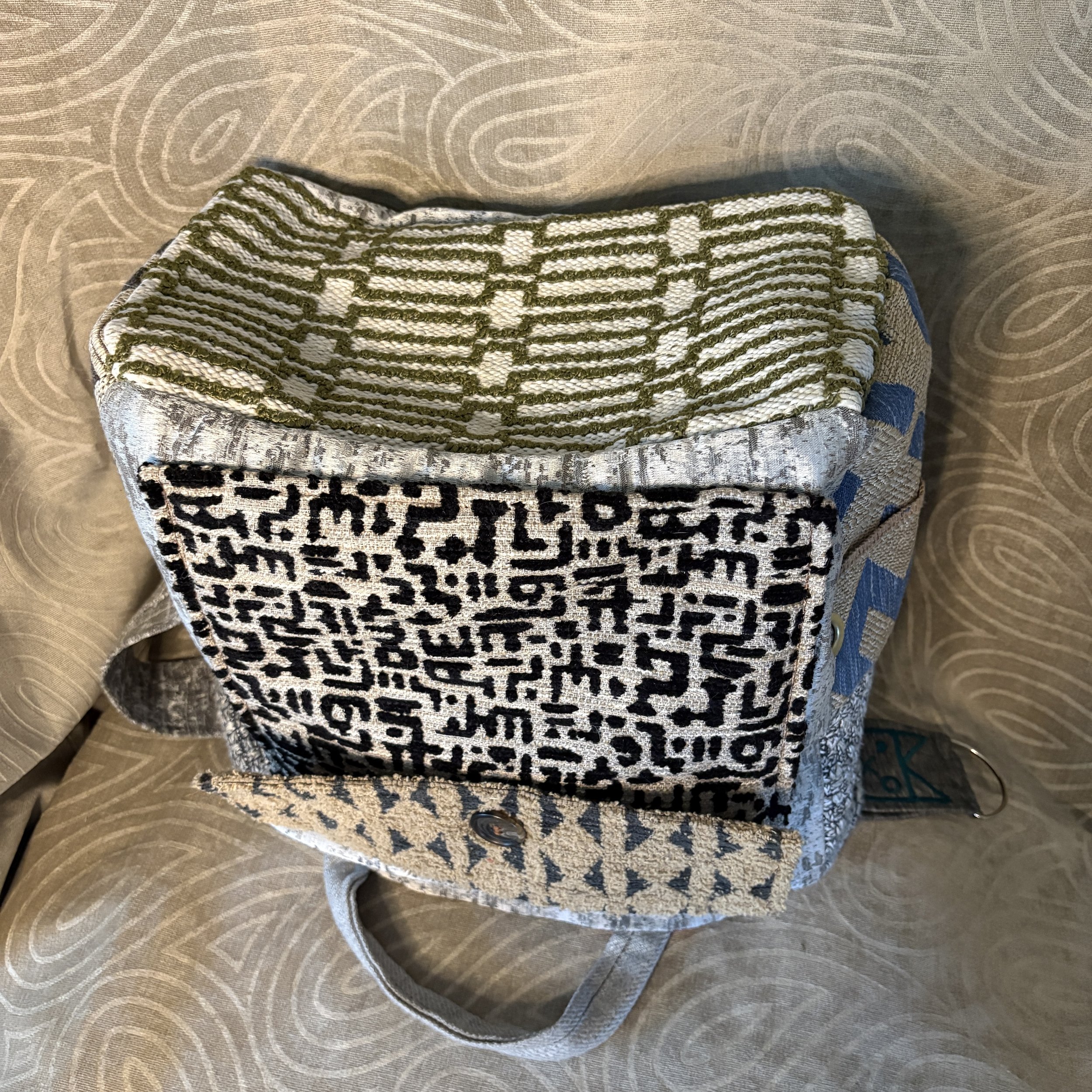
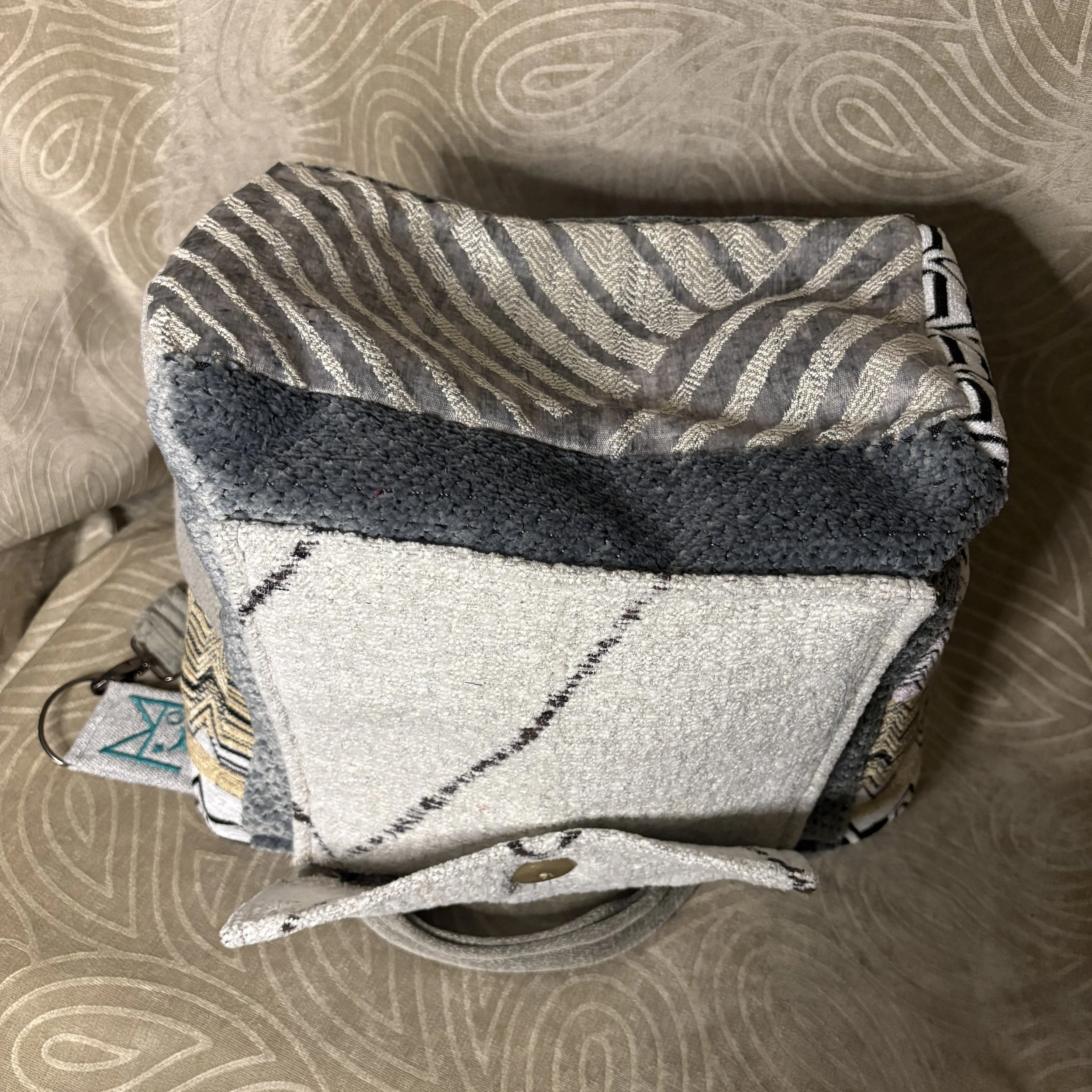
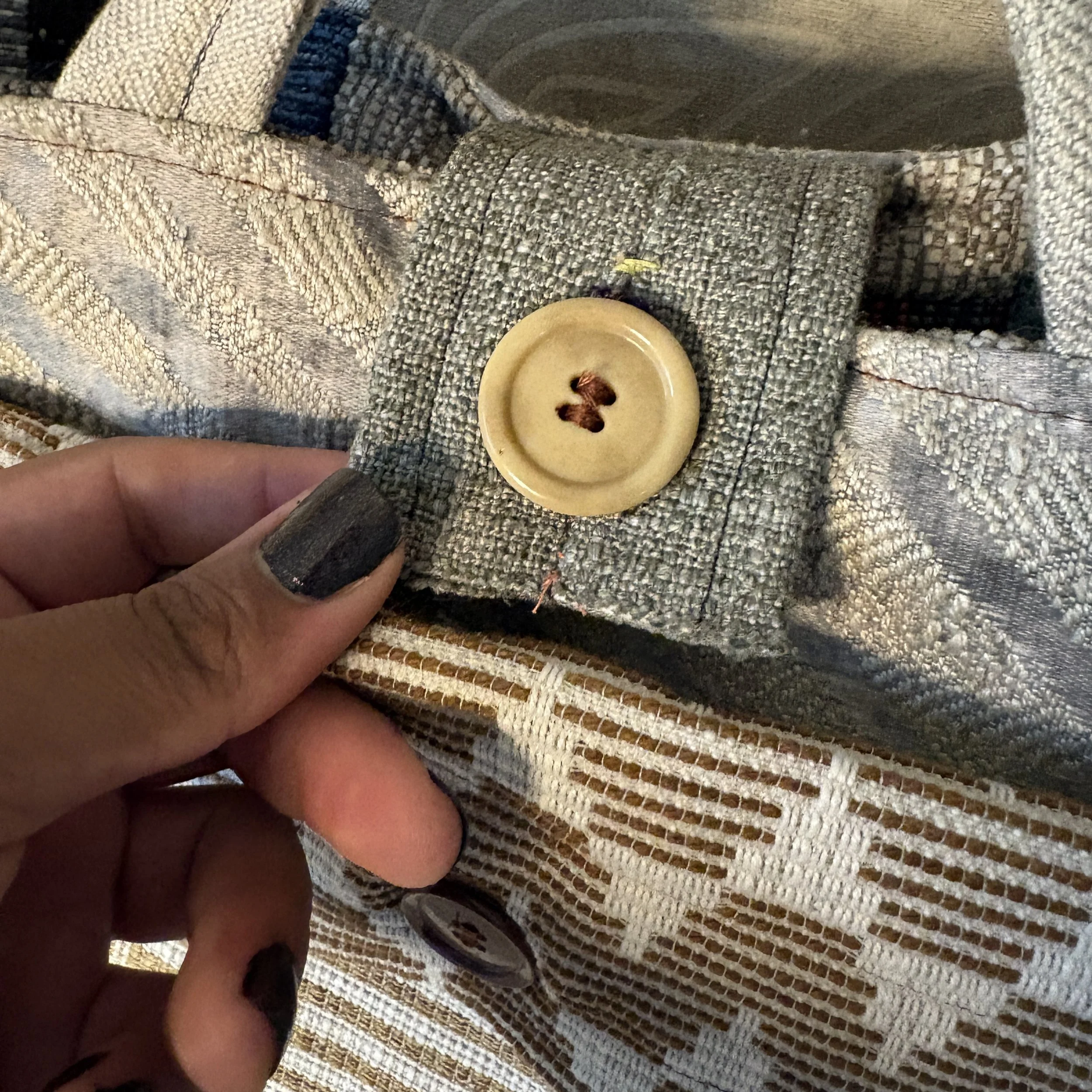
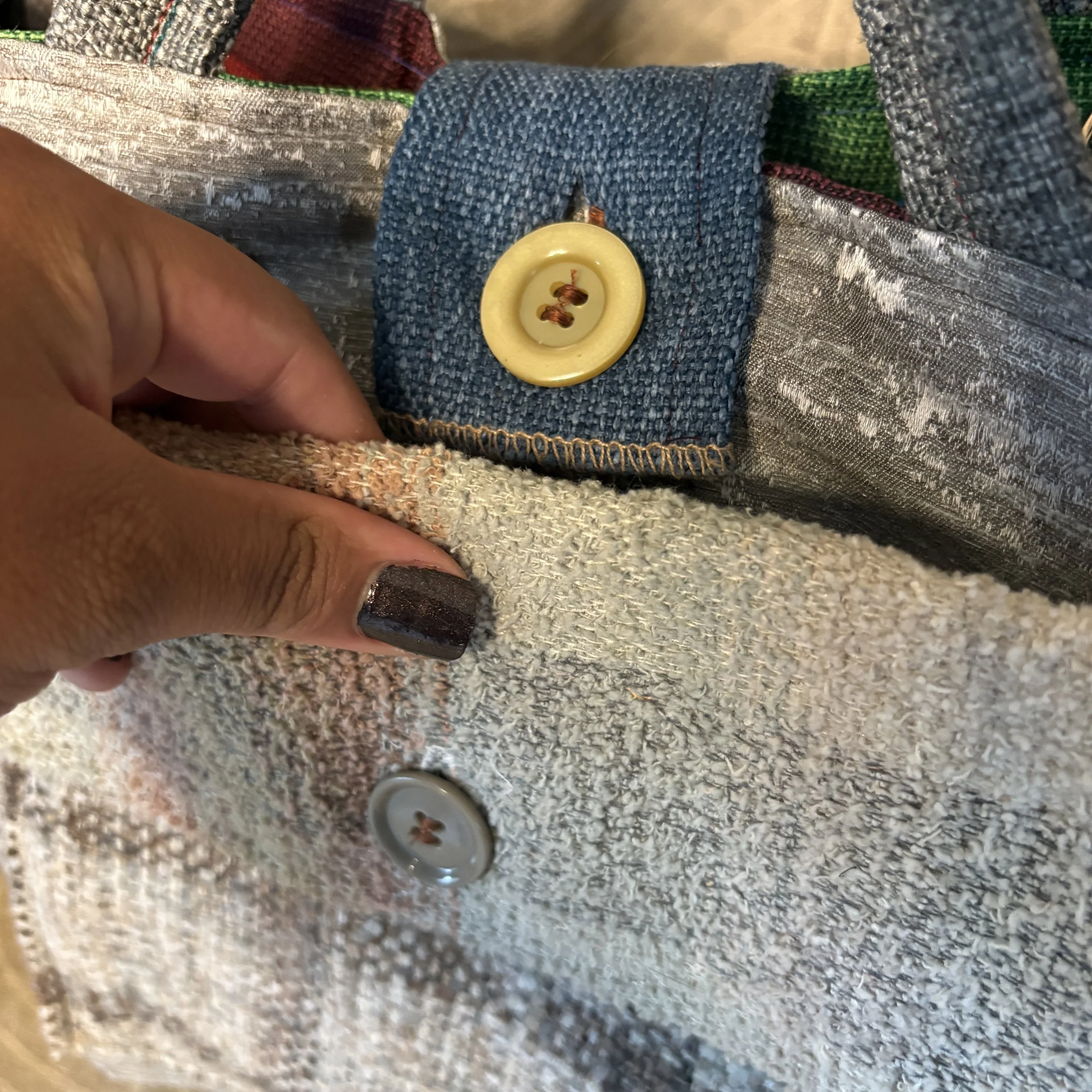
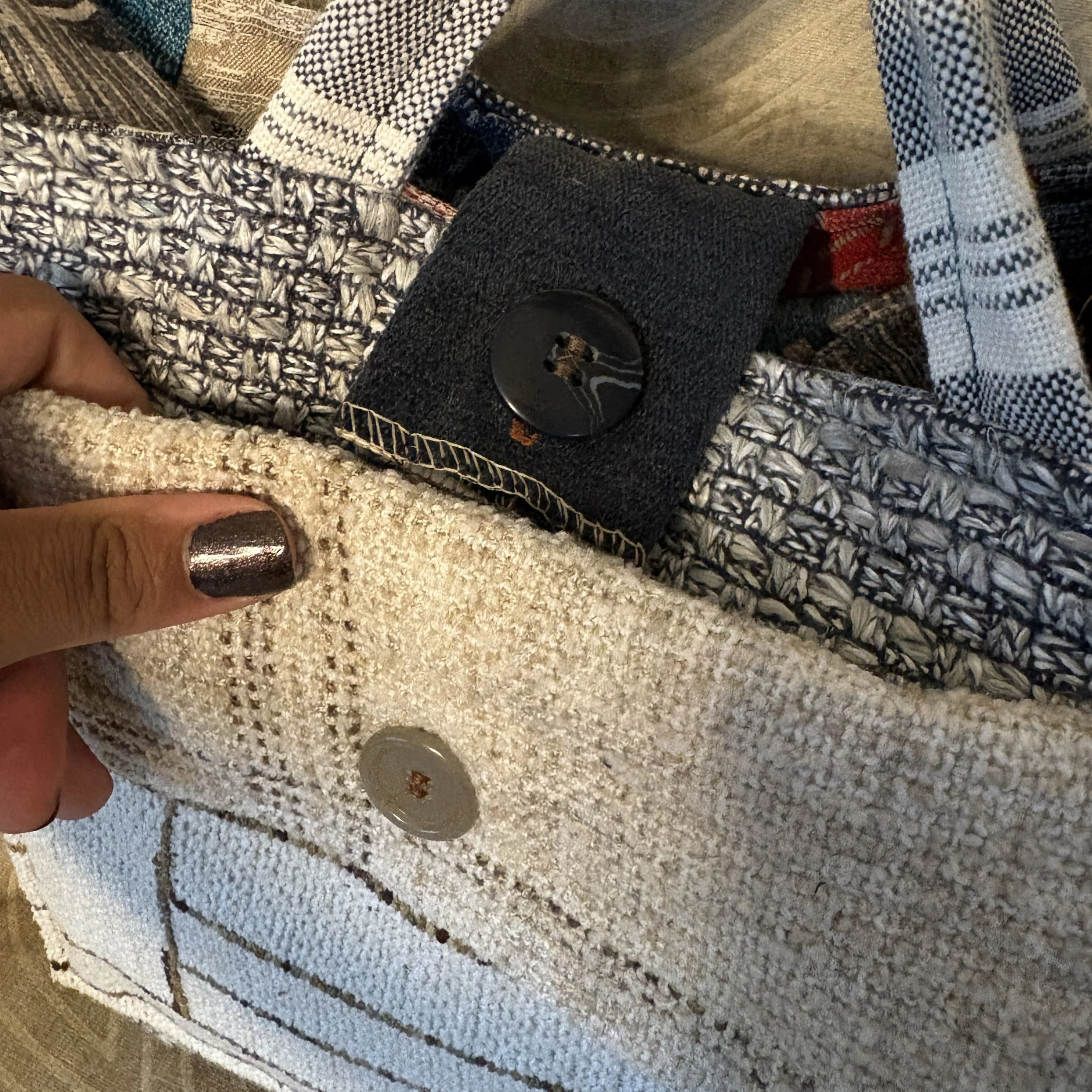
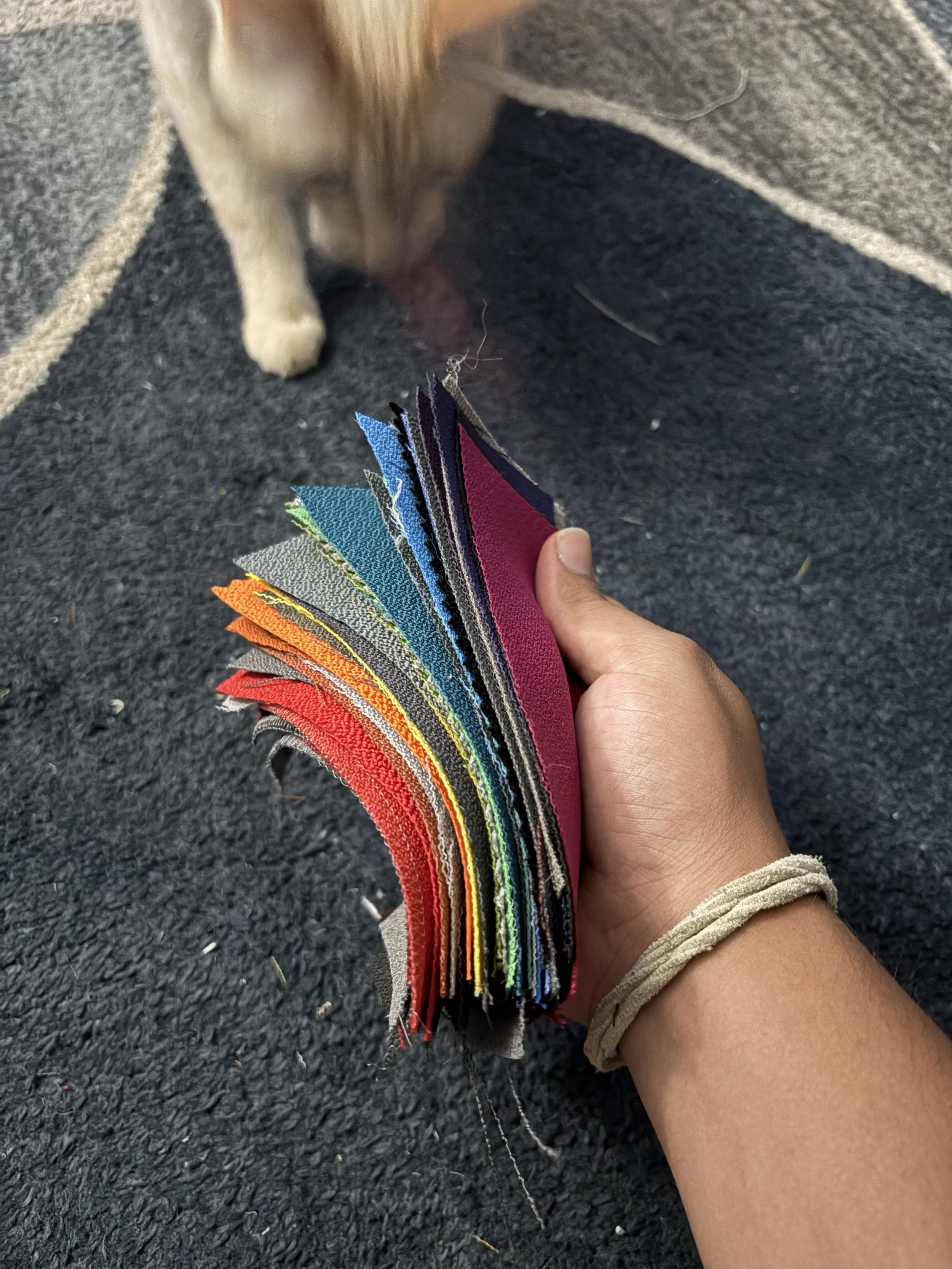
For a bit of added context, I was only in Chicago for about 5 hours between trains on my way to my brother’s Law School Graduation, so I did what any rational person would do: Walk 10 miles around the Windy City talking to any Architectural or Interior Design Firm/Representative that I could. I even got to attend an AIA Chicago Symposium inside the acclaimed Merchandise Mart, not bad at all. Ideally, I would love to move somewhere like Chicago for Architecture, so this was a bit of a dry run on that as well. I was lucky enough to receive a box from one of the contacts and inside were so many samples, I couldn’t believe it, but I also knew exactly what I wanted to do with them.
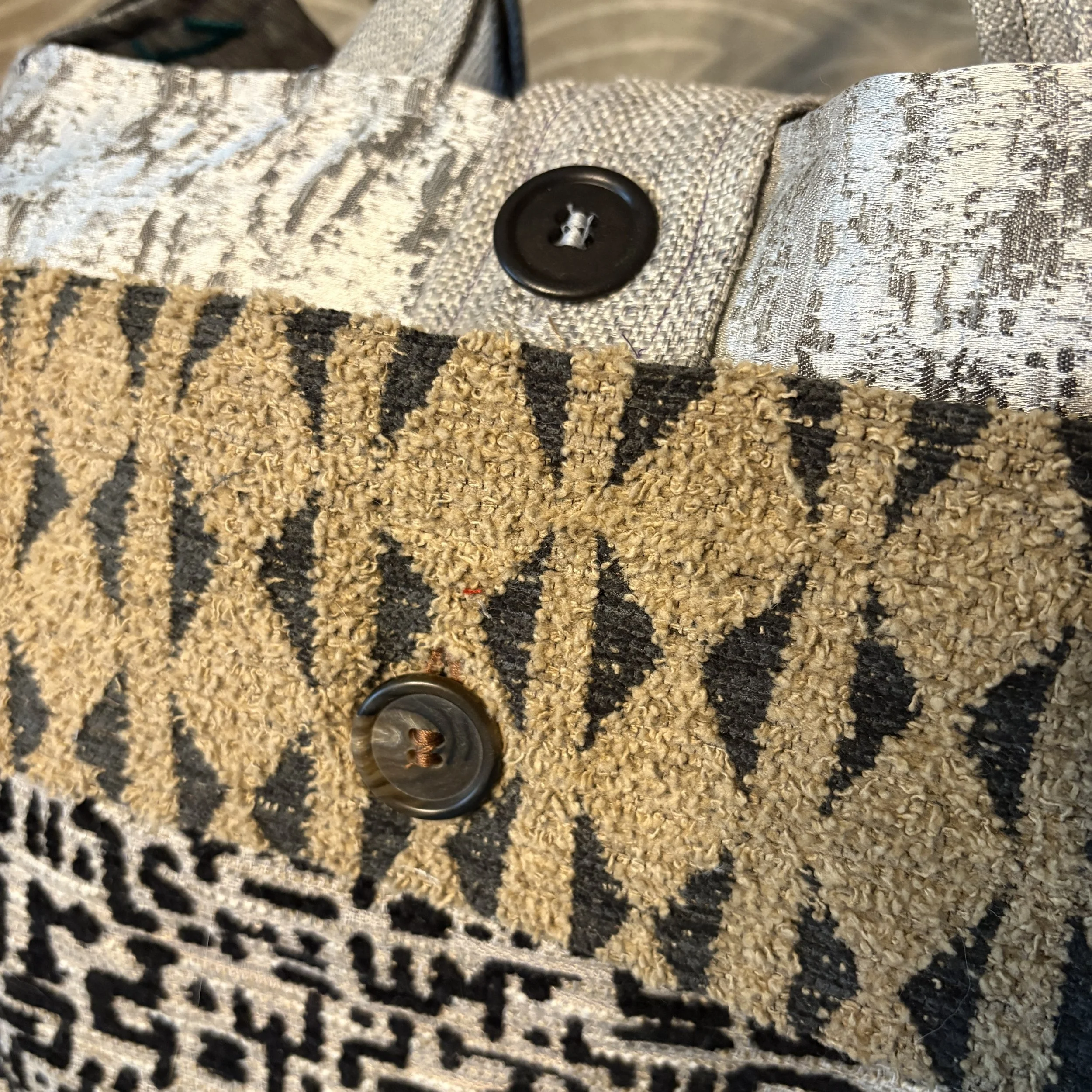
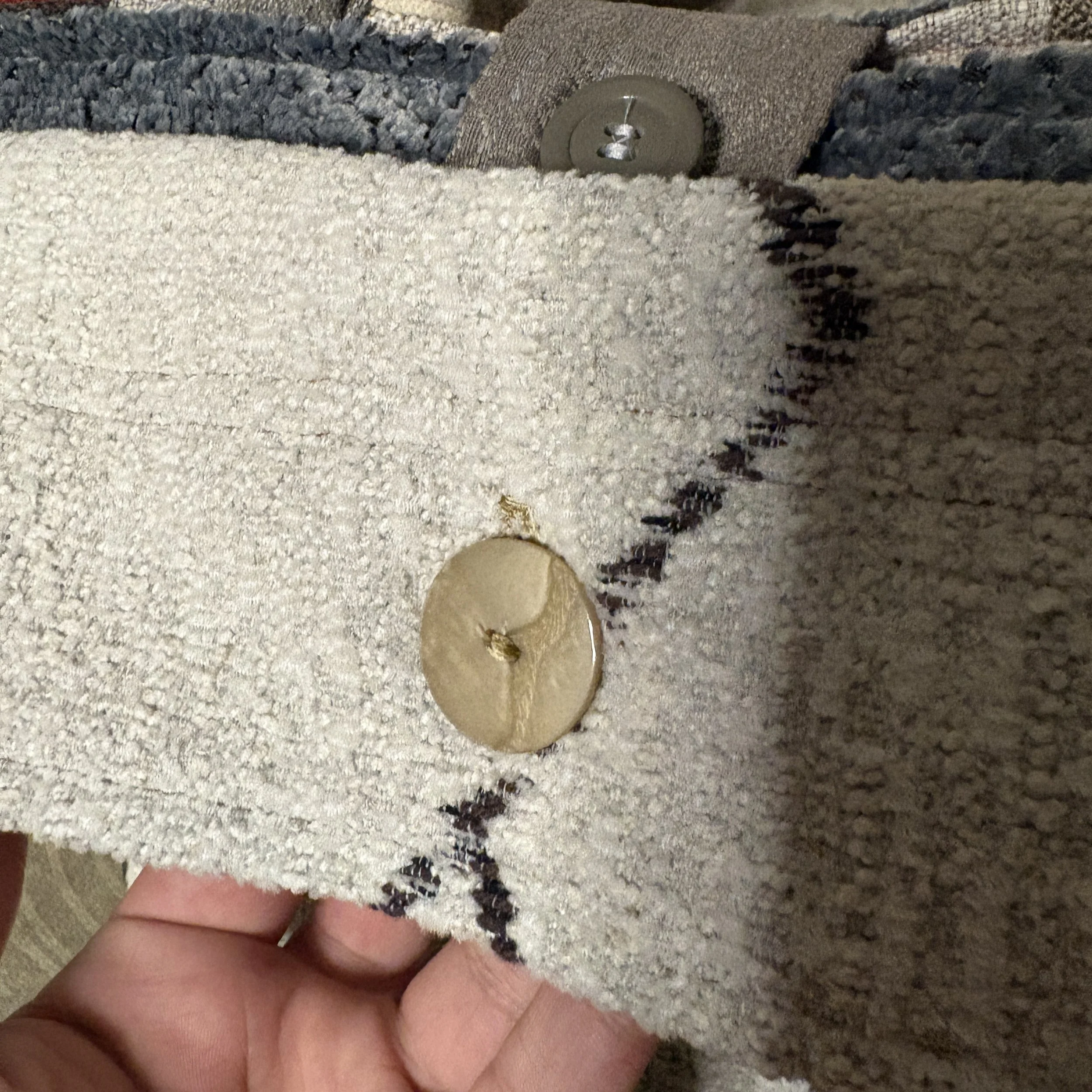
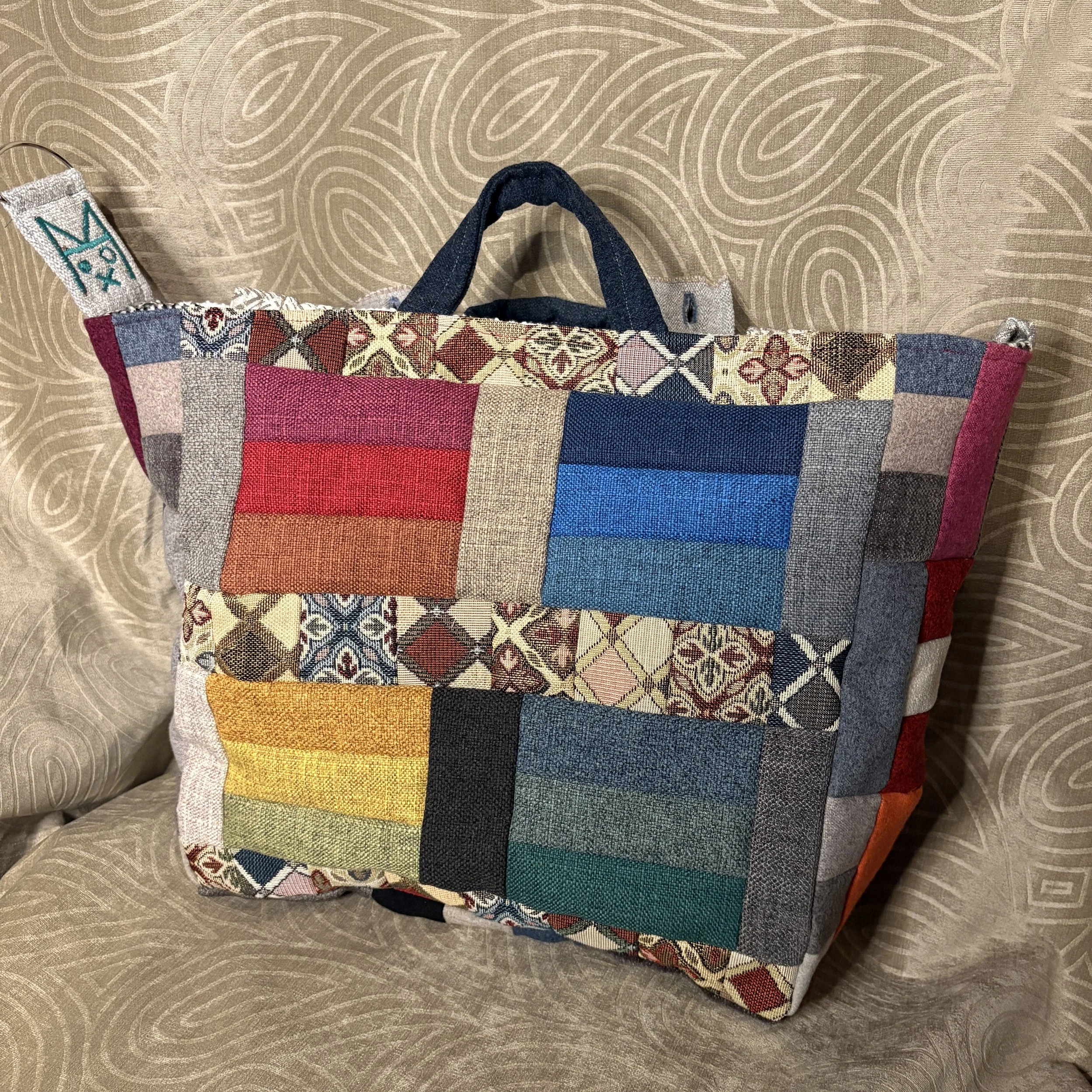
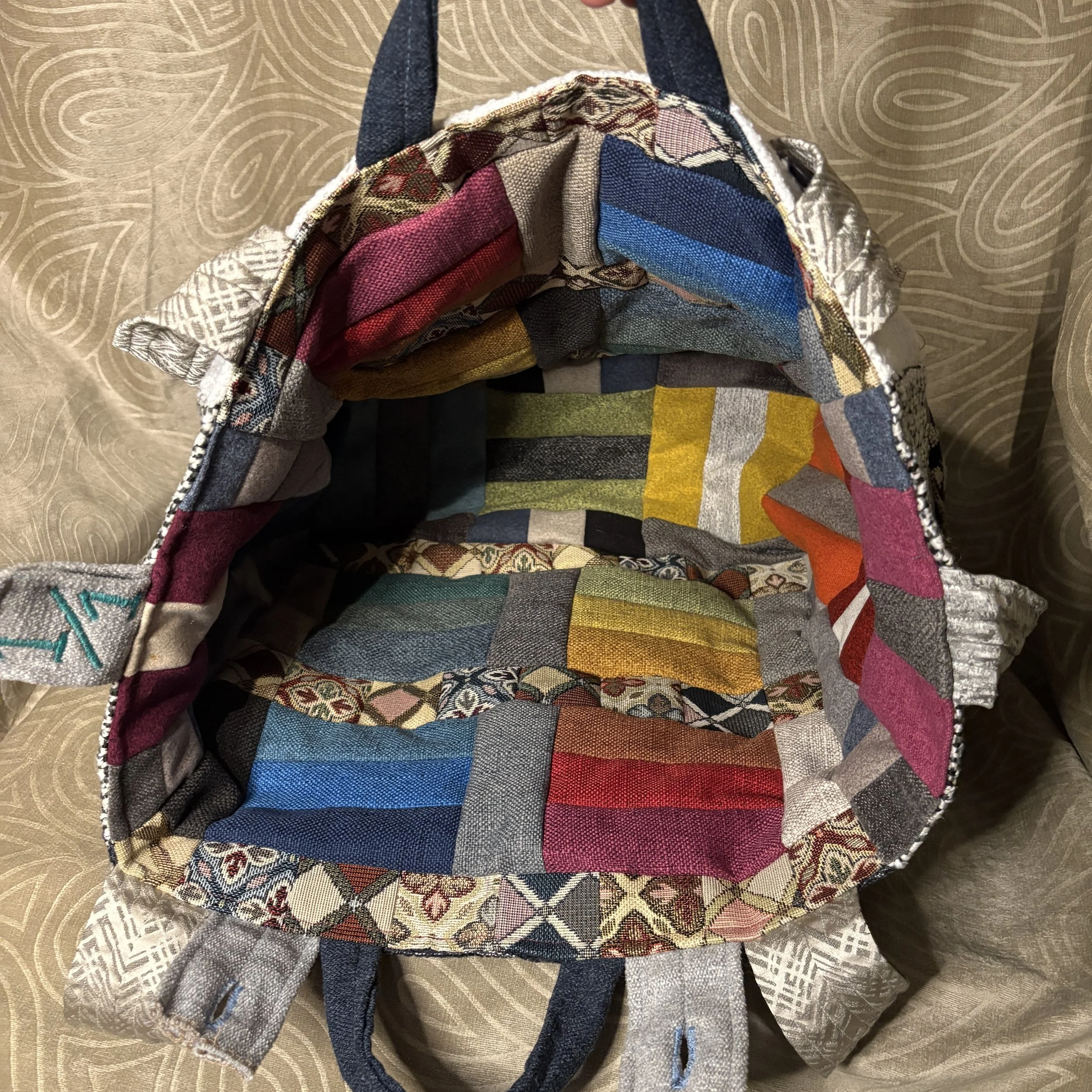
One of the original ideas for the Fa(b)rick Bags (as my mother can attest, as it was discussed on our 19-mile trek down Scenic 30A) was for the bags themselves to act as mobile and tactile samples of Interior Design Products/Lines. This idea was before I figured out about the life cycle of the fabric samples, but the idea still had legs and I was determined with this batch to make prototypes of just such a design. My luck extended as the samples usually bred two bricks, perfect for symmetry. I made them into one of the easier configurations to ensure equal attention: Combination and Regular Stack Bonds. The leftmost and rightmost bags are both stack bond, with one being a muted rainbow and the other being slightly more unified in the color theory. (I don’ t tend to repeat patterns so closely in rotation, but the opportunity to make rainbows is so few and far between.)
There was also a vertical combo stack which to me read as a scale, like you’d see at a restaurant like Wing Stop to tell the intensity of hot sauce you’d like, and that idea tickled me enough to go through with it. The opposite bag on the right was one near and dear to me, not just for being the first chevron patterned bag I’d done in months, but also because it was a bag I’d worked on and finished as I ushered in my 26th Birthday. It is a combination of Greyscale and Rainbow and I can safely say it turned out amazing, it is one of the few projects I took the extra precaution to iron to ensure everything came out as cleanly as possible.
The last bag in the center was the one I was most certain I would like because of the pattern and the reverse side. I am not often touting my patriotic side, but it’s hard not to enjoy when a red, white, and blue scheme comes off as tasteful as this one. I made it so that the combination stack had one of each brick on either side and the result was marvelous. If the 4th of July were a bag, this would be it.
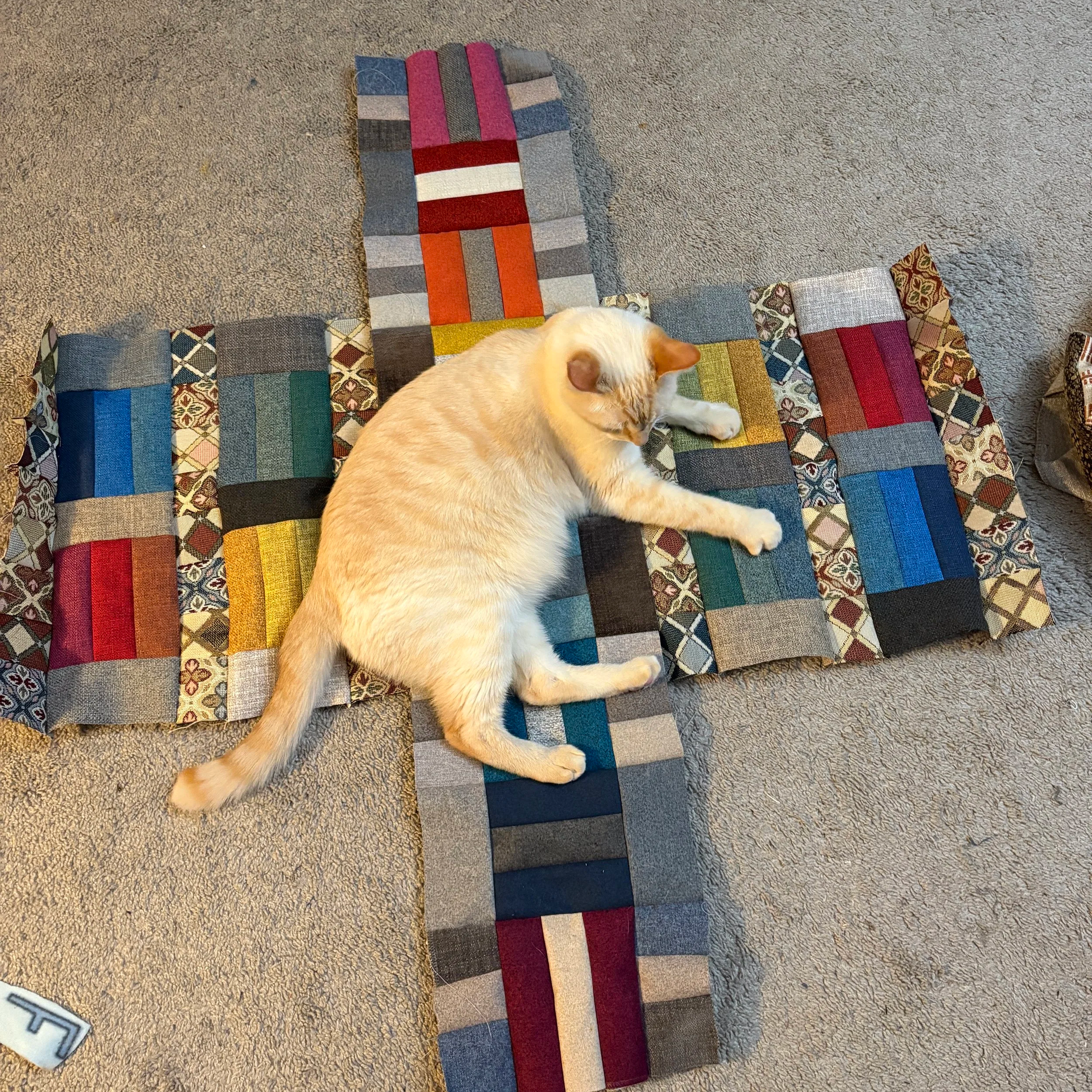
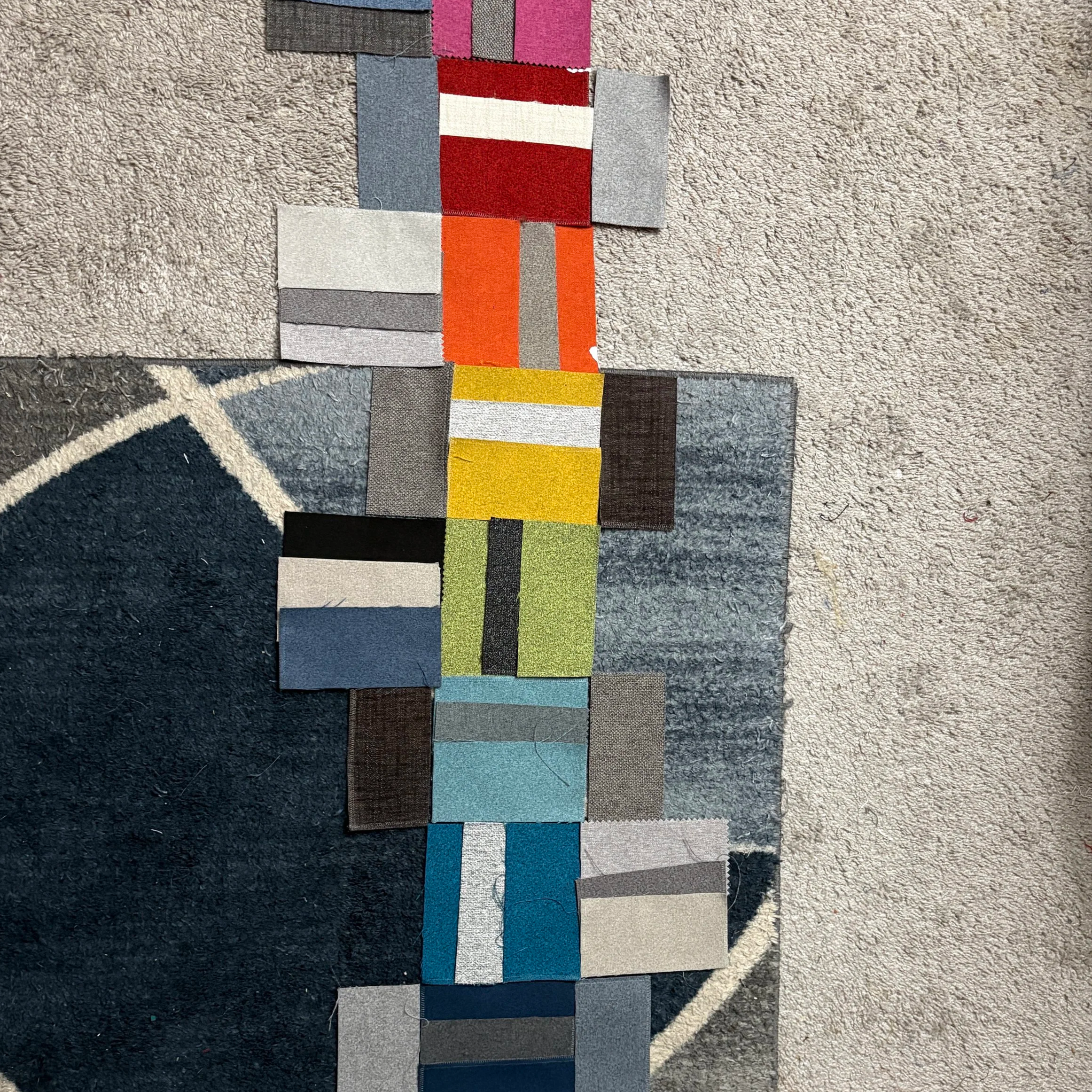
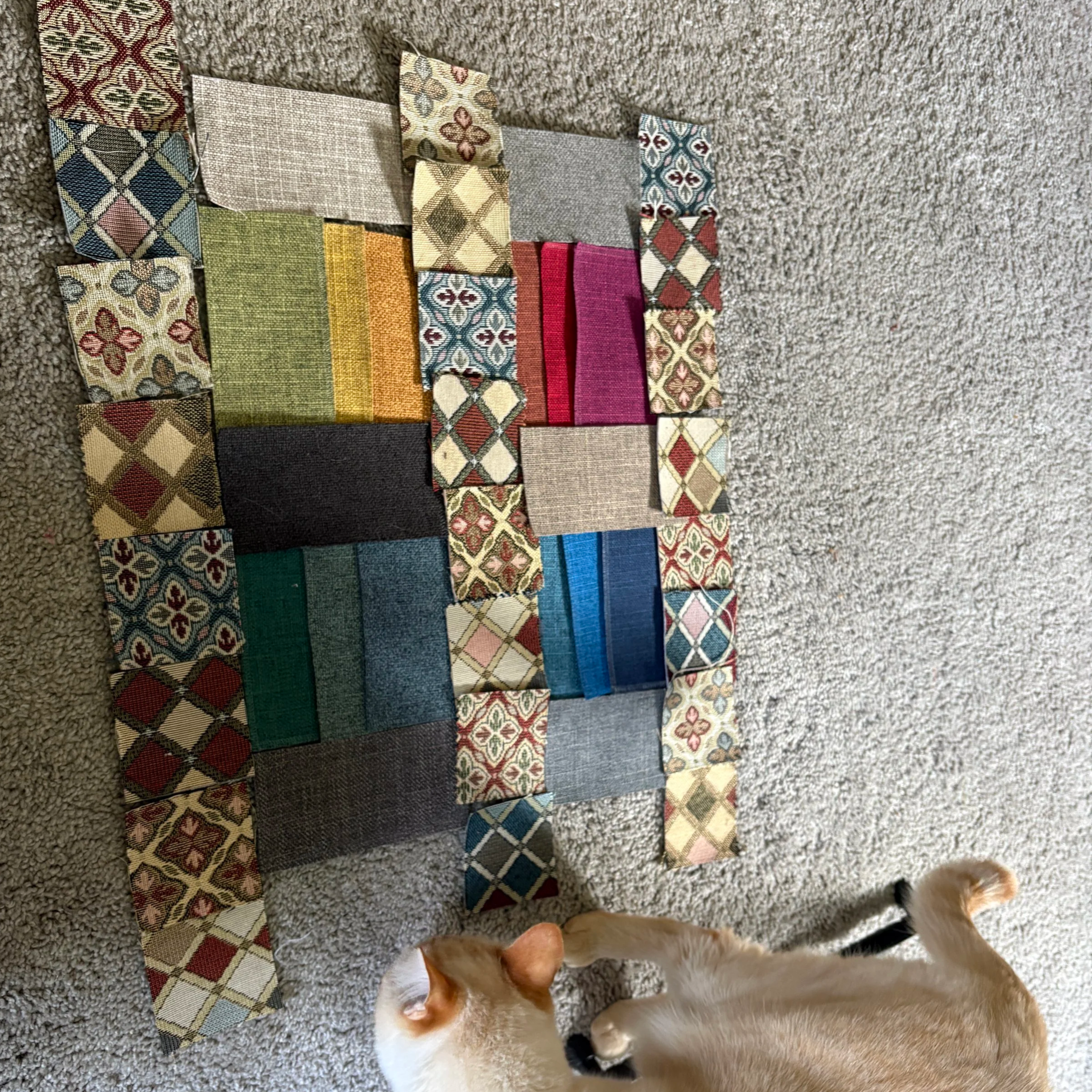
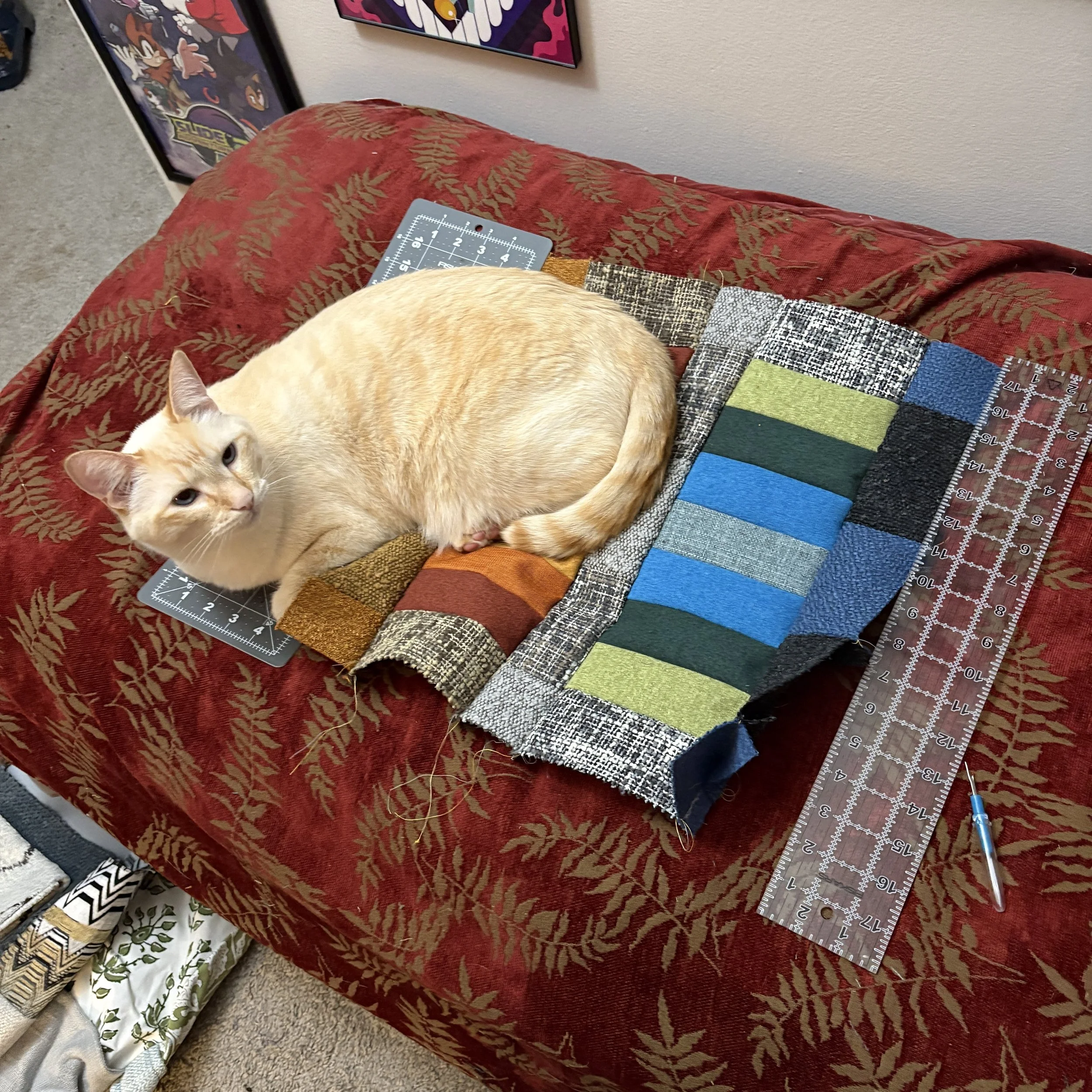
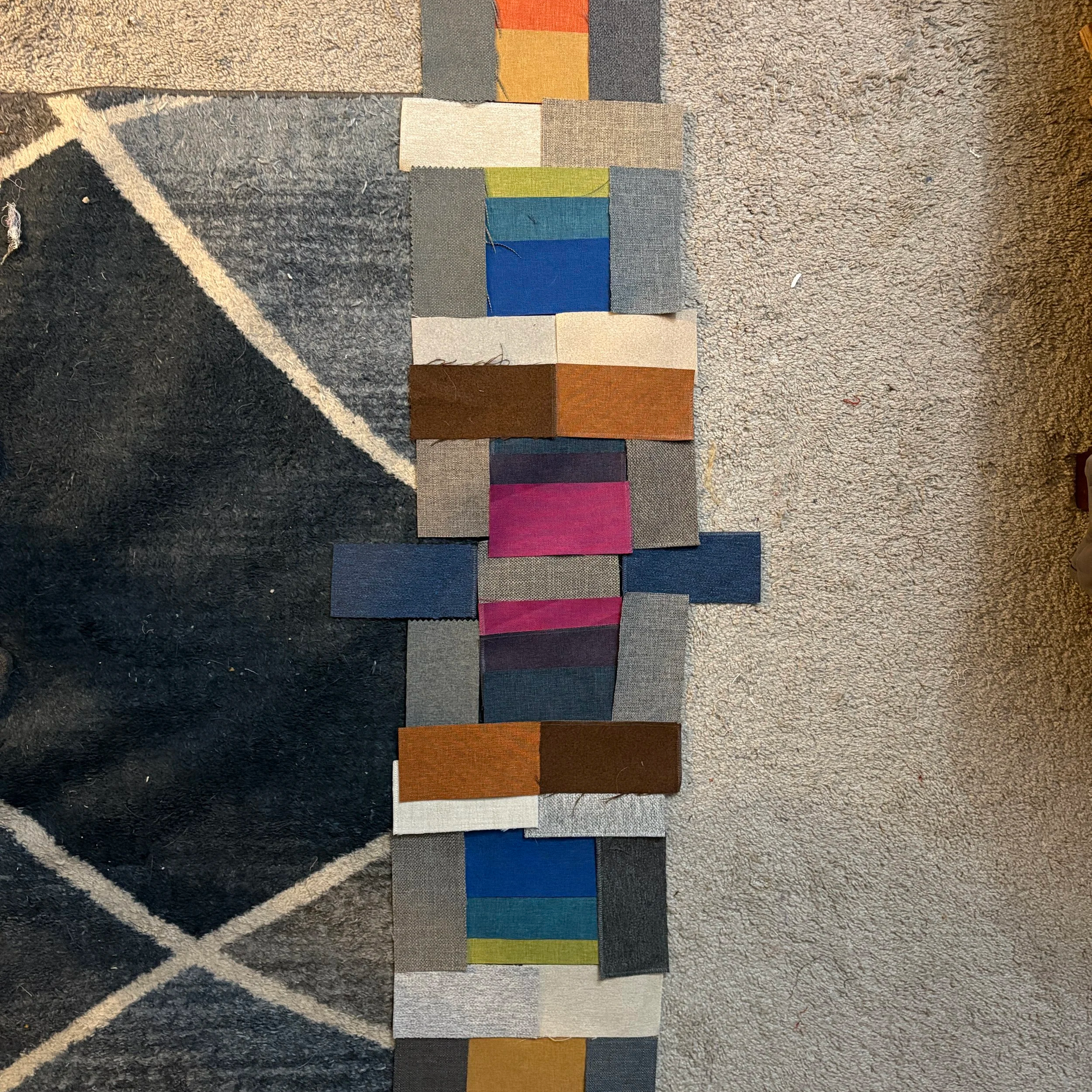
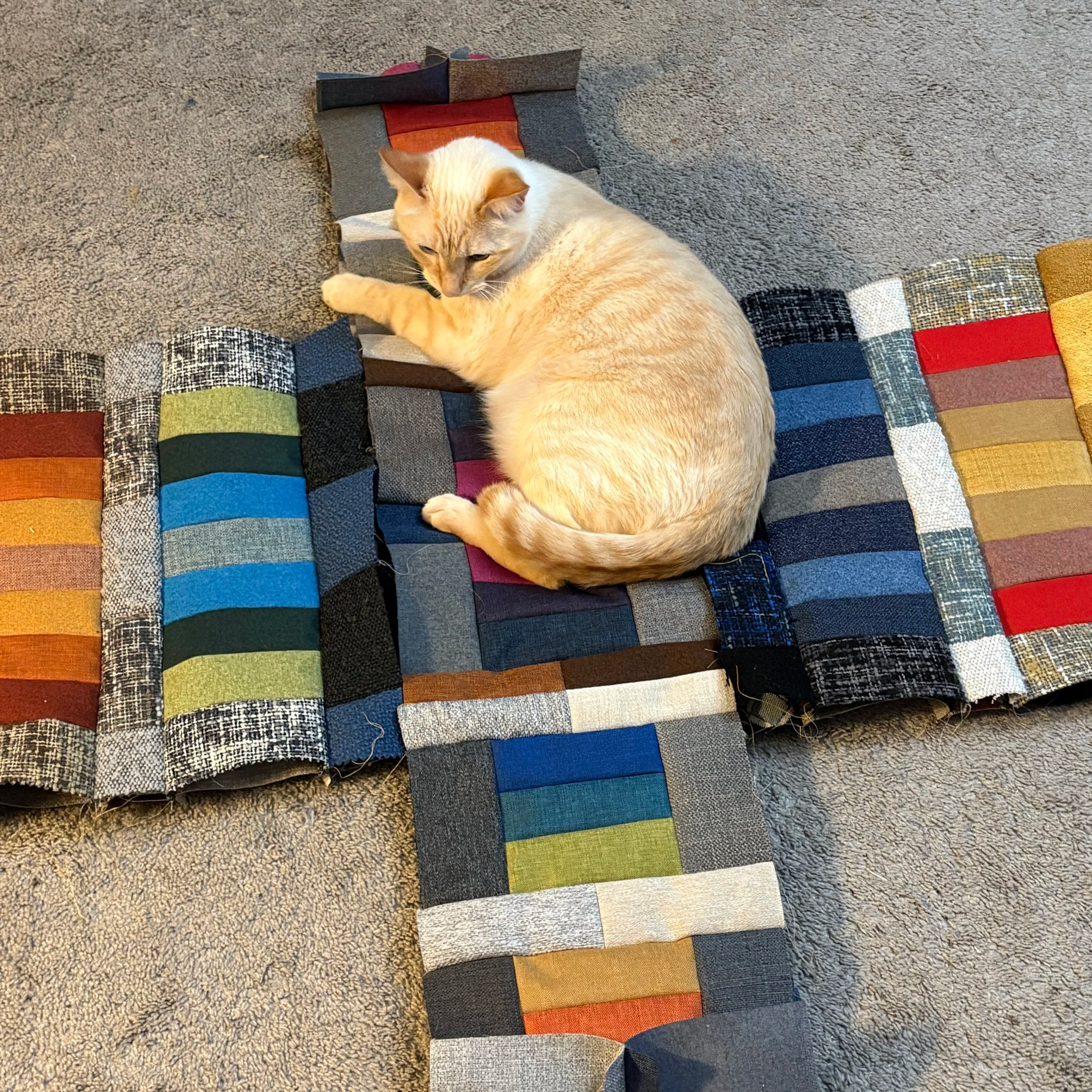
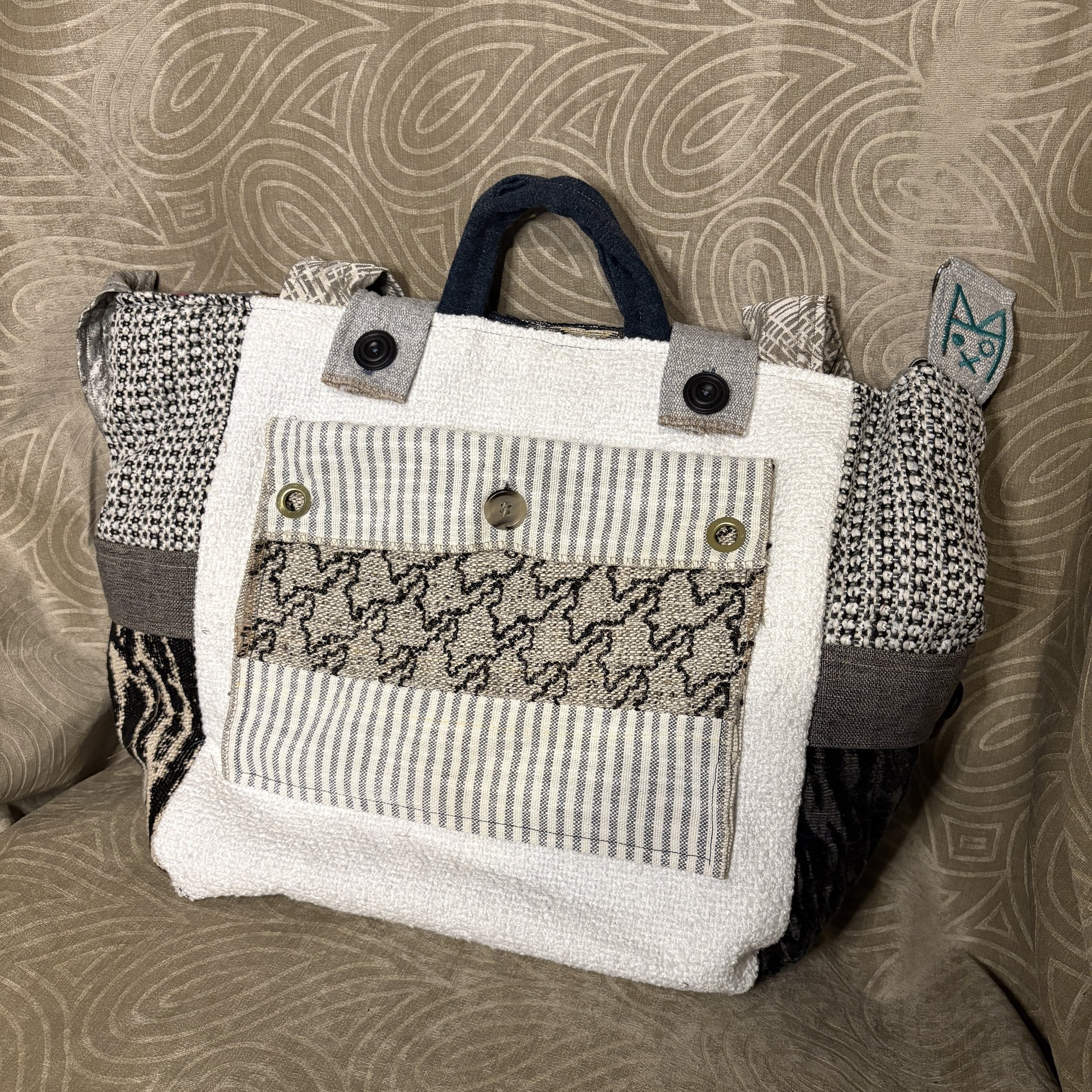
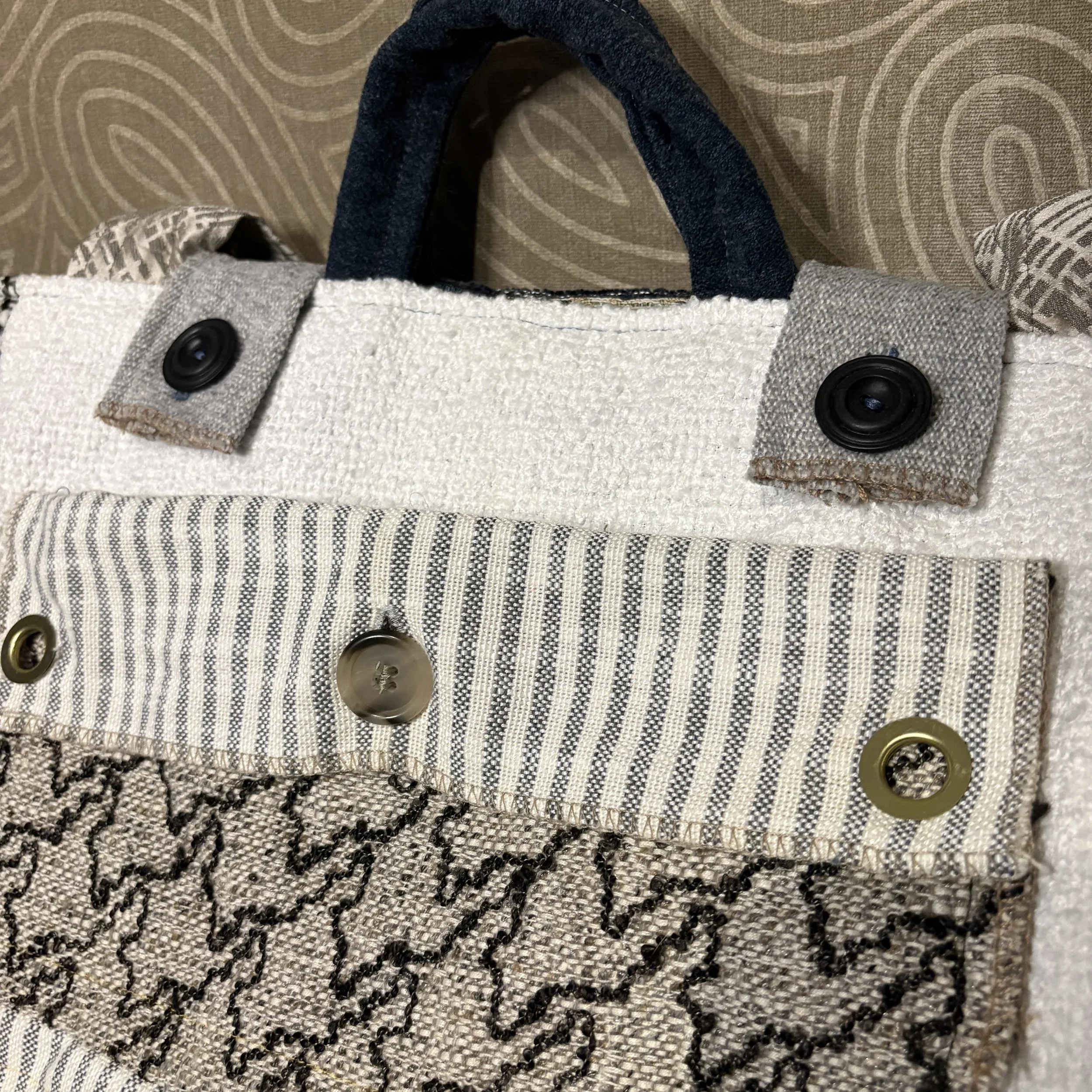
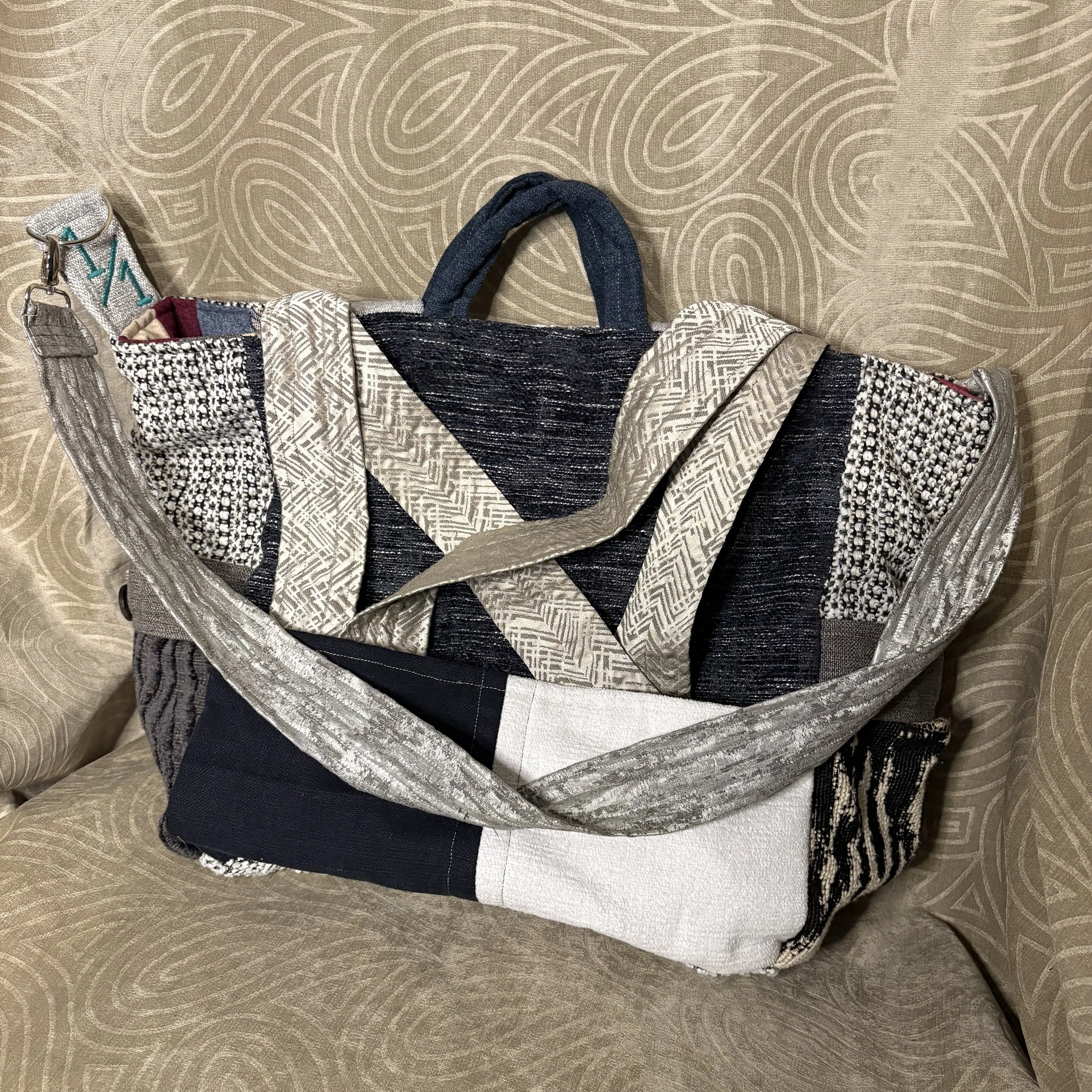
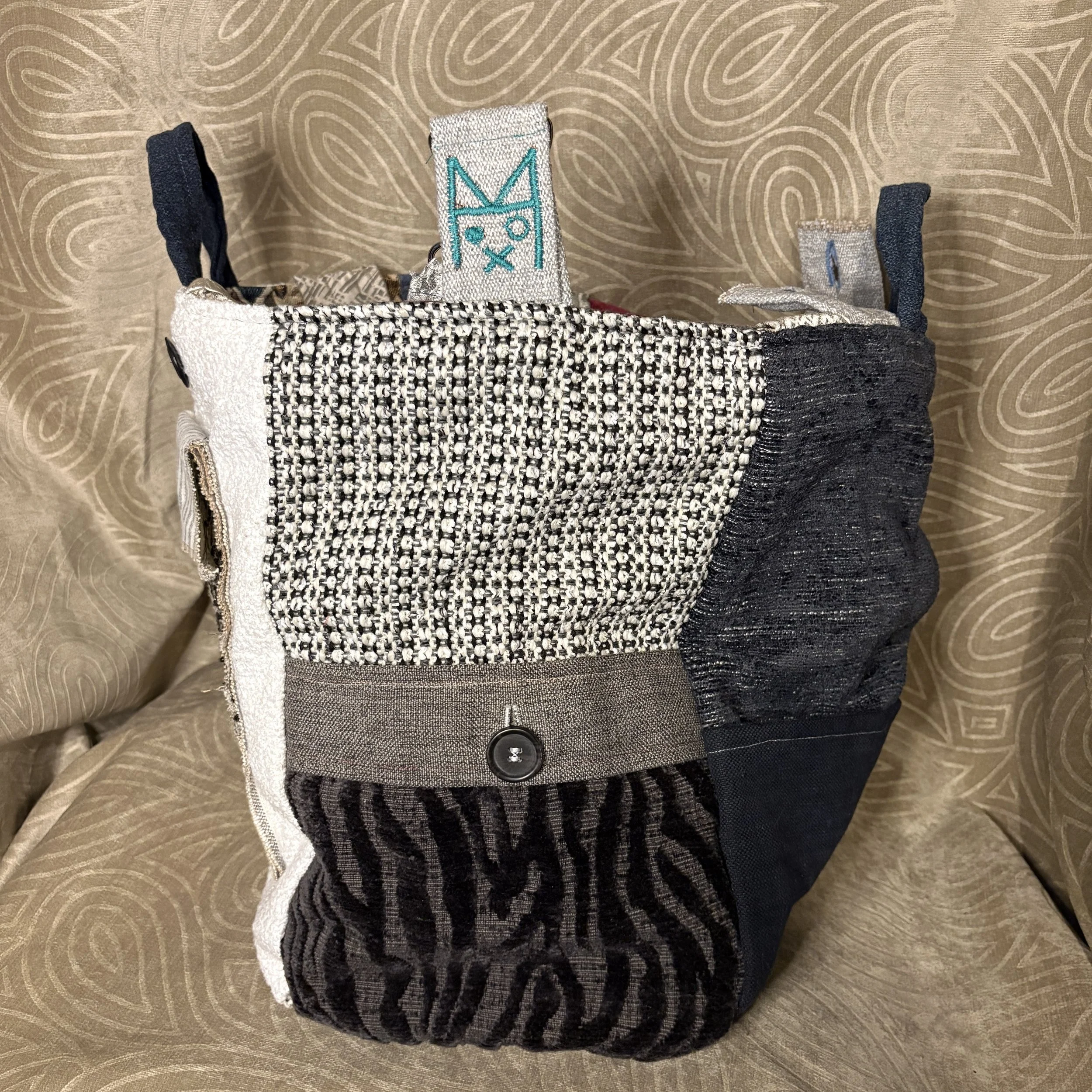
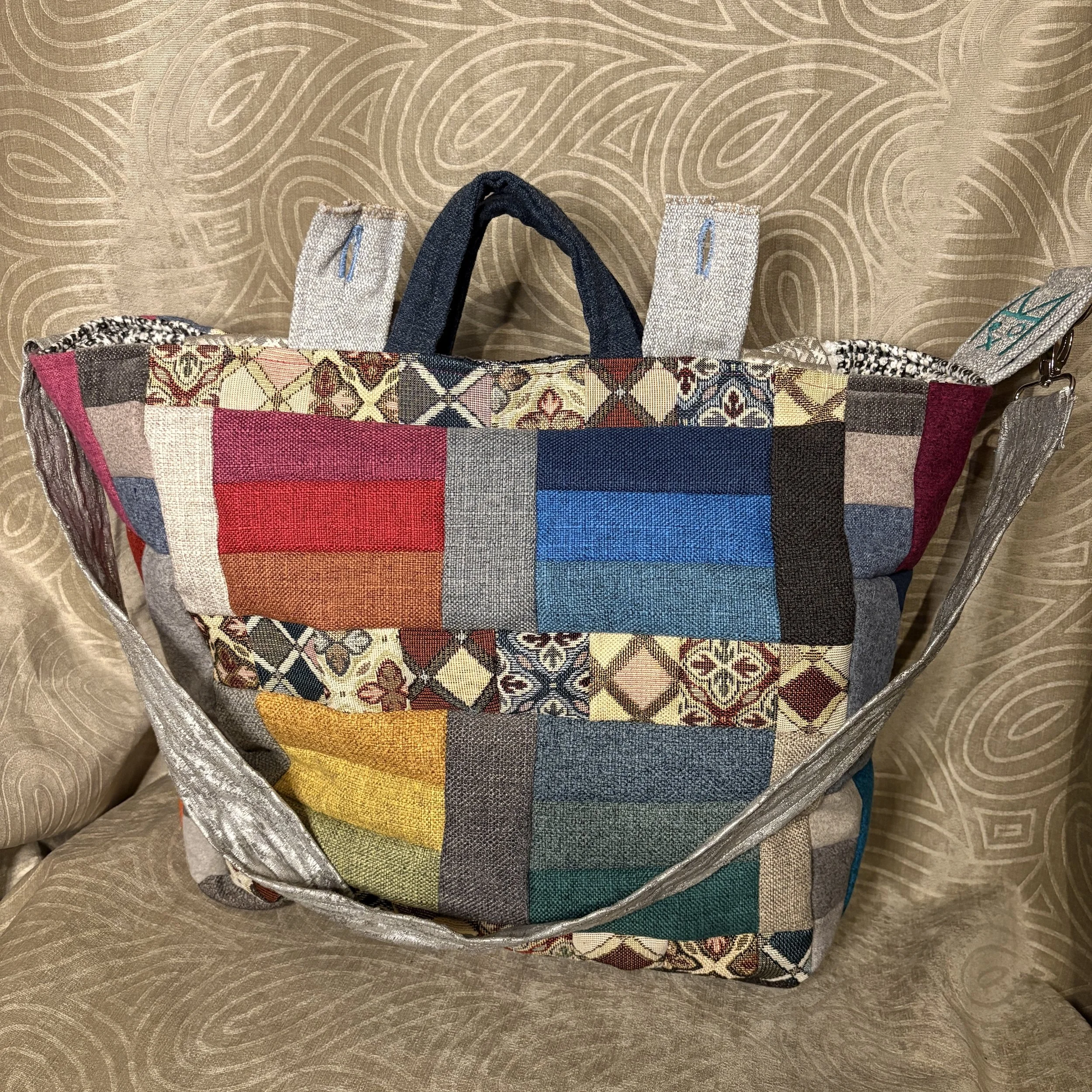
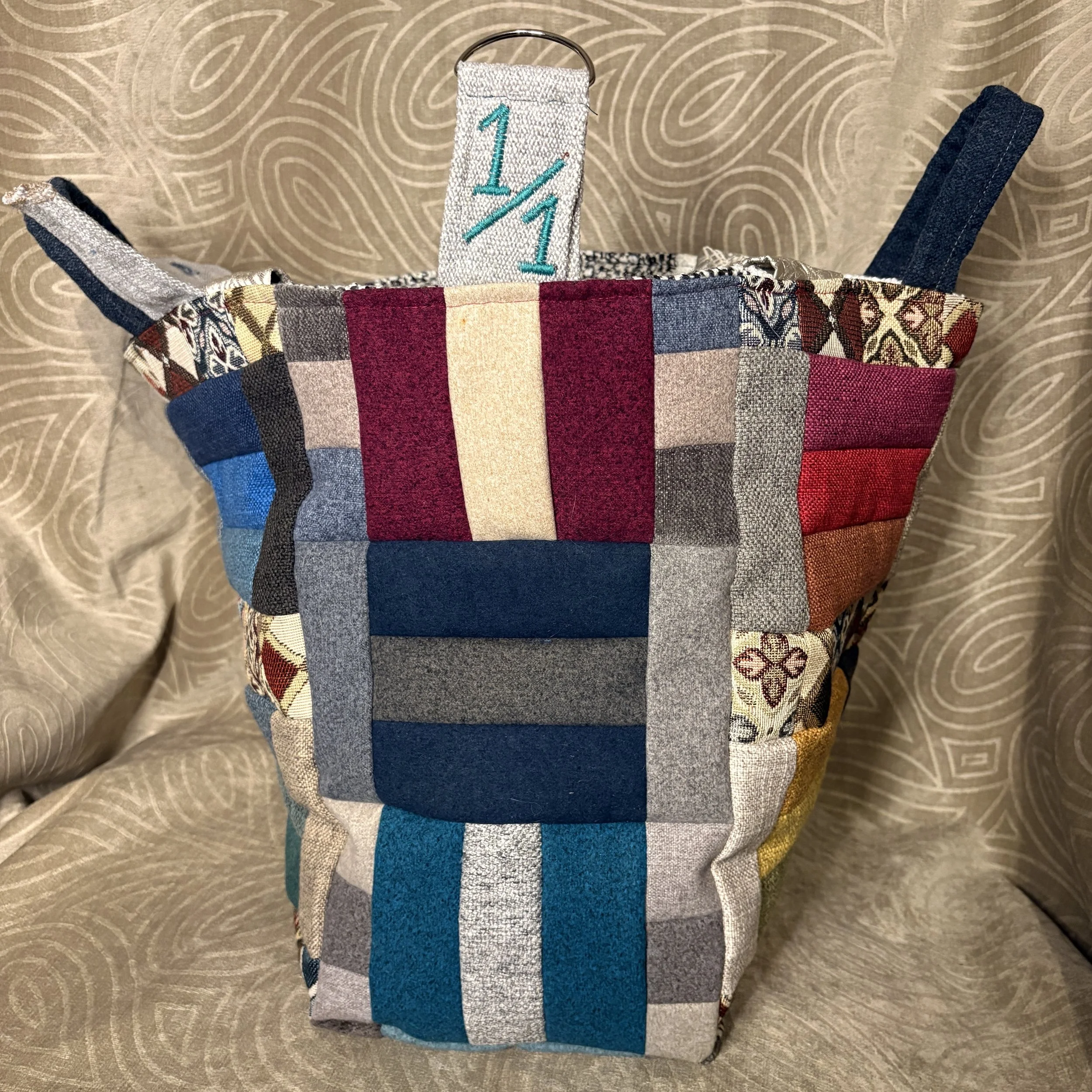
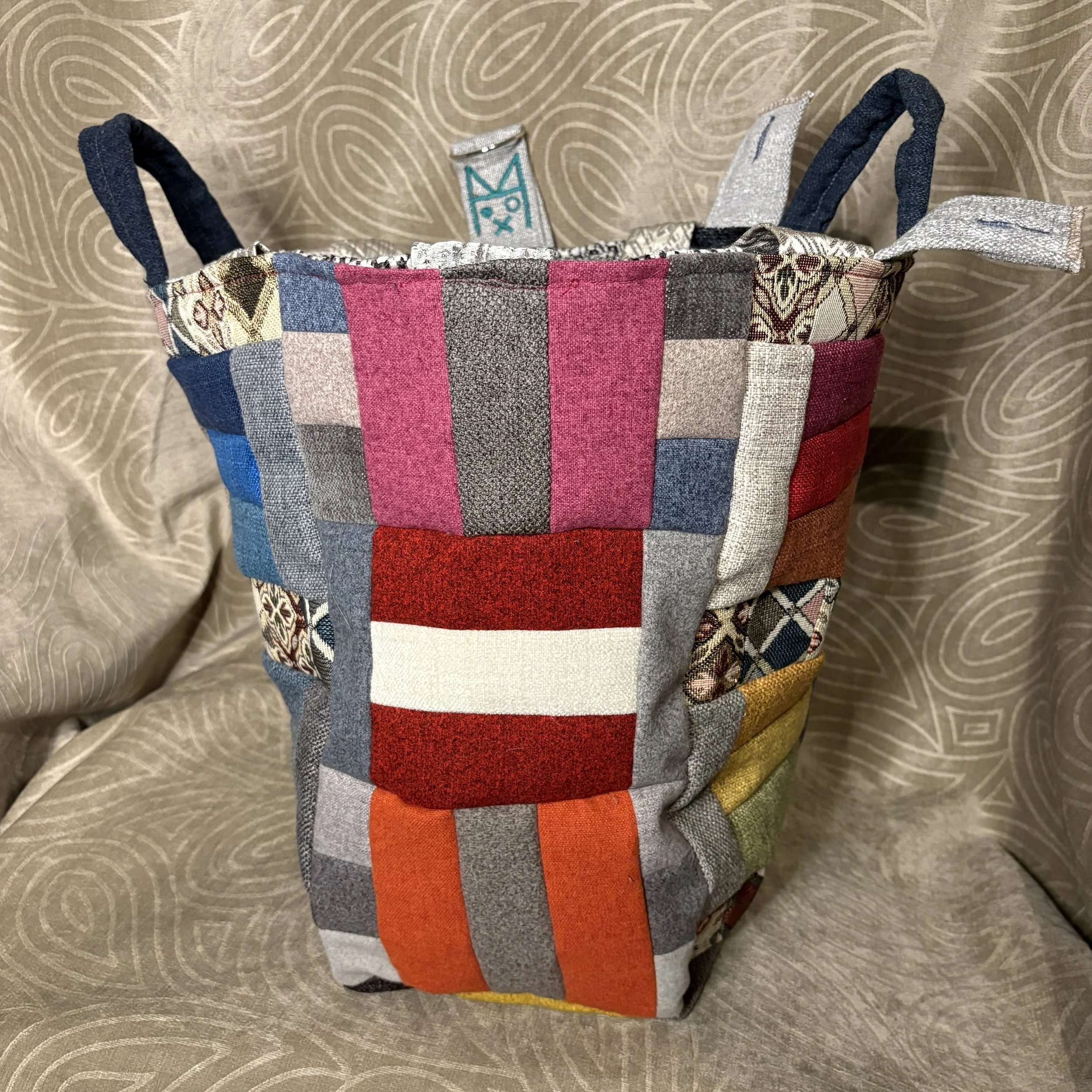
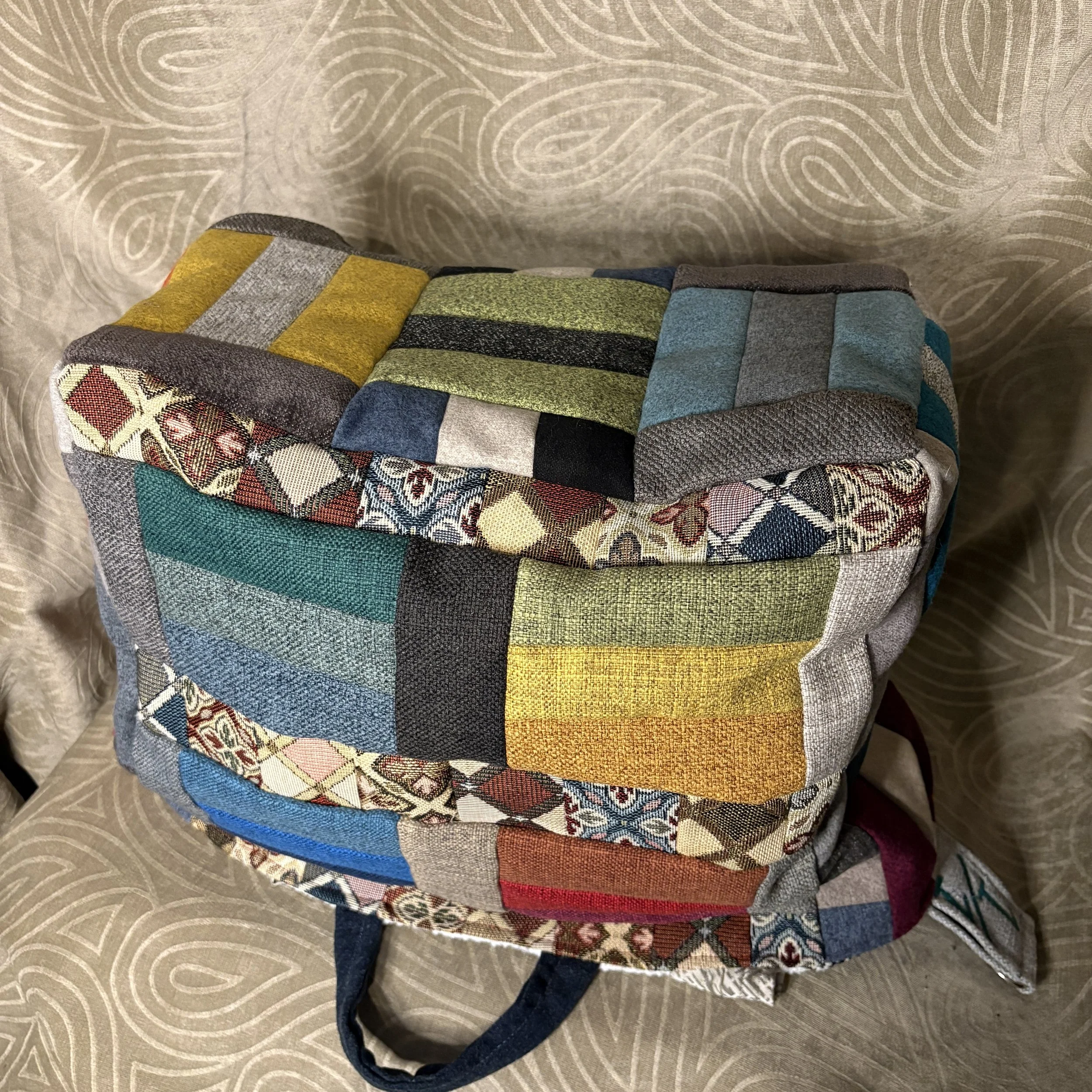
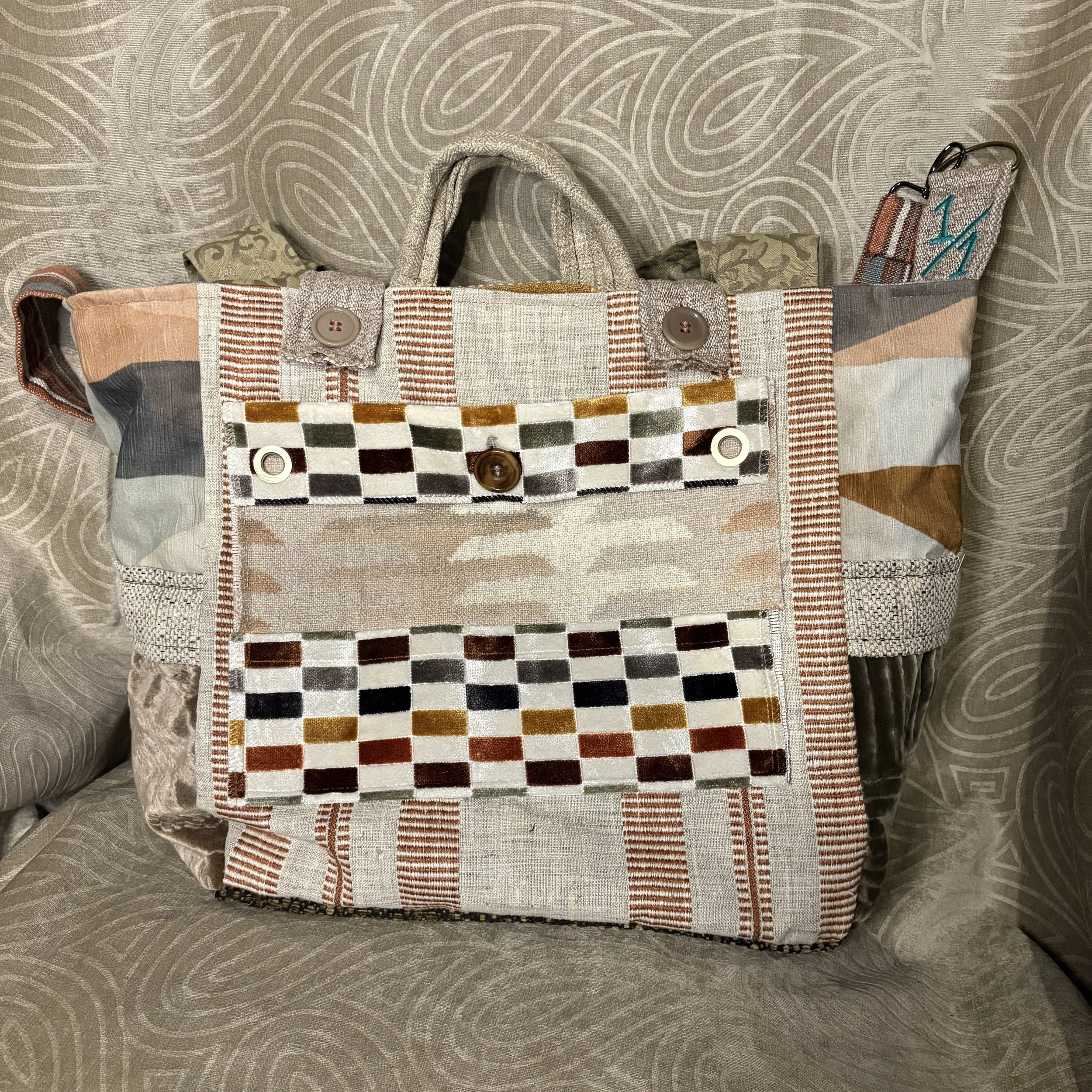
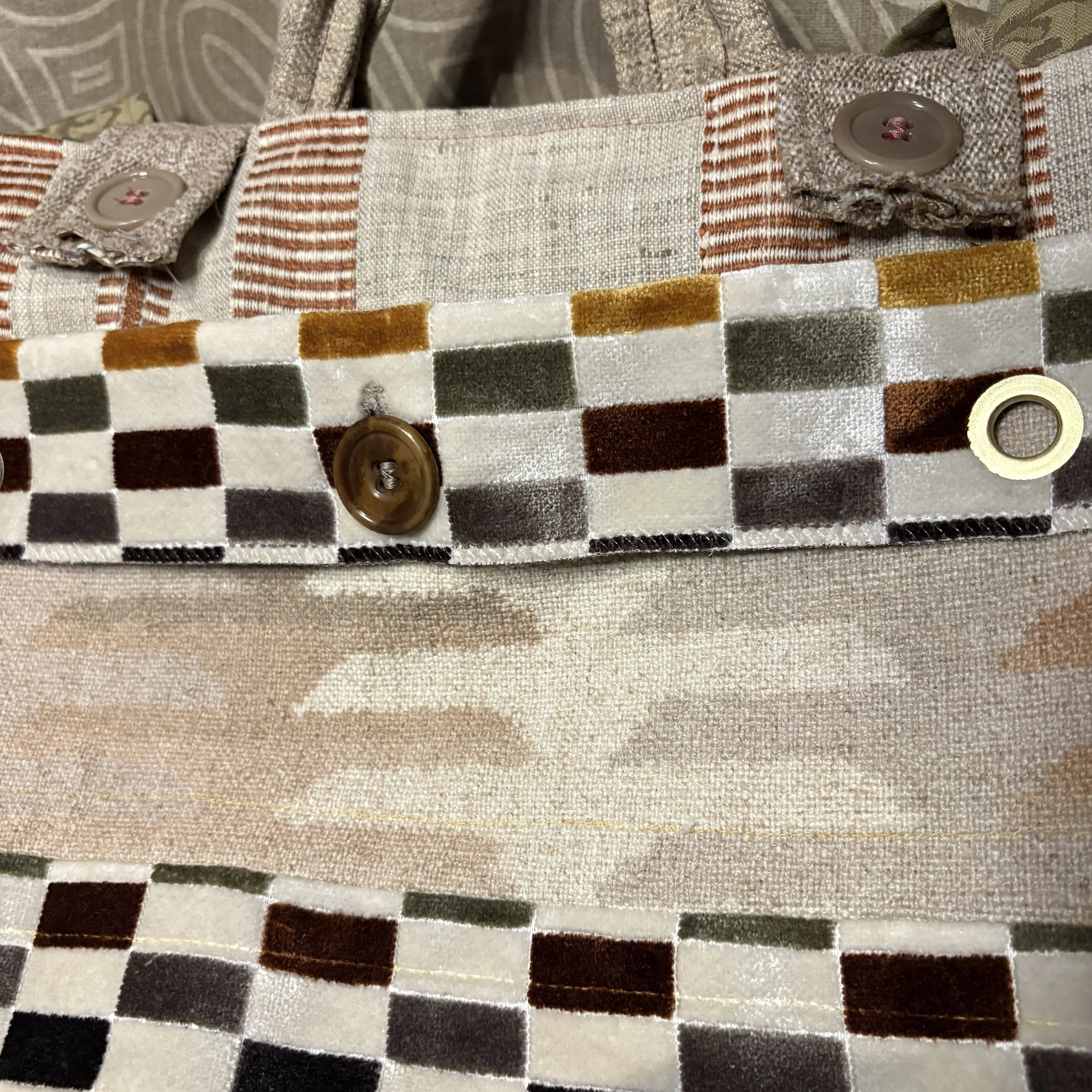
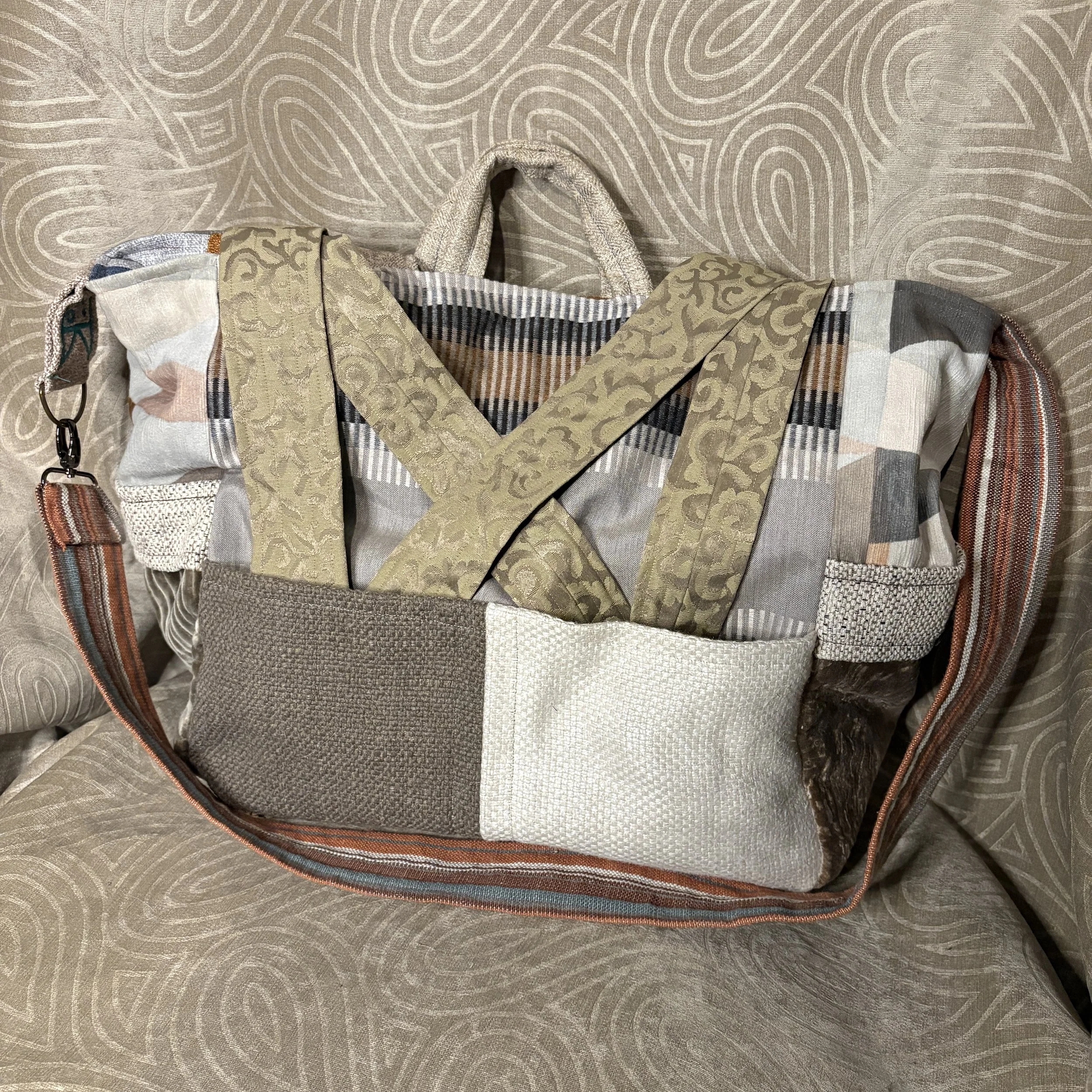
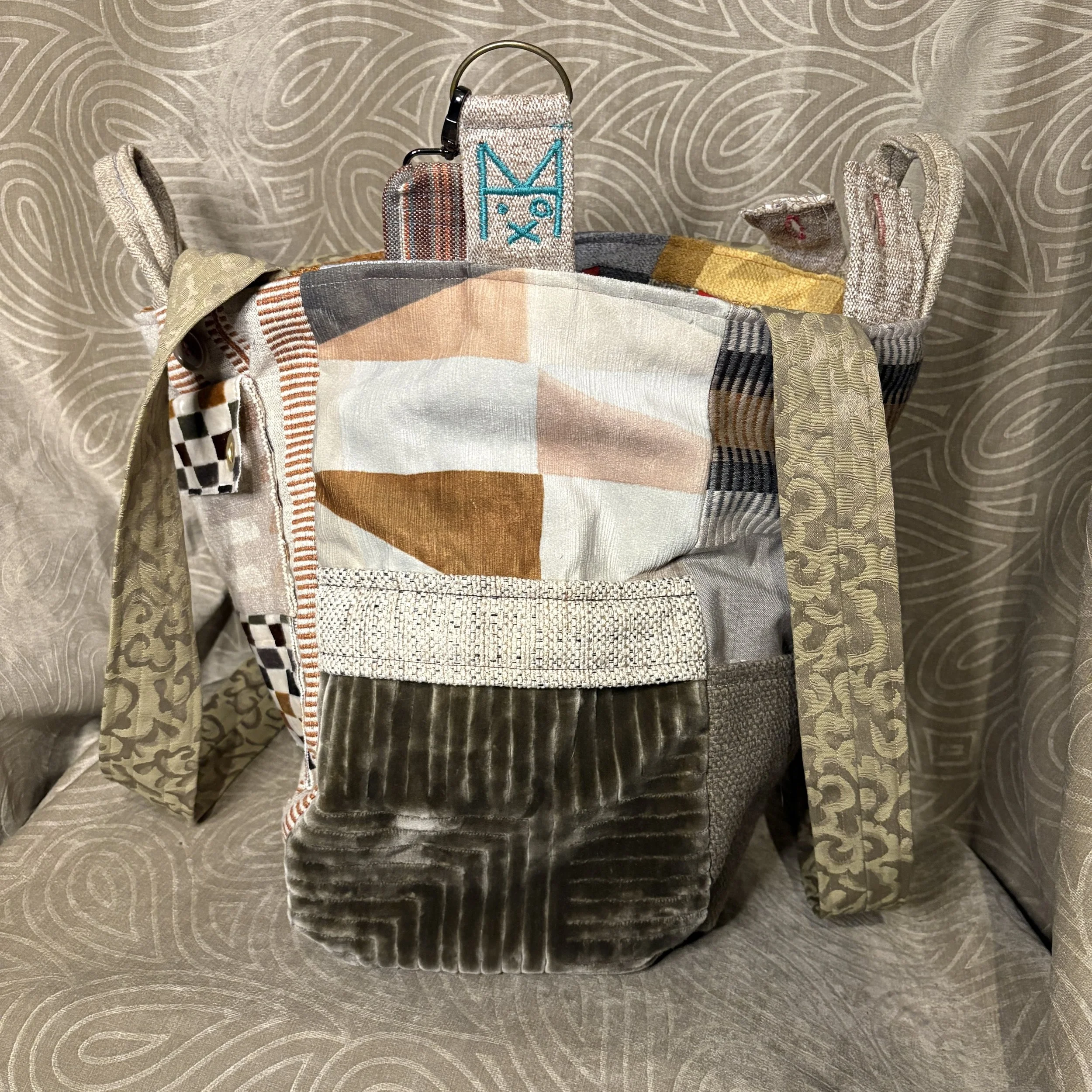
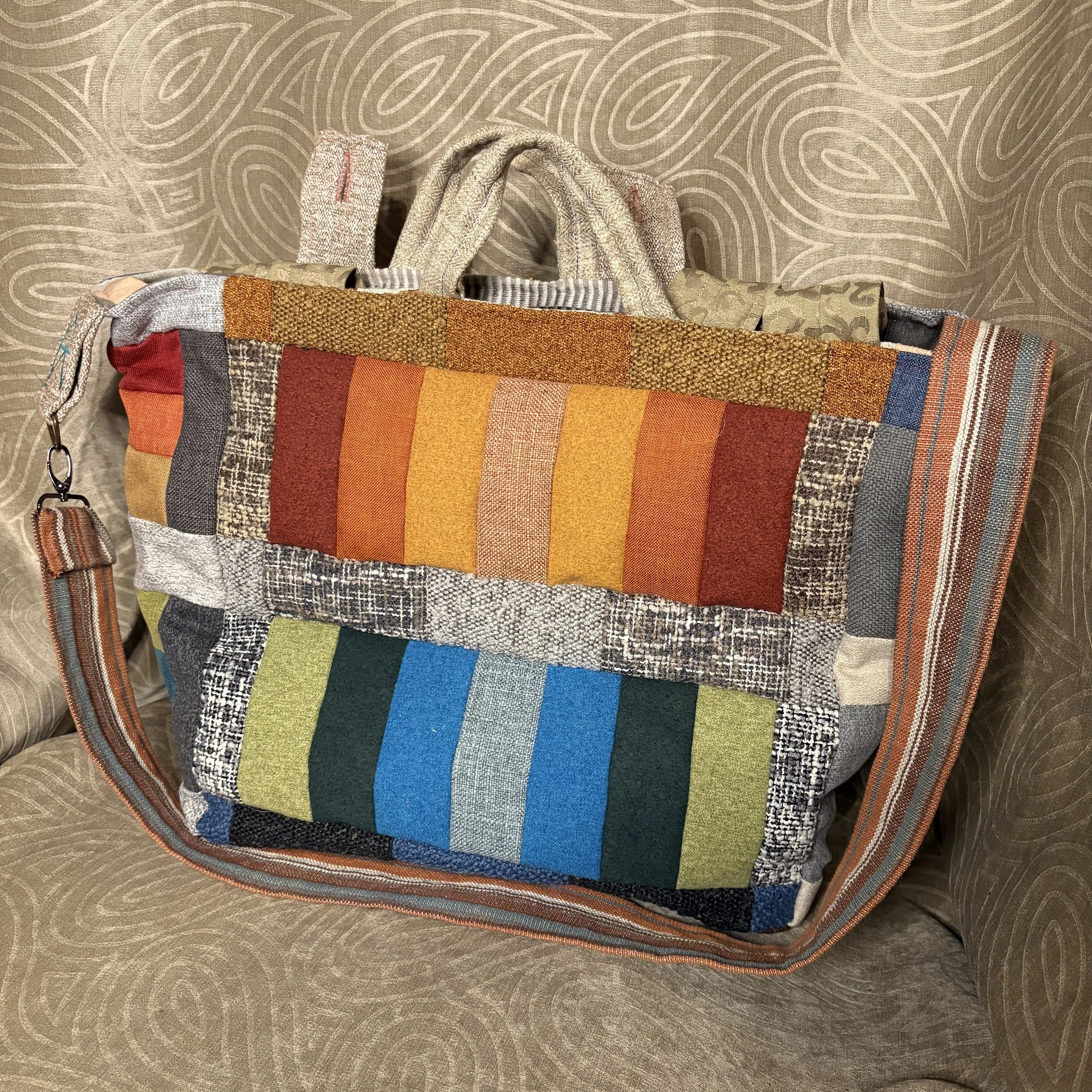
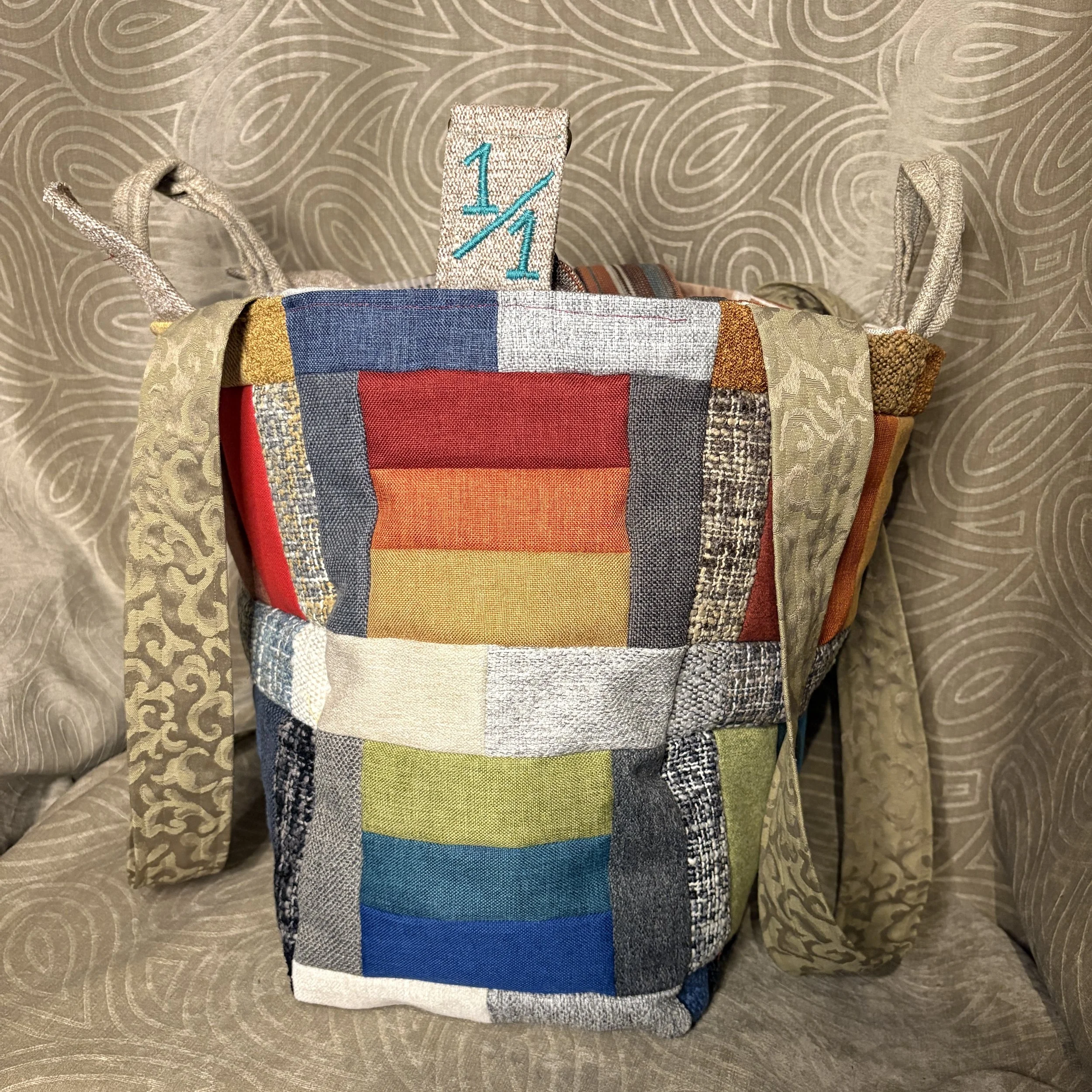
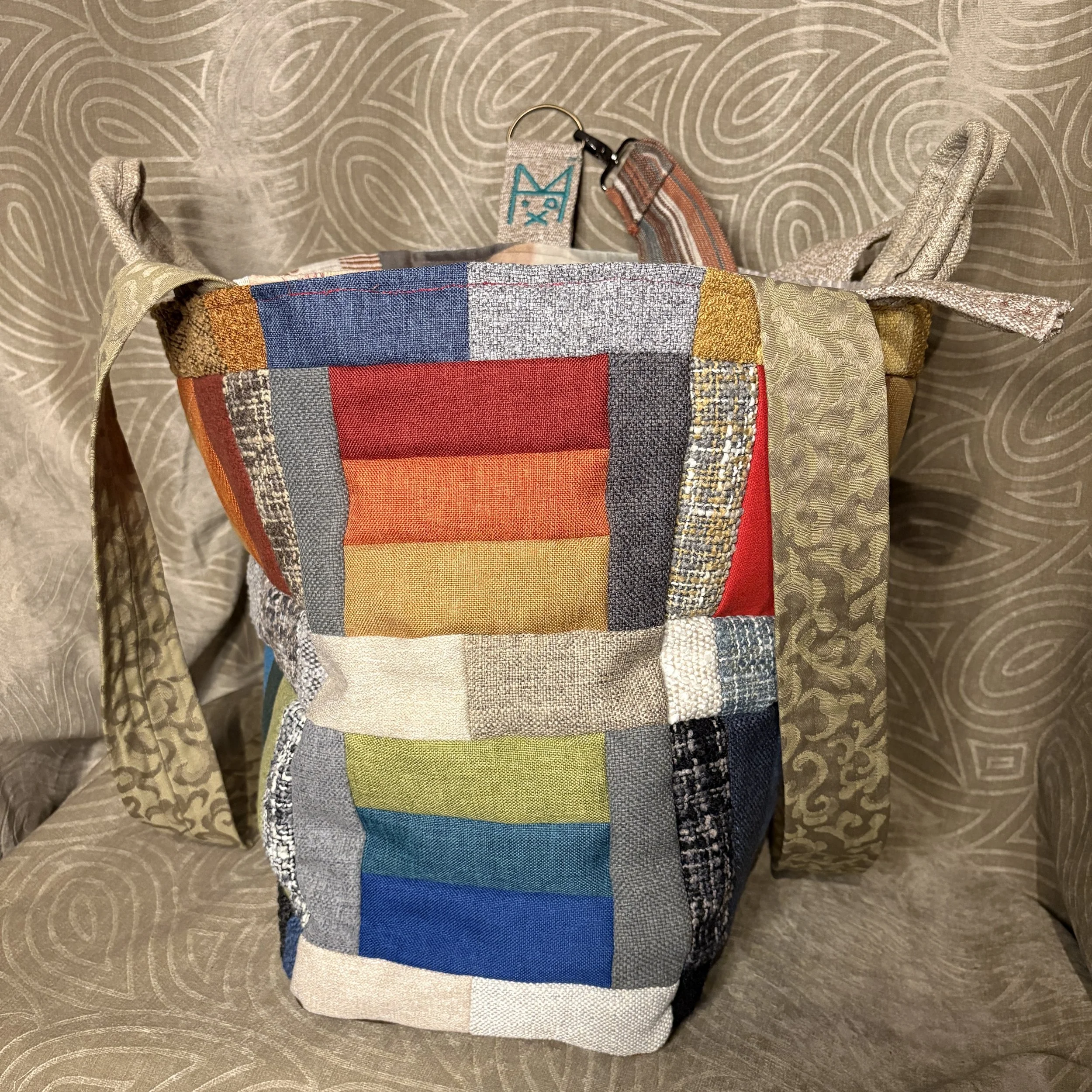
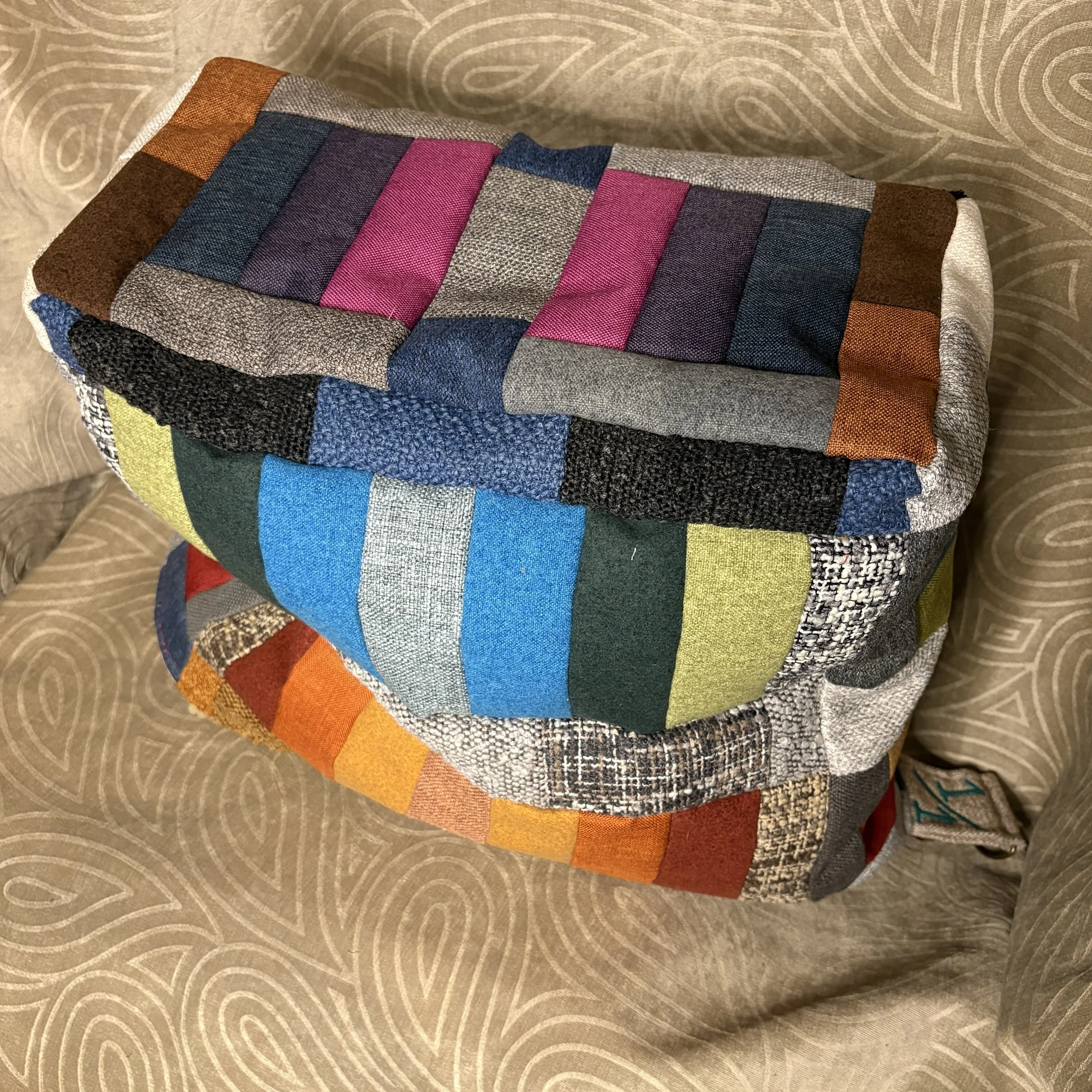
As I said in a previous post about Market Bags, the prep time put in before the bag production is just as vital, if not moreso, to the bag-making process as the sewing, and these are proof positive of that statement. I spent the better parts of the Sunday Market and the Monday following just cutting bricks from the Chicago Samples. Luckily, I also knew what I wanted them to look like well before these became a reality.
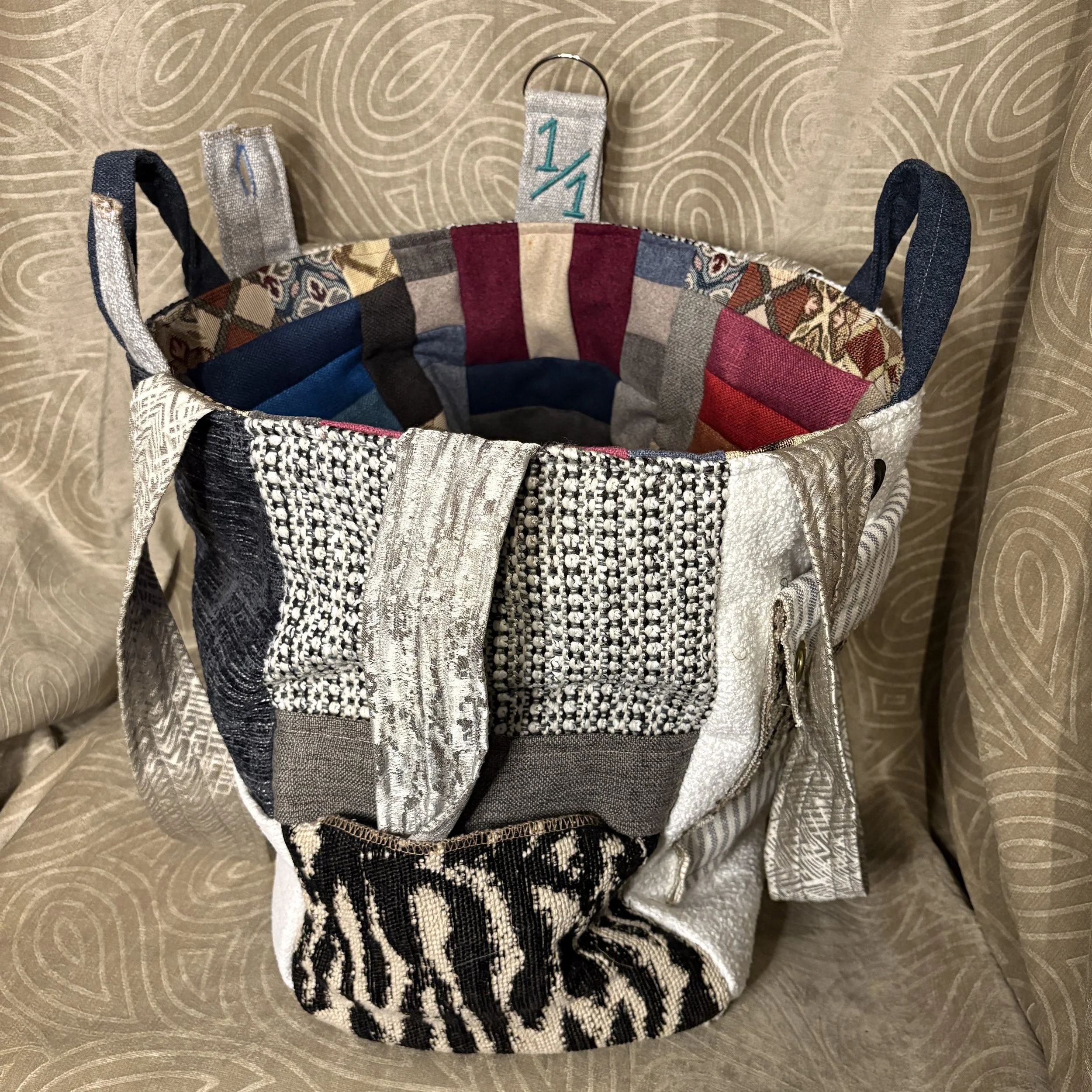
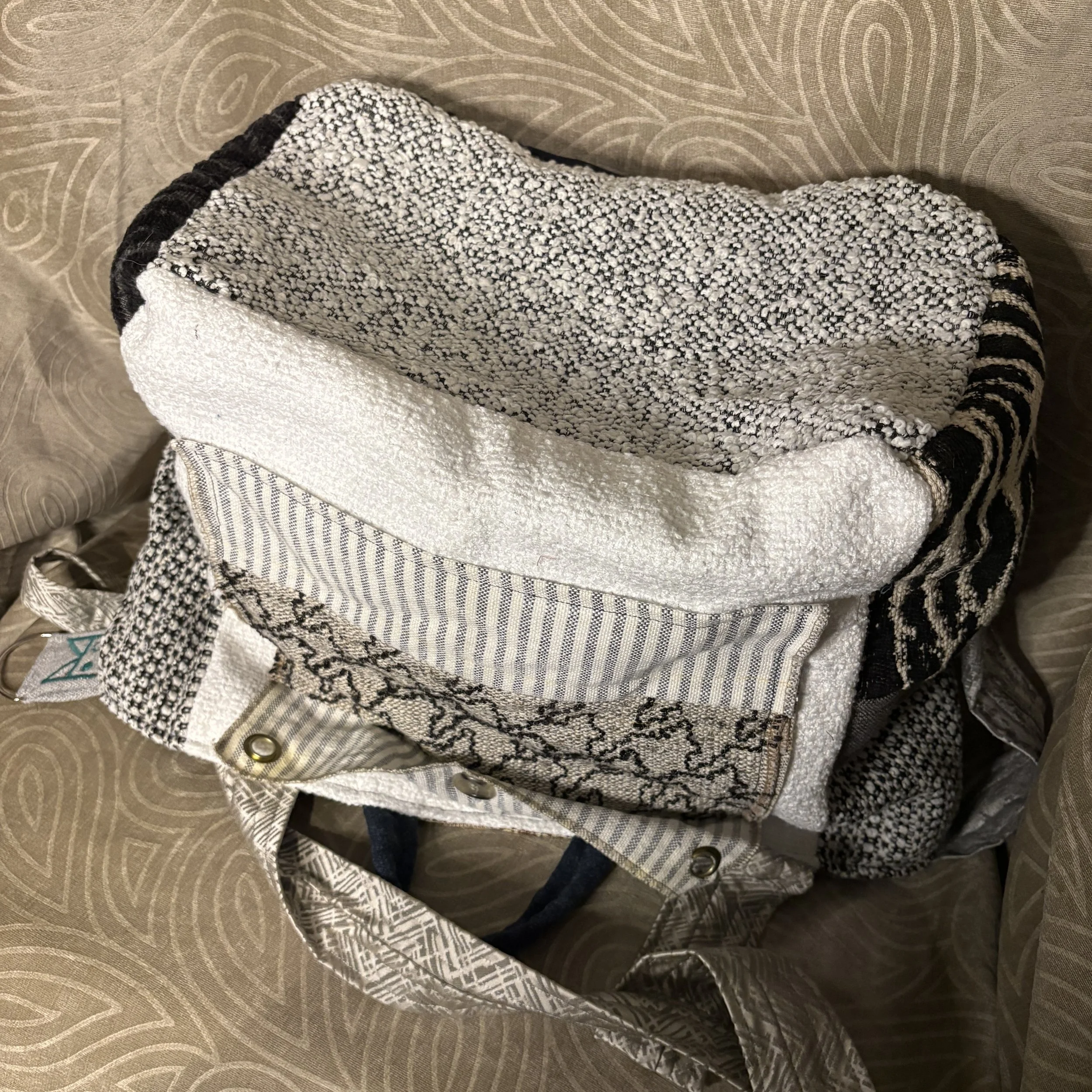
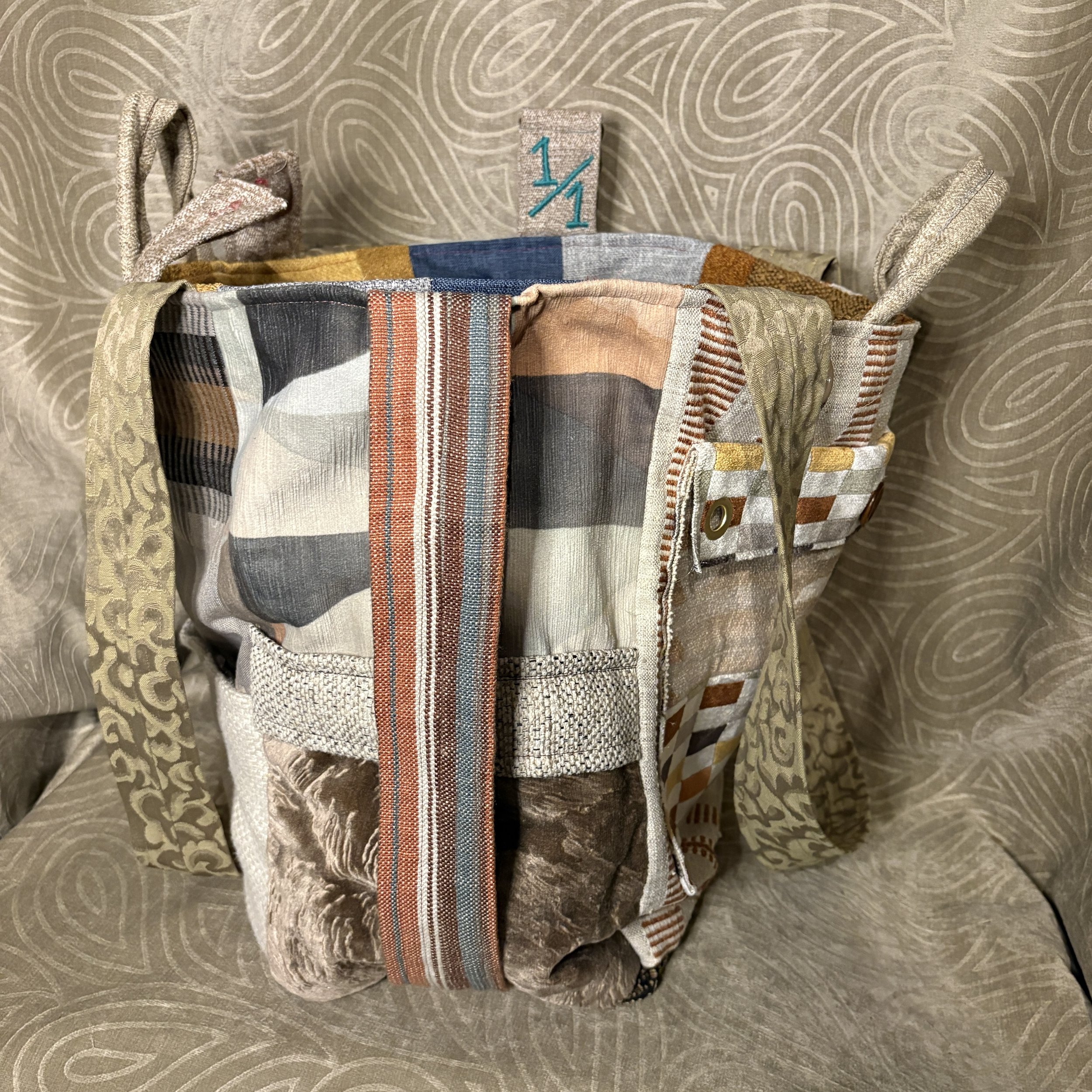
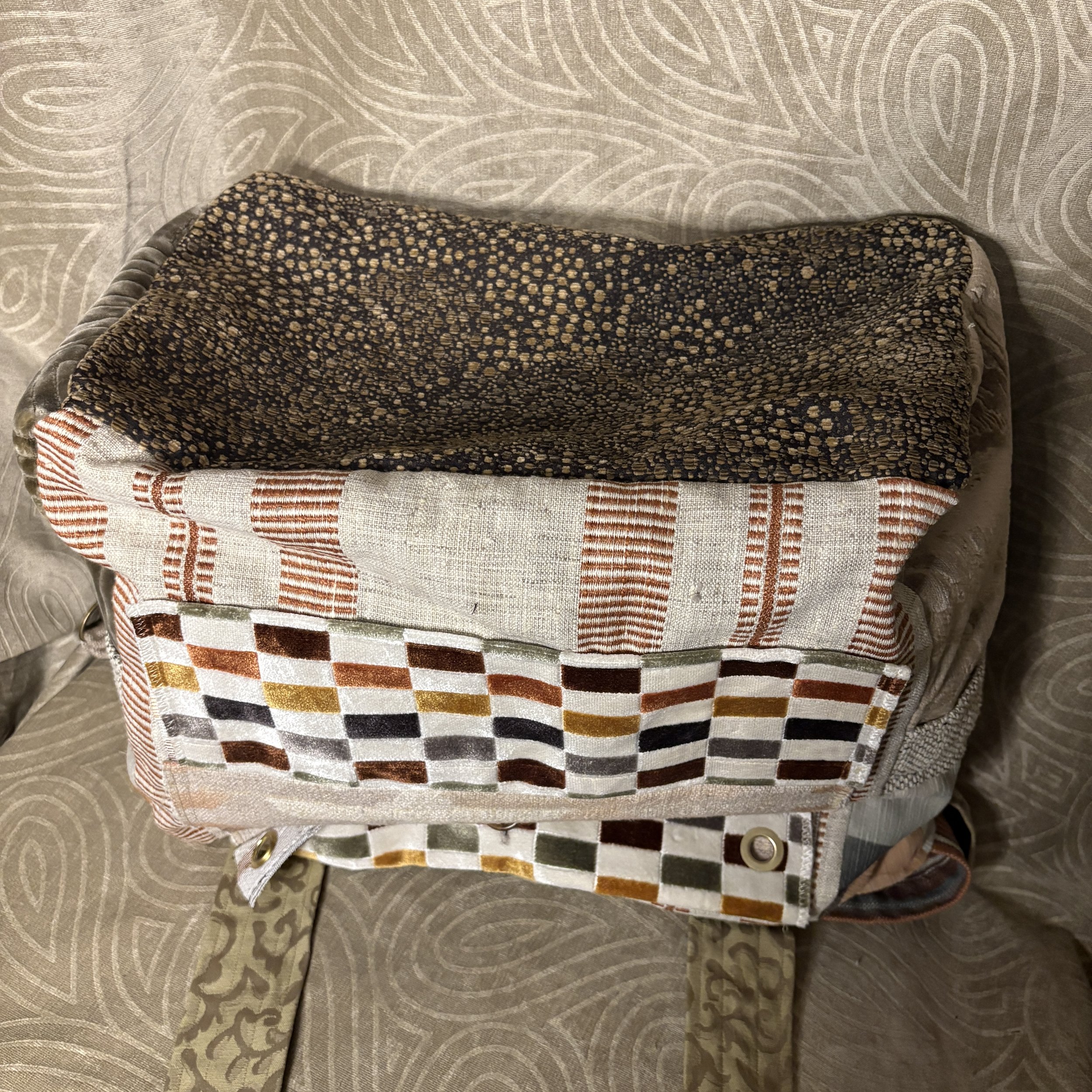
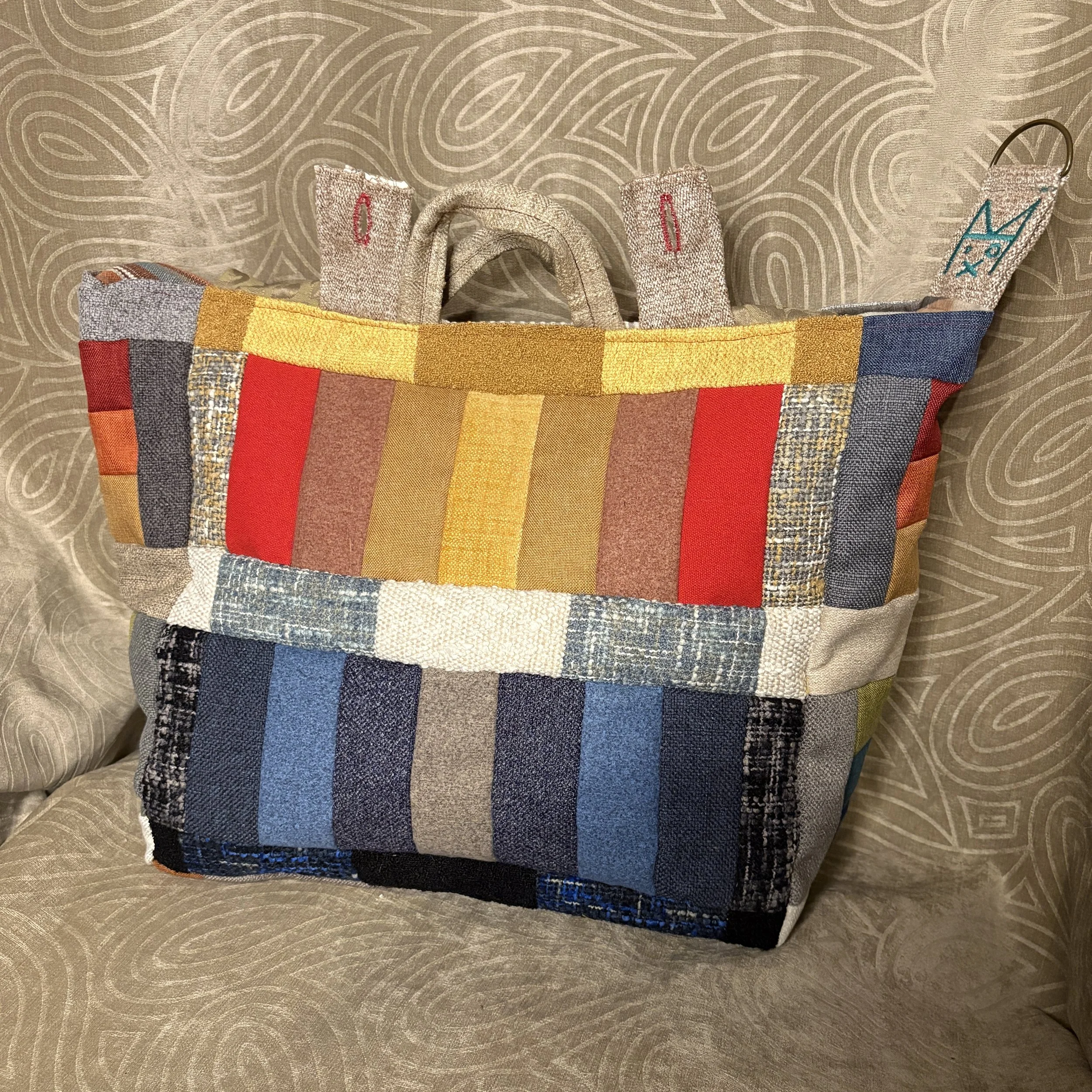
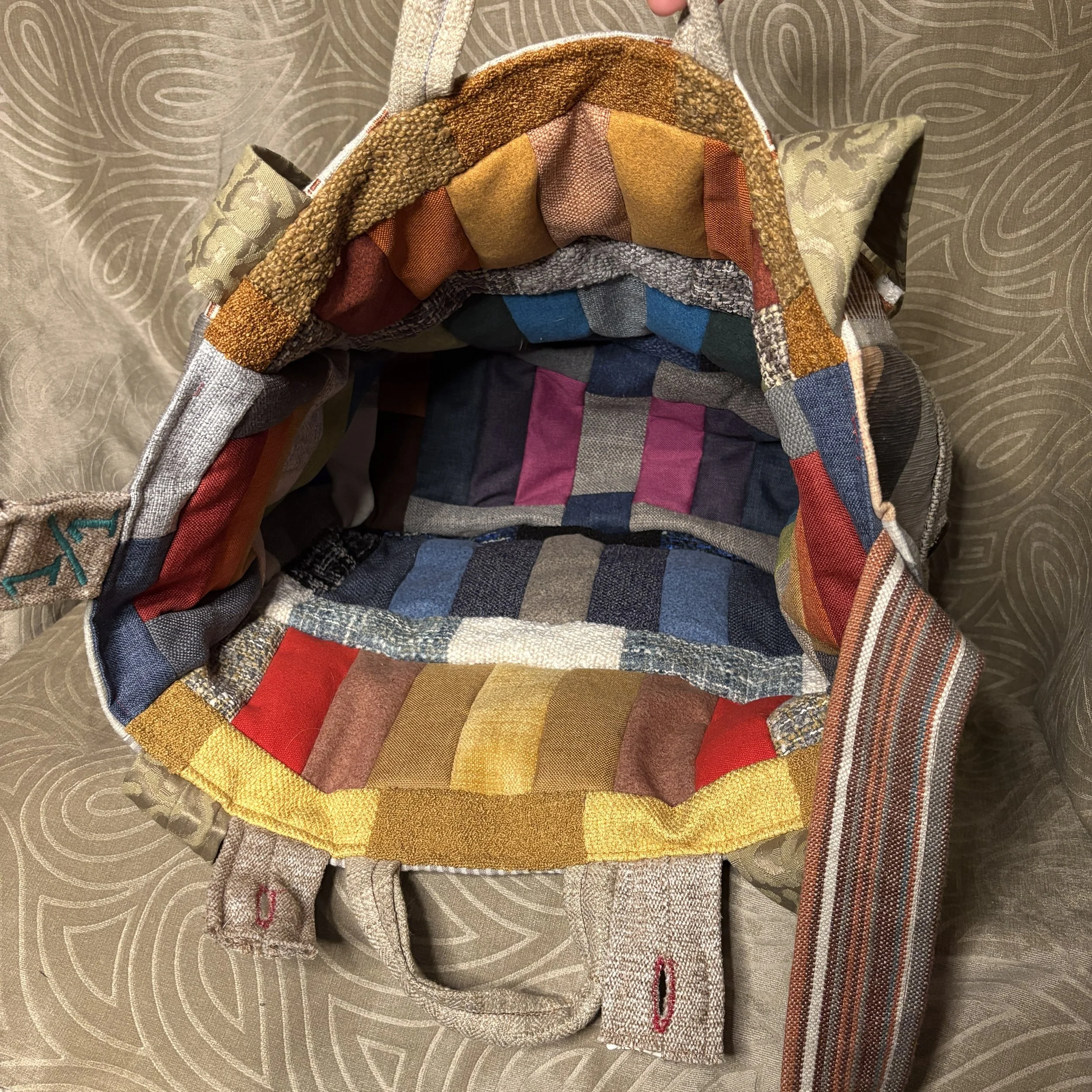
Medium bags are a rarity outside of commissions, but I have begun to see, especially after the Burnt Flowers entry that people won’t know what is out there until it is properly in their faces, so in addition to the small bag samplers, I wanted to make a few mediums so that people would become familiar with the scale and form of these elusive creatures. I made them with a very similar guiding principle as the smalls, If I were to show the range of colors in a fabric selection, what would that look like as a bag. In the end, I created this duo, one Combination Stack Bond in the Geometric Stripes External Shell, and one Enclosed Weave in the Zebra Houndstooth Shell.
A fun continuation of reuse is that I was able to use the leftover squares from my earlier checkerboard bag to make the courses that separated/enclosed the colorful squares of the upper bag. They didn’t fit the brocade checker theme, but fit perfectly here, so their place was cemented to great effect. Two very colorful and adventurous bags found their way onto my table and out to awaiting clients.
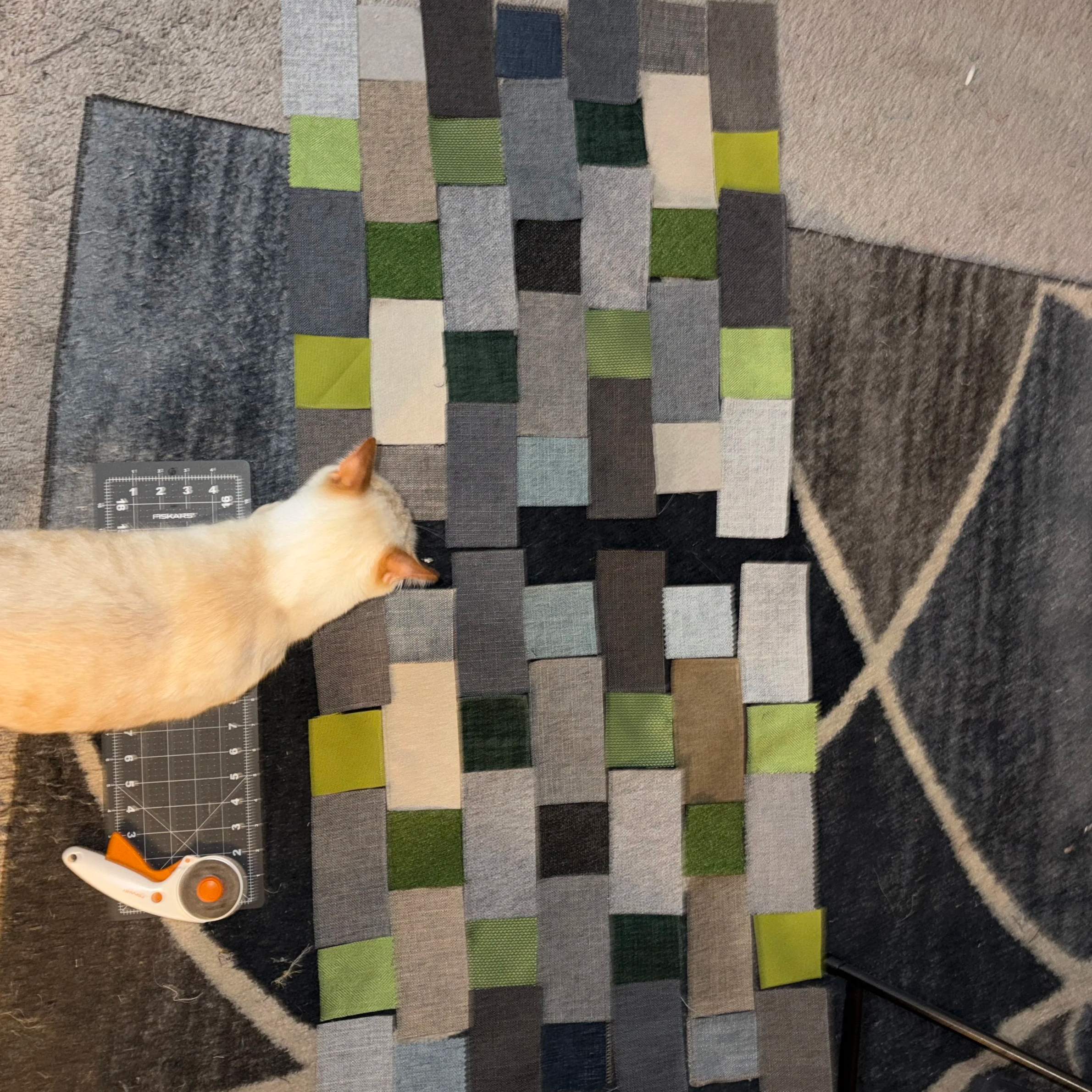
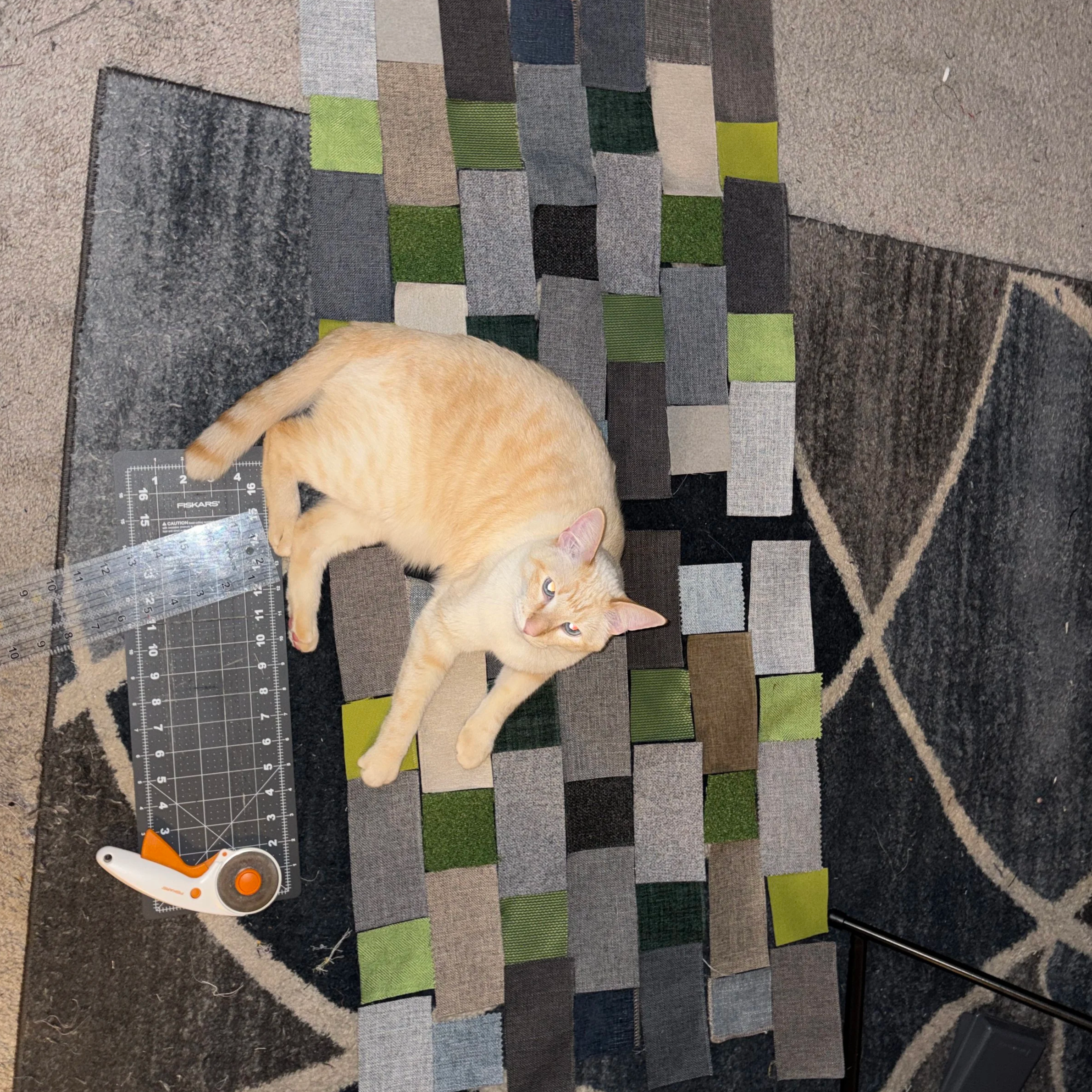
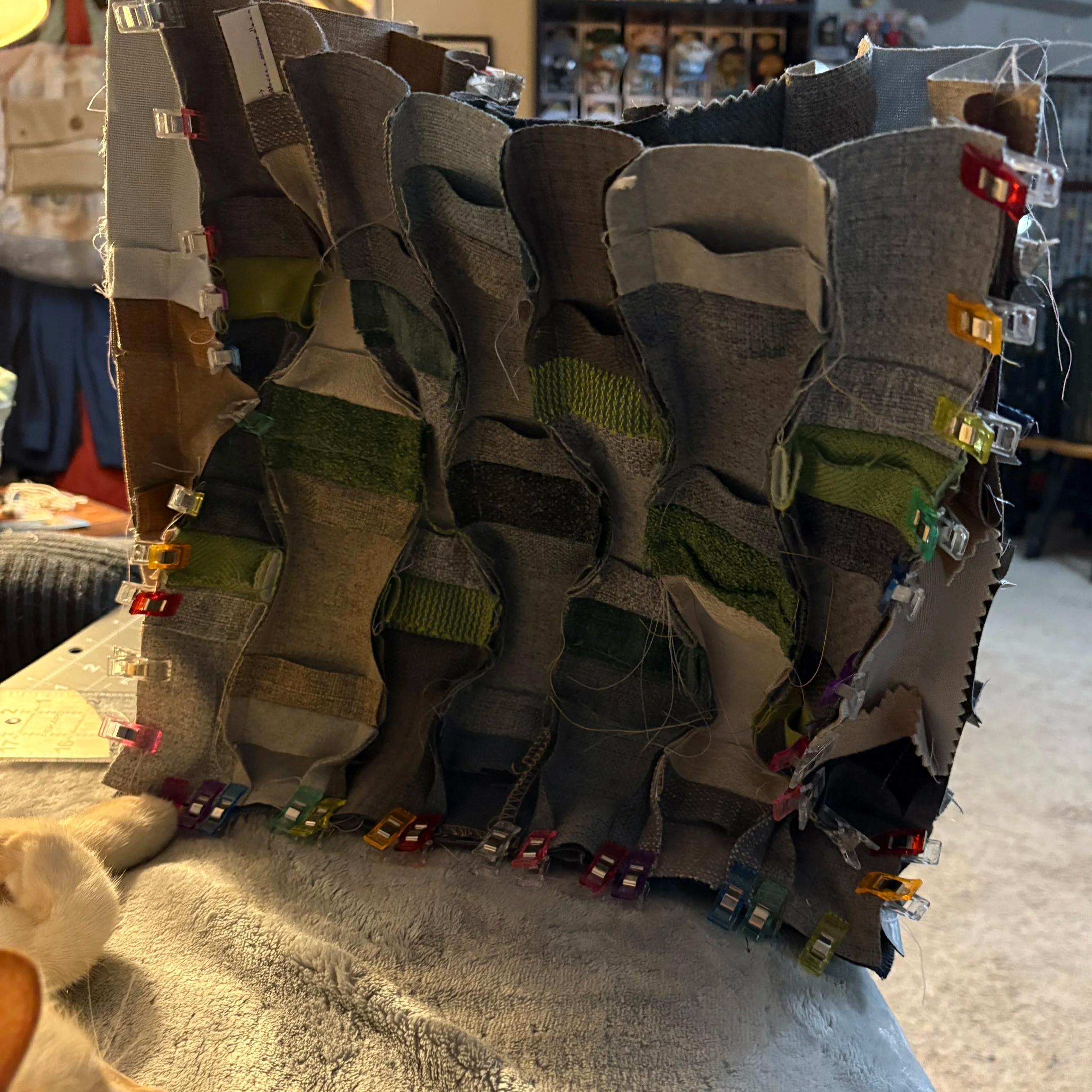
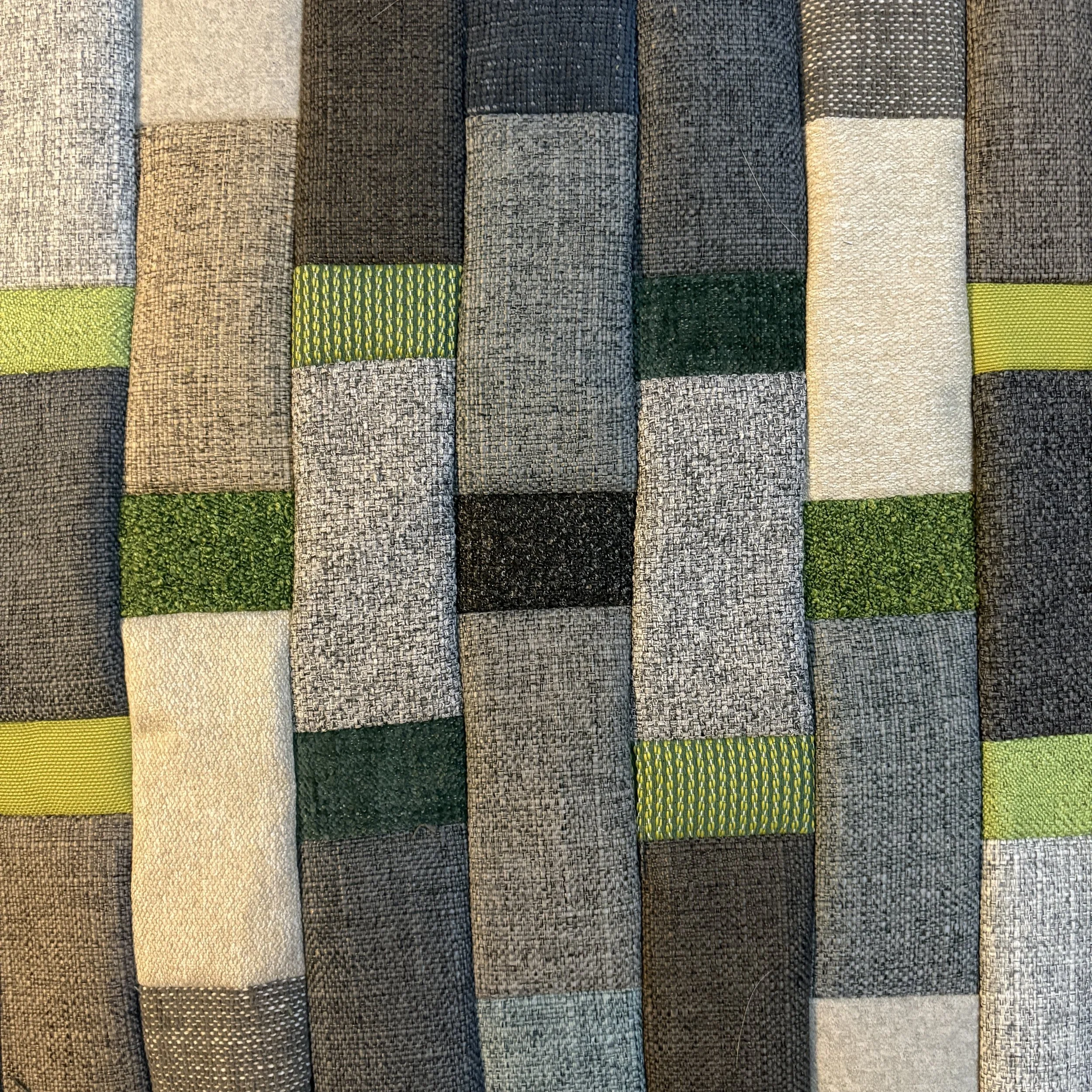
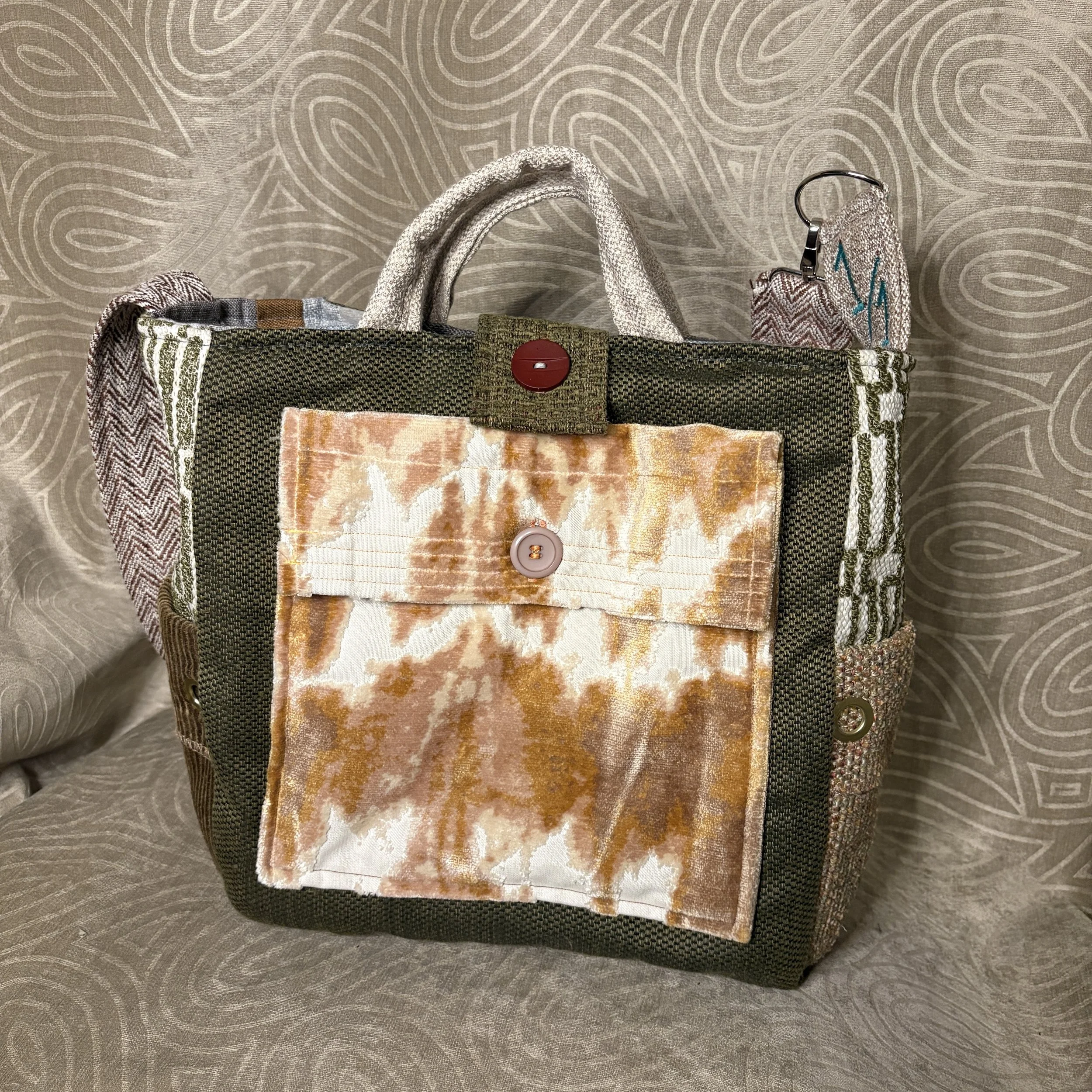
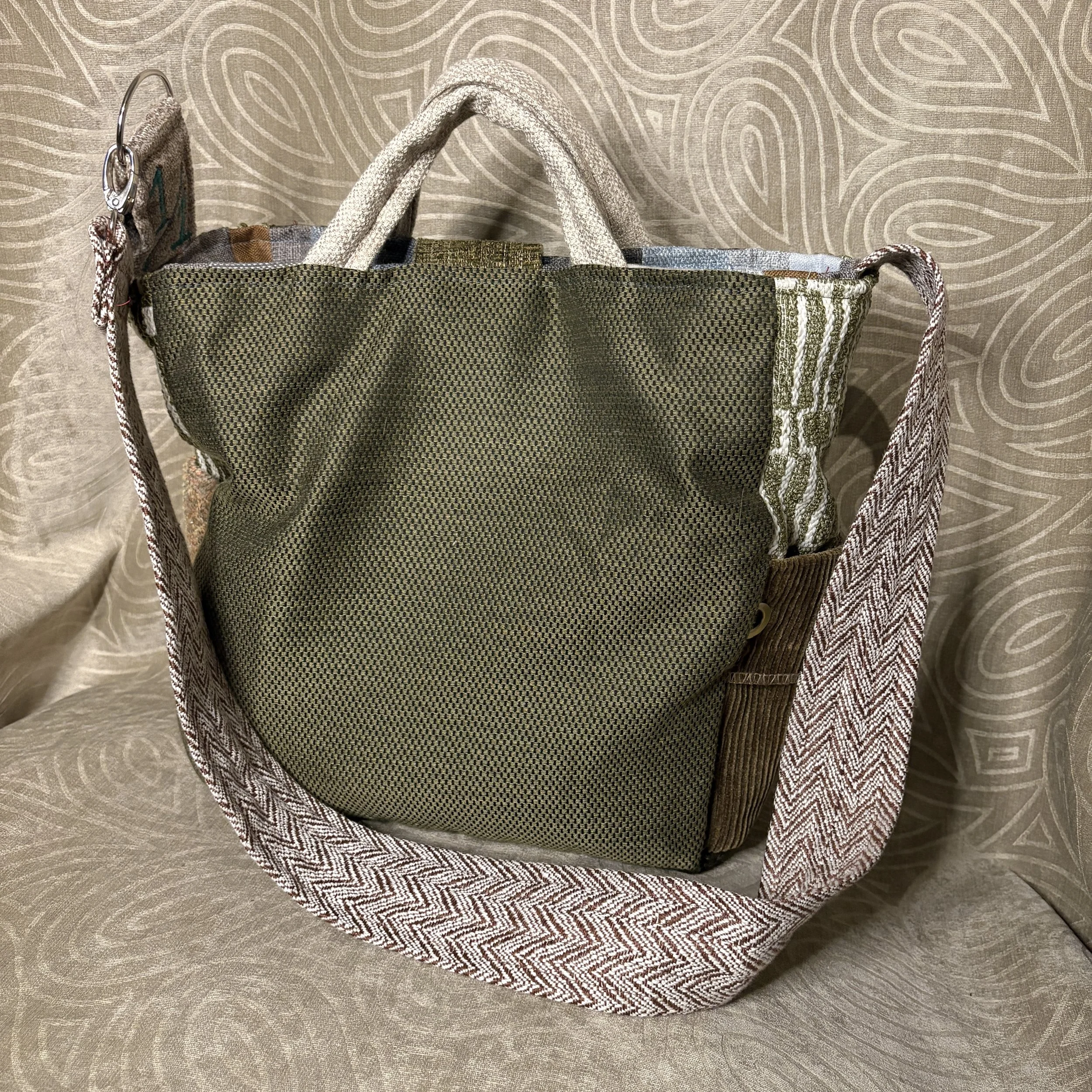
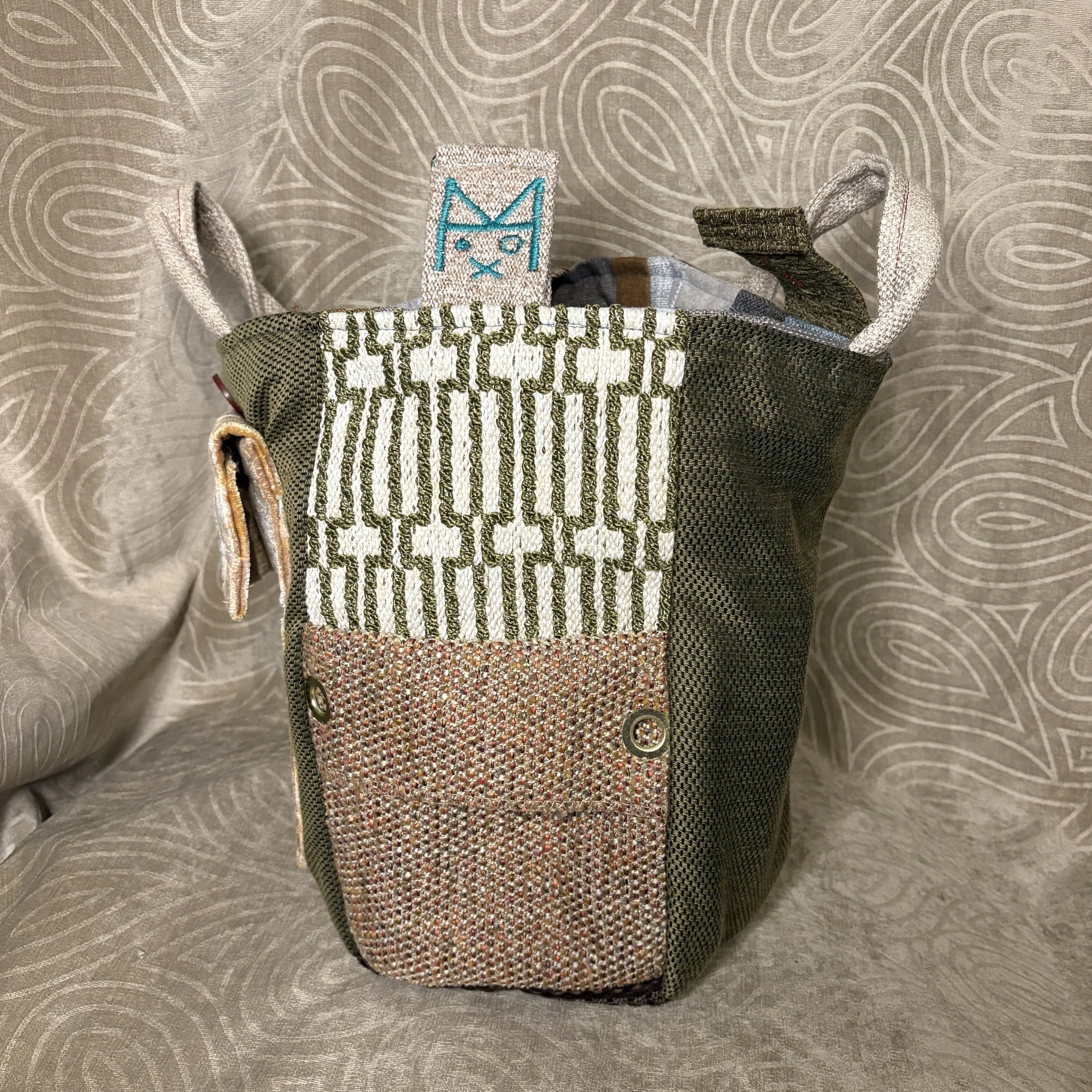
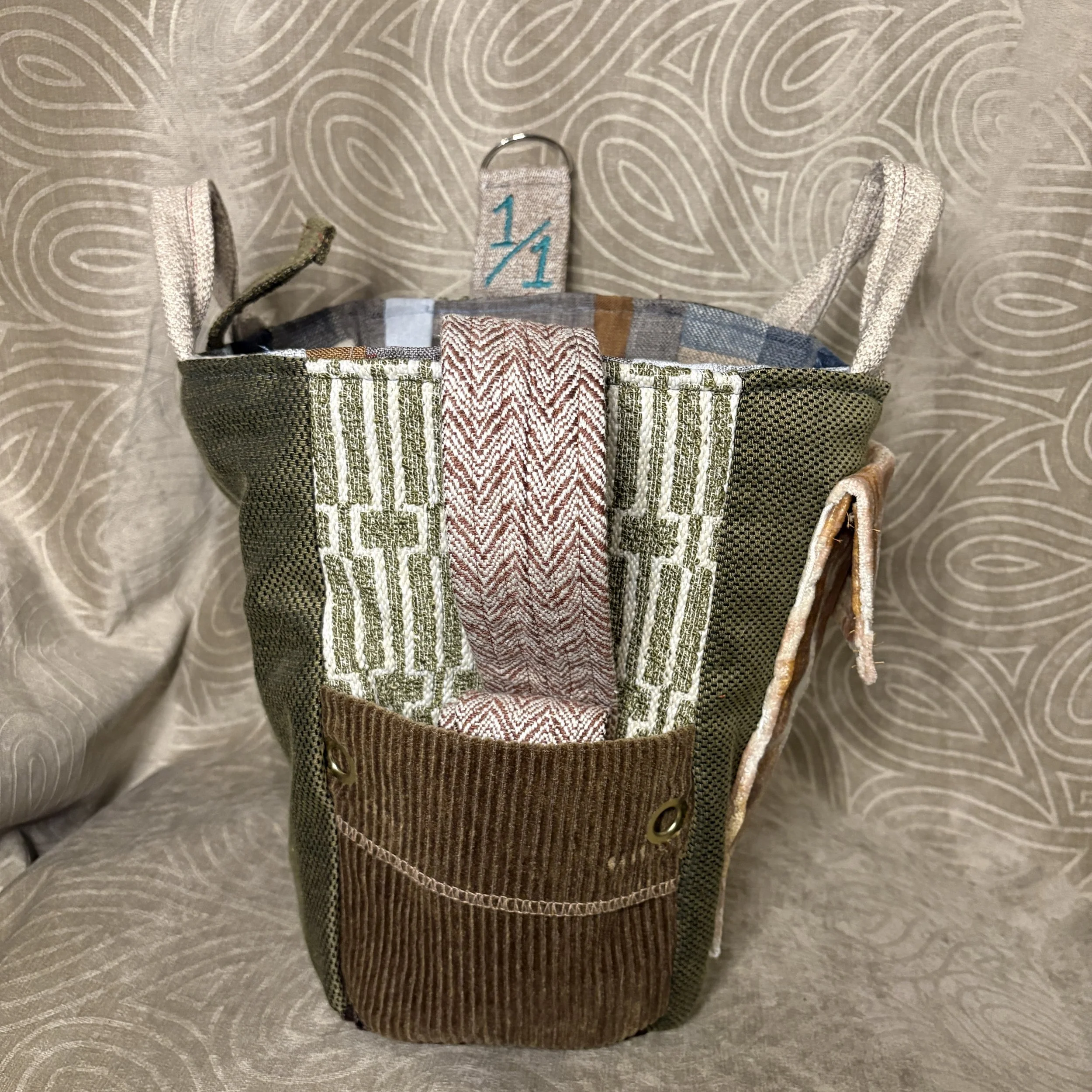
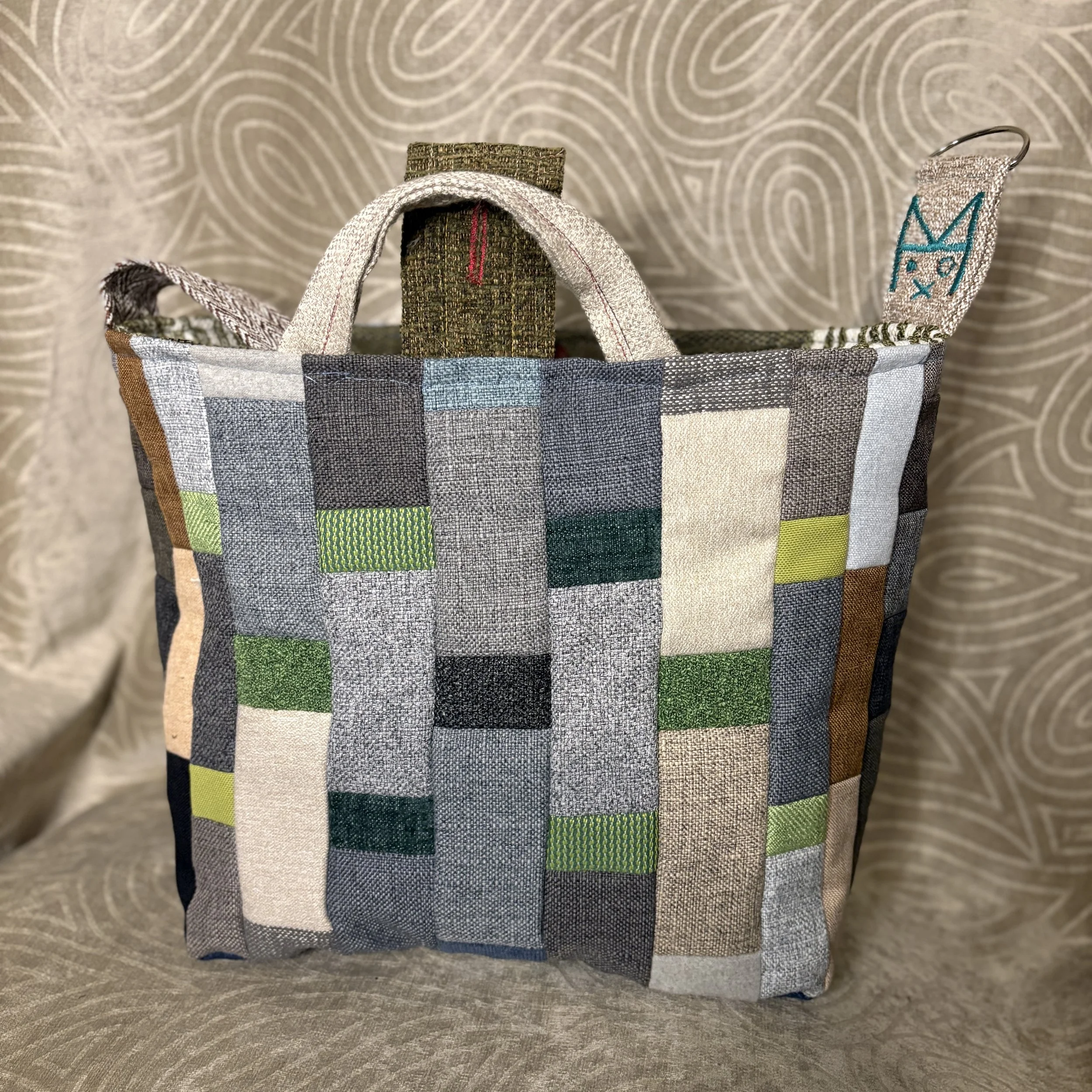
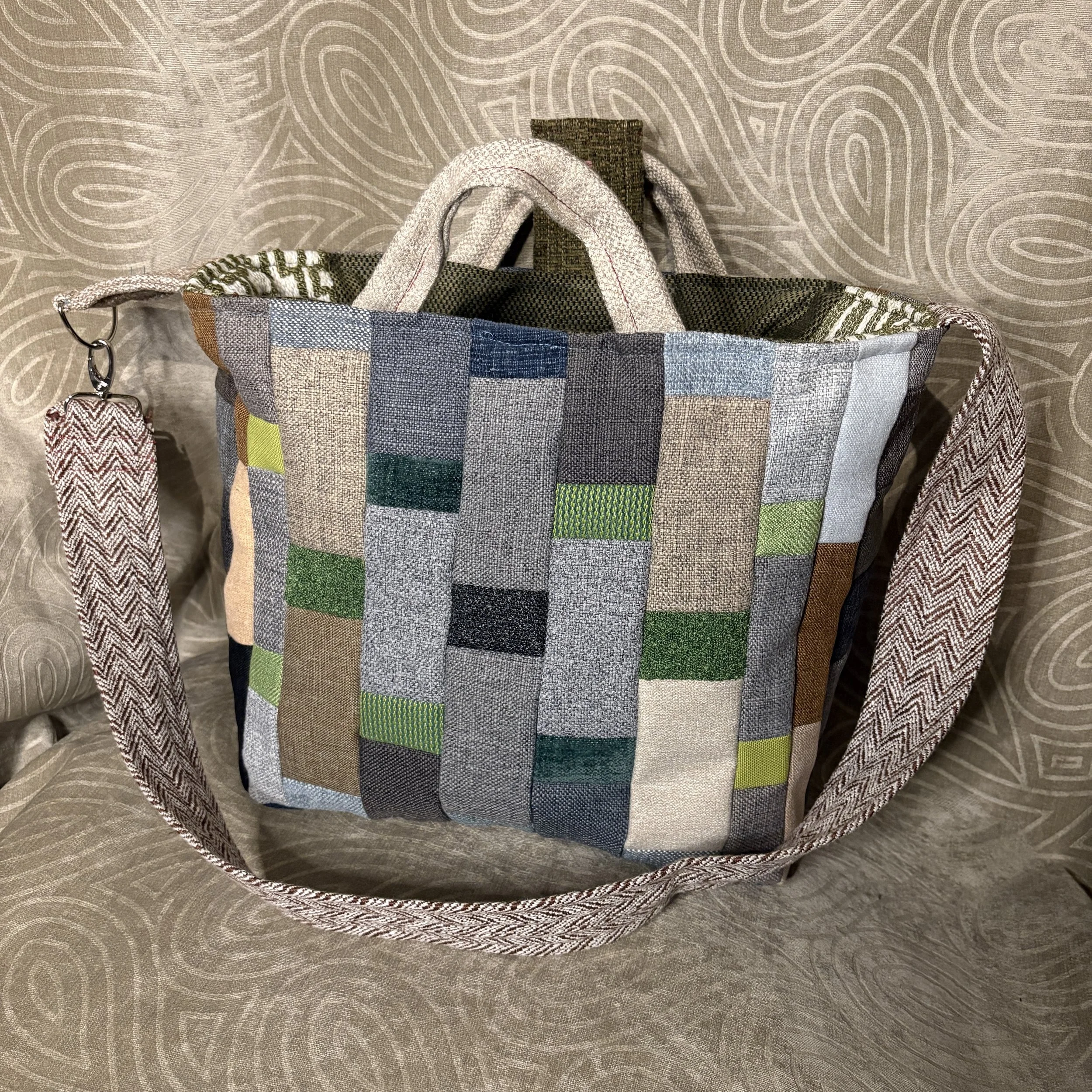
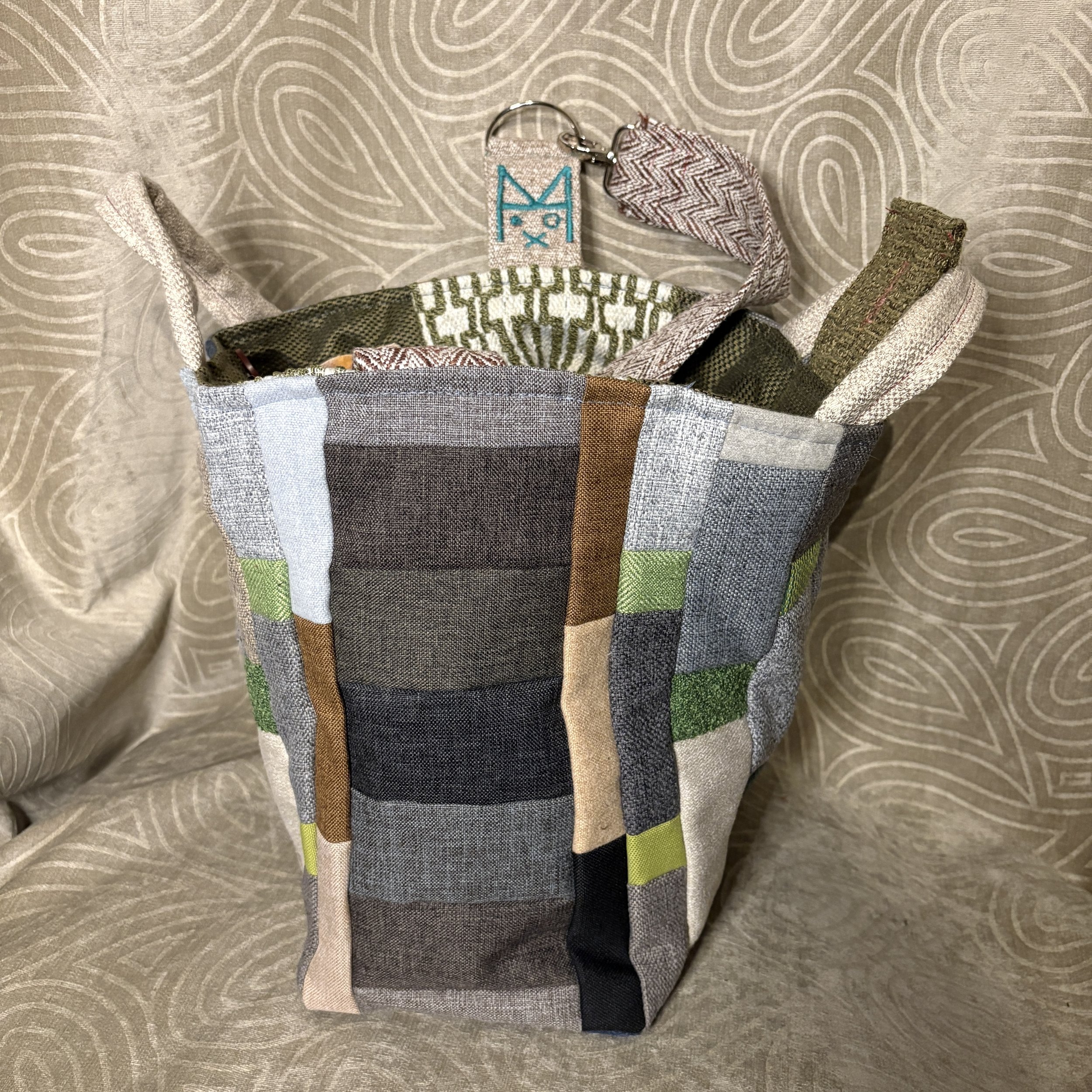
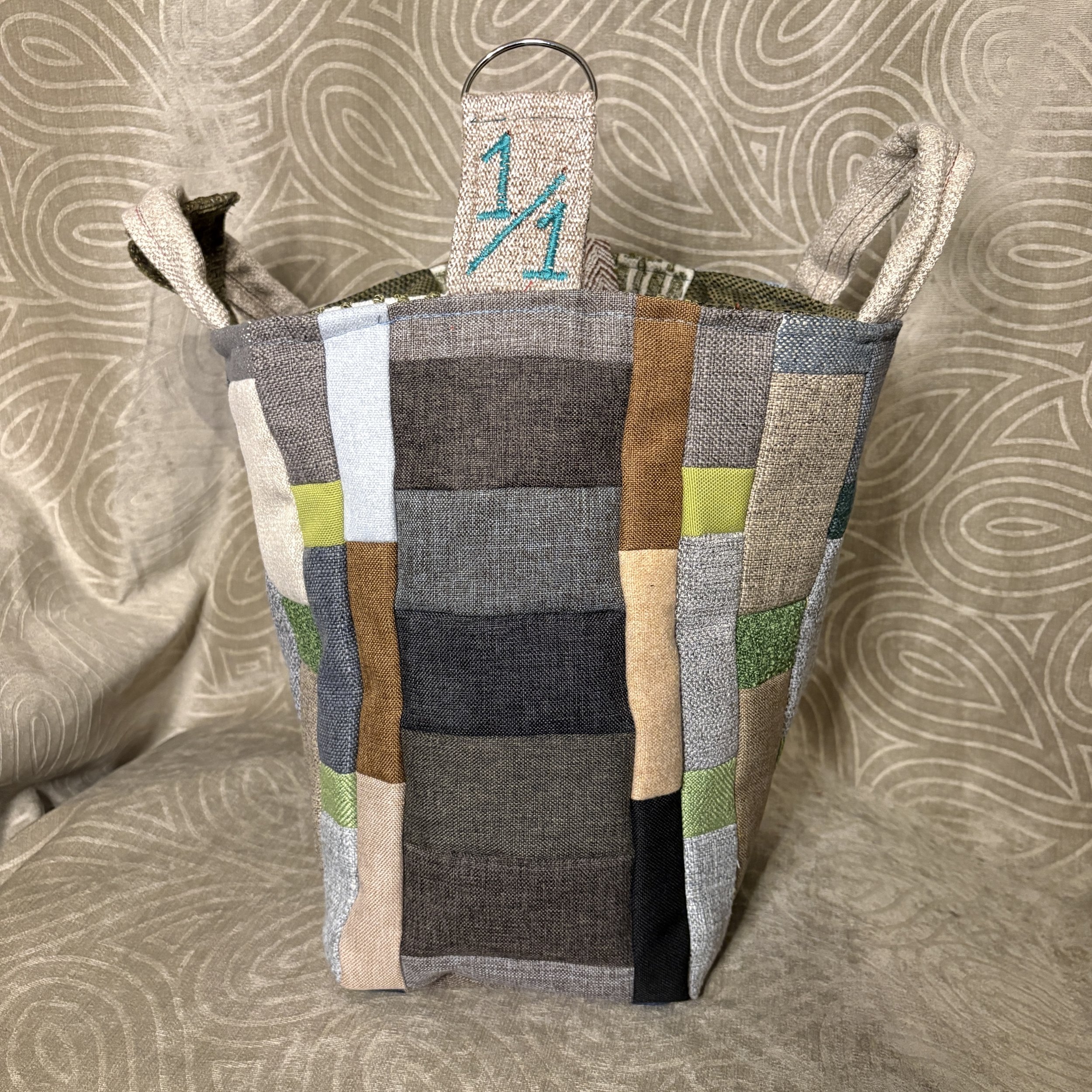
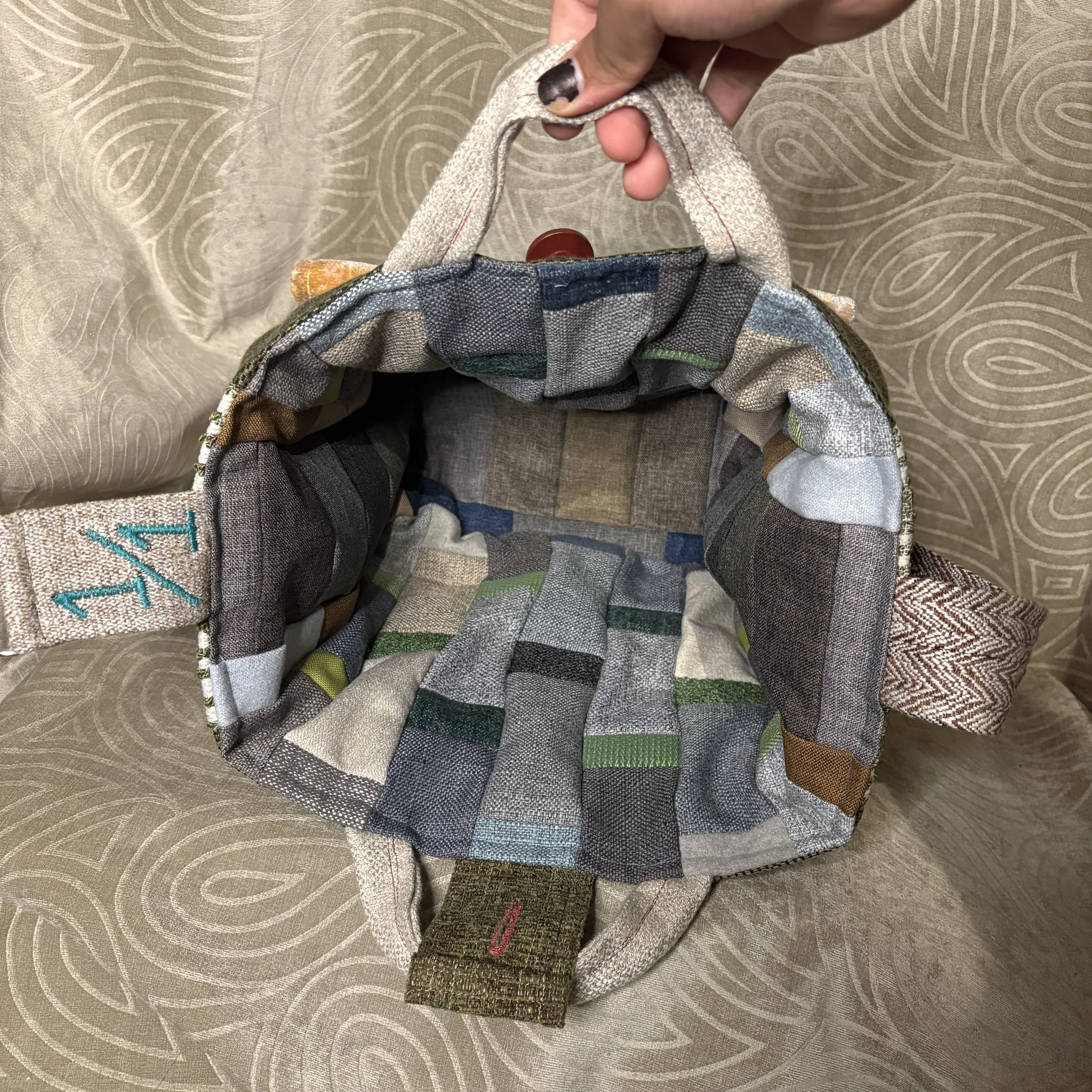
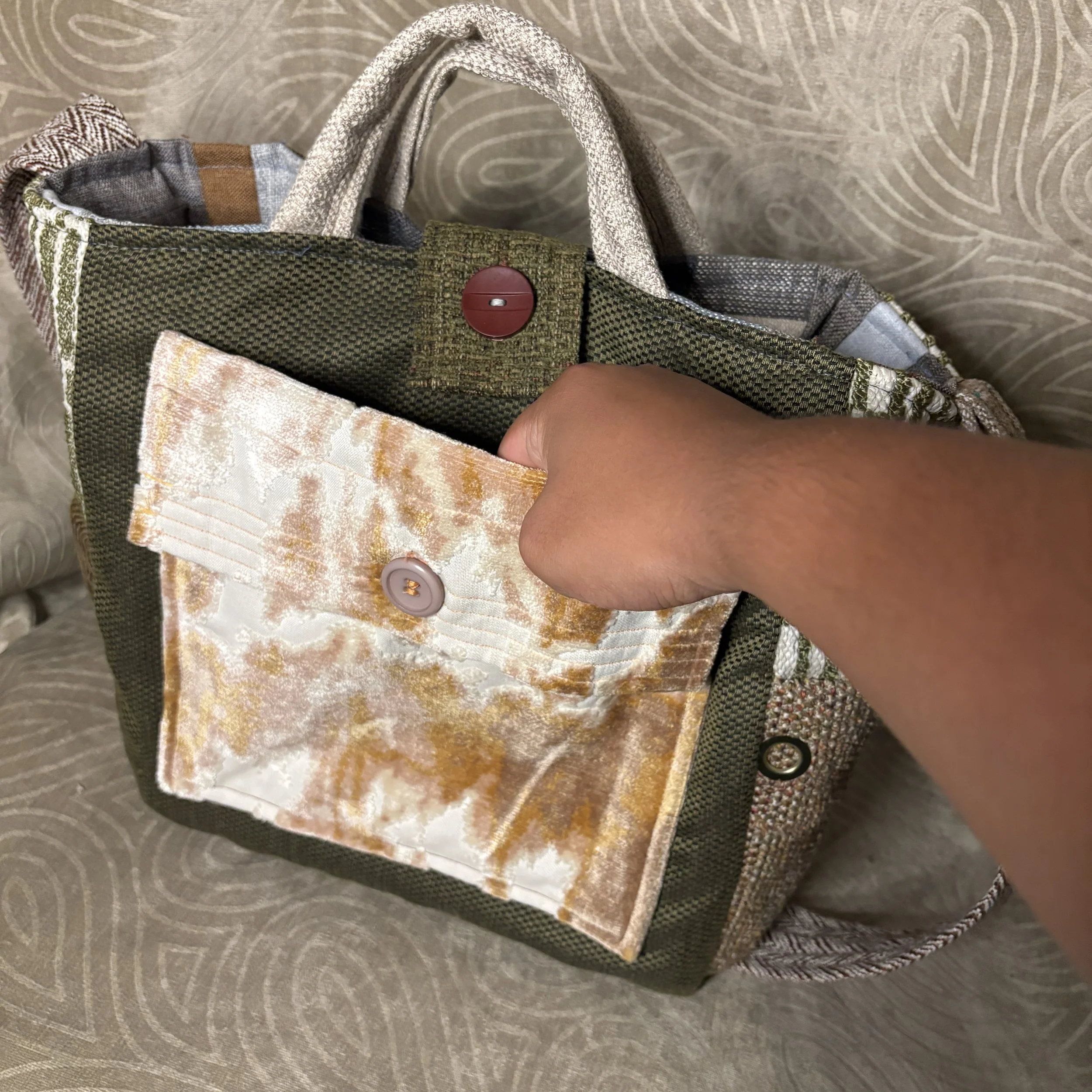
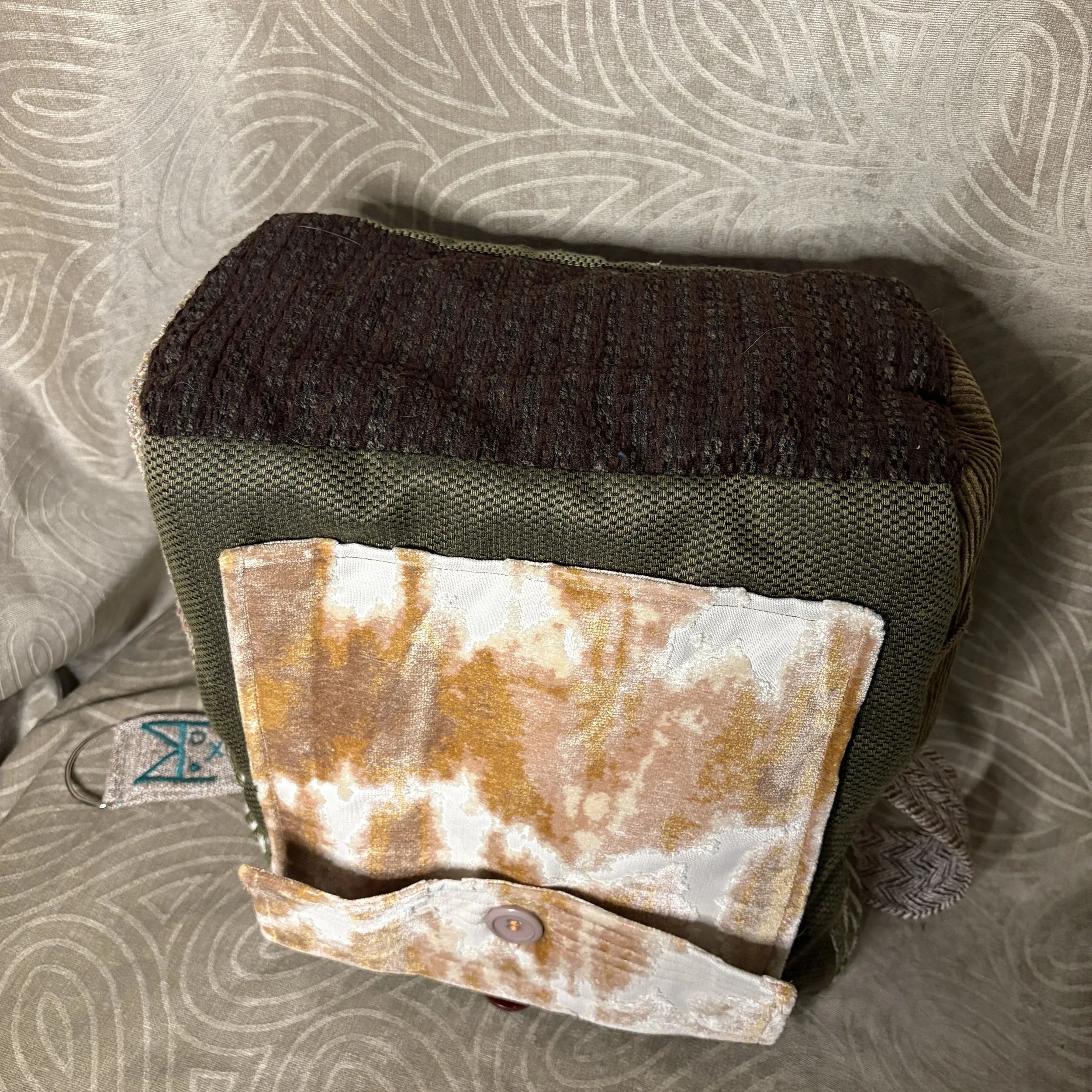
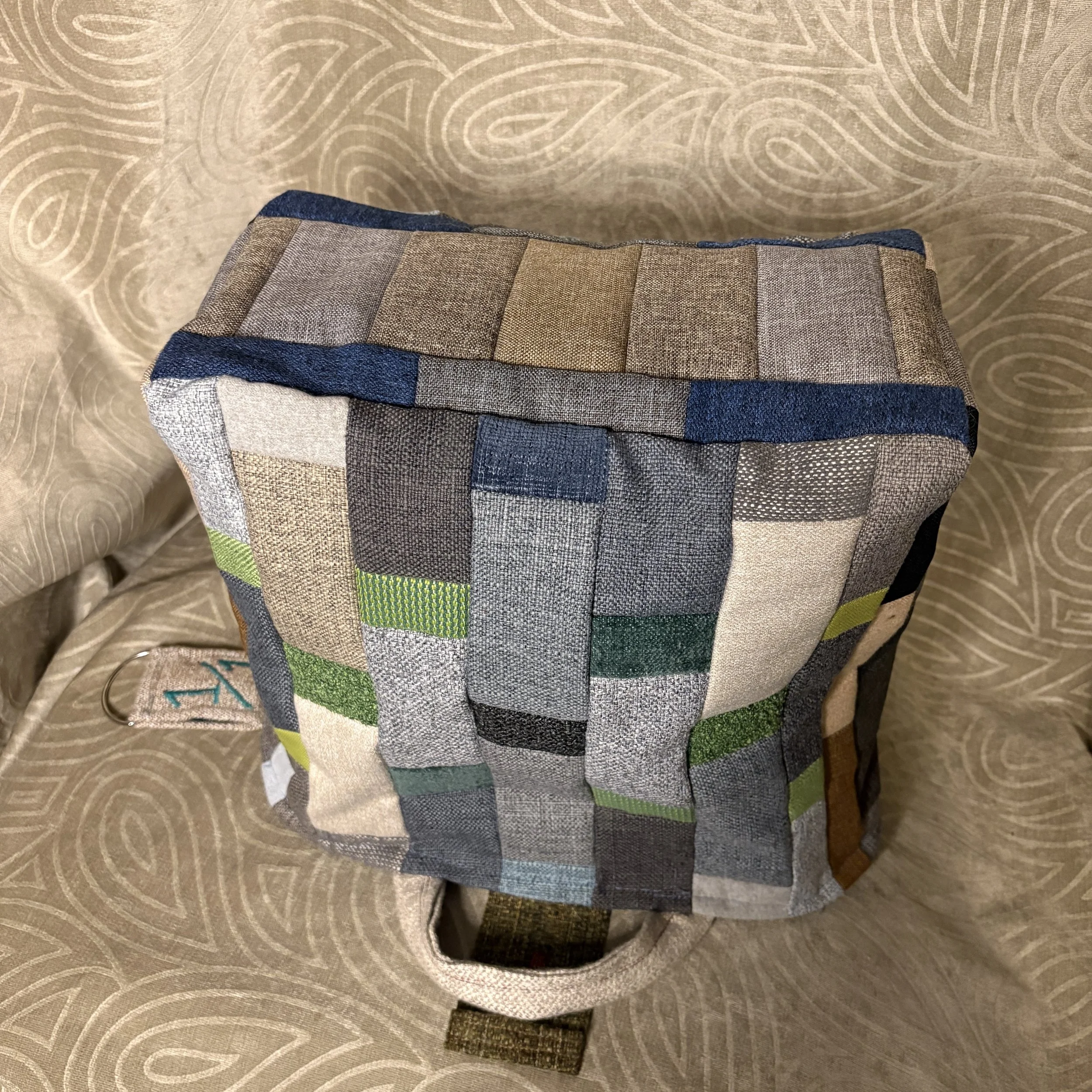
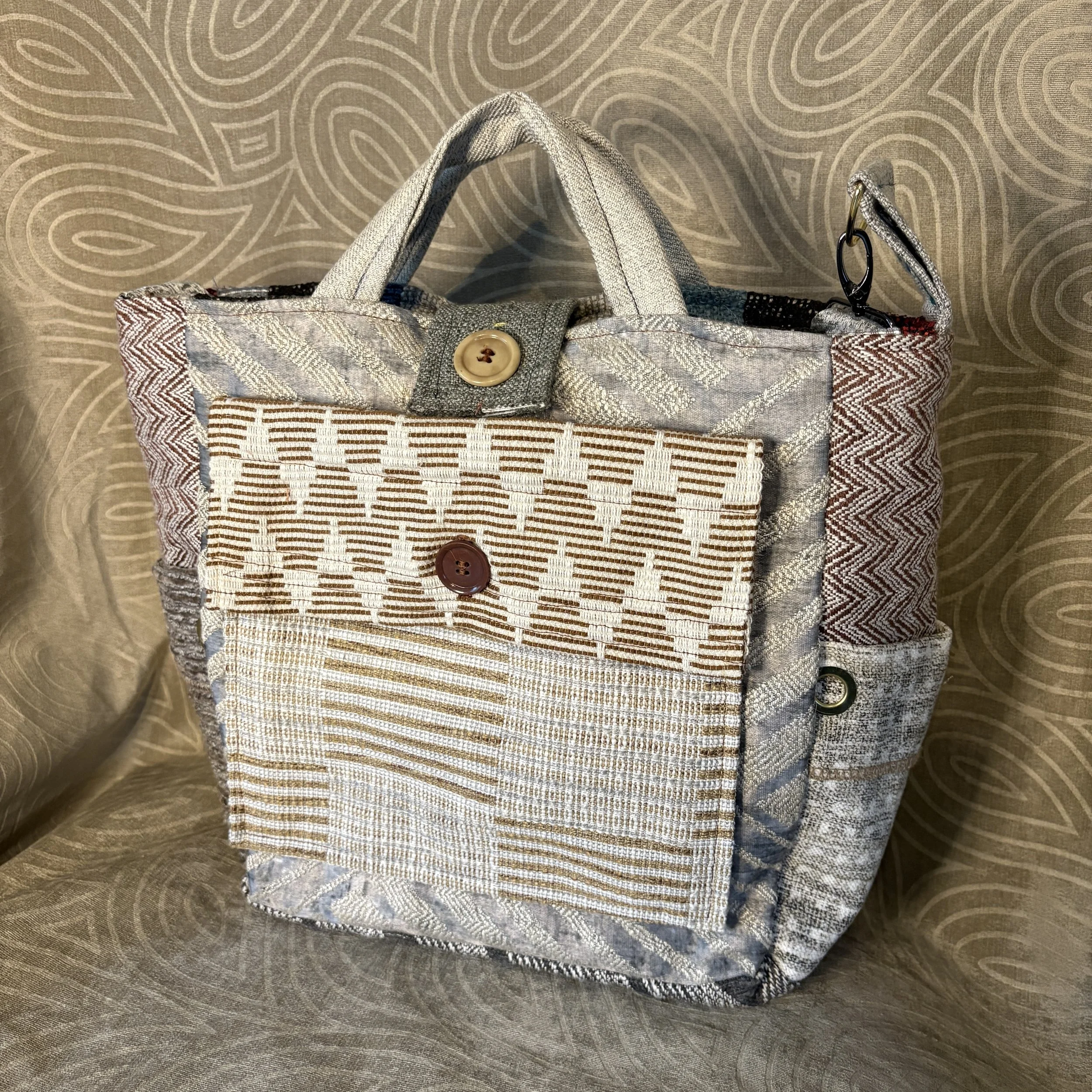
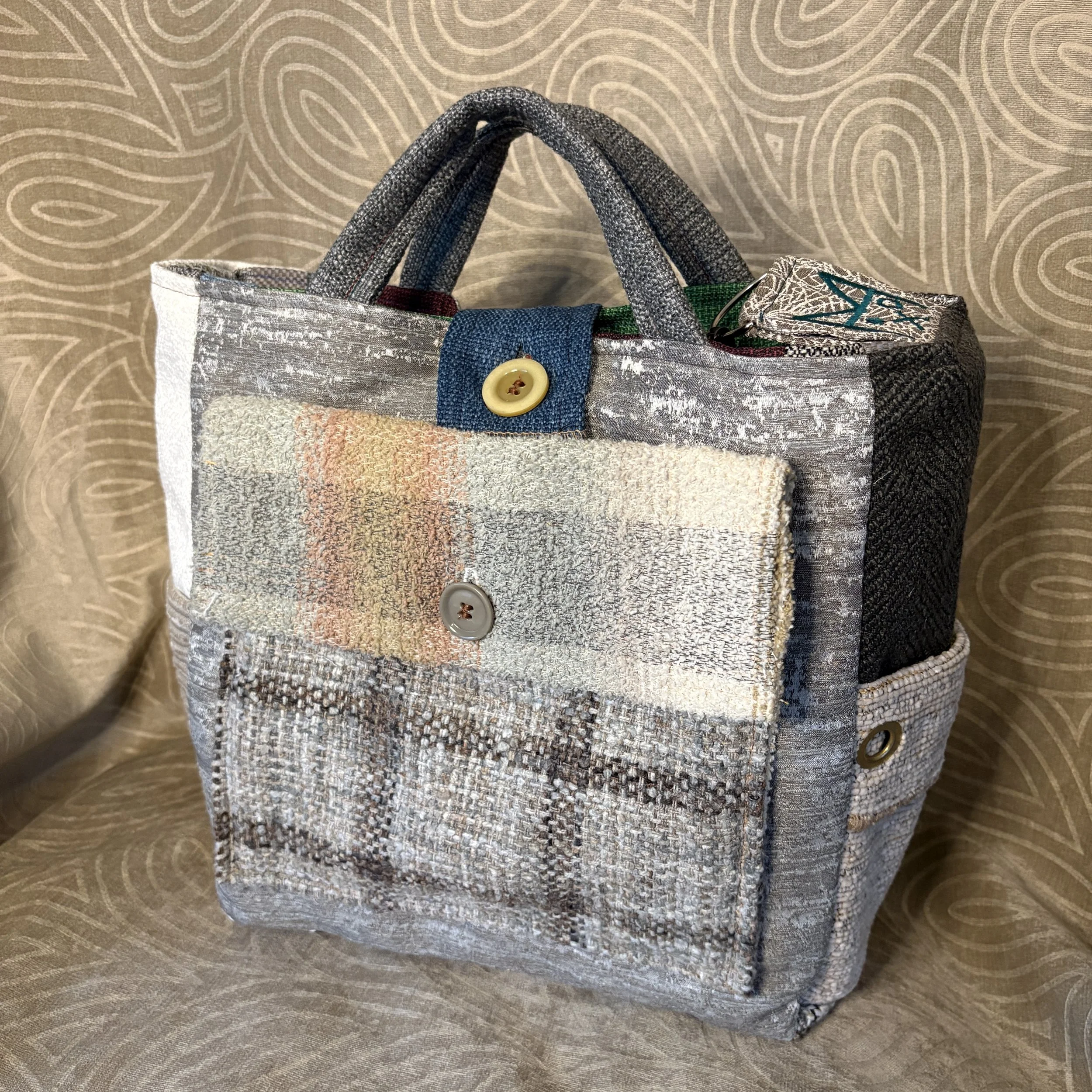
This last bag was what Bob Ross would call a “Happy Little Accident”, as it came about from the misfit pieces of the previous bags. In each rainbow, I was putting aside different greens and blues that didn’t exactly fit the spectrum I was going for in order to maintain symmetry, and the same went for the greys, as I didn’t want them to overpower or supersede the colors of the other bags. This left me with a pile of greys and tans, blues, greens, and browns, which left my mind churning in order to find a commonality among them. It only occurred to me after that that they were all incredibly earthy. I set out to make the greens the accents of the main panel, and the blues/browns the accents of the runner, with all of it playing further into the synchronicity of the exterior shell (that I affectionately refer to as the “swamp ogre” for its Shrek-esque color palette, and my enjoyment of its earthen tones). When I finished, I had a wonderful earth-inspired small bag, and the best part is that I know who it went to, a former coworker and friend at my old place of work. My former bosses breezed through the Sunday Market and ran into me, where we caught up, and they got to see the little slice of the market I had carved out for myself. It felt incredible to show them what I’d done, and even better to have received an email about having gotten the bag and her loving it. I am more than happy with the work I have done, and if this shipment of a relatively small box of fabric can result in so much joy, imagine how it could grow with a larger network? I’m excited.
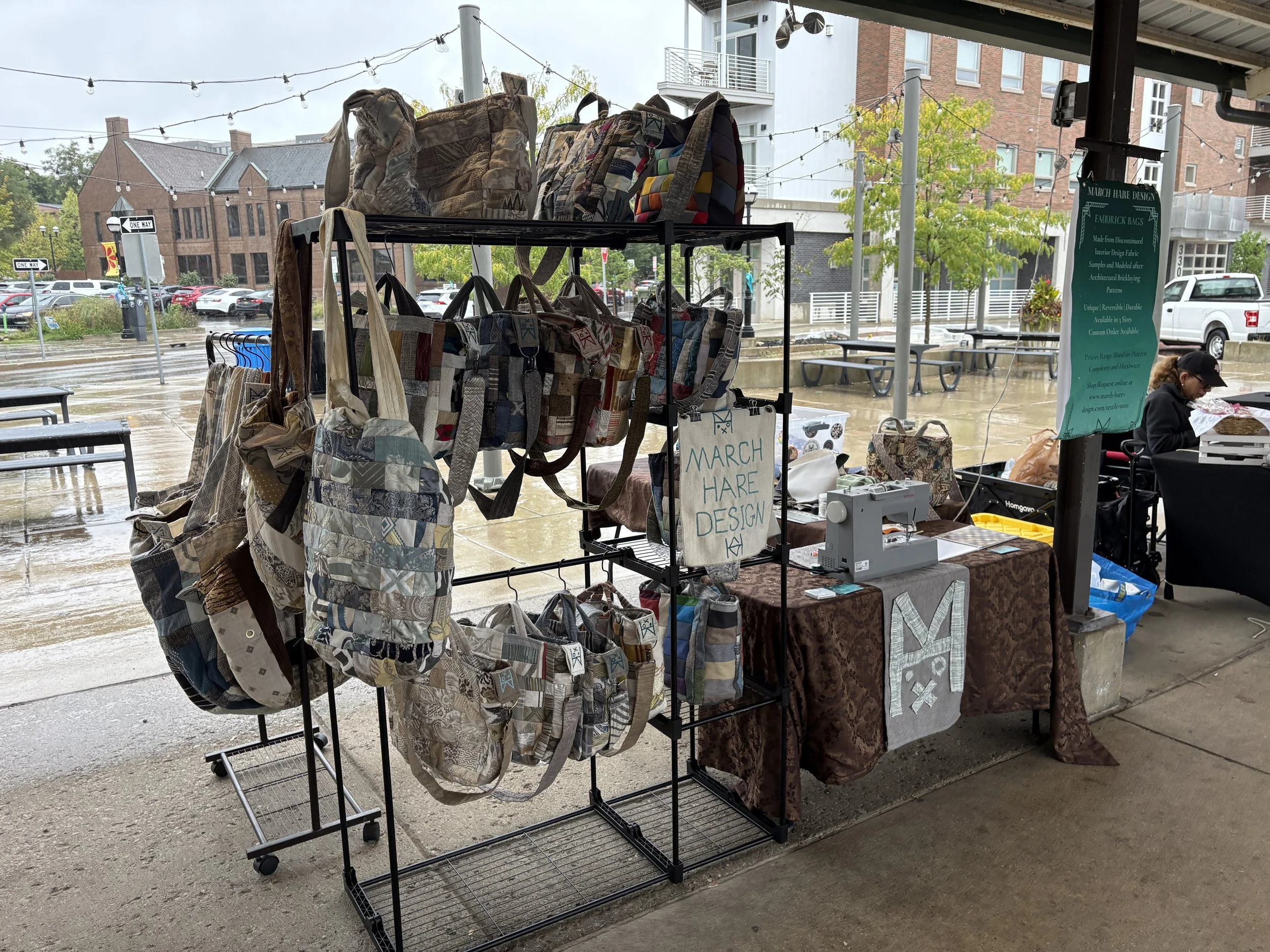
The market following this flurry of sewing was my best to date. I managed to sell so many bags and was able to showcase the capability of Fa(b)ricks to be configured in various ways, as reversible bags, but also in terms of bricklaying pattern and in bag size. Overall, I think that was just the boost I needed to keep going on the right track, and my setup will be growing with me.
New racks, new size options present on the table, a new look-book, a better UI on the Website, More Consistent Posting on Social Media, and Continued Outreach to current and former fabric suppliers and partners, to ensure that the flame doesn’t die out and the sustainable business model continues to thrive.
More to come, and I am more than happy to have celebrated my birthday and the day afterward doing something I love.
Much Appreciated, George R. Hass - The March Hare.